
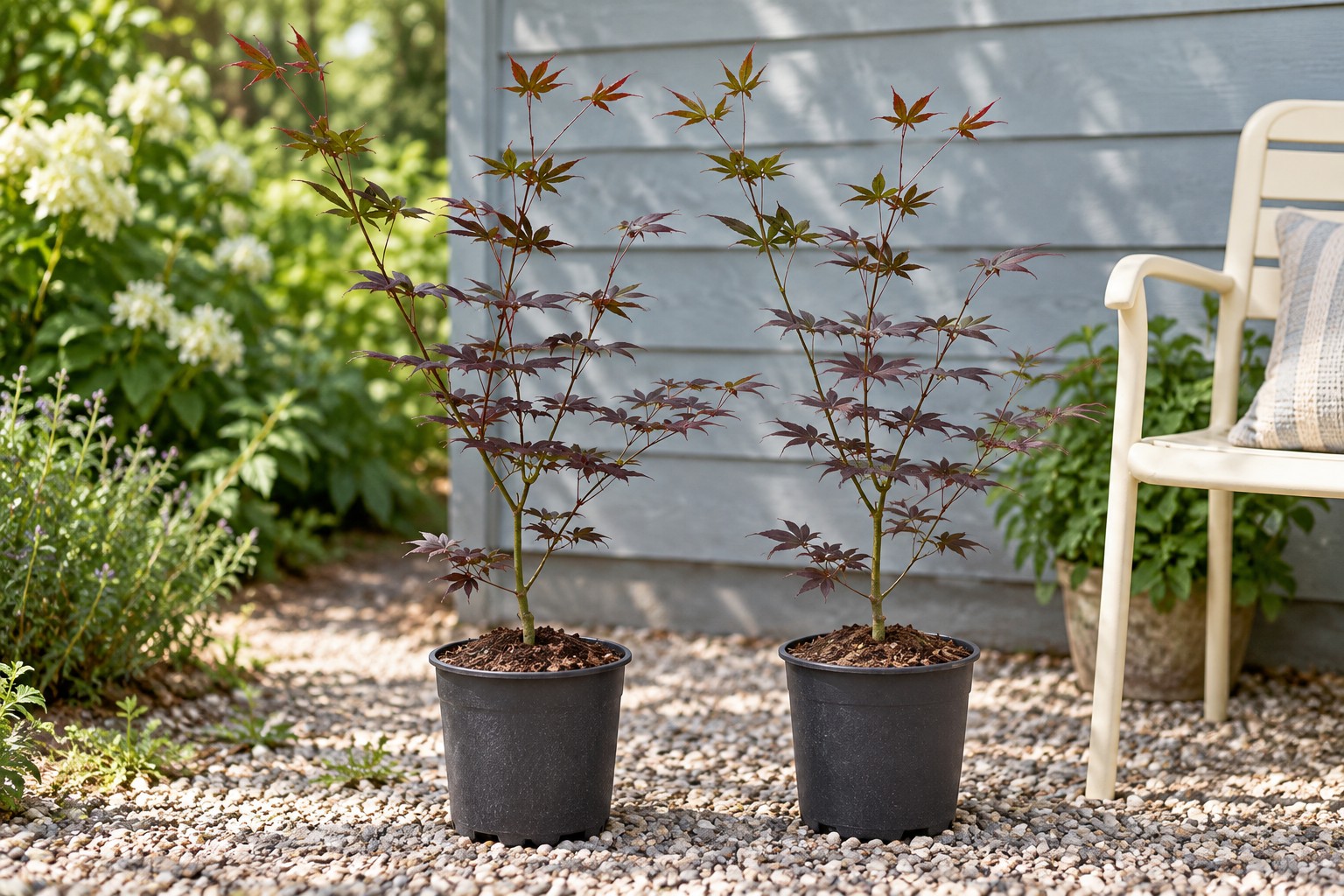
This plant at Exotenherz
Check the shop offer for current availability, price and what is included.
Link to the offer in German. Check the shop for the current price, availability and delivery contents.
Your care table
| Topic | What to do | Why it helps |
|---|---|---|
| Light | Sheltered bright partial shade. | Hot sun and dry wind may damage leaf edges. |
| Water | Supply the root ball evenly and check regularly. | Small pots are especially responsive to dry-wet swings. |
| Soil | Humus-rich, slightly acidic to neutral and well-drained. | Fine roots need water and air together. |
| Fertiliser | Sparingly according to need in spring and summer. | Do not hastily interpret brown edges as a shortage of feed. |
| Pruning | Selectively work only on dead or obstructive parts. | The natural loose shape needs no constant heavy pruning. |
| Late frost | Temporarily protect young growth when cold is forecast. | Fresh leaves are more sensitive than dormant wood. |
| Winter | Protect container roots during severe frost and ensure drainage. | Hardy wood does not automatically protect a small pot. |
| Yearly cycle | Allow summer colour changes and autumn leaf fall. | The variety does not stay equally purple-red all year. |
Check the compost and pot weight. The care table explains how far the compost may dry.
Water only when needed. The water should reach the root ball without spilling over the rim.
Remove surplus water from the saucer or cachepot. Then return the plant to a suitable position.
Leaf edges make the difference
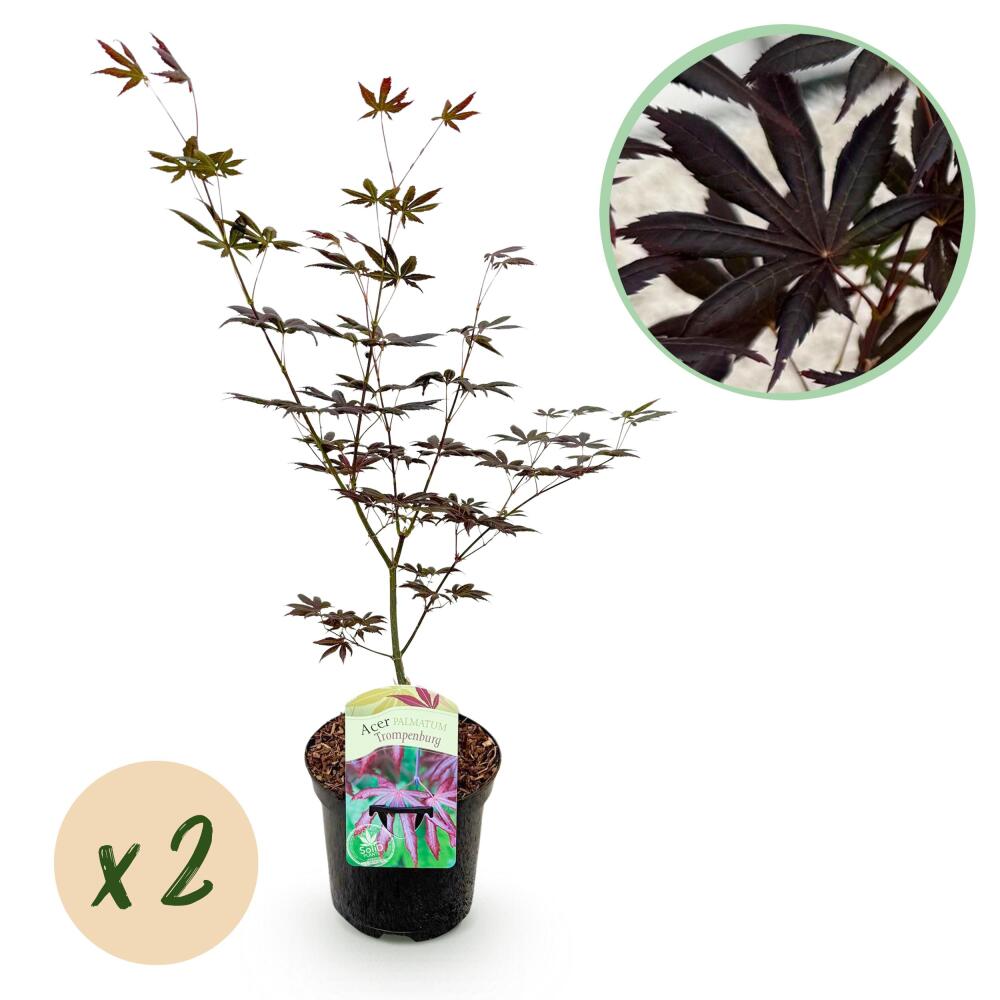
Acer palmatum Trompenburg belongs to the soapberry family. Its usually seven narrow leaf lobes have downward-curved edges, creating a distinctive three-dimensional effect. New growth may appear strongly purple-red, some areas become greener in summer, and warm red to orange tones arrive in autumn. This change belongs to the variety’s effect and is not a sign of inadequate care. The maple loses its foliage in autumn. Its fine branching remains visible as a distinctive shape even during winter rest.
A set of two young trees
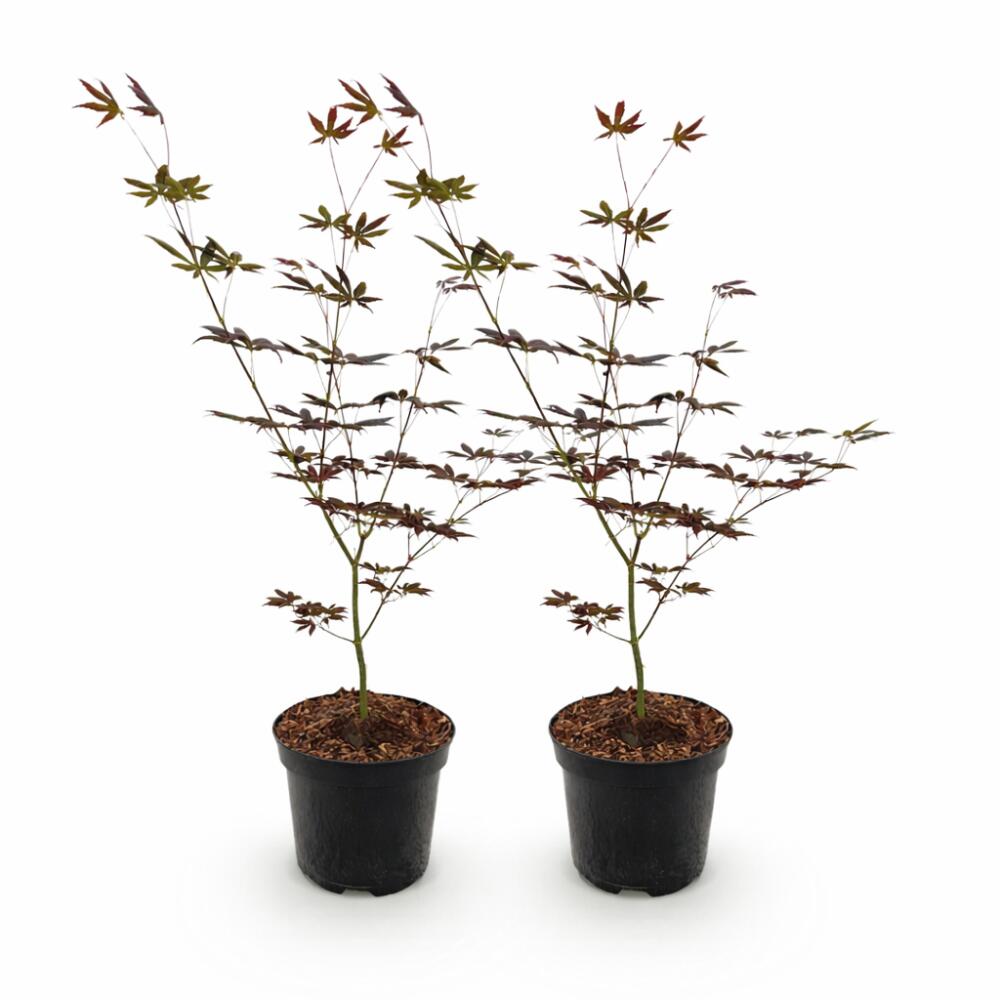
The shop offer comprises two plants in 19 cm pots at about 70 cm overall height. The original photograph shows a young loose structure with relatively few leaves, supplemented by a leaf detail inset. This delivery stage is not equivalent to a dense mature crown. Trompenburg can later reach several metres in height and width; pruning, position and cultivation influence development. The two plants may occupy separate garden positions. For lasting container growing, larger suitable root space is needed as roots increasingly fill the pot.
Sheltered partial shade maintains beautiful leaves
A bright partly shaded outdoor position is a good starting point for leaf quality. Excessive sun with a dry root ball and drying wind can damage leaf edges. Morning sun is often easier to combine than hot afternoon conditions before a reflective wall. Humus-rich slightly acidic to neutral soil should retain water while remaining well-drained. Do not plant the tree deeper than previously. A stable well-drained container supports the young tree. Neither persistently wet soil nor a completely dry small pot suits its fine roots.
Keep moisture as balanced as possible
Check the root ball regularly, particularly after planting and during warm windy periods. Water slowly and thoroughly when needed. Surplus must drain away; no permanent water reservoir should develop in the outer pot. A suitable organic covering around the root area can balance moisture in a border but should not wrap the trunk base. Feed only sparingly according to need in spring and summer. Brown edges are no clear proof of nutrient deficiency. Check water balance, sun and wind before applying extra fertiliser.
Support shape with few interventions
Trompenburg develops its own loose shrub or tree shape. Regular strong shaping cuts are unnecessary. Selectively remove dead or damaged wood and consider each branch’s contribution to the overall structure before cutting. Strongly shortening every tip can disturb the fine natural impression. Young leaves may suffer late frost in spring. Suitable temporary protection for a forecast cold night helps more than later hastily removing every damaged shoot. First wait to see which parts recover or regrow.
Winter rest is a natural part of its appearance
Trompenburg is a hardy garden maple. In containers, roots are still more exposed to cold and temperature fluctuations, so protect the pot in severe frost and ensure drainage. Check root-ball moisture on dry frost-free days. A warm living room interrupts the appropriate yearly cycle and is not winter quarters for this maple. With leaf spots, unusual wilting or dead branches, also check root and disease causes. Greener summer colour or normal autumn leaf fall, however, is no reason to treat healthy plants unnecessarily.
One plant, several views
Good to know
Are greener leaves in summer normal?
Yes. Trompenburg may become greener in summer and show strong warm colours again in autumn.
Why do leaf edges roll downwards?
These narrow curved-back edges belong to the variety’s typical leaf shape. Still assess any additional new damage separately.
Should the maple go into the living room in winter?
No. It is a deciduous garden tree with winter rest. In a container, protect mainly the root area.
Do the plants remain roughly 70 cm tall?
No. That is the delivery size. Over years, trees or shrubs several metres tall and wide may develop.
Sources and editorial note
- Product and delivery contents: Exotenherz
- NC State Extension: plant profile
- Royal Horticultural Society: plant and care knowledge
Sources checked: 15 September 2026. Product information and delivery contents follow the linked shop offer. Care has been checked against the stated specialist sources and remains subject to plant condition, position and season.