
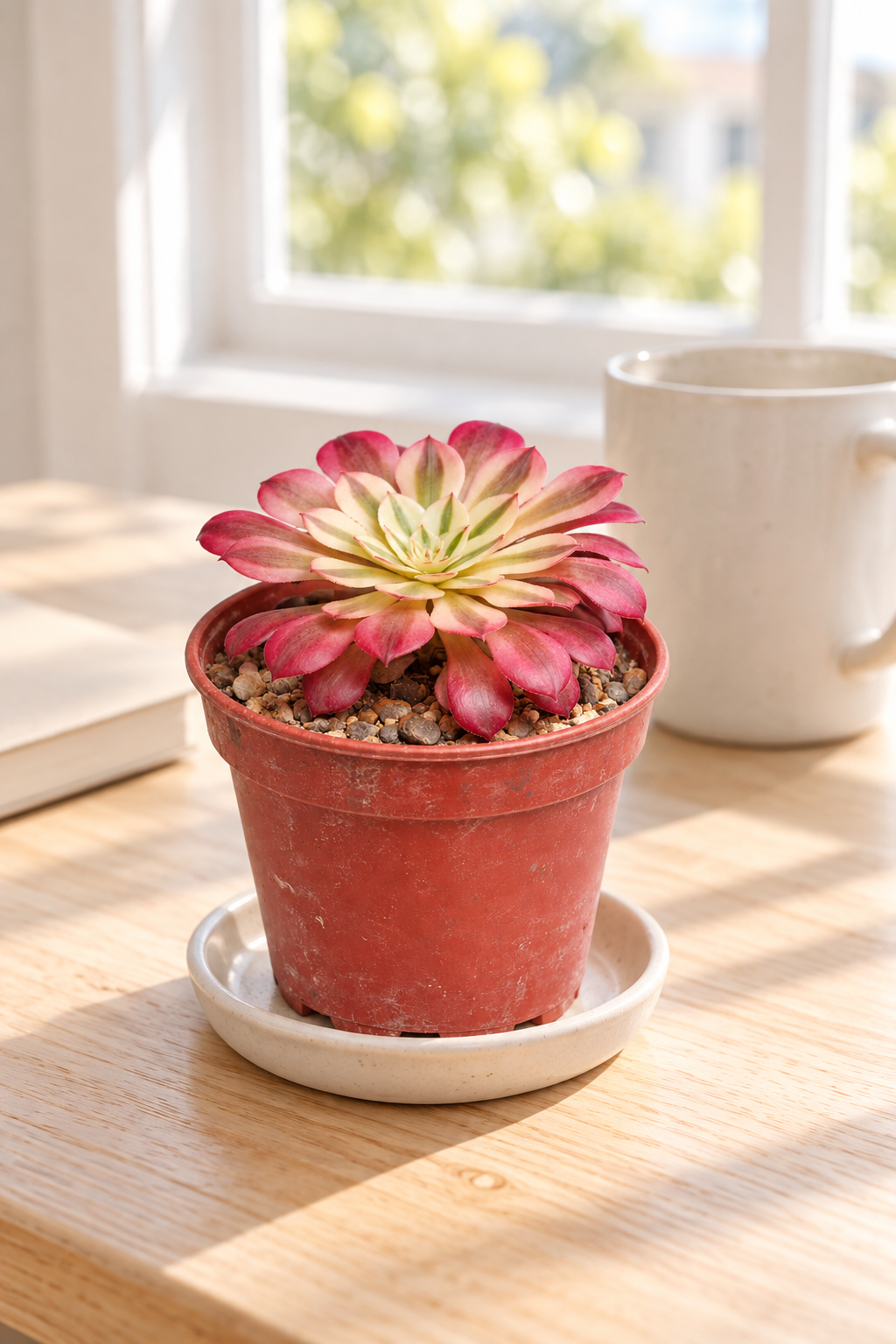
This plant at Exotenherz
Check the shop offer for current availability, price and what is included.
Check the shop for the current price, availability and offer contents.
Your care table
| Topic | What to do | Why it helps |
|---|---|---|
| Start | Inspect the root ball and rosette centre after unpacking. | The small 6.5 cm pot can dry differently from what a larger outer pot suggests. |
| Light | Place very brightly and increase direct sun slowly. | Compact leaf growth needs light; unfamiliar heat can cause damage. |
| Water | During growth, water thoroughly after partial drying and remove excess. | Fleshy leaves store water, but the roots still need free drainage. |
| Colours | Put healthy growth before maximum red colouring. | Colours also change with temperature and light; drought stress is not a care objective. |
| Summer | Water less during heat-induced rest and check the root ball. | Slower growth uses less water. |
| Repotting | Move only into a suitably larger pot with free-draining succulent compost. | Too much damp compost around the small root ball makes moisture harder to judge. |
| Feeding | Feed weakly during visible growth. | Particularly strong feeding does not produce compact growth. |
| Winter | Keep frost-free and very bright; avoid a rigid months-long dry treatment. | Aeoniums may grow in milder conditions and retain their leaves. |
Check the compost and pot weight. The care table explains how far the compost may dry.
Water only when needed. The water should reach the root ball without spilling over the rim.
Remove surplus water from the saucer or cachepot. Then return the plant to a suitable position.
Several colour stages in the palm of a hand
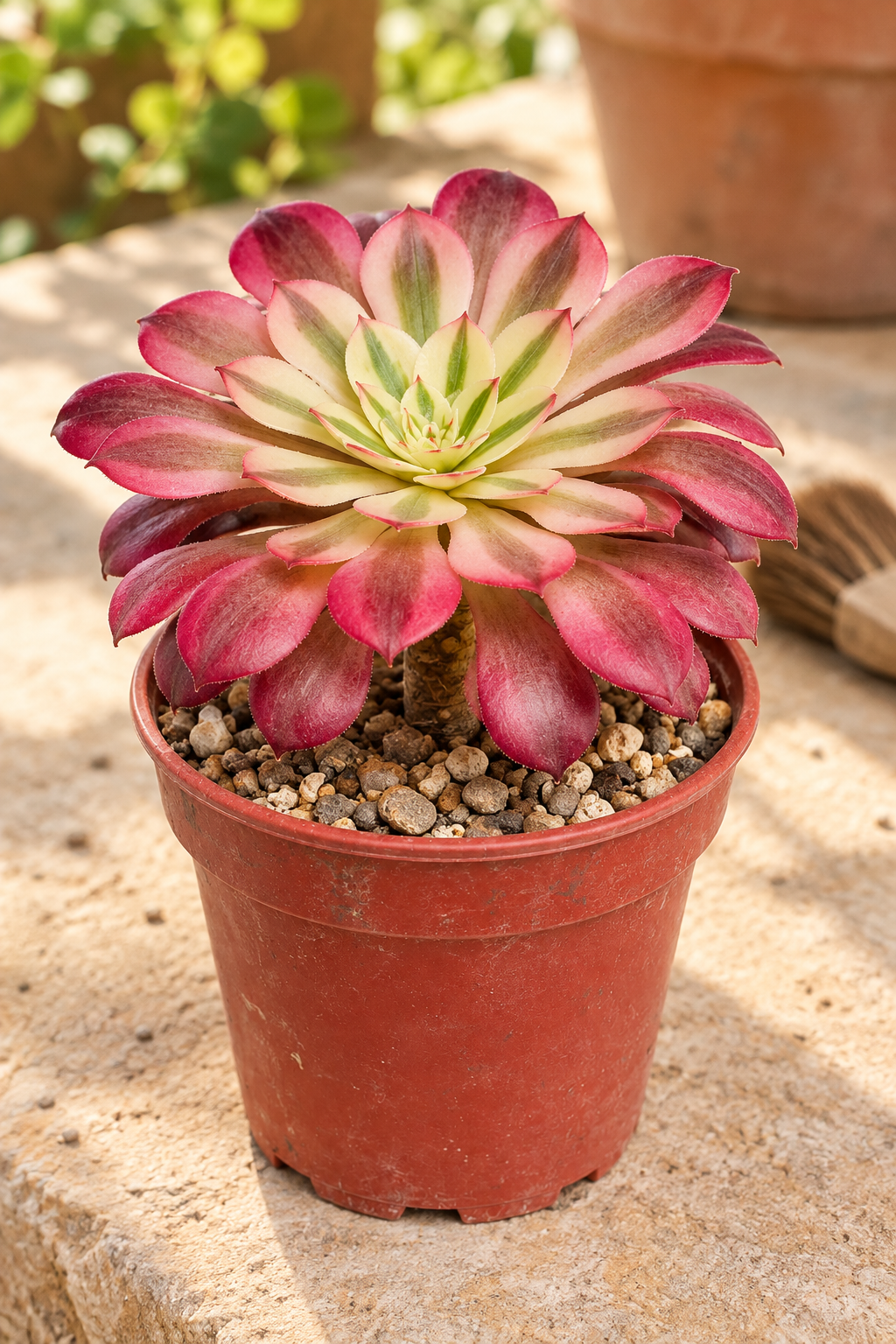
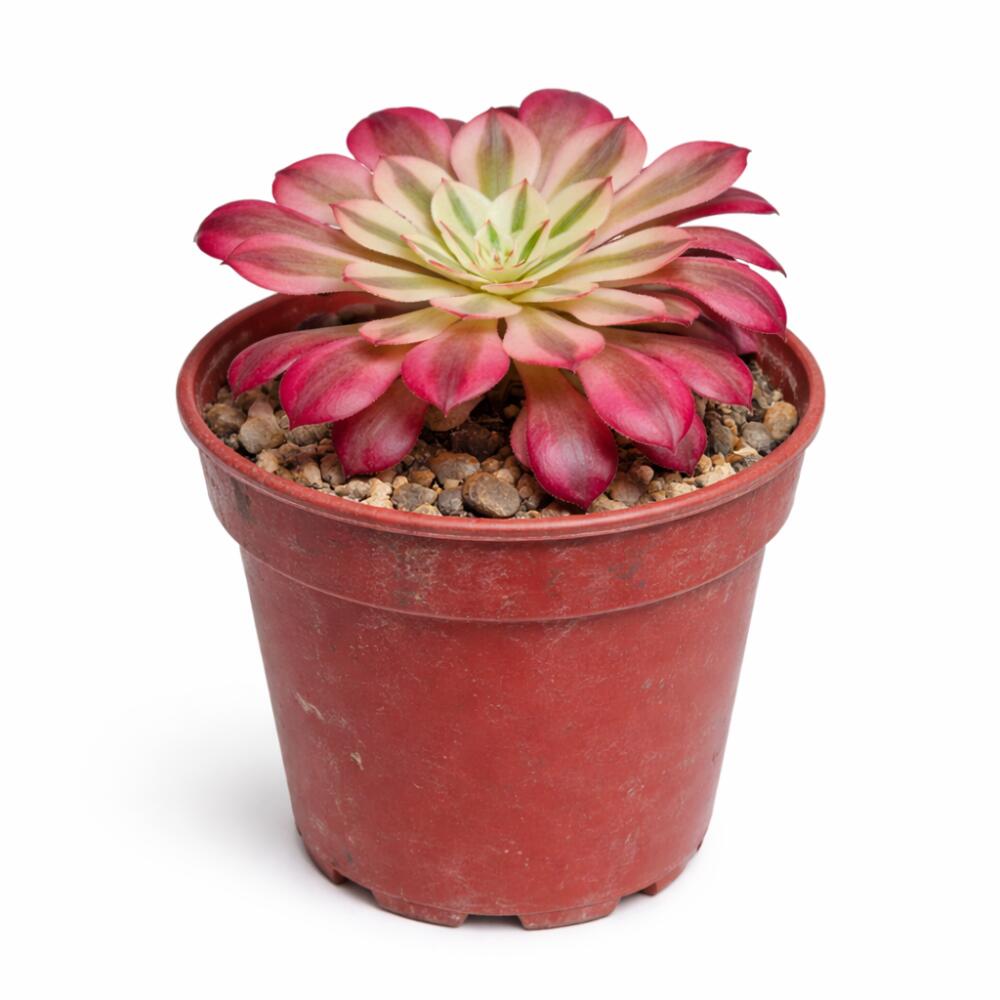
Mardi Gras often begins in the centre with pale creamy-yellow areas and narrow green markings. Older outer leaves show stronger pink to burgundy tones. Their spoon shape and open layered arrangement make the rosette look like a small colourful structure. The original photograph shows a single young rosette in a small pot. Look at it from a little distance and then from above: this reveals both young central leaves and older edge leaves. A living specimen will not reproduce the photograph’s pattern to the millimetre. The colour transitions belong to the named selection, but their strength changes with light, temperature and further growth.
A documented breeding selection, not a new species
Mardi Gras names an Aeonium hybrid breeding selection. The original breeder description documents the multicoloured leaves and compact structure. This helps identify it without inventing a species name. The measured trial plants were young specimens under particular growing conditions; their dimensions do not describe a general final height. This portrait therefore uses the confirmed shop size: a pot diameter of 6.5 cm and approximately 15 cm total height including the pot. Side shoots may broaden its appearance over time. Observe its own structure rather than planning a small sales pot as an already finished miniature tree.
Get to know the small root ball first
After unpacking, check the pot’s moisture and weight. Lift it again when the compost has noticeably dried in part; that comparison will help more than a fixed weekday. A 6.5 cm container holds little compost. Nevertheless, a dense inner root ball can stay wet longer than dry surface grit suggests. Start the plant in a bright, visible position without immediately hiding it among larger containers. An outer pot must not conceal drainage. You should still be able to check after every watering. Often the first good care decision is to leave an already moist plant alone.
Bright light builds the next row of leaves
Mardi Gras needs plenty of light for compact growth. A well-lit window or bright conservatory is better than a dark shelf. Introduce new direct sun gradually, especially after shipping or protected cultivation. Behind hot south-facing glass, even a bright position can become stressful; air movement and some protection from the strongest heat may then be useful. The red outer leaves should not become a contest for the darkest possible colour. Their shade responds to several growing conditions. A soft or injured plant is not better cared for simply because its red areas look particularly intense. Prioritise firm leaves and a living centre.
A summer pause does not signal thirst
In strong summer heat, aeoniums can slow their growth and hold the rosette more tightly closed. Watering can then become more restrained. Before watering, check the root ball and new leaf development. If the compost is still damp and little new growth appears, avoid adding more water. Milder weather and renewed visible development may increase demand again. Mardi Gras therefore remains an individual growing case within a succulent collection. Neighbouring pots need not receive water on the same day. This becomes clear beside an actively growing cactus: sharing a bright window does not give every plant the same watering rhythm.
Water thoroughly during growth and check drainage carefully
Apply water to the compost so that the root ball is reached evenly when needed. Excess drains freely and is removed from the saucer or outer pot. Then allow the compost to dry partly again. For repotting, choose a structurally stable gritty succulent compost in a container with a drainage hole. Provide only an appropriate increase in space when the roots need it. A large damp sleeve of compost around the small rosette does not help it settle in. Feed weakly according to the product instructions during visible growth. Pause feeding during hot or resting periods. When working, hold the pot and root ball without squeezing the delicate layers of leaves.
Support the rosette centre through winter
The winter position is frost-free and very bright. Cooler mild conditions can allow aeoniums a different growth pattern from summer heat; Mardi Gras should therefore not automatically be treated like every dry winter cactus. Temperature, light and moisture remain decisive. A warm dark position with plentiful water readily encourages weak stretched growth. Remove fully dry outer leaves gently and inspect tight bases for mealybugs. Fresh leaves and a firm base reveal more about cultivation than the exact red colour in the photograph. If new rosettes develop later, space requirements increase too. A clear, accessible position lets you notice that change in time.
One plant, several views
Good to know
Is Mardi Gras a botanical species?
No, it is a named Aeonium hybrid breeding selection documented in the original record.
Do the outer leaves always stay equally red?
No. Light, temperature and growing conditions influence intensity. Deliberate drought stress is not a care objective.
How tall will it ultimately grow?
No reliable final height is established for this particular offer. The approximately 15 cm shop total height including the pot describes delivery size.
Why does the rosette close in summer?
Strong heat can slow growth. Check root-ball moisture rather than automatically adding more water.
Can I keep it on a shelf?
Only in a genuinely very bright position. A dark shelf does not suit compact Aeonium growth.
When should it receive fertiliser?
Feed weakly during noticeable growth; pause during a resting phase.
Sources and editorial note
- Exotenherz: currently orderable individual offer (accessed 03/10/2026)
- Original breeder description: Mardi Gras (accessed 03/10/2026)
- RHS: Aeonium cultivation and summer behaviour (accessed 03/10/2026)
- RHS: indoor succulents (accessed 03/10/2026)
Current individual offer and specialist sources read directly on 03/10/2026; botanical identity/SKU checked against the 642-article reference catalogue and new parallel portraits. Original breeder patent USPP 21407P2 read directly; exact young-trial measurements not used as ultimate size; no unobserved flowering invented; clean original 2 and 6.5/15 scale verified.