
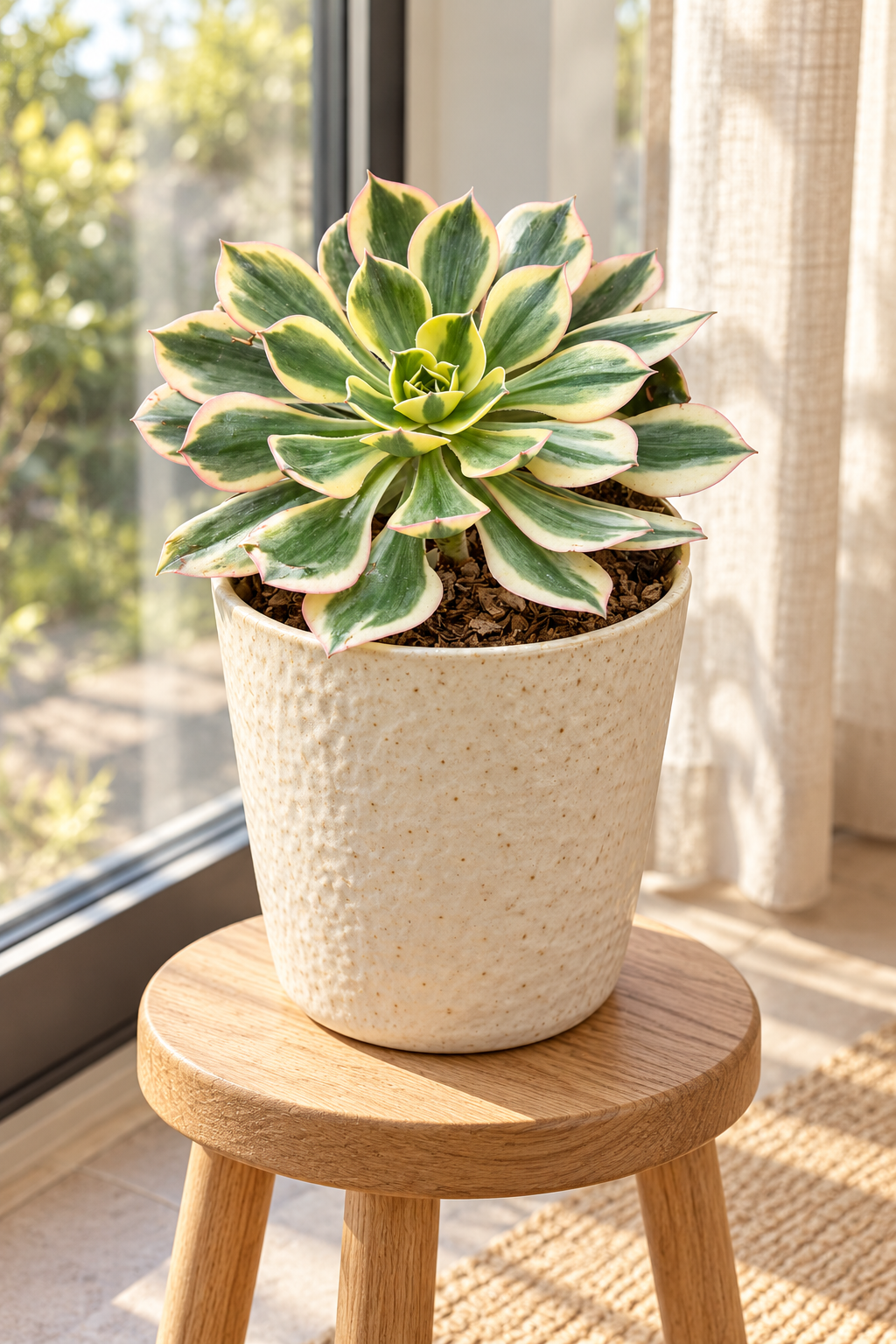
This plant at Exotenherz
Check the shop offer for current availability, price and what is included.
Check the shop for the current price, availability and offer contents.
Your care table
| Topic | What to do | Why it helps |
|---|---|---|
| Light | Grow near bright glass; increase new sun slowly. | The broad variegated rosette should remain compact without exposure to unfamiliar heat. |
| Water | During growth, water thoroughly after noticeable partial drying and allow drainage. | Leaves store water; constantly moist compost does not supply roots better. |
| Summer | Water more sparingly during heat and closed growth. | Summer rest is not a reason for additional water. |
| Compost | Use structurally stable gritty succulent compost and a drainage hole. | Free drainage protects the small root space from persistent damp. |
| Nutrients | Feed weakly only during visible growth. | Fertiliser replaces neither light nor living roots. |
| Winter | Keep bright, cool and frost-free, checking root-ball moisture. | The plant remains leafy; insufficient light and wetness encourage weak shoots. |
| Shape | Leave healthy rosettes; remove dry lower leaves gently. | A visible stem may be part of normal development. |
| Health | Check the rosette centre and leaf undersides for mealybugs. | Small deposits are easily overlooked between closely packed leaves. |
Check the compost and pot weight. The care table explains how far the compost may dry.
Water only when needed. The water should reach the root ball without spilling over the rim.
Remove surplus water from the saucer or cachepot. Then return the plant to a suitable position.
A pale border around every leaf
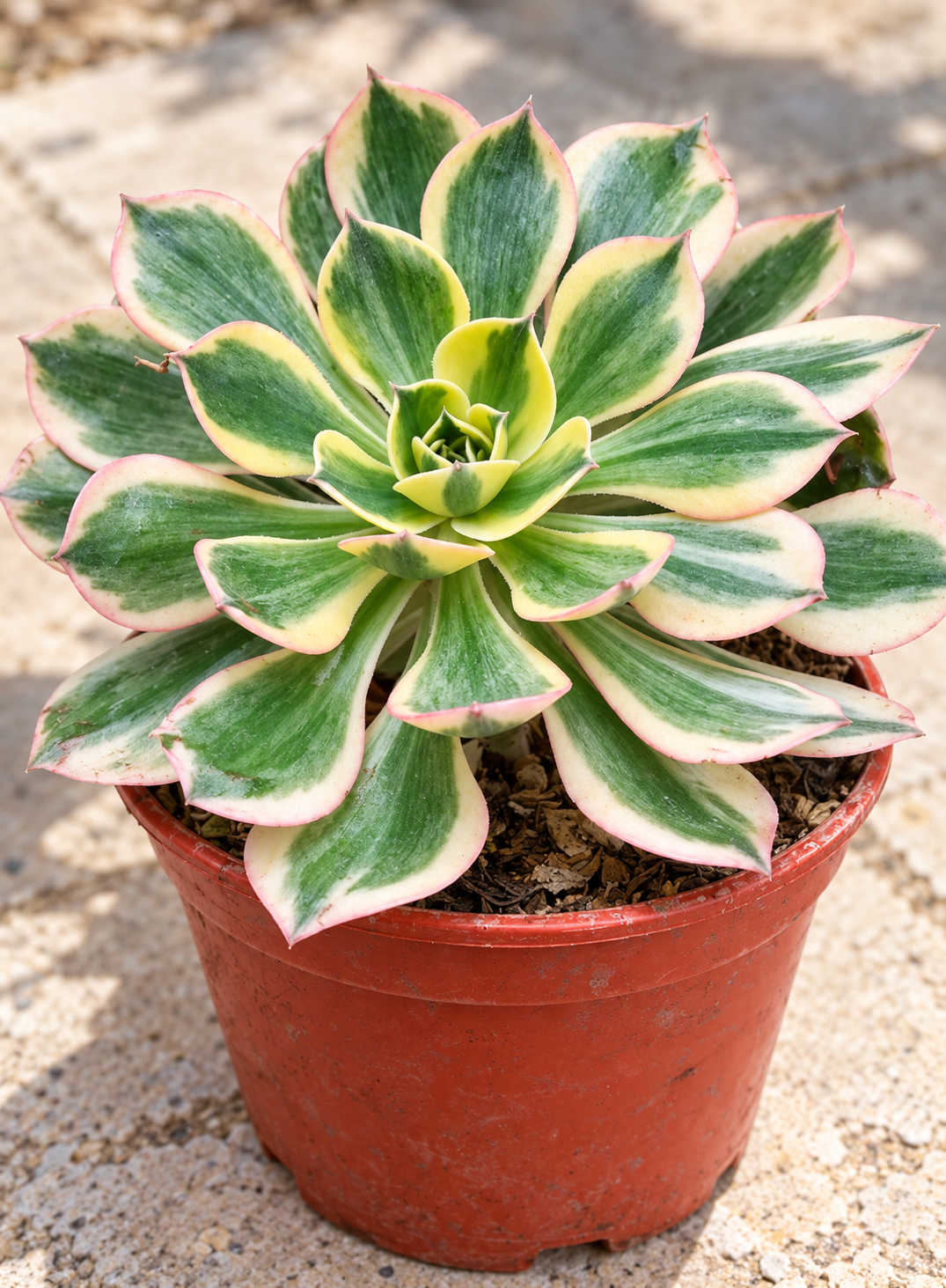
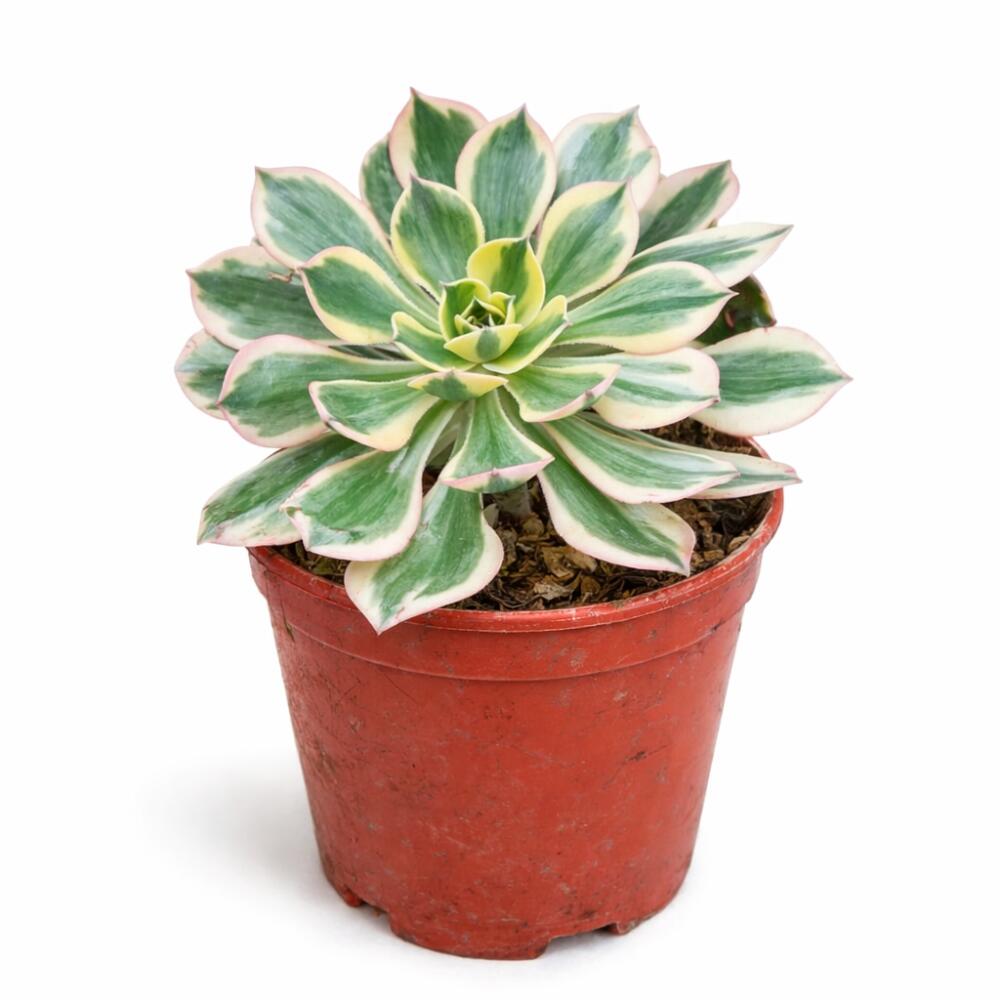
Sunburst forms an open rosette of spoon-shaped fleshy leaves. Broad creamy-yellow areas frame the green centres, and a delicate pink may appear along the edges. The pattern differs from leaf to leaf, and these small variations give the plant its living character. When unpacking, first check the firm rosette centre and undamaged leaf bases. An older lower leaf may look different from fresh growth. The rosette is this cultivar’s main ornament. It does not need a large flower for that, and the young shop specimen is not a promise of a currently flowering plant.
A young rosette becomes a small structure
The selected offer is in a 14 cm pot at approximately 30 cm total height including the container. That figure describes delivery condition, not final rosette height. A developed Sunburst may reach about 70 cm tall and spread considerably with additional rosettes; approximately 50–100 cm wide is guidance for suitable growing conditions. Allow some air beside and above it in a conservatory. The stem may become more visible as lower leaves age. A firm, evenly formed stem is part of development. A base suddenly becoming soft in wet compost, however, deserves close inspection rather than simply another covering layer of compost.
A conservatory needs real light
A bright sunny position suits Sunburst. Indoors this means being close to well-lit glass; a spot that seems bright in the middle of a room can already be too dark for compact growth. After shipping or shadier cultivation, increase exposure gradually. This is especially useful before hot south-facing glass. Air movement and some distance from very hot glass help when choosing the position. It can spend the mild season on a rain-sheltered terrace once accustomed to sun. Observe leaves and temperature together: pink leaf edges are a cultivar feature, whereas pale dry damage after an abrupt move is something different.
Read new growth during summer heat
Aeoniums may reduce growth during strong summer heat. The rosette looks tighter, fresh growth remains smaller and the plant uses less water. This differs from many cacti, which mainly receive dry winter rest. Assess the whole plant before answering a change with more water. If the root ball is still moist, the next watering waits. Milder temperatures and visible growth again may increase demand. A rigid weekly schedule overlooks these transitions. Instead, note changes in pot weight, compost and rosette centre at your particular position; this teaches you your Sunburst’s rhythm.
Water thoroughly, then let it drain freely
During active growth, water after noticeable partial drying. Apply water to the compost and let all excess drain through the drainage hole. Check and empty a closed outer pot afterwards. Small daily sips may keep the surface constantly moist while the deeper root ball receives water unevenly. Gritty, structurally stable succulent compost supports the alternation between water uptake and drying. Once roots fill the pot well, choose only a suitably larger container. A large amount of unrooted compost stays damp longer after watering. Hold the root ball and pot when repotting rather than using the broad rosette as a handle.
Minimal intervention keeps the pattern visible
Sunburst does not need regular shaping. Dry lower leaves can be loosened gently if they come away without pulling on the stem. Leave fresh fleshy leaves untouched. Feed weakly during noticeable growth according to the succulent fertiliser instructions; pause during rest. Check leaf undersides and tight bases for small white deposits or sap-feeding pests. A clean bright position and visible pot edge make inspection easier. A rosette stretching towards light first needs its position checked. Heavy feeding cannot turn a poorly lit spot into a good growing position.
Prepare the bright winter position in good time
Bring Sunburst indoors before cold; below about 10 °C, a sheltered very bright position is sensible. Reassess growth and moisture there. Cool and dark is no better than warm with abundant water but insufficient light. The root ball should not remain constantly wet, but neither should this leafy plant automatically be kept completely dry for many months. Place it with the rosette clear and the pot accessible for checks. The following spring, reacclimatise to stronger sunlight in stages. The best success shows in new leaf growth: firm leaves, recognisable pale margins and a rosette that fits the space available.
One plant, several views
Good to know
Is Sunburst a separate species?
No, it is a named Aeonium selection. The green-and-cream leaf pattern belongs to this cultivar.
How large is the delivery plant?
The offer states a 14 cm pot diameter and about 30 cm total height including the pot.
Should I water more when the rosette tightens in summer?
Not automatically. Heat can slow growth; first check root-ball moisture and fresh growth.
Can Sunburst stand outdoors?
In the mild season after gradual sun acclimatisation, sheltered from persistent rain. Bring it back to a very bright indoor position before cold.
Must I shorten the stem?
A firm stem is part of development. Regular pruning is unnecessary.
Why are shoots becoming longer?
A position that is too dark can cause weak stretched growth. More fertiliser does not remedy insufficient light.
Sources and editorial note
- Exotenherz: currently orderable individual offer (accessed 03/10/2026)
- RHS: Sunburst foliage, later size and cultivation (accessed 03/10/2026)
- RHS: Aeonium trials and seasonal cultivation (accessed 03/10/2026)
- RHS: succulents in containers (accessed 03/10/2026)
Current individual offer and specialist sources read directly on 03/10/2026; botanical identity/SKU checked against the 642-article reference catalogue and new parallel portraits. RHS-accepted cultivar name without unverified species parentage. Cultivar description of 70 cm and RHS spread class of 50–100 cm used as guidance; Aeonium summer rest not equated with general cactus winter rest.