
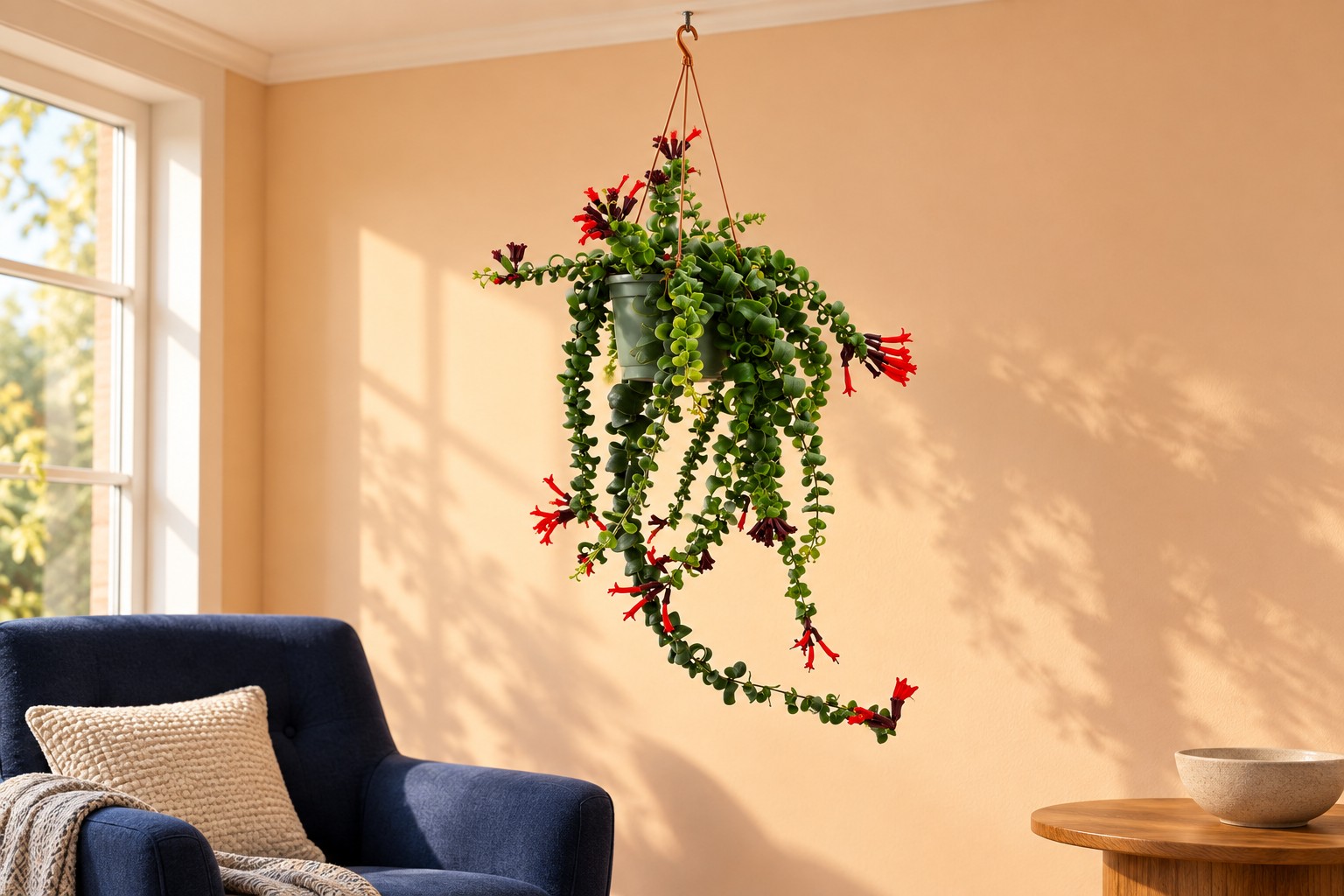
This plant at Exotenherz
Check the shop offer for current availability, price and what is included.
Check the shop for the price, current availability and what is included.
Your care table
| Topic | What to do | Why it helps |
|---|---|---|
| Light | Bright with indirect light. | Good light supports growth and possible flowering. |
| Water | Keep slightly moist, allowing the surface to dry a little. | The epiphyte likes neither waterlogging nor repeated drying out. |
| Drainage | Let the hanging pot drain after watering. | Water may collect unnoticed in outer containers. |
| Compost | Loose, moisture-retentive and freely draining. | Roots need air. |
| Temperature | Warm without cold draughts. | Sudden cooling can encourage leaf drop. |
| Air | Combine higher humidity with air movement. | Constantly wet dense vines encourage fungal problems. |
| Feed | Moderately during growth according to the product. | Excess supply does not replace enough brightness. |
| Vines | Let hang freely and support when repotting. | Leaves and flowers may break easily under pressure. |
Check the compost and pot weight. The care table explains how far the compost may dry.
Water only when needed. The water should reach the root ball without spilling over the rim.
Remove surplus water from the saucer or cachepot. Then return the plant to a suitable position.
Curled foliage as a lasting feature
Aeschynanthus Rasta has noticeably rolled small fleshy leaves. Along the hanging shoots, they create a dense curly structure that remains interesting outside flowering. Red tubular flowers emerge from darker calyces, explaining the name lipstick plant. The genus belongs to the Gesneriaceae family and comes from tropical Asia. We present Rasta as a horticultural cultivar without deriving an additional certain species identification from the trade name. Rolled leaves are normal for this form and do not alone indicate dryness.
A hanging basket with space beneath the pot
The offer states a 15 cm hanging pot and around 40 to 50 cm vine length. A hanging position therefore needs allowance for both the pot and the space below. A bright indoor place beside a window can free the vines without constant contact. Choose secure fastening and load capacity carefully. The basket should be accessible for watering. Flowers and individual leaves can break during transport; this does not automatically mean the whole plant is damaged. Nevertheless, inspect severely injured or soft shoots closely.
Bright light, warmth and circulating air
Bright indirect light supports growth and possible flowers. In a dark corner, the plant often remains less vigorous and willing to flower. Hot direct midday sun can stress foliage after a move. Normal warm room temperatures suit it well. Cold draughts, sudden temperature changes and a position that cools strongly in winter may encourage leaf fall. Higher humidity helps as long as air circulates between shoots. Constantly wet foliage in stagnant air is not a good alternative. Vines should not lie on moist compost or a wet shelf either.
Keep slightly moist and allow complete drainage
Use loose freely draining compost that retains moisture without staying wet long after watering. The surface may dry slightly before the next supply. Then water the root ball thoroughly and let drain. Fleshy leaves do not make Rasta a desert cactus; repeated complete drying is unsuitable. A hanging outer pot can conceal water, so look inside regularly. Reduce watering in winter when growth is slower. Neither a fixed weekly rule nor frequent small sprays replaces checking the actual root ball.
Support flowering and shape vines gently
During active growth, feed moderately with a suitable product according to the instructions. More feed does not replace good light. Flowering is possible, but not guaranteed at a particular delivery time. Remove spent flowers carefully without pulling sensitive shoot tips. If needed, shorten overly long or uneven vines after flowering with clean tools. Healthy sections may be used for vegetative propagation. Support vines at the sides when repotting and do not trap them beneath the pot rim. A pot only slightly larger with good drainage is usually enough.
Distinguish healthy growth from stress
The characteristic leaf curls remain with good care. Sudden extensive leaf fall, dark soft stems or a musty wet root ball, however, call for checking. Individual fallen flowers after transport may be mechanically caused. Remove loose dead material so it does not remain damp among dense leaves. Watch for aphids, mealybugs and spider mites, particularly on young shoots and leaf undersides. An early targeted examination helps more than preventive spraying with changing products. The plant is grown ornamentally and is not intended for the kitchen.
One plant, several views
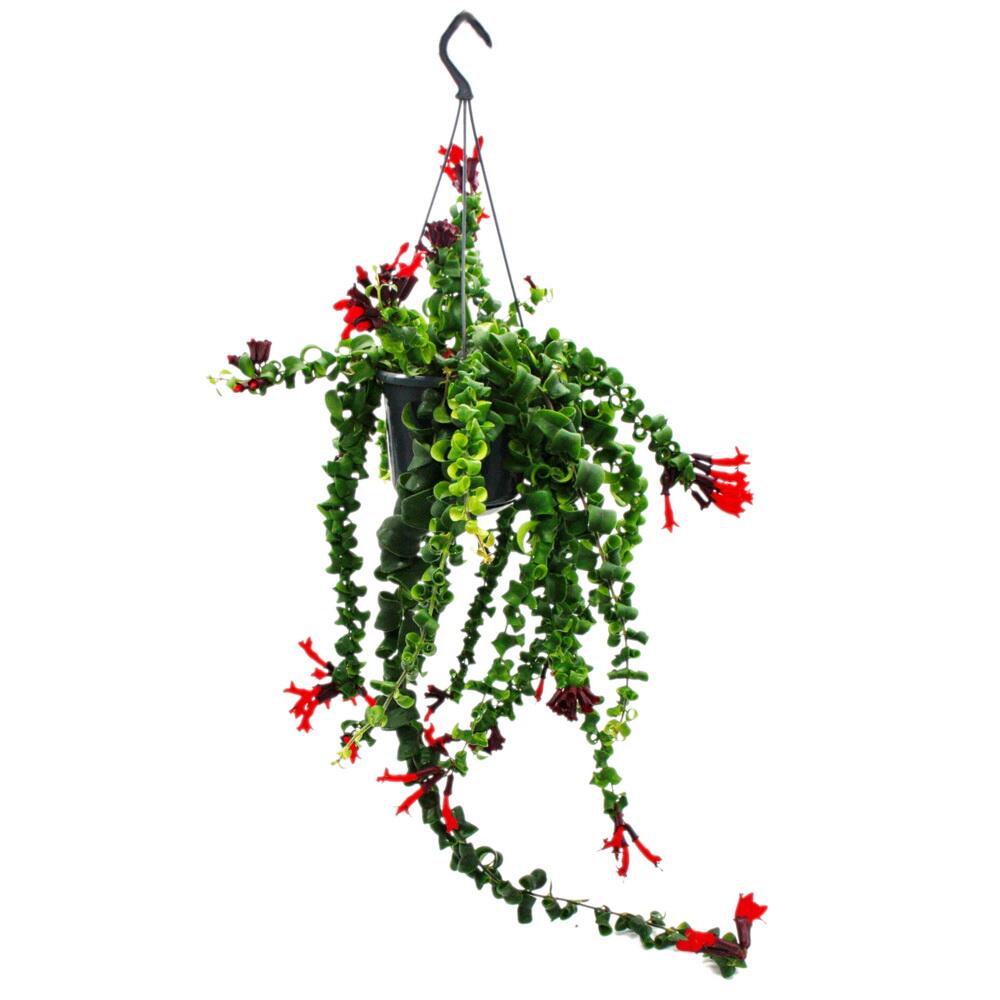
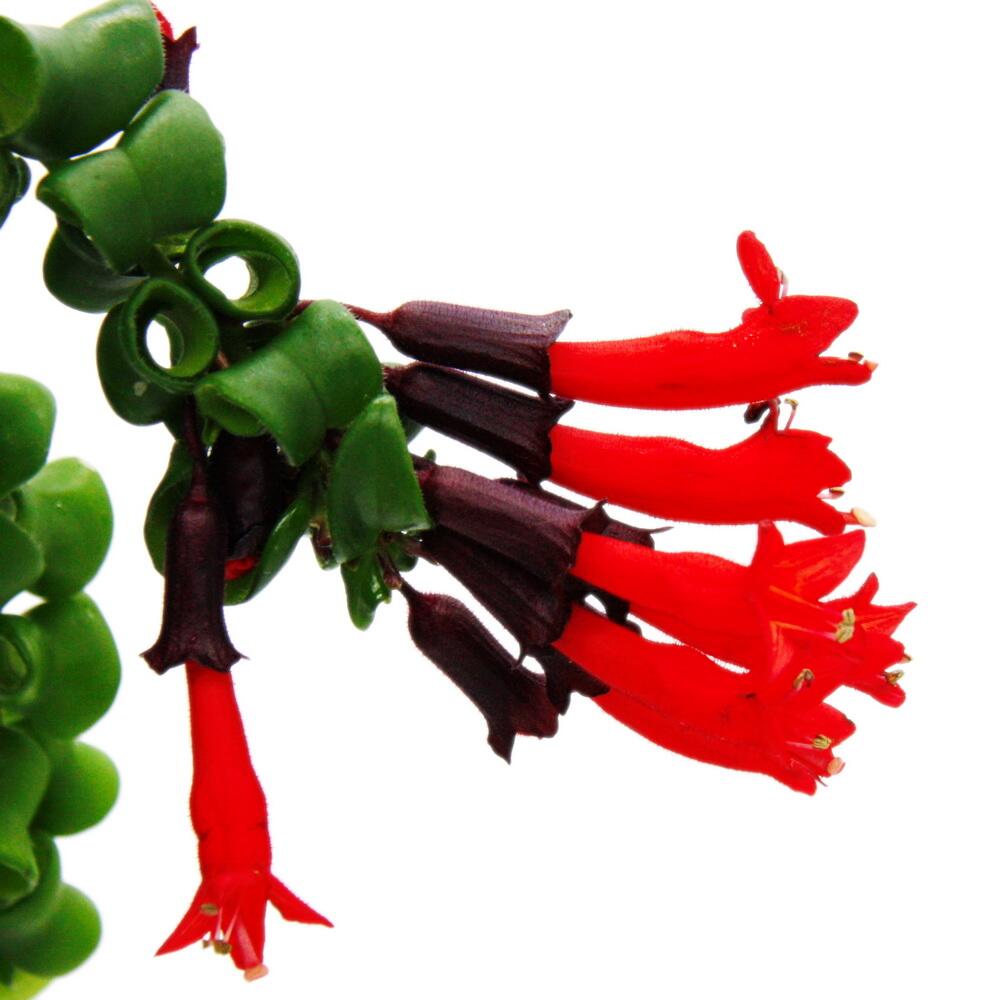
Good to know
Why do the leaves curl so strongly?
Curly leaves are Rasta’s typical feature. This alone does not indicate lack of water.
What does the size figure mean?
The offer describes a 15 cm hanging pot with around 40 to 50 cm vine length. Allow appropriate free space beneath.
Are flowers falling after shipping always a disease symptom?
Sensitive flowers can break mechanically. Nevertheless, inspect more closely with severe damage, soft stems or extensive leaf loss.
Must it be sprayed constantly?
A suitably supplied root ball, adequate humidity and air movement matter more. Constantly wet foliage in stagnant air is unsuitable.
Sources and editorial note
- Product and delivery contents: Exotenherz
- Royal Horticultural Society: plant and care information
- NC State Extension: plant profile
Sources checked: 15 September 2026. Product information and the contents of delivery follow the linked shop offer. Care advice was checked against the cited specialist sources and should still be adapted to the plant’s condition, position and season.