
This plant at Exotenherz
Check the shop offer for current availability, price and what is included.
Check the selected shop offer for price, availability and delivery contents.
Your care table
| Topic | What to do | Why it helps |
|---|---|---|
| Light | Choose a sunny position. | Enough sun suits flower development better than a dark position. |
| Soil | Prepare well-drained soil and avoid lasting wetness. | A wet winter position can particularly stress the plant base and roots. |
| Planting | Set the moist root ball at its previous height and water in well. | The young plant first needs a connection with surrounding soil. |
| Spacing | Allow about 50 cm between plant centres. | The small delivery plant later builds a much larger upright clump. |
| Water | Water in dry weather while establishing; later check actual soil moisture. | An established garden planting and a limited container need different rhythms. |
| Fertiliser | Feed moderately during active growth if needed. | Excessive attention replaces neither suitable soil nor enough light. |
| Flowers and cutting | Remove spent spikes as desired; cut old stems back in spring. | The planting stays tidy while new growth at the base is protected. |
| Renewal | Divide healthy older plants in spring or root suitable cuttings. | The cultivar forms no reliably usable seed; vegetative propagation retains cultivar type. |
For young plants, feel the soil directly at the root ball. The surface and deeper soil may have different moisture levels.
Water thoroughly after planting; later, water according to the soil, weather and establishment rather than a fixed calendar.
Avoid standing water. For plants in containers, also check that water runs out of the drainage hole.
A flower spike made of many little flowers
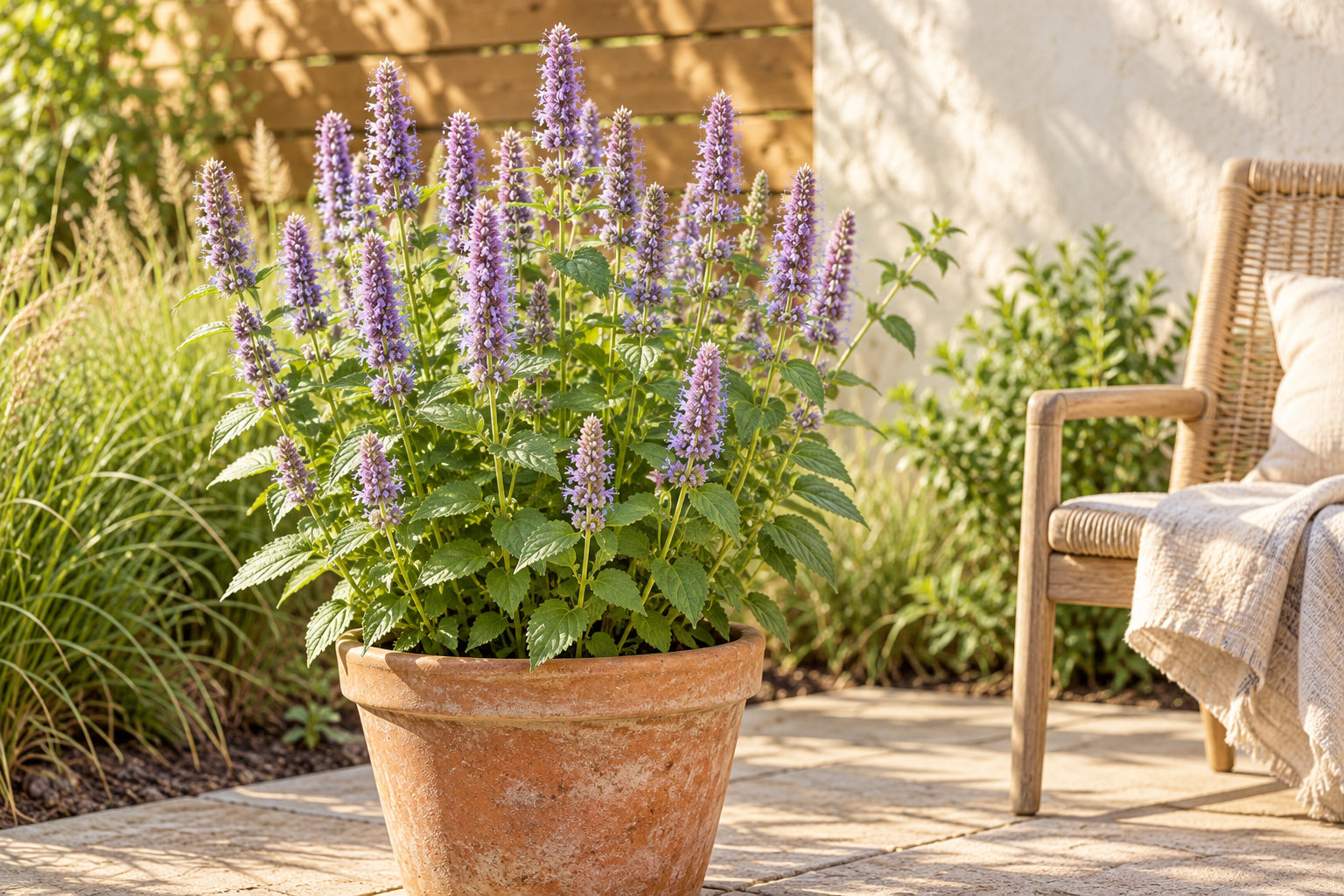
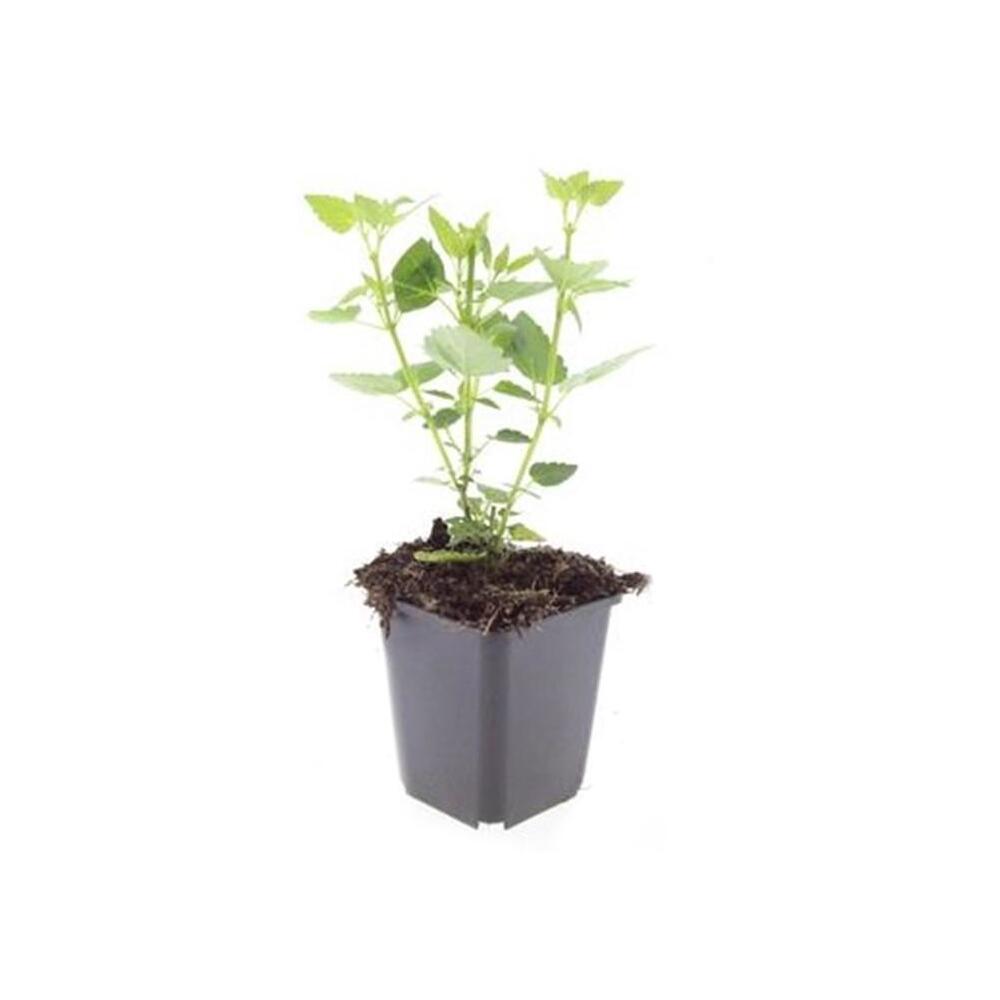
Blue Fortune looks tidy and upright even from a distance. When I approach, lavender-blue spikes resolve into many small individual flowers. Green leaves with toothed edges stand beneath them on branched shoots. The impression differs from a flat creeping perennial or a large yellow flower plate. I particularly like the clear shape among finer grass or other summer bed plants. Young plants in the offer are not yet a complete garden clump. Approximately 10–25 cm delivery height may later develop into a plant about 60–80 cm tall; specific development depends on position.
The fragrance lies mainly in the foliage
The German name Duftnessel suits its aromatic leaves. Gentle touching reveals the scent without harvesting the whole plant. I enjoy such small garden observations, especially if a path passes nearby. Blue Fortune is nevertheless presented here as an ornamental perennial, not a promised medicinal or food product. The shop says Agastache rugosa Blue Fortune; botanical listings often simply use Agastache Blue Fortune. For ordering, the specific cultivar name and selected article identity matter. Flower colour lies between lavender-blue and violet-blue and may look slightly different in changing daylight.
The planting spot matters more than a general winter promise
I give Blue Fortune sun and a spot where water does not stand permanently. I especially consider the soil’s winter condition already at planting. A bed that feels pleasant in summer may have very different conditions in a wet winter. A deep hollow or container without drainage therefore suits it poorly. The cultivar is perennial but may have a shorter life depending on conditions. I would not promise a fixed number of garden years. A suitable planting spot is the more sensible start. In spring, you can then observe at the base whether and how new growth begins.
A set quantity becomes a deliberately arranged group
With several plants, I first lay out the pots across the intended area. Around 50 cm from centre to centre is the shop guidance, about four plants per square metre. Even if the small pot initially looks lost, that spacing stays useful for the later clump. Moisten the root ball, plant at its previous height and water in. Frost-free spring planting gives the young group time to root. Later planting must suit weather and soil. I would not put a fresh planting into an unsuitable bed just before difficult wet conditions and simply rely on the word hardy.
Water remains its own task in a large terrace container
Developed Blue Fortune can also make an attractive terrace accent in a sufficiently large container. The image shows that later possibility, not an included large outer pot. Soil in the container is limited and dries faster than garden soil depending on sun and wind. I therefore check the root ball and water as needed, always allowing excess water to drain away. Even a plant with more modest later demands needs attention while establishing. A decorative saucer should not become a permanent water basin after rain. In winter, the container root ball is also more exposed to weather than in a larger bed.
Spent spikes and new shoots tell different stories
When individual flower spikes finish, I can remove them and make the planting look tidier. That needs no rigid cutting date, just a look at the plant. Foliage dies back at season’s end; Blue Fortune is not green all year. Firm dry stems may stay initially before I carefully cut them back in spring. Protect young shoot bases when doing so. Soft rotting parts differ from normal dry winter stems. I examine unusual changes more closely rather than immediately giving extra water or fertiliser. The yearly change belongs to the perennial and is not automatically a deficiency.
Retain cultivar type through healthy plant parts
To continue an older healthy Blue Fortune, you can divide it in spring or root suitable cuttings. The cultivar is sterile, so I would not rely on a dependable sowing of this Blue Fortune. For me this is also a reason to assess the planting from time to time: which plant has developed well in which position, and where would a new group be better? Healthy rooted portions receive a careful water start again after planting. An attractive garden planting comes from these small decisions, not a promise that every perennial will always look the same without observation.
One plant, several views
Good to know
Is Blue Fortune perennial?
Yes, it is deciduous and perennial. Lifespan depends on position; unfavourable wetness can shorten cultivation considerably.
When do flowers appear?
In summer to early autumn, approximately July–September in the offer. Weather and development influence the actual course.
How large does the clump grow?
The shop specifies about 60–80 cm for the developed plant. Young delivery height in the 9 cm pot is about 10–25 cm.
How far apart should I plant them?
About 50 cm between plant centres, approximately four plants per square metre as shop guidance.
Can I sow Blue Fortune?
The cultivar is sterile. Division or suitable cuttings retain cultivar type more reliably than an expected seed harvest.
Can it grow on the terrace?
A sufficiently large container in a sunny position with good drainage is possible. Water needs and winter conditions differ from the bed.
What matters especially in winter?
Avoid lasting wetness. Deciduous foliage dies back; observe the plant base and new growth in spring.
Sources and editorial note
- Exotenherz: five sets, delivery size, spacing and flowering time (01.10.2026)
- RHS: exact cultivar Blue Fortune, growth, lifespan and propagation (01.10.2026)
- RHS: Agastache, sun and garden drainage (01.10.2026)
Shop parent 1444320032025; 6/12/60 available, 20/40 inactive, all child identities checked directly. Trade name Agastache rugosa Blue Fortune retained, specialist name Agastache Blue Fortune; no unchecked origin or hybrid parent claims. Exact RHS cultivar and genus guide read: perennial sometimes short-lived, sterile, deciduous, full sun, moist but drained or drained soil, wet soil problematic; no guaranteed long lifespan. Shop height guidance 60–80 cm, spacing 50 cm. Only advertising-free original photo 2 public. Scene acceptance: upright spikes of small violet-blue lipped flowers, paired green toothed foliage and plausible later terrace container accepted against original.