
This plant at Exotenherz
Check the shop offer for current availability, price and what is included.
Check the selected shop offer for price, availability and delivery contents.
Your care table
| Topic | What to do | Why it helps |
|---|---|---|
| Light | Position sunny to bright partial shade. | Herb aroma and growth need a suitable place. |
| Soil | Use permeable herb compost. | Avoid wet hollows. |
| Water | Check young root ball and supply according to need. | New roots are not yet established. |
| Drainage | Keep drainage holes clear and covers empty. | Do not trap moisture. |
| Harvest | Cut individual tips cleanly. | Retain enough healthy foliage. |
| Fertiliser | During growth, dose according to herb label. | Account for pre-fertilisation. |
| Winter | Cultivate young pots protected and frost-free if needed. | Conditional hardiness is no position guarantee. |
| Observation | Look at new growth and base together in spring. | Dormancy is not automatically a loss. |
Check the compost and pot weight. The care table explains how far the compost may dry.
Water only when needed. The water should reach the root ball without spilling over the rim.
Remove surplus water from the saucer or cachepot. Then return the plant to a suitable position.
Aroma is already in the green foliage
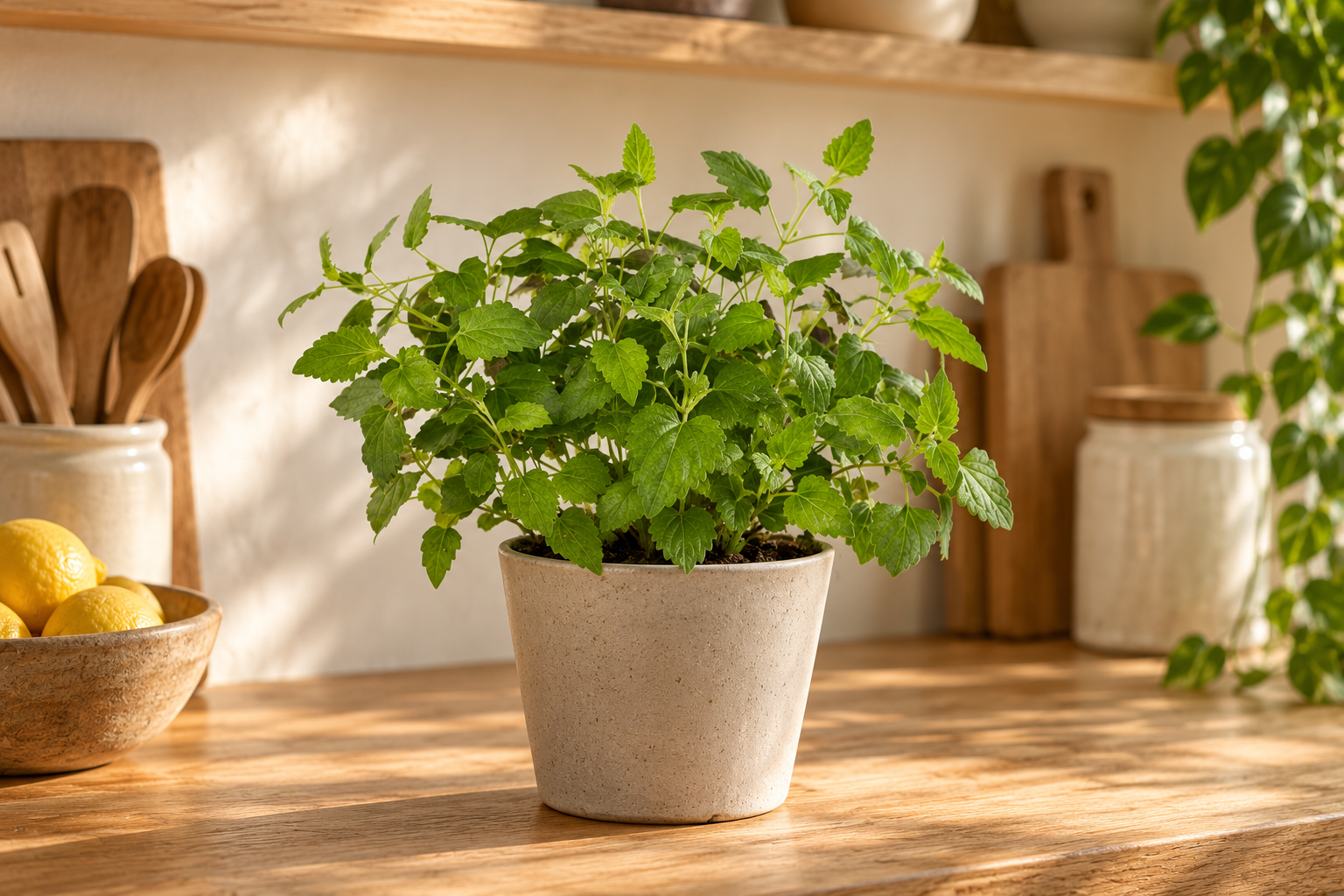
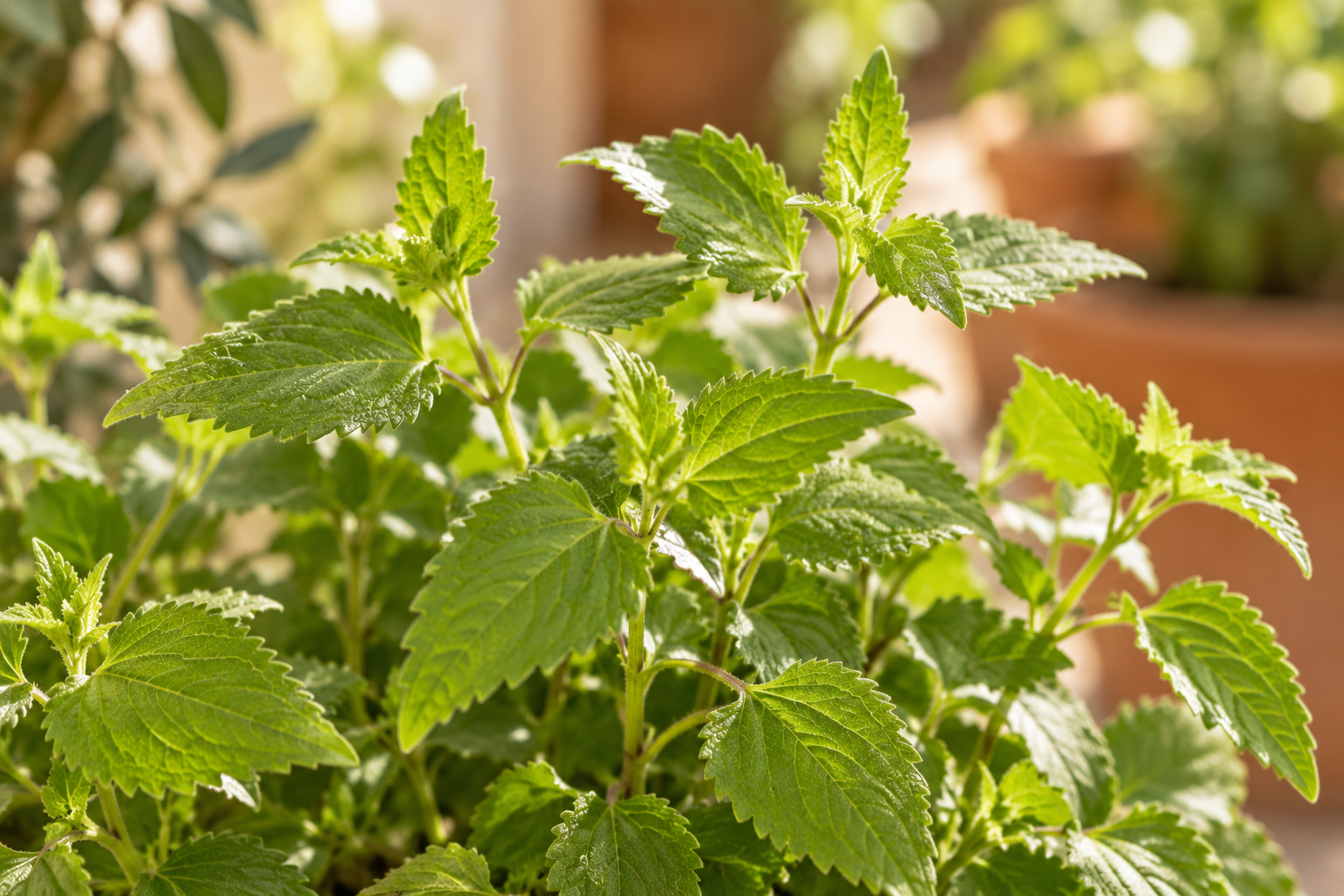
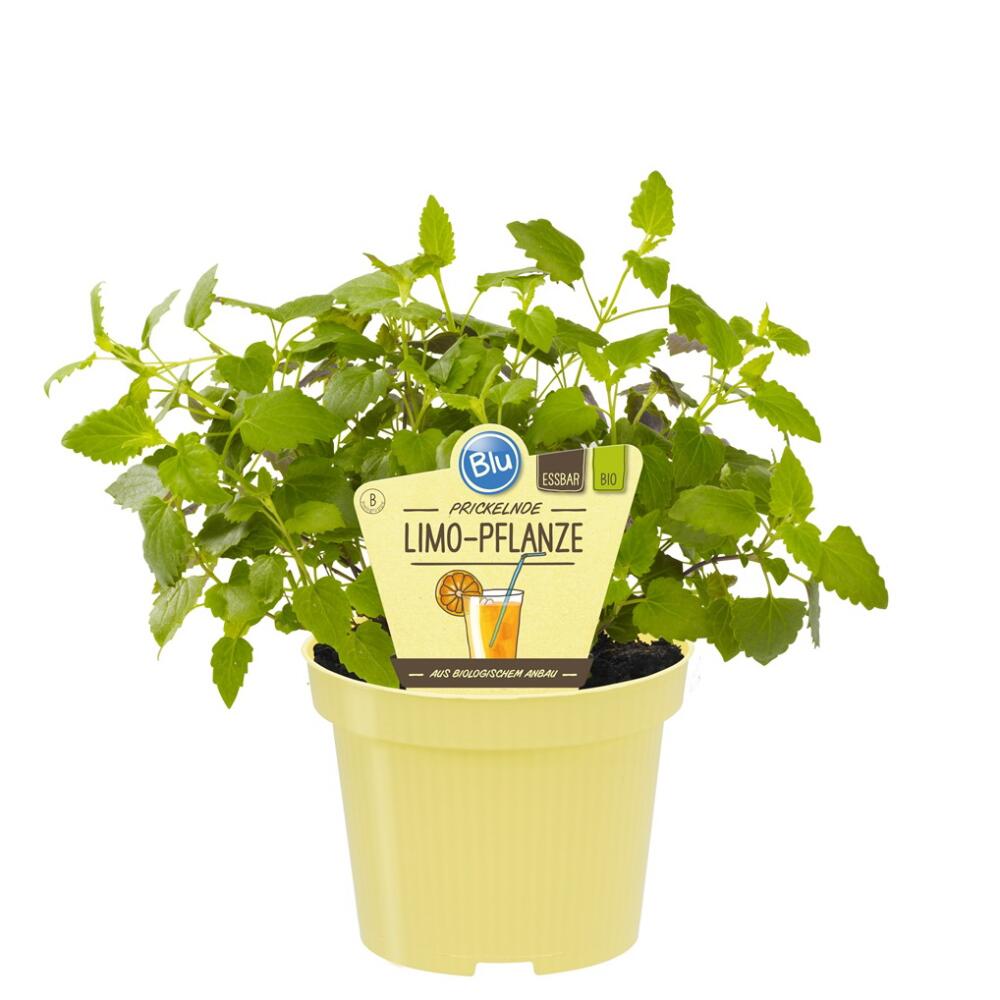
The lemonade plant needs no large flower show to stand out. Its green toothed leaves sit on upright shoots and give the small crown a lively structure. Gentle touching reveals a lemony, lightly anise-like scent note. The name Limokraut describes this culinary idea, not ready-made lemonade in the pot. Agastache mexicana is presented here as a specific herb. No additional variety name and therefore no fixed later flower colour are named in the offer. The original shows the green starting state.
A herb pot does not immediately become a large shrub
The shop states a 12 cm pot but no reliably defined delivery height. The producer’s forty to sixty centimetres describe possible further development. They do not become today’s shipping size. Position the young plant so its centre stays accessible. Beside small scissors and a free surface, it suits a bright herb area. A scene shows the spatial idea; containers, fruits and furnishings within it are not part of the plant offer.
Light and loose soil go together
Choose a sunny to brightly partly shaded position and permeable herb compost. Deep shade makes the upright well-branched form harder to retain. After protected cultivation, acclimatise gradually to outdoor light. Container drainage holes remain clear. Before planting in a bed, also observe soil moisture after rain. A repeatedly wet hollow does not automatically suit through more sun alone. Small plants should extend roots without soil remaining constantly short of air.
Young roots need reliable supply
Check root ball and pot weight in the young potted plant. Supply according to need, then allow excess water to drain. An established plant is not equivalent to a freshly planted herb pot. Particularly in the first warm days, a small root ball can dry quickly. If soil remains wet, no extra dose follows out of habit. Harvest individual shoot tips and retain enough healthy foliage. This keeps development visible and makes the next care decision easier.
Enjoy aroma without stripping the crown
Leaves can be used as a culinary flavouring. Wash a small harvest and try its taste sparingly at first in a suitable preparation. The article makes no health or effect promises. A clean cut above existing leaf pairs preserves young starting points rather than harvesting the little plant down to bare stems. With sufficient growth, feed moderately according to a suitable herb fertiliser label. A freshly repotted plant in pre-fertilised soil does not immediately need a full additional fertiliser dose.
Plan winter for the specific potted plant
The producer describes the lemonade plant as conditionally winter-hardy. This is no blanket frost guarantee for every location and small pot. A young container plant can continue bright and frost-free. In the garden, success and protection depend on position, drainage and rooting. Note in the plant book where it stood and how it started spring. An empty winter crown is assessed together with base and new growth. Persistent winter wetness is as undesirable as premature disposal after dormancy.
One plant, several views
Good to know
Is Limokraut a citrus plant?
No. This is Agastache mexicana with lemony-anise-like foliage aroma.
Is 40–60 cm the delivery height?
No. The producer states developmental size; specific delivery height is not given.
What flower colour do I get?
No named colour variety is supported here; the original shows a leafy plant.
Can it stay outdoors through every frost?
No. Conditional hardiness requires suitable position and protection; young pots are treated cautiously.
How do I harvest at the beginning?
Take individual tips and leave a substantial leafy remainder.
Sources and editorial note
- Exotenherz: offer and original images (03.10.2026)
- Blu – lemonade plant, aroma and conditional hardiness (03.10.2026)
- RHS – Agastache, genus characteristics and position (03.10.2026)
Shop offer, article number, GTIN, availability and original images checked directly on 02.10.2026; specialist acceptance 03.10.2026. Specialist sources read directly. SKU, pot reference, original photographs and orderability checked in shop on 03.10.2026. Delivery height and species development separated. Specialist sources actually read; six individual sections, eight care points and five FAQ editorially compared. Currently not orderable: knowledge portrait without purchase link or social sending approval. No tool, Wawi or server changes. Currently not orderable: knowledge portrait without purchase link; social drafts not approved for sending.