

This plant at Exotenherz
Check the shop offer for current availability, price and what is included.
Product details, availability and delivery information are provided in the shop offer.
Your care table
| Topic | What to do | Why it helps |
|---|---|---|
| Light | Keep very bright; increase direct sun behind glass or outdoors slowly after shipping. | Good light keeps the rosette compact and markings clear; sudden change can burn leaf surfaces. |
| Water | Water thoroughly during growth, then let growing medium dry clearly. | Fleshy leaves store water; agave poorly tolerates permanently wet roots. |
| Drainage | Use only containers with holes and remove water from decorative pot or saucer. | The small root ball otherwise stays moist for a long time. |
| Growing medium | Choose loose cactus compost with mineral components. | It lets air and water pass quickly through the root zone. |
| Repotting | Only with a tight root ball in spring, into a slightly larger pot; keep leaf bases clear. | Too much unrooted soil dries slower and increases rot risk. |
| Feeding | In bright growing conditions, give moderate suitably diluted liquid fertiliser. | The slow rosette needs no heavy continuous feeding. |
| Winter | Bring inside before frost, keep bright and growing medium almost dry. | Less light and cooler conditions clearly reduce water use. |
| Handling | Wear sturdy gloves when carrying and repotting, and grip the pot. | Toothed margins and pointed ends can injure skin. |
Check the compost and pot weight. The care table explains how far the compost may dry.
Water only when needed. The water should reach the root ball without spilling over the rim.
Remove surplus water from the saucer or cachepot. Then return the plant to a suitable position.
A rosette with four colour voices
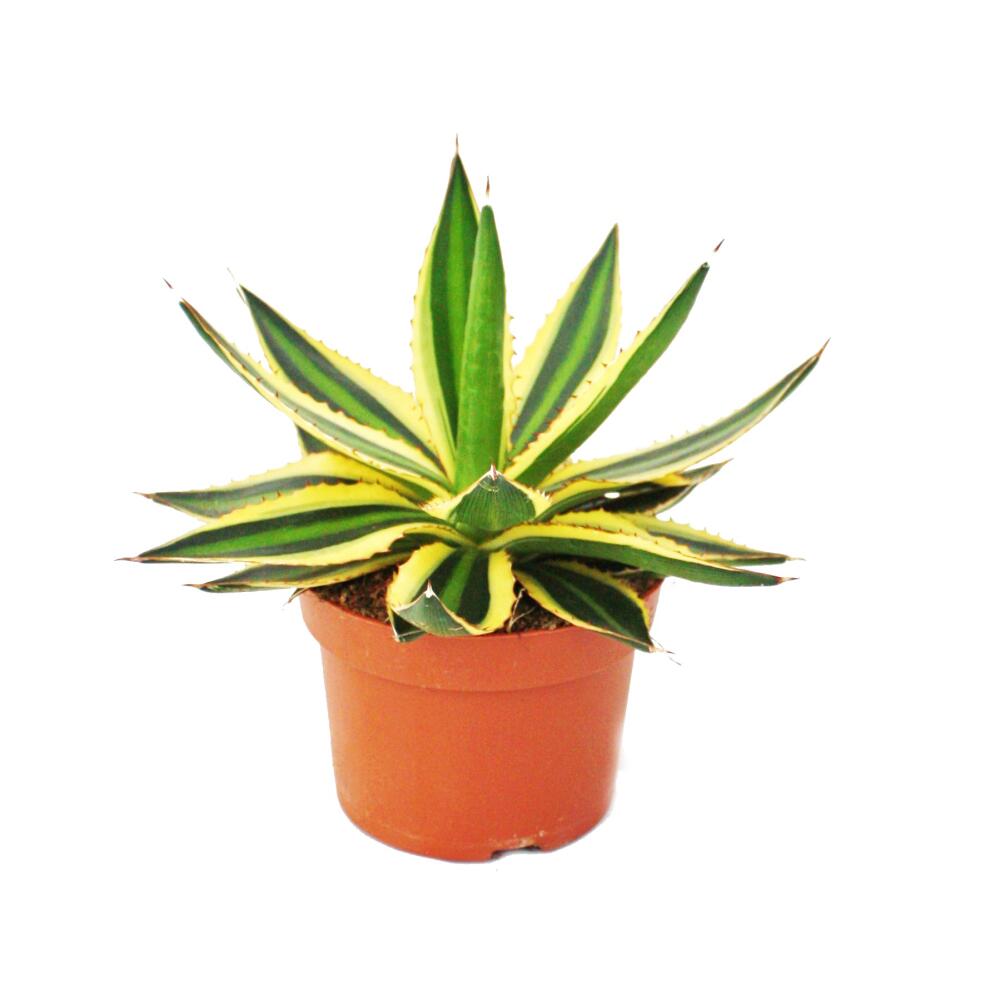
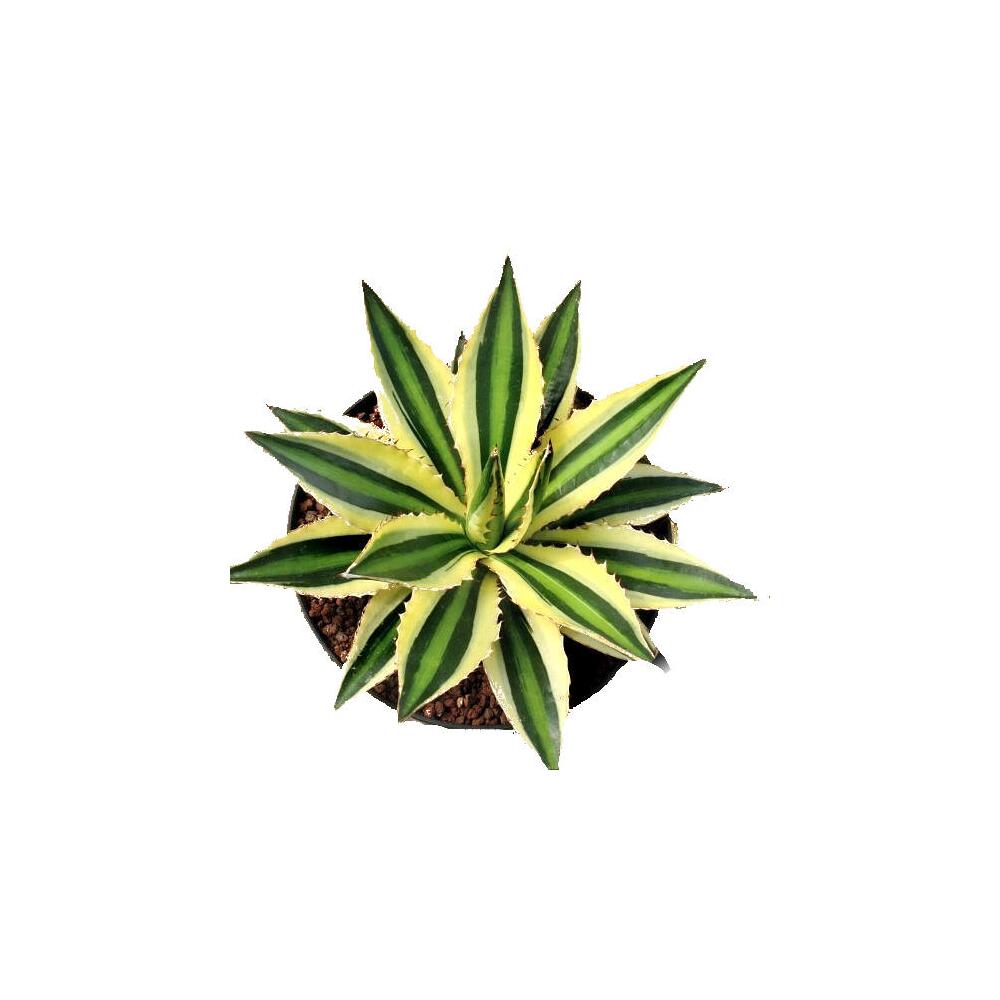
With this young agave I pause first at its leaves: a dark-green stripe runs through the centre, lighter green beside it, and a creamy-yellow edge glows. Fine teeth give the rosette a clear outline. Shop images show a single plant in a 12 cm pot, still around 15 to 20 cm tall. The broad effect in the terrace image is a possible scene, not a promise of an already mature plant. We grip the pot when moving it, since even a small rosette has defensive leaf tips.
Two names, the same striped variety
In the shop we find it as Agave lophantha ‘Quadricolor’. The Royal Horticultural Society lists the striped variety under Agave univittata ‘Quadricolor’ and names lophantha as a synonym. What matters most is the recognisable variety: green-yellow leaves with toothed margins distinguish it from a plain agave. I retain the familiar shop name in the offer and explain the other specialist name so you can understand care under both. It is a perennial succulent that slowly expands its rosette; a delivery plant needs time.
Plenty of light, but a gentle start
The agave wants a very bright place. A bright conservatory or sheltered terrace in warm weather suits well. Immediately after shipping, however, I do not place it straight in the strongest midday sun. Leaves that had less light in a greenhouse or delivery box must acclimatise to intense radiation again. Increase sunny hours gradually and watch pale or dry patches. Deep indoors the rosette becomes less compact over time while its pot dries more slowly. Light markings look particularly attractive when light also reaches lower leaves.
The root ball decides when to water
No weekday makes a good watering schedule here. Check the pot with a finger or by weight: only once growing medium has clearly dried do we water thoroughly. Excess exits below and is removed from the decorative pot. During bright growing phases the plant uses more water than in a dark winter week. That explains why the same pot sometimes dries faster, sometimes slower. Check brown dry tips with position and roots; a soft base in wet medium is a reason to inspect drainage immediately, not water again.
A pot where roots can breathe
The offered agave need not move from its nursery pot immediately. As long as water drains well and the root ball looks healthy, let it settle. Later use a pot with a hole and loose cactus compost mixed with mineral material. The new pot should be only a small step larger. Do not plant the rosette deeper, keeping leaf bases out of moist medium. A touch of nutrients during growth suffices; strong feeding cannot replace missing light. If offsets eventually form, separate cautiously only once they have enough roots of their own.
Restraint is care in winter
Before the first cold nights, move the potted agave to a bright frost-free place. Water far less often and let soil become almost dry. Growth slows or pauses; wet soil during rest particularly burdens roots. I occasionally look into leaf axils and bases rather than moving the rosette constantly. Dead dry outer leaves can later be carefully removed; healthy ones stay. In spring gradually provide more light and water again. The plant’s rhythm remains more important than any calendar.
One plant, several views
Good to know
Is this agave hardy in the garden?
For the young shop plant, a bright frost-free winter place is the safe choice. A blanket outdoor promise would be unreliable because of wetness, position and regional frost spells.
How often should I water in summer?
Check the root ball before each watering. During bright growth, water thoroughly after clear drying and drain completely; a fixed weekly rhythm does not fit.
Why is the rosette losing its strong markings?
Too little light may change shape and markings. Choose a brighter place but gradually introduce direct sun.
Must I repot after purchase?
No, if the nursery pot drains and roots are healthy. Only with a tight root ball move to a slightly larger container with free-draining medium.
What does Agave univittata ‘Quadricolor’ mean?
That is how the RHS lists this striped variety. Agave lophantha ‘Quadricolor’ is noted there as a synonym; the shop uses the familiar lophantha name.
Sources and editorial note
- Exotenherz: offer and original images (accessed 30 September 2026)
- RHS: Agave univittata ‘Quadricolor’, synonym and culture (accessed 30 September 2026)
- Kew: Agave lophantha, taxonomy (accessed 30 September 2026)
Shop checked with low stock on 30 September 2026; SKU 17122012286, GTIN 4019515901401, 12 cm pot and 15–20 cm from description. Shop spelling varies between lophanta/lophantha. RHS lists the variety as Agave univittata ‘Quadricolor’ and names Agave lophantha ‘Quadricolor’ as synonym; Kew lists Agave lophantha as accepted. Shop naming is therefore retained in the main name and differing specialist terminology explained. Image checked against four clean original views. RHS culture guidance applies to the variety; frost hardiness is not universally promised.