This plant at Exotenherz
Check the shop offer for current availability, price and what is included.
Product and delivery details are given in the individual offer.
Your care table
| Topic | What to do | Why it helps |
|---|---|---|
| Position | Choose a bright, open indoor place with a free leaf crown. | This strongly pale plant does not belong in a permanently dark corner. |
| Sun | Protect freshly unpacked foliage from intense direct sun. | Leaf colour alone does not make a plant sun-resistant. |
| Water | Let upper soil dry slightly, then water after checking the root ball. | Avoid repeated drying out and constant waterlogging. |
| Drainage | Remove excess from the outer pot after watering. | A white outer pot is no water store for roots. |
| Warmth | Avoid cold at the crown and pot base, and cold draughts. | Chinese evergreens are sensitive to chilling. |
| Nutrients | Supply sparingly according to the label during active growth. | More fertiliser does not make white whiter. |
| Pot | When the ball is well rooted, place in only a little more loose soil. | A large unused soil reserve makes moisture control harder. |
| Leaves | Remove dust gently and document new changes. | The pale surface makes small injuries easy to see. |
Check the compost and pot weight. The care table explains how far the compost may dry.
Water only when needed. The water should reach the root ball without spilling over the rim.
Remove surplus water from the saucer or cachepot. Then return the plant to a suitable position.
A green frame around almost white surfaces
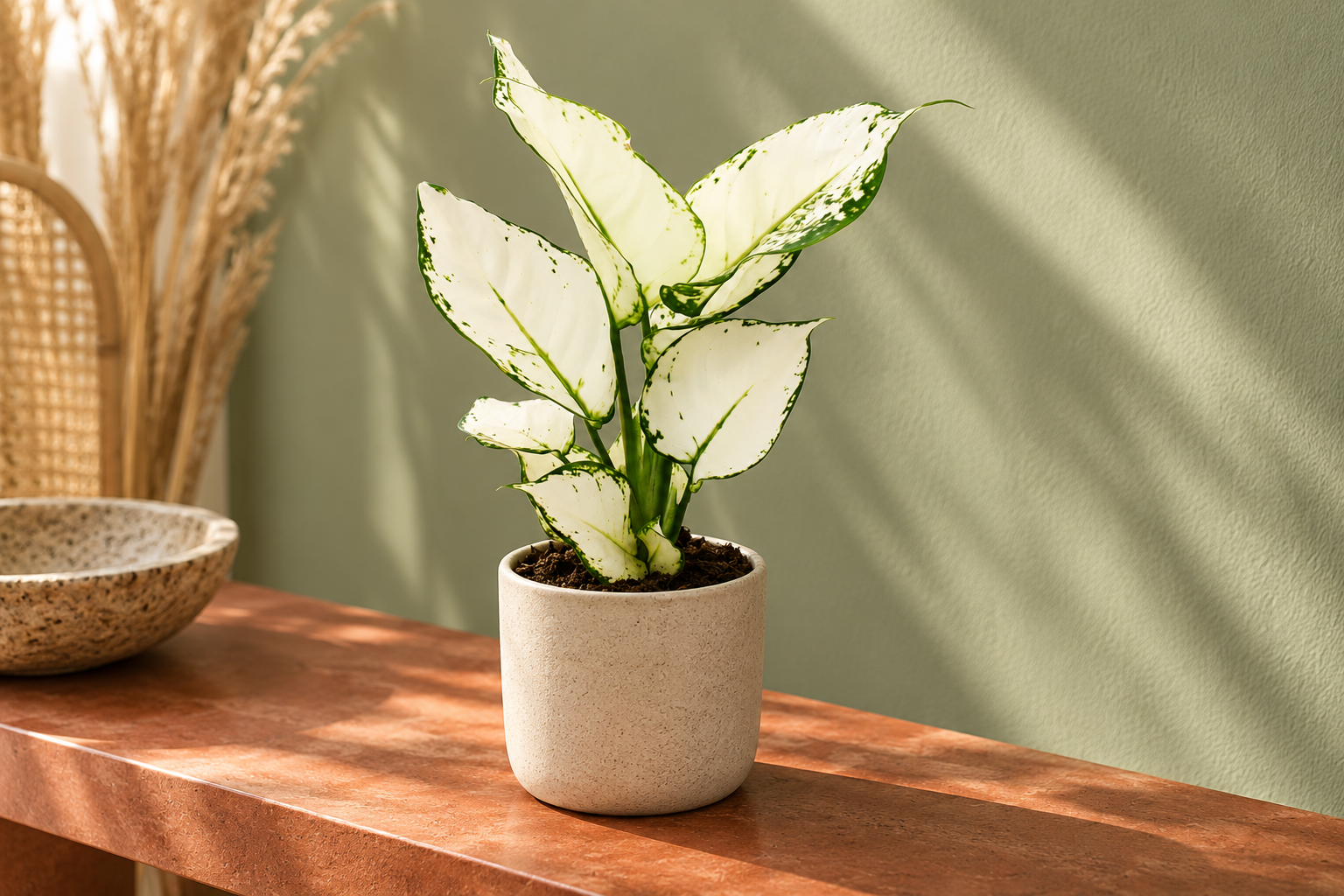
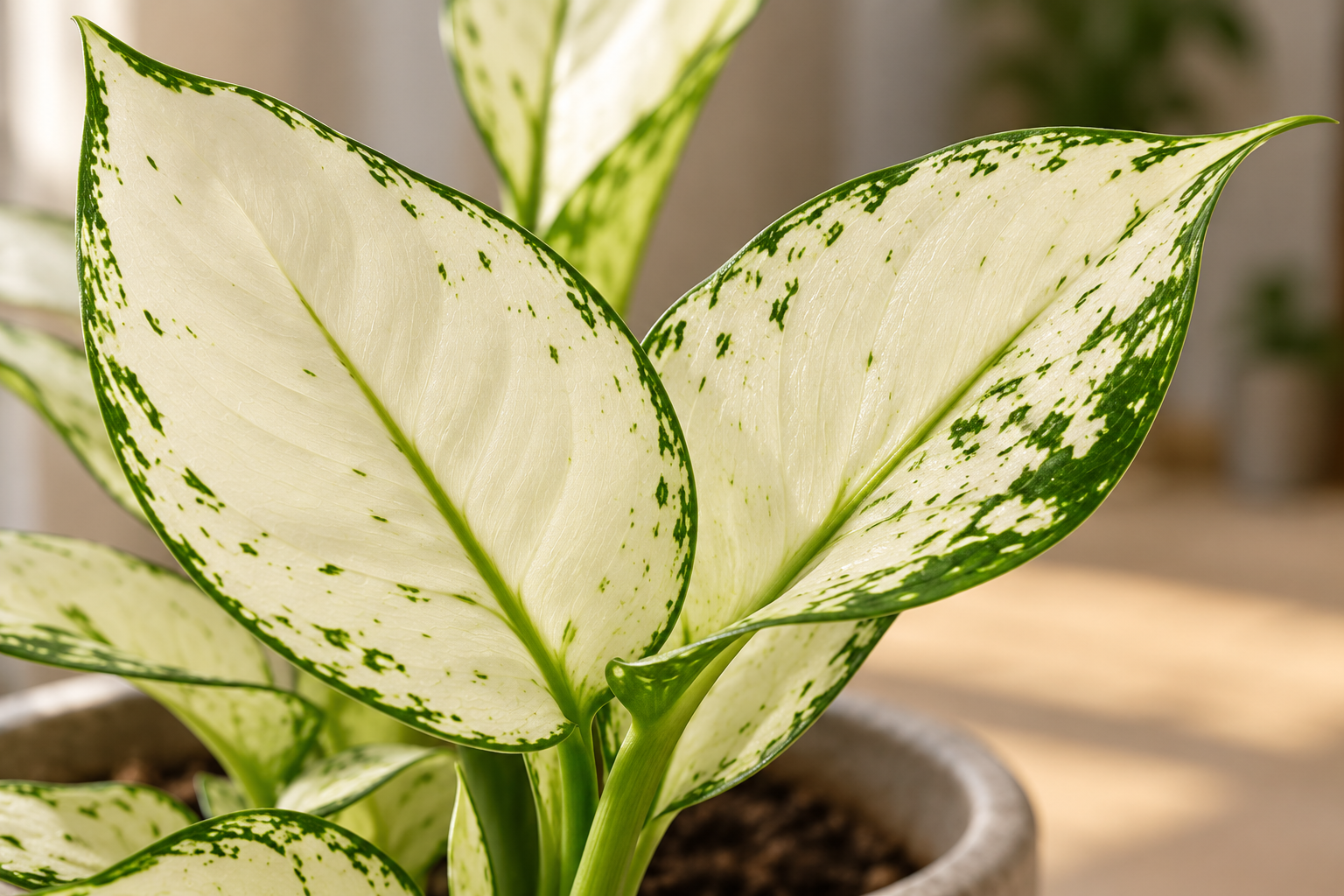
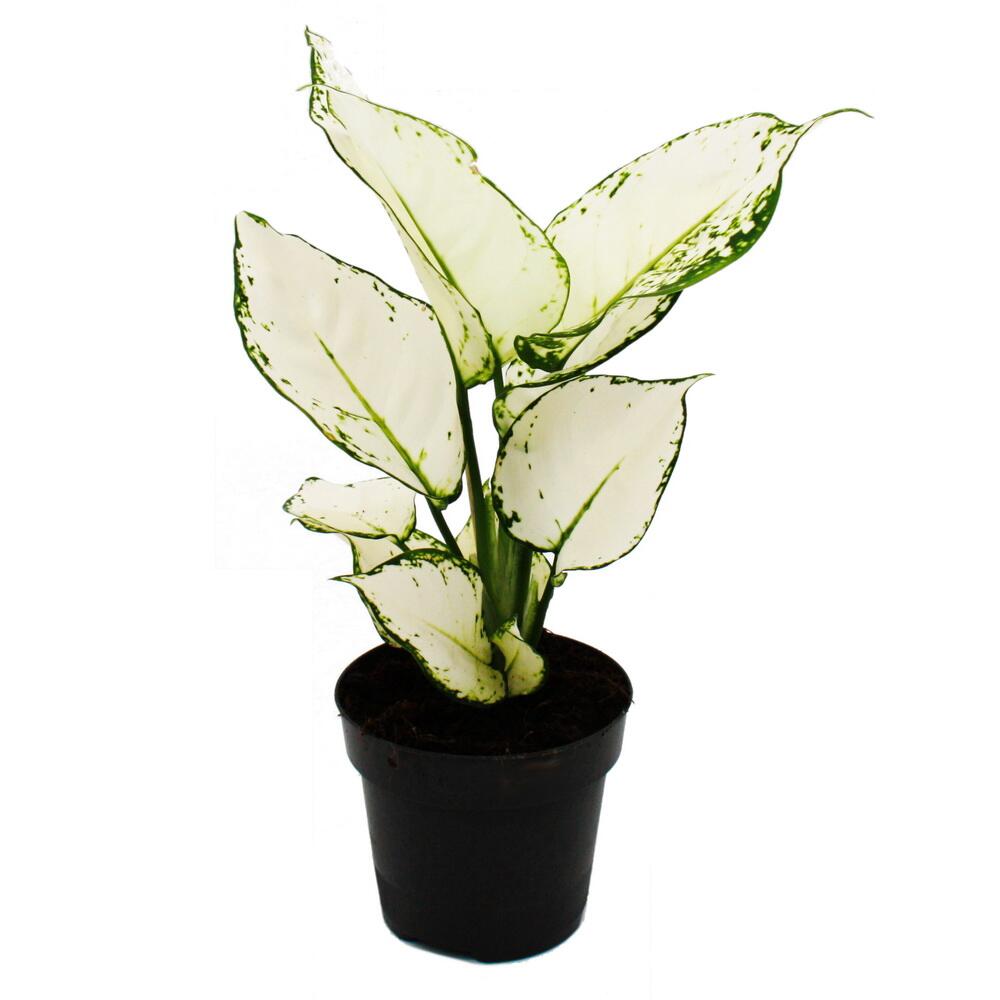
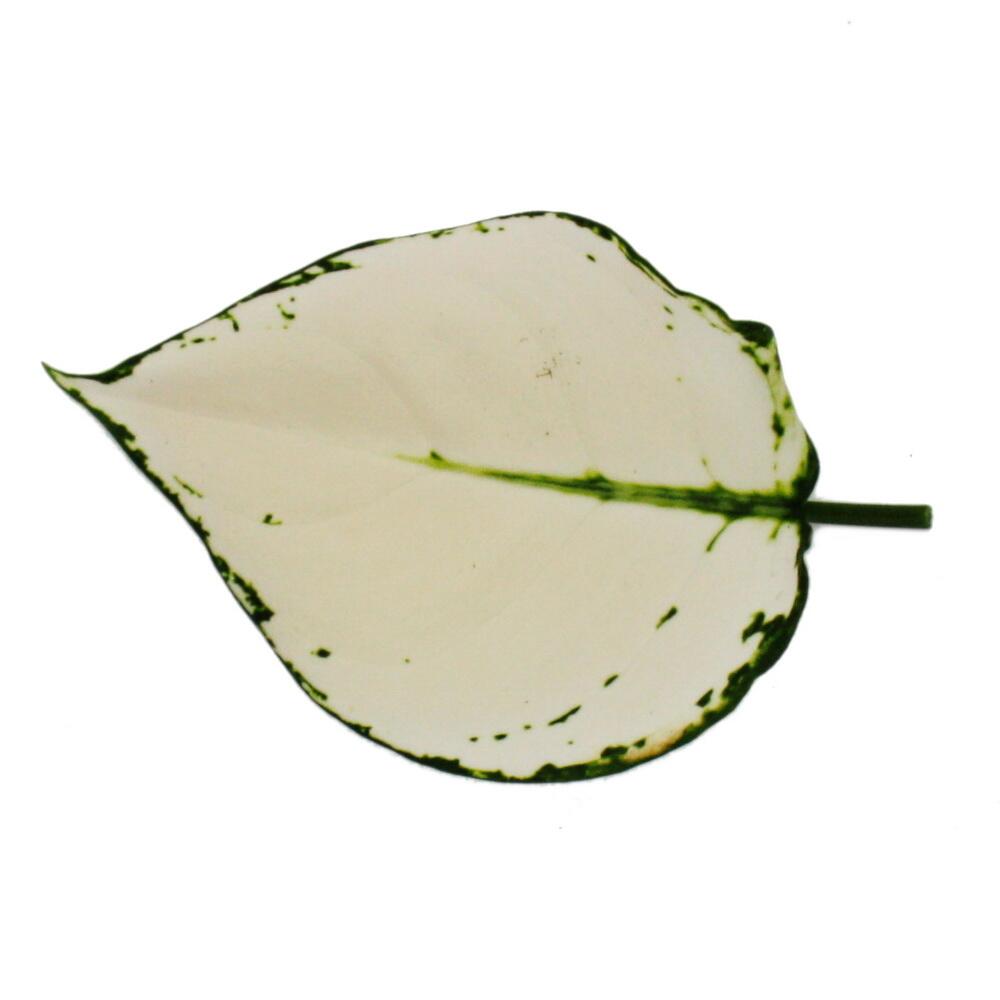
White Joy stands out through broad pale leaf surfaces. In the original photograph a narrow green frame remains at the edges; fine veins and occasional speckles provide further contrast. The leaves taper to a point and sit on green to pale stalks. A quiet, darker setting shows these markings well as long as the position itself receives enough daylight. The Chinese evergreen is named White Joy in the offer. Its white is part of living leaf markings. It needs no artificial coating and will not repeat precisely to the millimetre on future leaves.
The pale young plant on an accessible shelf
The exact offer states a 12 cm pot diameter and approximately 25 to 30 cm total height including the pot. This size initially fits a small console. Still leave space at the sides for new leaves and later basal shoots. Choose a stable outer pot from which the growing pot can be lifted and checked. Inspect soil and existing leaves after shipping before watering or repotting. The living scene shows only a possible arrangement. Furnishings and outer container are not automatically part of the delivered plant, and an exactly identical leaf number is not promised.
A bright position is no invitation to hot sun
White Joy needs useful light at its leaf crown. An open bright shelf suits it better than a deep dark compartment. Pale areas should not receive intense direct midday sun, particularly immediately after shipping. Observe the position throughout the day even when it looks pleasant in the morning. Plants and curtains can change and create different sun exposure later. Even warmth remains important. Do not allow a cold air current over the crown when ventilating, and avoid a cold stone surface beneath the pot.
White does not replace checking beneath the foliage
Feel upper soil gently and lift the growing pot before watering. When it dries a little and the root ball needs water, supply slowly and evenly. Let it drain afterwards and empty the outer pot. Do not rely only on leaves still looking beautifully pale. A wet root space can develop unseen while foliage initially remains unchanged. With limp leaves, first distinguish the ball: dry and light or wet and heavy. This simple observation helps more than a fixed weekly watering appointment.
Grow bigger in suitable small steps
New leaves change the plant slowly. As long as existing roots have enough space, immediate repotting is unnecessary. With a well-rooted ball and active growth, give only a little extra room. Loose humus-rich houseplant soil and reliable drainage holes are a sensible basis. Do not bury stalk bases more deeply. Dose extra nutrients according to the label and account for existing fertiliser in the soil. More fertiliser produces no purer white. Care aims at healthy roots and well-developed new leaves, not a forced particular colour pattern.
Small marks appear sooner on pale surfaces
Dust or dried water traces are clearly visible on pale leaves. Wipe a supported surface carefully with a soft, slightly damp cloth rather than rubbing firmly or applying shine products. Brown areas do not turn white again. Whether the next growth looks healthy matters more. Check undersides and stalk bases for small scales, cottony deposits and fine webbing. With sudden new patches, also consider cold, direct sun and root-ball moisture. A photo of the same leaf side helps distinguish change from a mark already present at unpacking.
Maintain the settled indoor place through the seasons
White Joy remains warm and frost-free as a perennial houseplant. In lower-light winter, observe water use anew and adapt nutrient applications to reduced growth. Do not force a deliberate completely dry resting period. Direct heating currents and cold surfaces fit poorly with even cultivation. A spadix with spathe may appear later; the offer promises no flowering delivery. Do not eat foliage or possible fruits. Protect eyes and mouth from sap and remove cut material safely. Choose an inaccessible bright position for children or pets that nibble.
One plant, several views
Good to know
Is White Joy artificially coloured?
No. Cream-white surfaces and green edges belong to the leaf markings.
Why do brown areas appear on white foliage?
Cold, unsuitable sun exposure, water balance or other damage may be involved. Check leaf and position together; brown areas do not become white again.
Can more fertiliser make it whiter?
No. Nutrient supply follows growth and the product label, not a desired stronger colour.
May it stand on a dark console?
The position must offer enough daylight at the crown. A dark background colour can be attractive; that does not mean a low-light position.
Will I get exactly the photographed markings?
No. Leaf number and pattern distribution may vary naturally. The original shows the plant form.
Must I water more because winter growth is slow?
Not automatically. Check soil first; with lower brightness the ball often stays moist longer.
Sources and editorial note
- Exotenherz: offer and original images (02/10/2026)
- NC State Extension – Aglaonema: classification, foliage and care (02/10/2026)
- University of Florida IFAS – Aglaonema indoors, warmth and cultivation problems (02/10/2026)
- RHS – houseplants: pot, position and ongoing care (02/10/2026)
Shop offer, article number, GTIN, availability and originals checked directly on 02/10/2026; specialist acceptance on 03/10/2026. Specialist sources read directly. Exact offer and both original views read directly on 03/10/2026. Shop cultivar name White Joy retained, no unsupported species or hybrid ancestry added. Original leaf shape and colour distribution assessed individually. Genus care read directly at NC State and IFAS; general pot practice compared with RHS. Shop air-purification advertising not included. The 25–30 cm are total delivery height, not cultivar final height. Acceptance with aglaonema-guide and aglaonema-lucky-red-guide.