
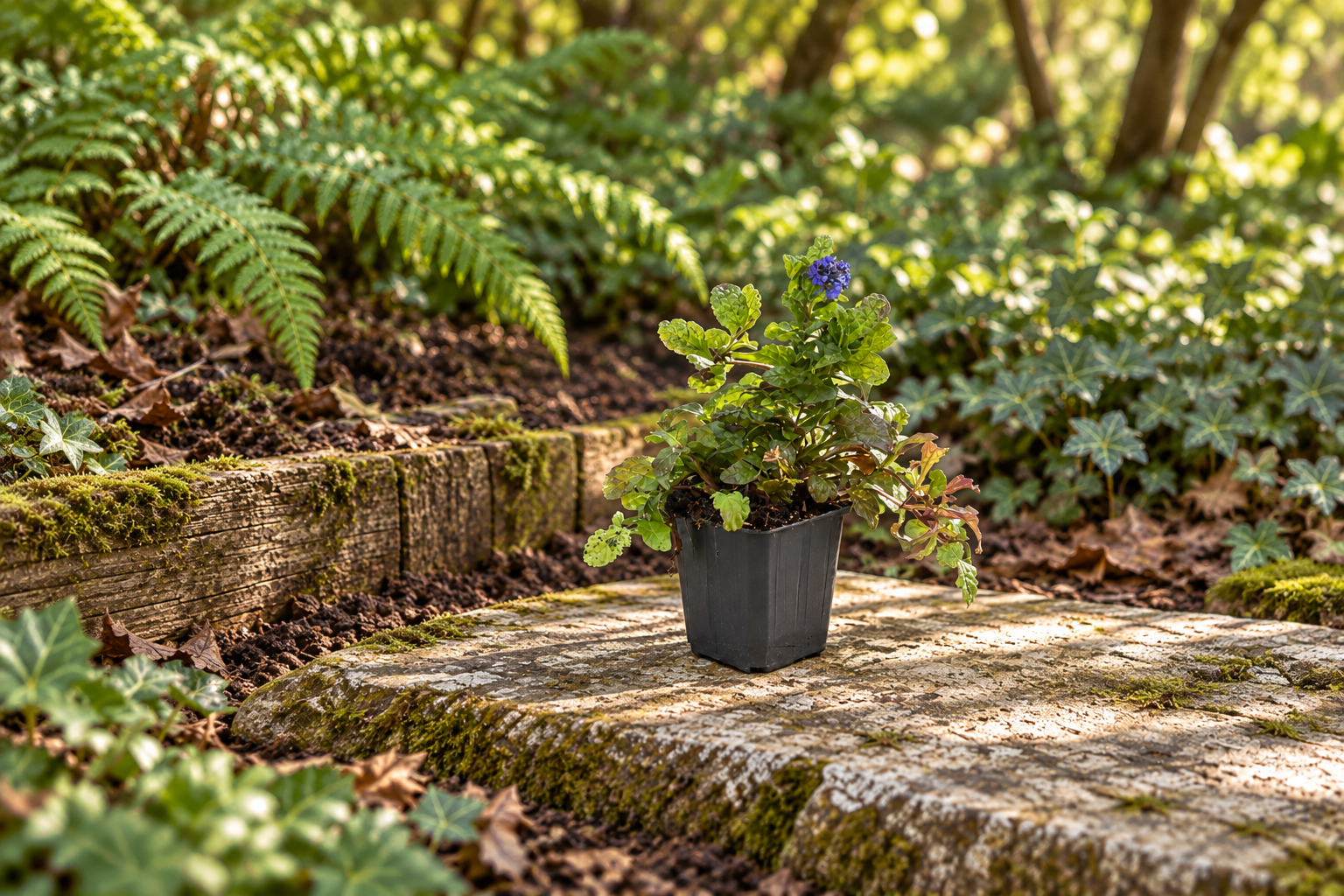
This plant at Exotenherz
Check the shop offer for current availability, price and what is included.
Check the shop for the current price, availability and offer contents.
Your care table
| Topic | What to do | Why it helps |
|---|---|---|
| Position | Choose light partial shade with sufficient soil moisture. | Low leaves are easier to supply evenly in a cool garden position. |
| Planting | Set the moist root ball at its previous level and water in carefully. | Good soil contact helps small roots grow into surrounding soil. |
| Water | During establishment check root ball and adjacent soil; water thoroughly when dry. | A shower does not always reach a root ball beneath trees. |
| Soil | Use moist humus-rich soil; loosen compaction before planting. | Bugle needs water, but a young potted plant should not sit in a closed wet hollow. |
| Nutrients | Work in a little mature compost in spring if needed; avoid heavy feeding. | Low groundcover needs no lavish supply like a hungry container plant. |
| Runners | Watch border edges and lift excess rooted rosettes selectively. | Coverage keeps its shape without constant shearing of the whole planting. |
| Rejuvenation | Renew older gaps with strong young edge rosettes. | New pieces close bare patches better than feeding an old centre. |
| Winter | Leave in borders; protect container roots from freezing through and drying. | A small pot responds to frost and wind faster than rooted garden soil. |
Check the compost and pot weight. The care table explains how far the compost may dry.
Water only when needed. The water should reach the root ball without spilling over the rim.
Remove surplus water from the saucer or cachepot. Then return the plant to a suitable position.
Blue above a low leaf carpet
With creeping bugle, looking down is worthwhile. Slightly glossy spoon-shaped leaves lie in low rosettes from which upright blue spikes rise at flowering. Ajuga reptans is offered as a species; a particular leaf-colour cultivar is not promised. In the garden this groundcover connects gaps rather than acting as a tall specimen perennial. The shift between flat leaves and short flower spikes is particularly enjoyable along a path where small details are visible.
One young plant begins the area
The shop offer describes a 9 cm pot and about 10–25 cm total height including the pot. Planting does not immediately create a finished carpet. First place bugle at the planned spots and consider distances together with its neighbours. The stated 25–30 cm is a starting distance for area coverage, not a permanent spreading limit. Allow a small fern or freshly planted perennial some room. Runners can gradually explore the free soil later.
Really check moisture beneath trees
A partly shaded position suits it provided soil does not regularly dry out. Beneath trees in particular, shade may still be dry: canopies block rain and existing roots drink too. Dig a small sample before planting and check soil below the surface. Loosen without unnecessarily damaging larger woody roots, adding humus-rich material if needed. A bright position with morning light is easier to manage than a hot edge beside heated paving. After a dry day, actual moisture matters, not compass direction alone.
Plant without burying the root ball
Spring or early autumn often provide favourable conditions if soil is frost-free and workable. Slowly water a dry pot root ball before removing it until evenly moist. Keep the top level with surrounding soil and do not heap earth over the rosette centre. Firm carefully and water in. Check directly at the root ball over subsequent weeks. Many roots still occupy it while surrounding soil may have different moisture. In hot weather choose a cooler planting time or follow especially attentively.
A border and planter need different attention
Humus-rich garden soil helps balance moisture between watering. A planter keeps root space restricted. Use a sufficiently large container with open drainage and inspect it after rain too. Water slowly onto compost until roots are supplied; remove water collecting in the saucer. A rigid weekly rule suits neither situation well. For nutrients, first assess existing soil and compost supply. More fertiliser does not compensate for a dry root ball.
Guide runners and renew gaps
Creeping bugle’s name describes its movement through the border well. New rosettes develop along runners and may root in suitable places. Check the path edge and proximity to small neighbours. Carefully lift excess rooted pieces and plant them elsewhere. Where an older carpet’s centre becomes gappy, vigorous young edge pieces offer a good fresh start. Do not cut all foliage down as a precaution: removing damaged parts and targeted tidying often suffice.
Watch fresh rosettes through the year
The perennial remains a garden resident. A pot, however, needs more winter root protection than the same plant in a border. Shelter the container and check on frost-free days whether compost is too dry. In spring remove loose dead leaves carefully without pulling young rosettes along. A whitish coating or weak foliage calls for closer examination. Check moisture, crowding and position instead of heavily feeding and watering more simultaneously. Healthy new growth shows suitability better than a single old leaf.
One plant, several views
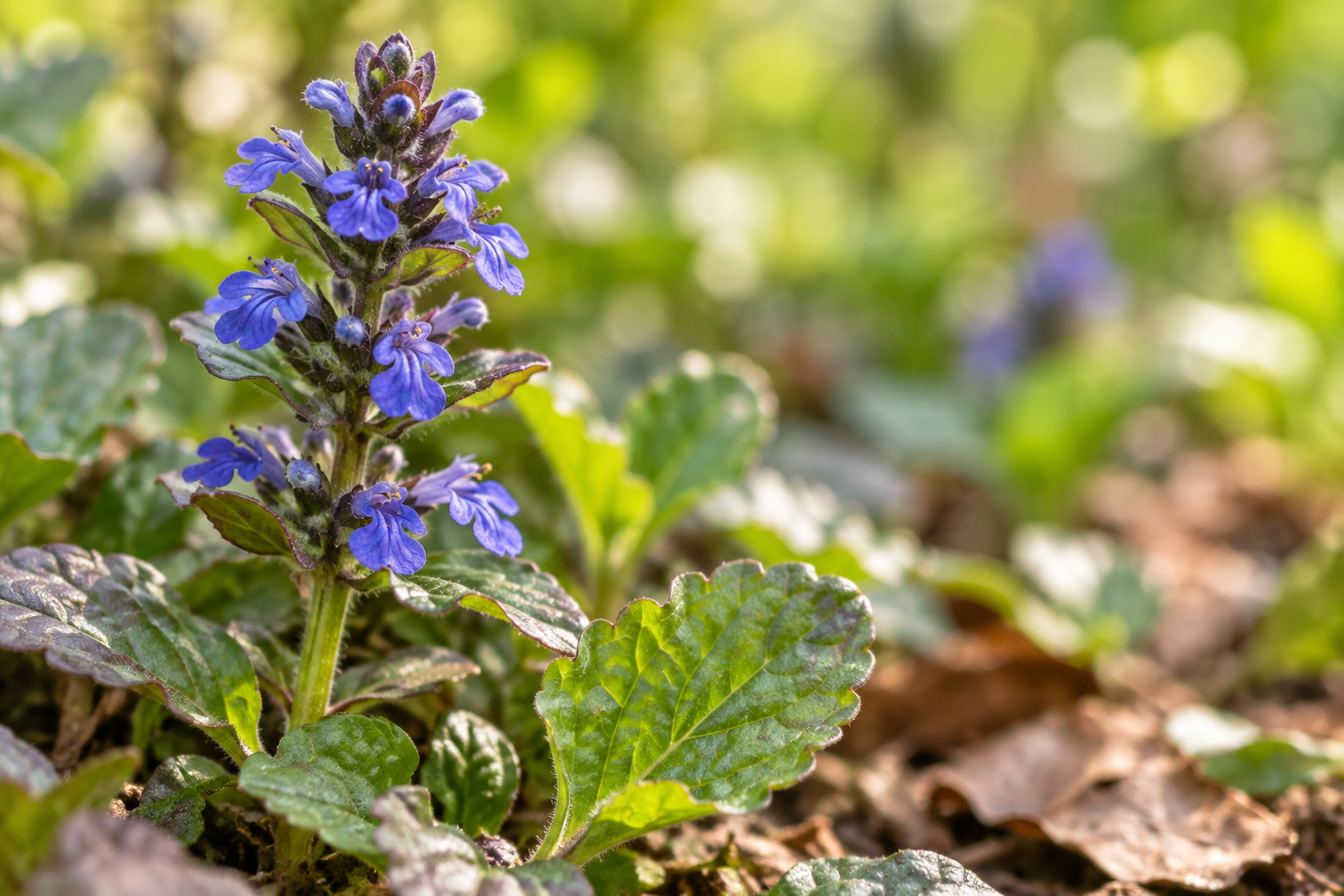
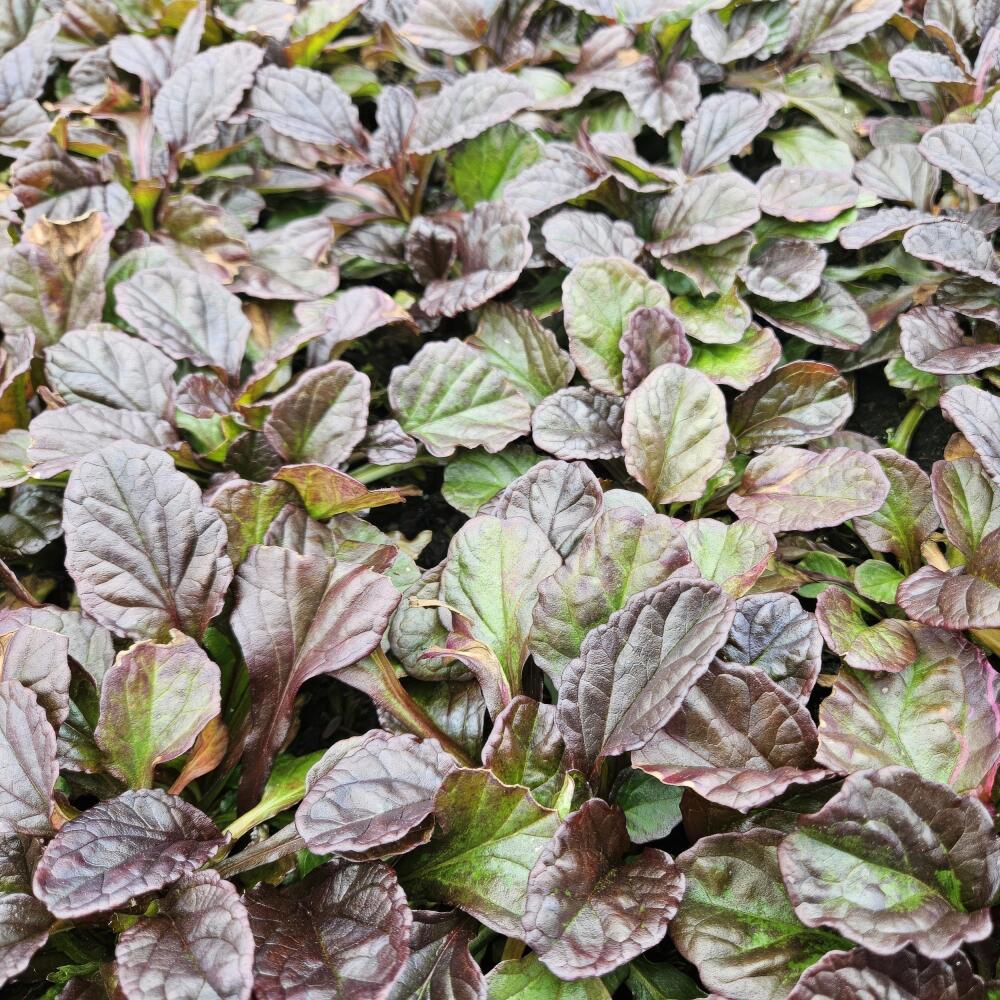
Good to know
How tall is creeping bugle?
The species forms a low leaf carpet about 15 cm tall. Flower spikes rise above; delivery height including the pot is a different measurement.
Is 25–30 cm spacing enough?
That is shop guidance for starting area coverage. Later it spreads with runners and edges may need guiding.
Can it grow beneath a tree?
Yes, if enough moisture is present. Even shaded soil beneath a canopy can be very dry.
Must I cut it all back after flowering?
Complete cutting is normally unnecessary. Individual old spikes or damaged leaves may be removed.
When should I plant?
In frost-free workable soil, preferably spring or early autumn. Strong heat demands more support for young plants.
How can I propagate existing coverage?
Carefully separate vigorous rooted edge rosettes and replant. Keep the new root ball moist afterwards.
Sources and editorial note
- Exotenherz: offer and original photographs (03/10/2026)
- RHS: Ajuga reptans — species and cultivation (03/10/2026)
- RHS: bugle in the garden (03/10/2026)
- Exotenherz: checked child offer of 6 (03/10/2026)
- Exotenherz: checked child offer of 12 (03/10/2026)
- Exotenherz: checked child offer of 20 (03/10/2026)
- Exotenherz: checked child offer of 40 (03/10/2026)
- Exotenherz: checked child offer of 60 (03/10/2026)
Shop offer, article number, availability and original images checked directly on 03/10/2026. Specialist sources read directly. Species offer, no cultivar assignment from leaf colour. Planting and container-check advice is editorial application of supported moisture needs. Winter without a blanket temperature promise. Clean final shop view to be visually checked separately. All five child offers freshly read individually with SKU, GTIN where available, and availability; orderable quantities: 6, 12. Scene shows one plant; quantity follows selected set.