

This plant at Exotenherz
Check the shop offer for current availability, price and what is included.
Product and delivery details are given in the individual offer.
Your care table
| Topic | What to do | Why it helps |
|---|---|---|
| Light | Choose a sunny place not hidden by tall neighbours. | Small blue heads should remain visible above the leaf zone. |
| Planting | Plant in autumn when soil is unfrozen. | The root base develops before the next flowering. |
| Depth | About 10–15 cm as a species guide; check the actual bulb and package instructions. | Very small commercial bulbs and larger specimens are planted appropriately. |
| Spacing | Plan about 10–15 cm in loose small groups. | Forty bulbs need not form one dense row. |
| Water | Water thoroughly only when needed during growth. | The underground root area needs moisture and air. |
| Nutrients | Account for garden soil and feed moderately only as needed. | High fertiliser inputs replace neither light nor drainage. |
| Foliage | Let it mature and remove only dead remains. | Leaves may decline earlier than flower stems. |
| Winter | Maintain border drainage; give containers extra protection. | Limited pot space is more exposed to cold and wetness. |
For young plants, feel the soil directly at the root ball. The surface and deeper soil may have different moisture levels.
Water thoroughly after planting; later, water according to the soil, weather and establishment rather than a fixed calendar.
Avoid standing water. For plants in containers, also check that water runs out of the drainage hole.
Blue works here in small dots
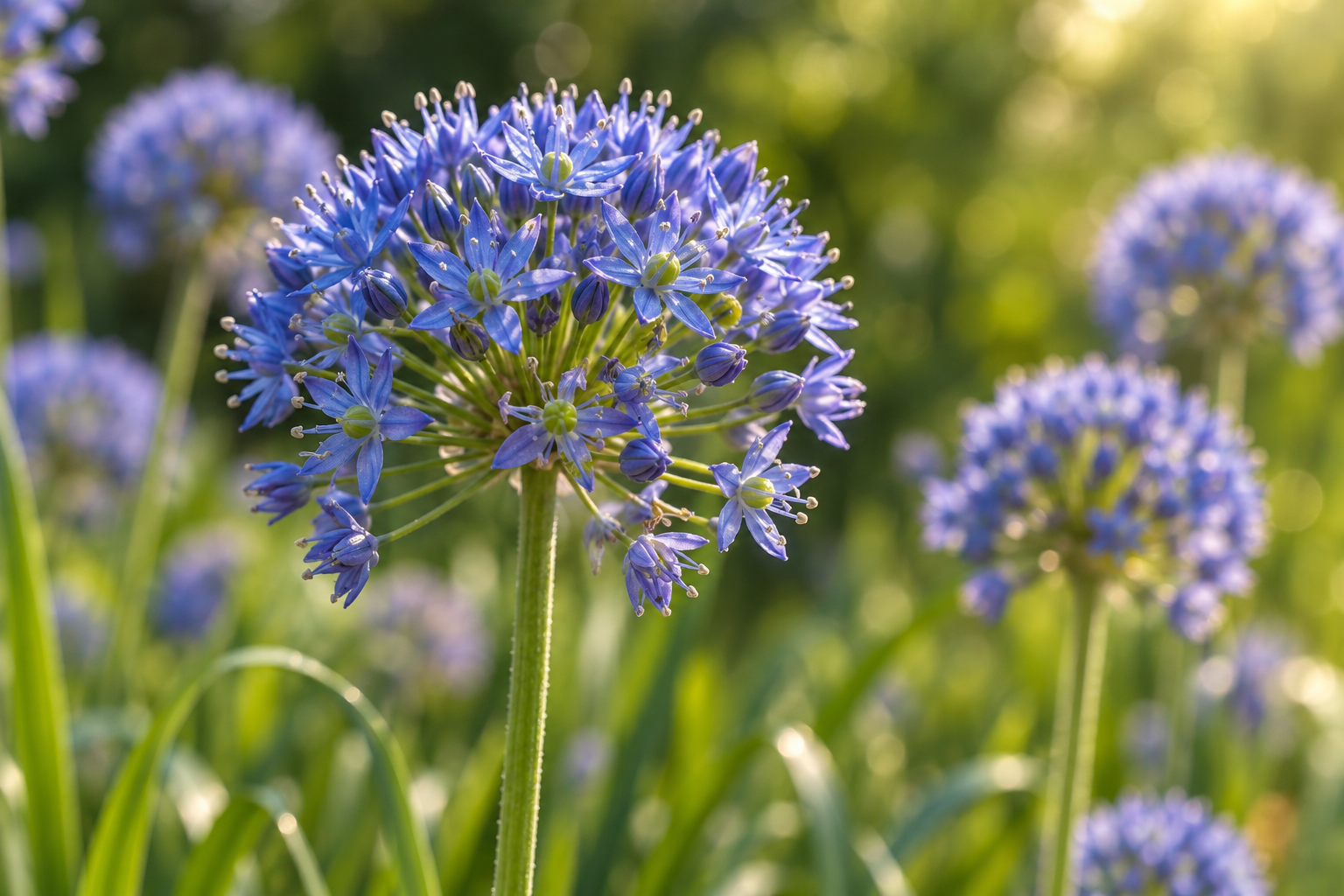
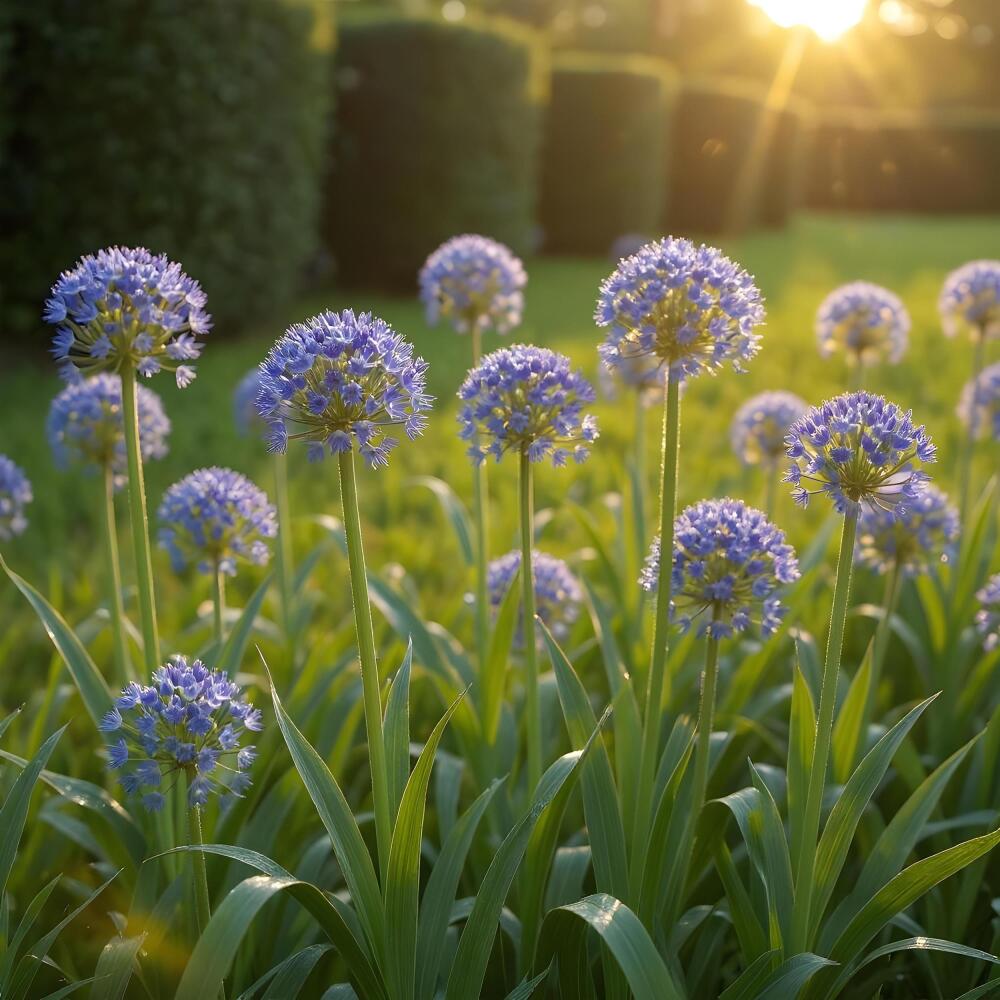
Allium caeruleum brings clear blue to the early summer garden. Small round heads consist of many star-shaped flowers and stay about 2 to 3 cm wide. On slender stems this looks light, almost like a row of little colour dots above the green. With about 30 to 60 cm later growth height, the species fits lower plantings well. It is no substitute for the enormous head of a Globemaster, but offers a different effect. Several loose groups repeat blue through the border without forming a heavy coloured area.
Forty bulbs allow several small groups
The offer includes 40 bulbs. Flowering plants, gravel edges and other garden plants in the pictures are not delivered. Before planting, consider where the blue should recur. About 10 to 15 cm spacing is a practical guide for loose planting. Rather than hiding all bulbs in one tight row, you can distribute several small groups among existing perennials. Ensure their leaves do not later conceal the slender flower stems completely. Later height describes garden development, not a delivery measurement.
A bright soil position rather than a hidden shady corner
Sun and permeable soil suit blue ornamental onion. Its small heads show well at a bright border edge when the ground beneath upper foliage does not remain permanently wet. Check beforehand where rainwater flows. A hollow beside a paved surface may collect much extra water. In a container, plan clear drainage holes and airy substrate. Low neighbouring plants can accompany the narrow leaf zone but must not densely cover the entire space. A bright place alone is insufficient when bulbs lie in poorly draining soil.
Plant the small bulbs correctly in autumn
Plant in autumn when soil is unfrozen, with the tip pointing upwards. NC State gives about 10 to 15 cm planting depth for this species; also consider actual bulb size and delivered package instructions. RHS’s general ornamental-onion guidance refers to actual bulb diameter, not a commercial grading class. Work in a loose prepared planting area, settle soil gently and water a little if the ground is dry. Small markers help locate the groups in winter. This prevents unnoticed movement during later border work.
The first annual phase needs observation
When narrow leaves appear in spring, active supply begins. Rain often suffices in the garden; in prolonged dryness, check root-area soil and water thoroughly when needed. Containers dry faster and are checked more frequently. Persistent wetness is no suitable reserve there either. Do not feed constantly in adequately supplied garden soil. Weak growth first calls for checking soil and light before adding nutrients. Flowering often falls in late May and June, though cool springs can shift development.
Narrow foliage and flowering have different schedules
Narrow basal leaves may already decline during flowering. The head on its slender stem then remains the most visible part. Do not prematurely remove green or still-maturing foliage. Only dead remains are cleared. Neighbouring perennials can visually fill the lower area without interfering with leaf development. Remove spent stems if desired. Do not force regular artificial moisture during the subsequent rest period. Note in the plant book when shoots and blue globes appear at your own position; this creates a useful garden calendar.
A small bulb group can stay longer
Allium caeruleum is perennial. At a suitable garden position bulbs may stay in the ground and need not be dug up after each flowering. A group may become denser over the years. When visibly crowded, reorganise carefully after dieback or at autumn planting and redistribute healthy bulbs. In containers also consider winter rain and severe freezing through. Check drainage before winter begins. Discard soft or foul-smelling bulbs. Although Allium includes edible relatives, this ornamental offer is not used as food.
One plant, several views

Good to know
Are the blue globes very large?
No. Flower heads remain about 2 to 3 cm wide.
How many bulbs do I receive?
The offer includes 40 bulbs, not flowering potted plants.
How tall does blue ornamental onion grow?
About 30 to 60 cm at flowering, depending on position and development.
When do flowers appear?
Often late May to June; weather may shift the sequence.
May I immediately cut yellowing leaves?
Let them mature as fully as possible and remove only dead remains.
Can the group remain in the ground?
Yes, at a suitable permeable position. Healthy bulbs may later be reorganised if strongly crowded.
Sources and editorial note
- Exotenherz: offer and original images (03/10/2026)
- NC State Extension – botanical profile and flower characteristics (03/10/2026)
- RHS – planting ornamental onions and caring through the seasons (03/10/2026)
Shop offer, article number, GTIN, availability and original images checked directly on 02/10/2026; specialist acceptance on 03/10/2026. Specialist sources read directly. Shop offer, SKU, availability and both originals checked directly on 03/10/2026. Specialist sources read directly. Bulbs are delivered; original shop images and AI scenes show later flowering. Shop bulb grading classes are not taken as measured diameters. Planting depth relates to the actual bulb, not a commercial grading class. Growth height describes the later garden plant. Compared with existing detailed garden portraits; distinct species or cultivar, not a quantity-variant duplicate.