
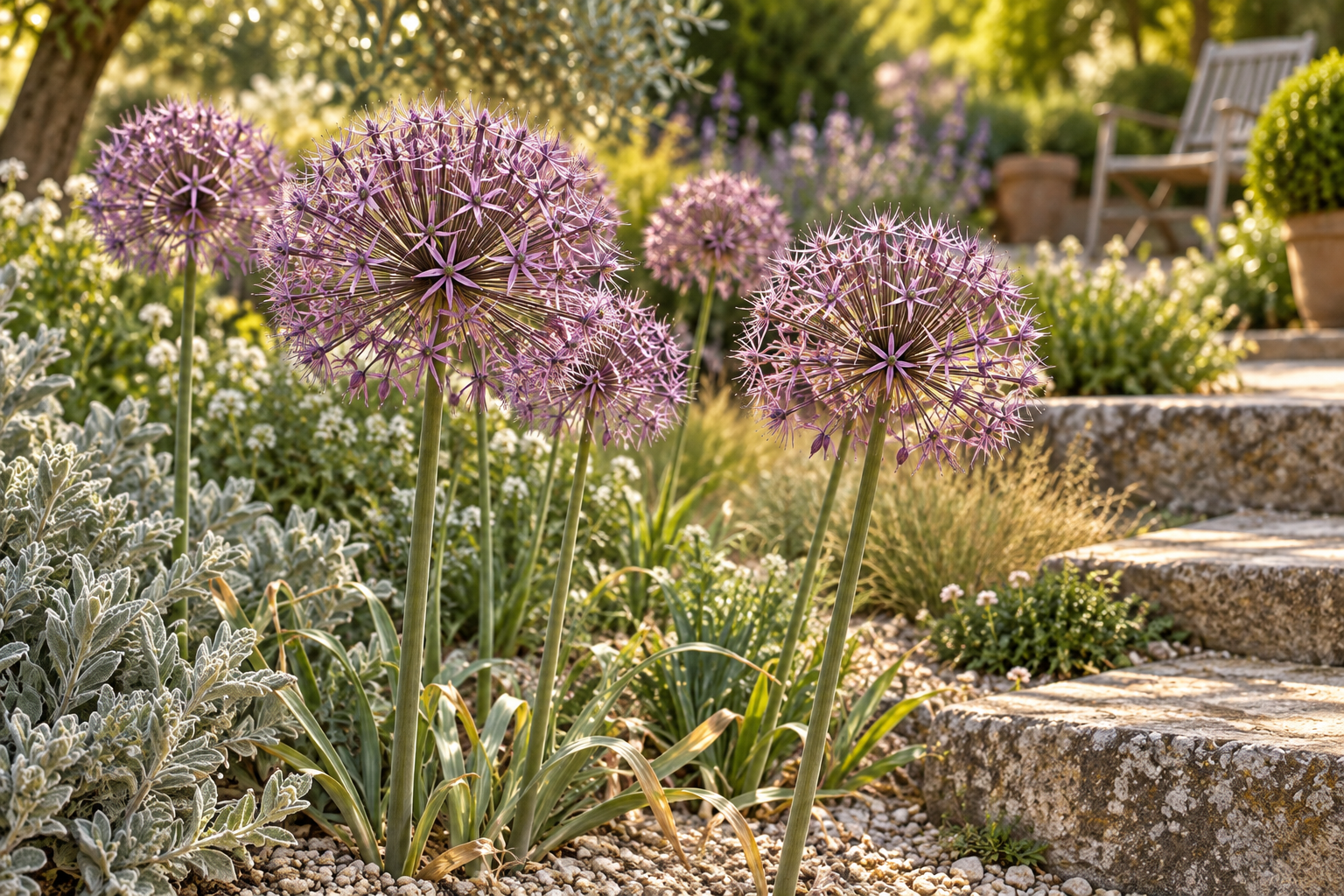
This plant at Exotenherz
Check the shop offer for current availability, price and what is included.
Product and delivery details are given in the individual offer.
Your care table
| Topic | What to do | Why it helps |
|---|---|---|
| Light | Choose a sunny position. | Low neighbours should leave the heads visible. |
| Soil | Prepare permeable ground. | Summer-wet resting positions are unfavourable. |
| Planting time | Plant in autumn in unfrozen ground. | The tip points upwards. |
| Depth | Account for actual bulb and packaging. | Commercial grade is not a measured diameter. |
| Spacing | About 20 cm as a guide. | Large open flower globes need space. |
| Water | Supply active plants according to soil moisture. | Containers dry differently from garden soil. |
| Foliage | Let naturally declining leaves mature. | A spent globe does not immediately end the leaf phase. |
| Winter | Protect containers from persistent wetness. | Pot soil is exposed differently from a border. |
For young plants, feel the soil directly at the root ball. The surface and deeper soil may have different moisture levels.
Water thoroughly after planting; later, water according to the soil, weather and establishment rather than a fixed calendar.
Avoid standing water. For plants in containers, also check that water runs out of the drainage hole.
A globe that lets light through
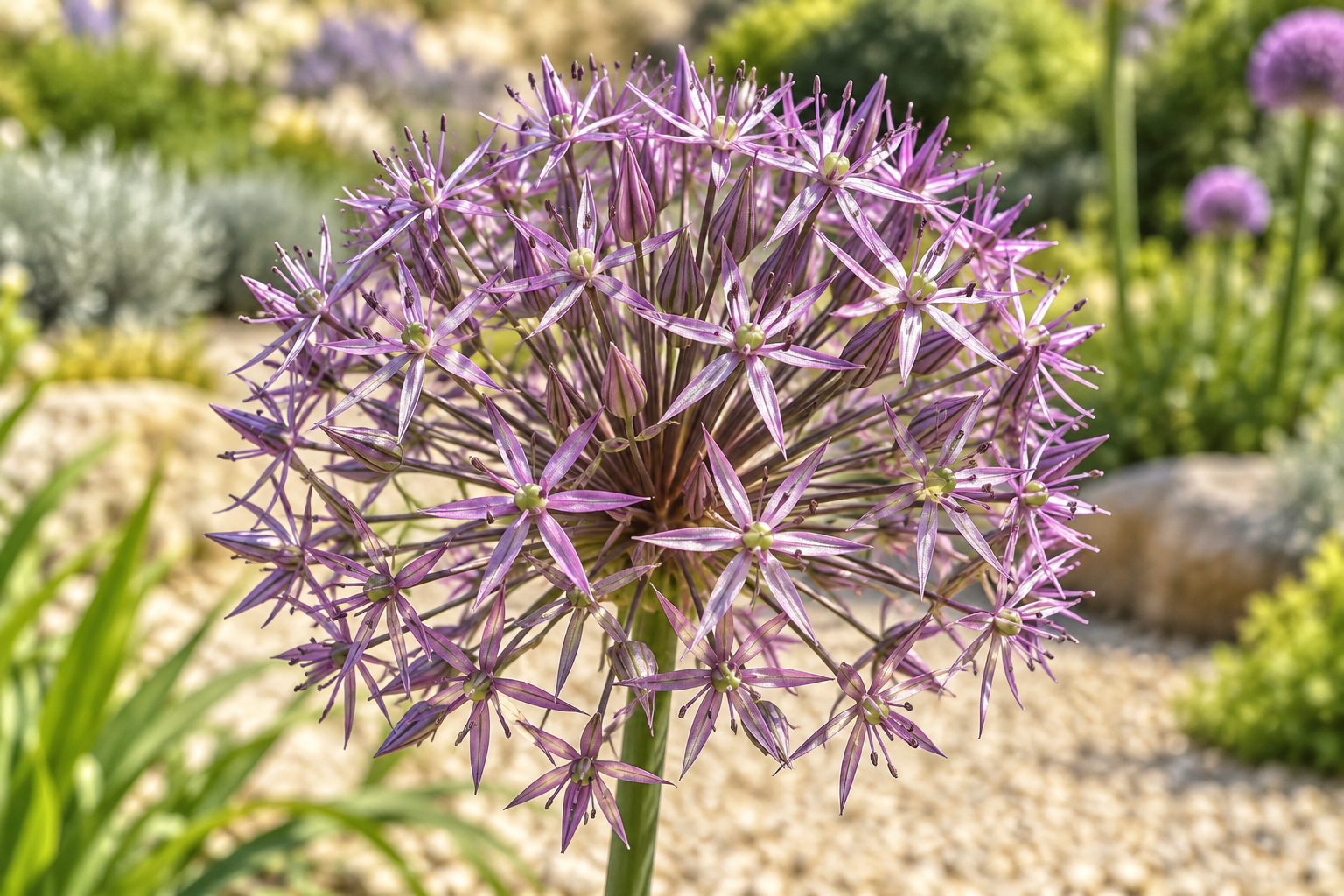
This ornamental onion forms its flower globe from many narrow, pointed star-shaped flowers. Air remains between them; light and background show through slender stalks. Pink-purple may shimmer almost metallically. Heads reach about twenty centimetres in diameter and sit on relatively low stems. At the front of a border you can examine them especially well up close. The shop spells it Christophii; in the specialist source the species also appears as Allium cristophii. They mean the same characteristic star-globe ornamental onion.
Fifteen bulbs give a garden corner rhythm
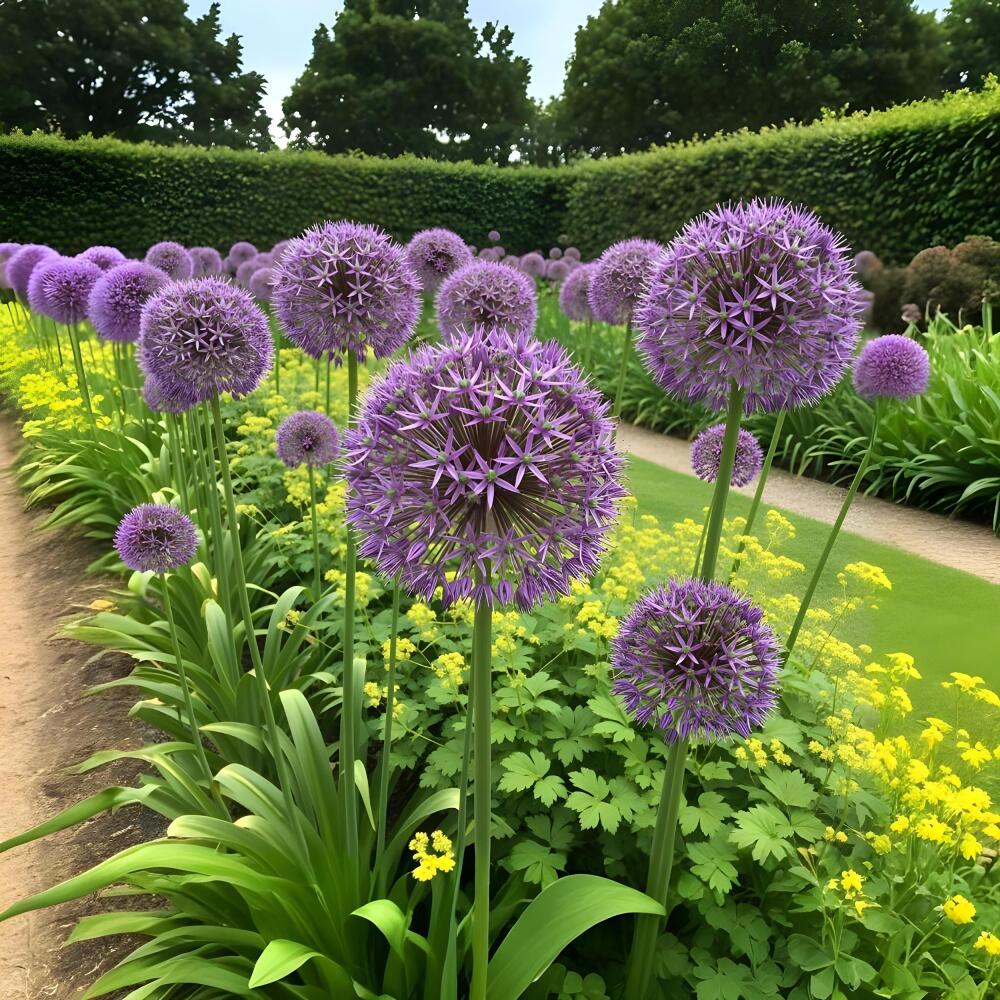
You receive fifteen bulbs for planting, not ready-made flower globes. Images show a later flowering phase. First consider which path or seat should have a view of the group. An irregular distribution among lower perennials often looks calmer than a straight row. Approximately twenty centimetres spacing is a starting guide; broad heads need visual space. Lay bulbs out on the ground before planting. This allows changes to the group without later moving already rooted plants.
A sunny place with quiet neighbours
Sun and well-drained soil are the foundation. A small gravel garden, drier border edge or sunny area before a wall may suit, provided water can drain through the soil. Low neighbours should neither crowd shoots nor later conceal flower heads. Narrow grey-green leaves may already decline while flowering. Thoughtful neighbours accompany this change. Summer flowers watered constantly directly above resting bulbs are no ideal combination if they keep the ground continually wet.
Autumn planting begins with the real bulb
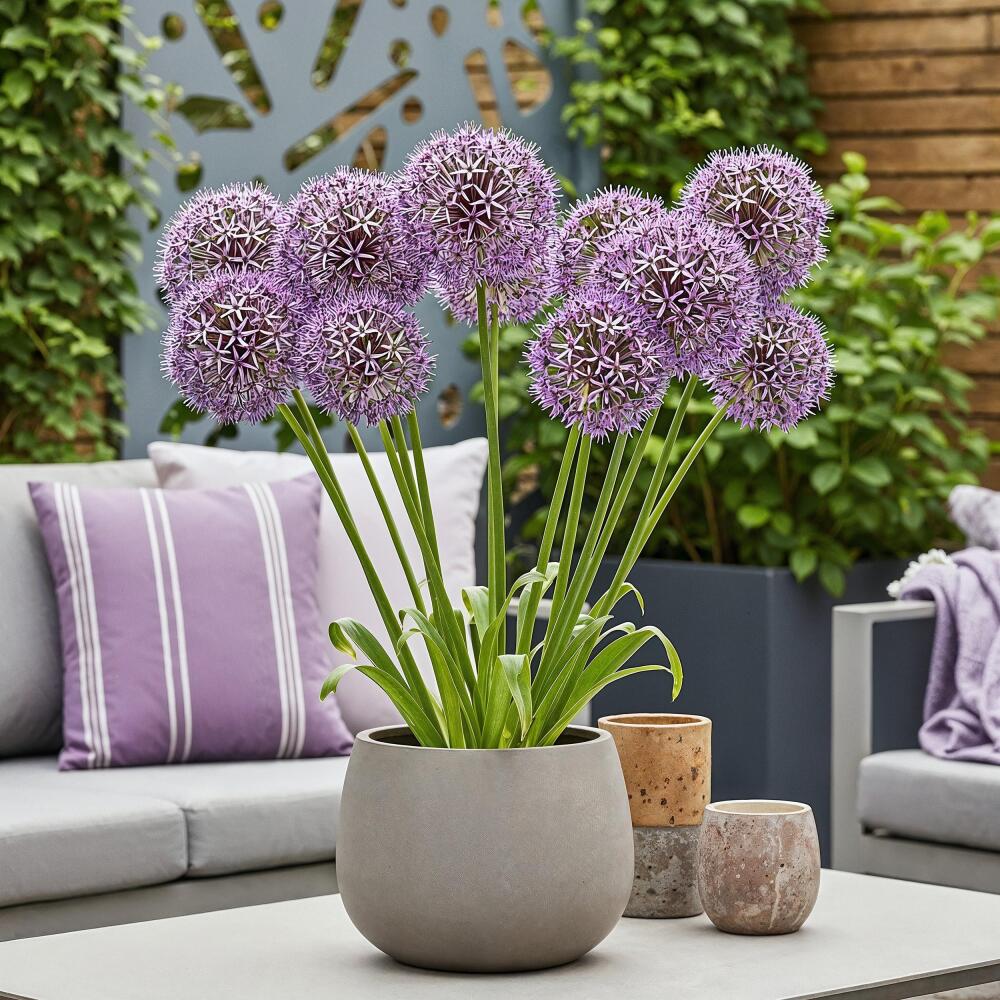
Plant in workable ground in autumn. The tip points upwards; close soil gently afterwards. The specialist supplier uses about three actual bulb diameters as a depth guide. This is not the same as the commercial grading class in the offer name. Follow the delivered packaging and ground conditions. Mark the group so resting bulbs remain intact during later garden work. A deep container is possible but needs clear drainage holes, enough substrate and a position where heads do not constantly rub against neighbours.
Supply shoots and recognise the summer pause
Check soil moisture in spring. Existing rain often suffices in borders; containers may need extra water. Actual soil matters, not a fixed watering date. Add nutrients as needed during shoots while accounting for reserves. The specialist supplier recommends moderate supply at the start of growth. This does not become continuous feeding into summer. Adapt care when foliage dies back naturally. A drier rest phase does not mean deliberately allowing the plant to wilt during active shoots.
Even spent stars retain a lovely line
Dry flower heads can remain in the border for a time. Their framework is particularly interesting before a quiet wall. Remove them if they bend over or you dislike seed formation. Green leaves are not cut for a tidy photograph; dead remains can be removed later. The bulbs are ornamentals, not kitchen onions. A picture of the fresh and dry globe is worthwhile in the plant book. Both show the same structure in different phases and help next year’s design.
Follow a returning group attentively
The species is perennial. Flower strength and number also depend on light, soil and the previous growing phase. If a group weakens, first check shading, wetness and competition. Daughter bulbs can be carefully separated if needed when the plant rests. Keep the new position and planting depth in mind. In containers the underground area is more exposed in winter than in a border; stand them sheltered and avoid persistent rain wetness. A short annual comparison shows development better than continual moving.
One plant, several views
Good to know
What is Christophii called botanically?
The specialist source uses Allium cristophii; the shop name remains Christophii.
How many bulbs are in the offer?
Fifteen bulbs for planting.
How tall does the species grow at flowering?
Approximately 50–60 cm; that is not delivery height.
Are the heads very dense?
Large globes consist of individual star flowers with visible gaps.
May dry flower heads remain?
Yes, while stable and you enjoy their effect.
Can it grow in a container?
Yes, in a suitable deep container with good drainage and appropriate winter care.
Sources and editorial note
- Exotenherz: offer and original images (03/10/2026)
- RHS Plants – Allium cristophii, growth and cultivation (03/10/2026)
- RHS – ornamental onions in the garden (03/10/2026)
Shop offer, article number, GTIN, availability and originals checked directly on 02/10/2026; specialist acceptance on 03/10/2026. Specialist sources read directly. Shop variant, quantity, SKU, current orderability and both original shop images checked directly. Specialist sources read on 03/10/2026. Images show later flowering, not delivery condition. Commercial grading classes not taken as measured bulb or tuber diameters. Specialist acceptance against published Pflanzenwelt portraits; no tool or Wawi changes.