
This plant at Exotenherz
Check the shop offer for current availability, price and what is included.
Product and delivery details are given in the individual offer.
Your care table
| Topic | What to do | Why it helps |
|---|---|---|
| Light | Choose full sun for the large flower heads. | Globes should stand freely above neighbouring plants. |
| Planting time | Plant in autumn in unfrozen ground. | Rooting begins before the following flowering year. |
| Planting depth | Use actual bulb size and package instructions. | Commercial grades must not be confused with measured diameter. |
| Spacing | At least about 20 cm; plan more generously for large heads. | Spherical heads can become very broad. |
| Soil | Choose permeable earth without a long-wet hollow. | Large bulbs need an airy root area. |
| Watering | Water thoroughly during shoots after prolonged dryness. | Need and soil condition determine supply. |
| Foliage | Let leaves die back completely first. | The plant thereby finishes its active annual phase. |
| Winter | Maintain border drainage and protect containers from extremes. | A limited vessel is more exposed to rain and frost. |
For young plants, feel the soil directly at the root ball. The surface and deeper soil may have different moisture levels.
Water thoroughly after planting; later, water according to the soil, weather and establishment rather than a fixed calendar.
Avoid standing water. For plants in containers, also check that water runs out of the drainage hole.
A large globe needs some air
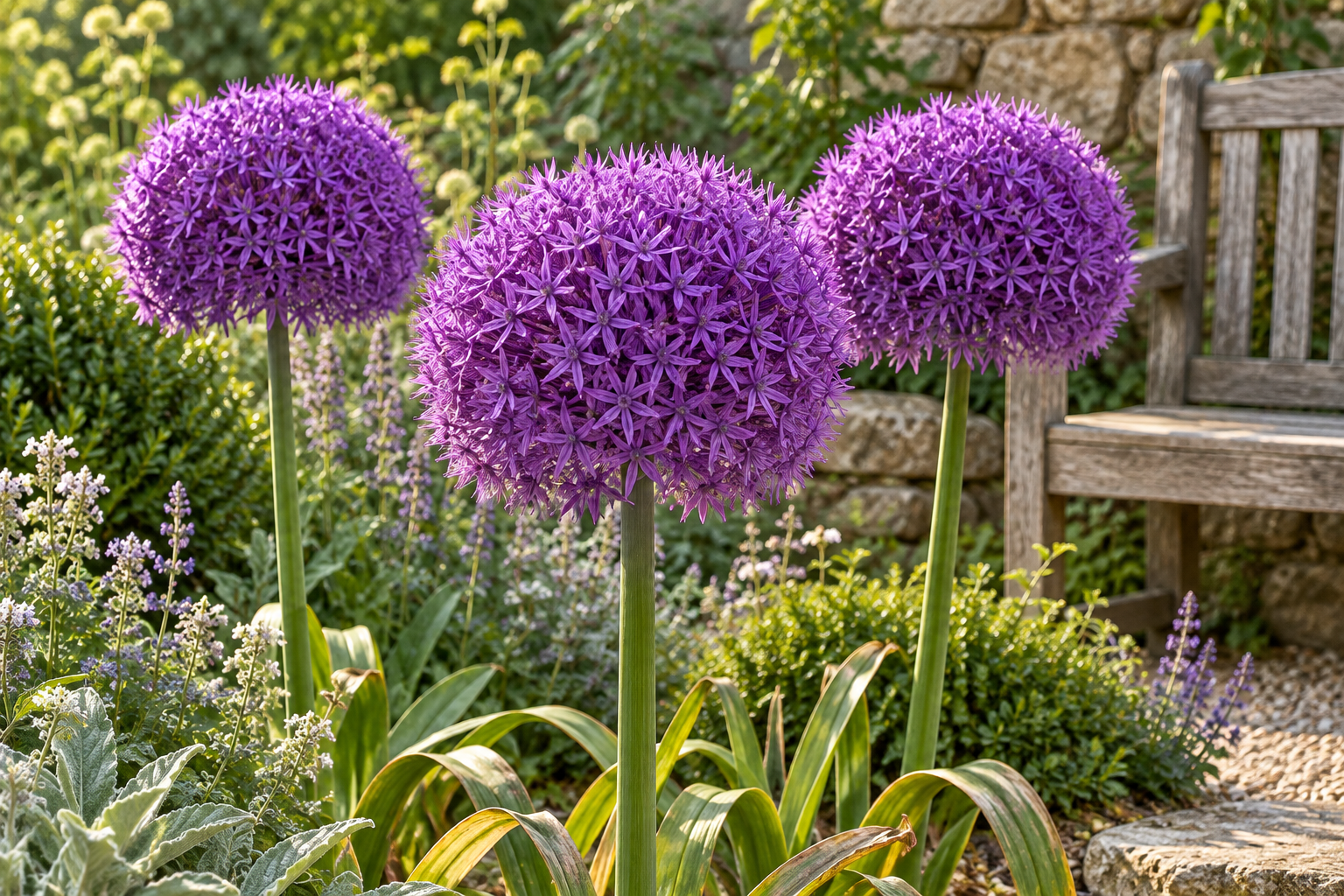
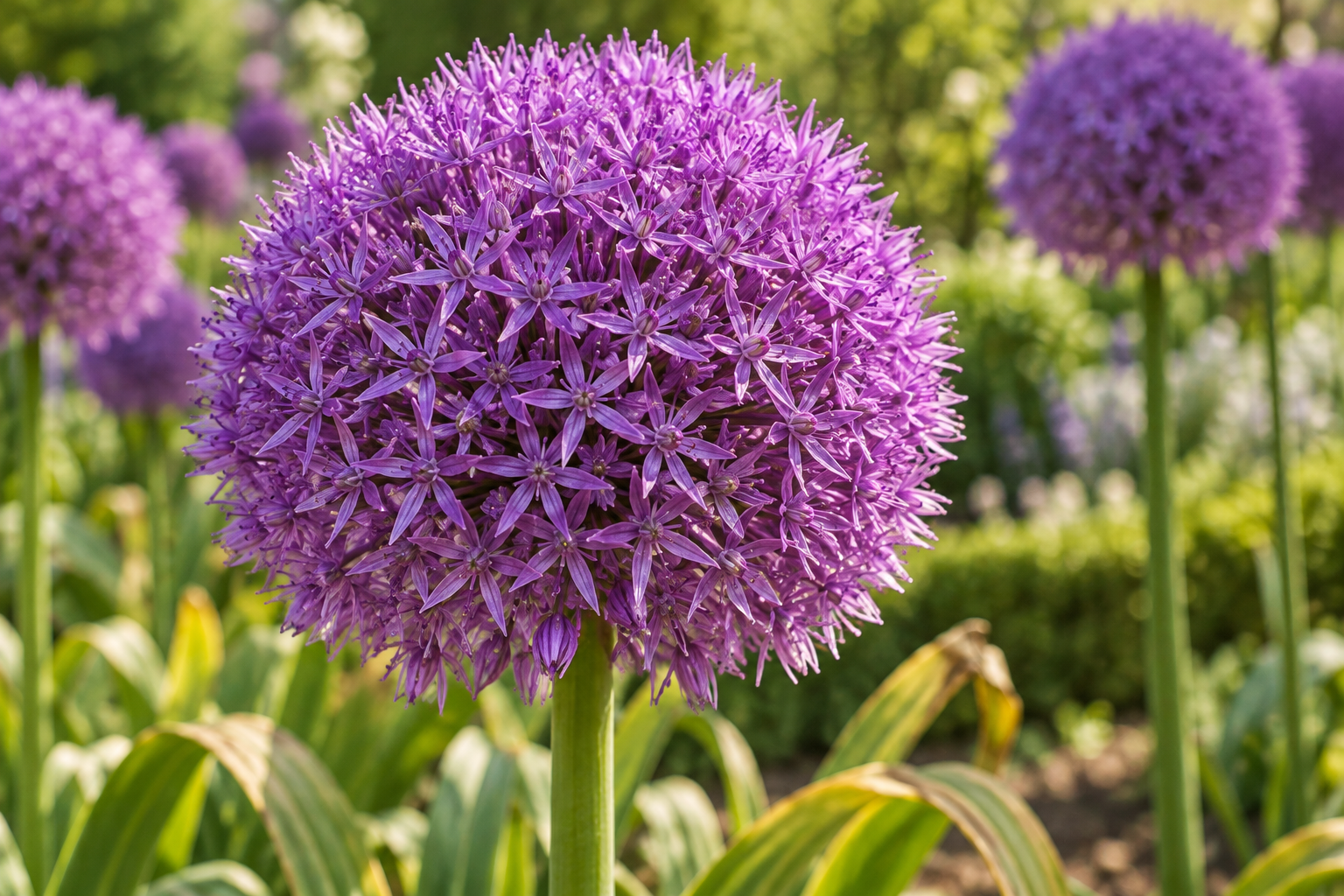
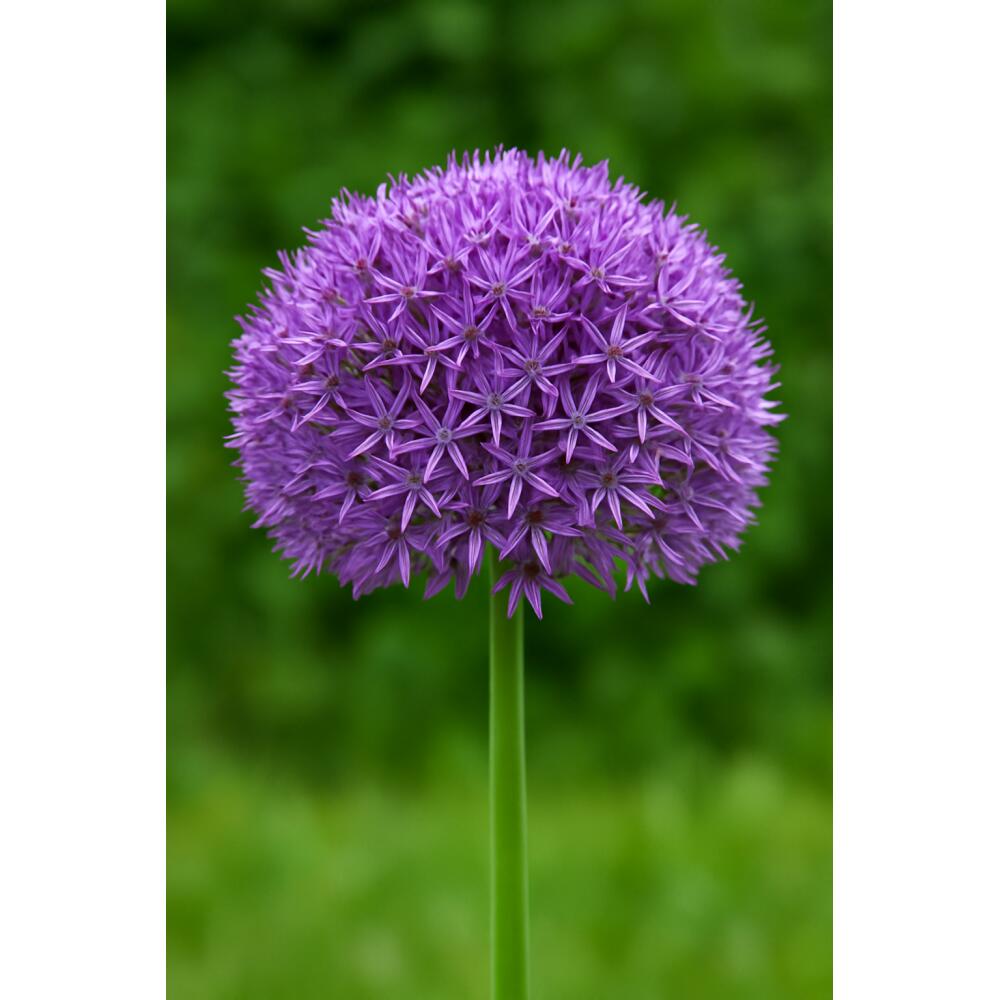
Globemaster stands out with exceptionally large purple flower heads. Many closely packed star flowers form an almost closed globe. Heads may become about 20 cm wide in good conditions, while stems reach about 80 to 85 cm. Even a few specimens give a border clear structure. Beside a simple garden bench their round form is especially easy to recognise. Tight plantings beneath branches diminish this ornamental onion’s effect: the head should unfold freely without continually hitting neighbouring plants.
Five bulbs become a planned group
The offer is five bulbs, not already flowering container plants. Later flowering results from suitable garden cultivation. Distribute the five planting positions beforehand to create a calm view of the globes from the house too. About 20 cm is a lower spacing guide; leave more air for very large heads. Later height is not a delivery measure. A frame of lower perennials can surround bulb sites but should neither crowd shoots nor keep soil permanently wet.
Flowering stands above permeable soil
Sun and reliable drainage suit the cultivar. In spring the soil can be adequately moist without feeling smeary and airless. Observe where rain runs off and collects before planting. A deep hollow in heavy soil is particularly unfavourable for large bulbs. A raised planting area is often more sensible than a single deep hole filling with water again. In a container, sufficient size and clear drainage holes belong to planning. A closed decorative vessel alone is insufficient.
Autumn planting without confusing sizes
Set bulbs in prepared ground in autumn. Tip upwards, settle soil gently and water in during dryness. Depth follows the actual bulb body and delivered package instructions. The general RHS guide is four times the real diameter; supplier Bloms gives 12 cm depth for its Globemaster. Different bulb sizes explain why one number need not suit every delivery. Using a commercial grading class unchecked as diameter would greatly distort planting depth.
Strong shoots need water according to demand
Check soil during growth, especially after several dry days. When needed, water thoroughly so moisture reaches the underground root area. If soil stays wet, do not continue watering because of a pale leaf. Check containers more often because wind and sun consume their small reserve faster. Feeding stays moderate according to soil condition and the fertiliser label. A large flower head is no reason for extra high doses. The cultivar often flowers in June, depending on position and spring conditions.
After the globe comes the quiet phase
Broad green leaves may already age during flowering. Let them mature and remove only once fully dead. This makes the annual sequence understandable even if the border’s base looks less fresh. Dry flower globes may stand a while if you enjoy their structure. When removing stems, avoid injuring the bulb and remaining foliage. Companion perennials can visually fill the lower zone. Do not artificially force constant even moisture after summer dieback; the bulb is then dormant.
The next flowering year starts in the same place
Globemaster is a perennial bulbous plant. Annual digging is not normal care at a suitable garden position. Keep planting sites marked after flowering so autumn work does not strike bulbs. Place containers sheltered from prolonged winter rain and severe freezing through. If flowering weakens after some years, first check light, ground condition and space. A crowded group can be carefully reorganised after dieback or at autumn planting. Bulbs are ornamental plant material, not used as food onions.
One plant, several views
Good to know
How many bulbs are in the offer?
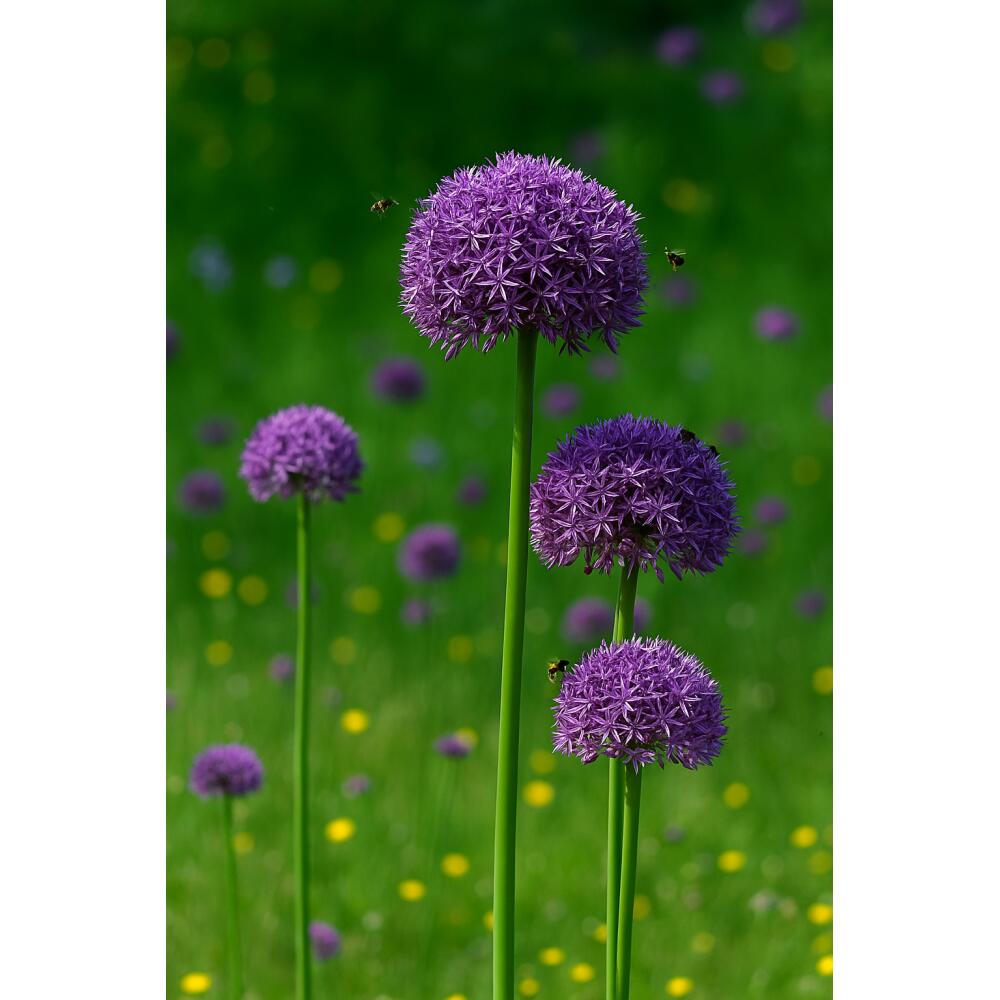
Five. Garden images show later development.
Is Globemaster as small as Purple Sensation?
No. Globemaster globes can become much larger, up to about 20 cm in good conditions.
When does the cultivar flower?
Often in June. Weather and position may shift timing.
Why do leaves turn yellow?
Foliage often ages around flowering. Also check wetness and other damage with conspicuous changes.
Must I feed heavily for large globes?
No. Suitable soil, light and supply according to need matter more than high extra doses.
Can dry heads remain?
Yes, as garden structure. When cutting, do not damage maturing foliage and bulbs.
Sources and editorial note
- Exotenherz: offer and original images (03/10/2026)
- RHS – botanical profile and flower characteristics (03/10/2026)
- RHS – planting ornamental onions and caring through the seasons (03/10/2026)
- Bloms Bulbs – Globemaster: flowering and planting guidance (03/10/2026)
Shop offer, article number, GTIN, availability and original images checked directly on 02/10/2026; specialist acceptance on 03/10/2026. Specialist sources read directly. Shop offer, SKU, availability and both originals checked directly on 03/10/2026. Specialist sources read directly. Bulbs are delivered; original shop images and AI scenes show later flowering. Shop bulb grading classes are not taken as measured diameters. Planting depth relates to the actual bulb, not a commercial grading class. Growth height describes the later garden plant. Compared with existing detailed garden portraits; distinct species or cultivar, not a quantity-variant duplicate.