
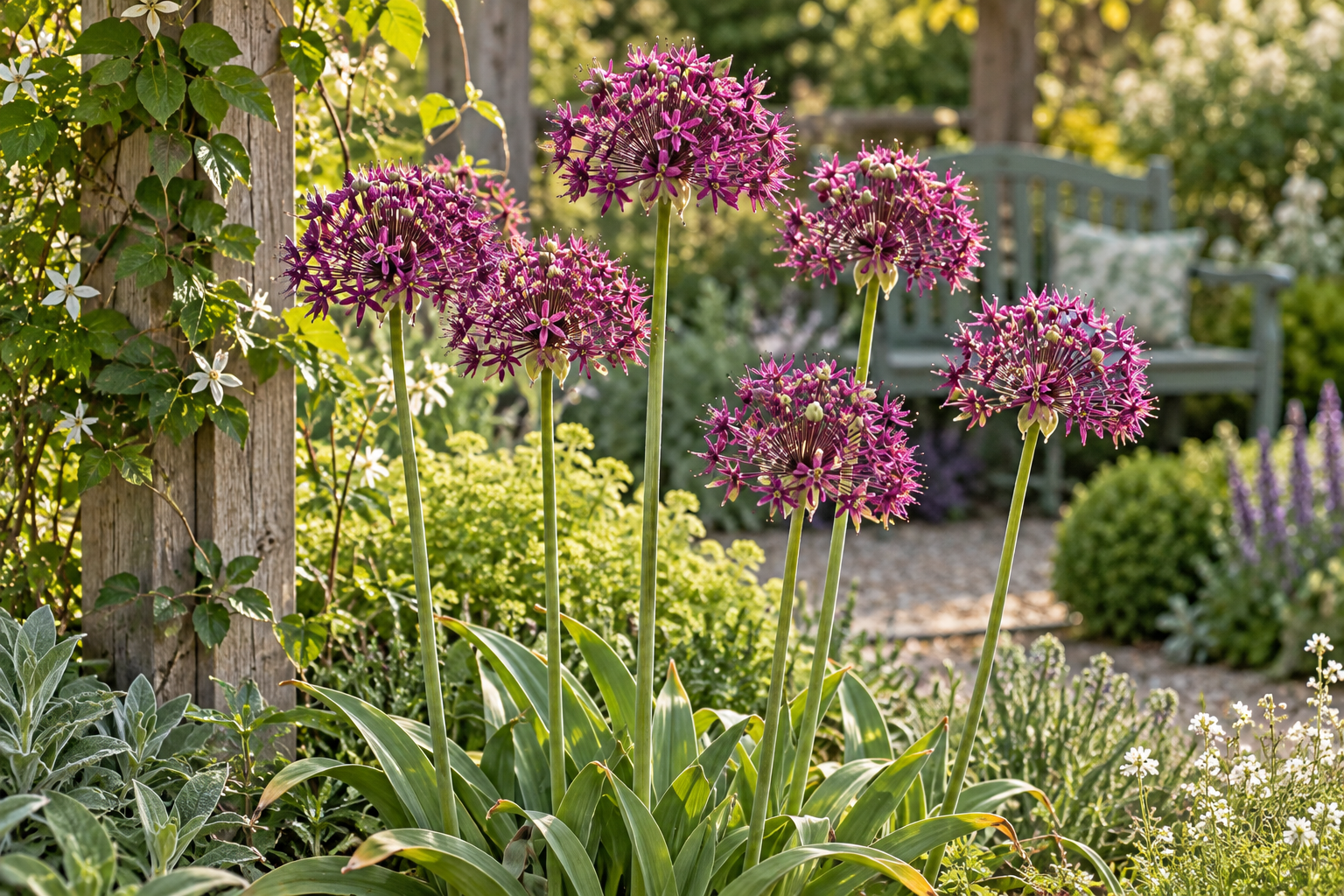
This plant at Exotenherz
Check the shop offer for current availability, price and what is included.
Product and delivery details are given in the individual offer.
Your care table
| Topic | What to do | Why it helps |
|---|---|---|
| Light | Place sunny and sheltered. | Tall stems benefit from less strong wind. |
| Soil | Choose fertile, permeable ground. | Winter saturation is a problem. |
| Planting | Plant in autumn in unfrozen ground. | A marker protects the resting group during garden work. |
| Spacing | At least about 20 cm as a guide. | Neighbouring perennials also need development space. |
| Depth | Account for packaging and actual bulb. | Do not convert commercial grades into diameter. |
| Water | Water during shoots according to soil moisture. | A container needs more attention than a border. |
| Nutrients | Check need and existing reserves. | Continuous feeding is no substitute for a good place. |
| After flowering | Allow natural dieback. | The underground plant remains perennial. |
For young plants, feel the soil directly at the root ball. The surface and deeper soil may have different moisture levels.
Water thoroughly after planting; later, water according to the soil, weather and establishment rather than a fixed calendar.
Avoid standing water. For plants in containers, also check that water runs out of the drainage hole.
Purple with a lighter flower form
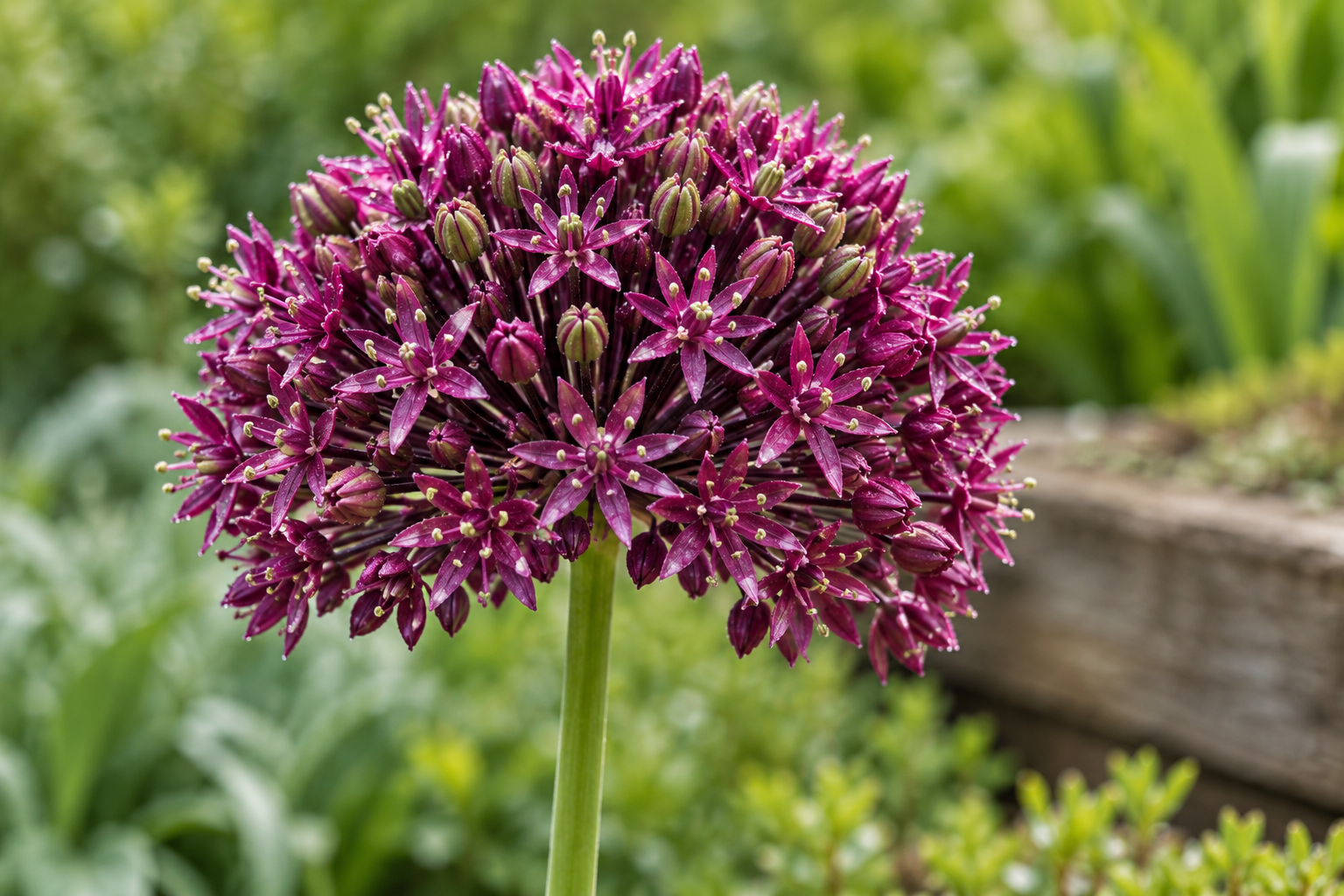
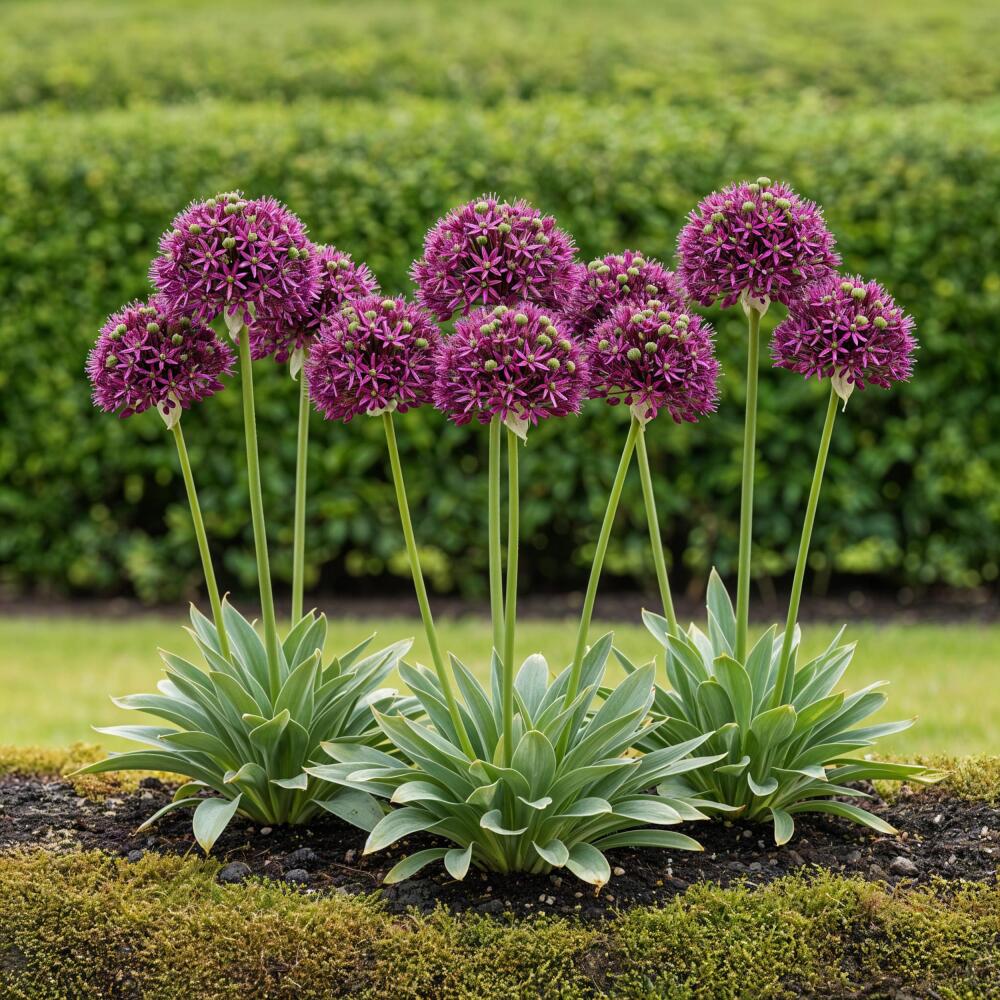
Miami carries reddish-purple flowers in a relatively open, dome-shaped umbel. It looks lighter than a densely closed globe. On tall green stems it creates a clear line above the border. The plant may reach about a metre at flowering and provides a different accent from low star-globe onions. Look at the umbel from the side: branching remains visible between its small flowers. A quiet green background brings out the colour especially well without making the entire border intensely colourful.
A group for the view from a seat
The offer contains fifteen bulbs. A later flower group can lead the eye from a terrace into the border; it is not delivered already flowering. Try distributing bulbs in several loose groups and view them from the usual distance. Tall ornamental onions need at least roughly twenty centimetres between bulbs as a starting guide. Also leave development room for neighbouring perennials. Quantity does not promise a particular number of simultaneous flower heads. Bulb development, planting and subsequent conditions at the chosen site matter.
Sun alone does not settle the position question
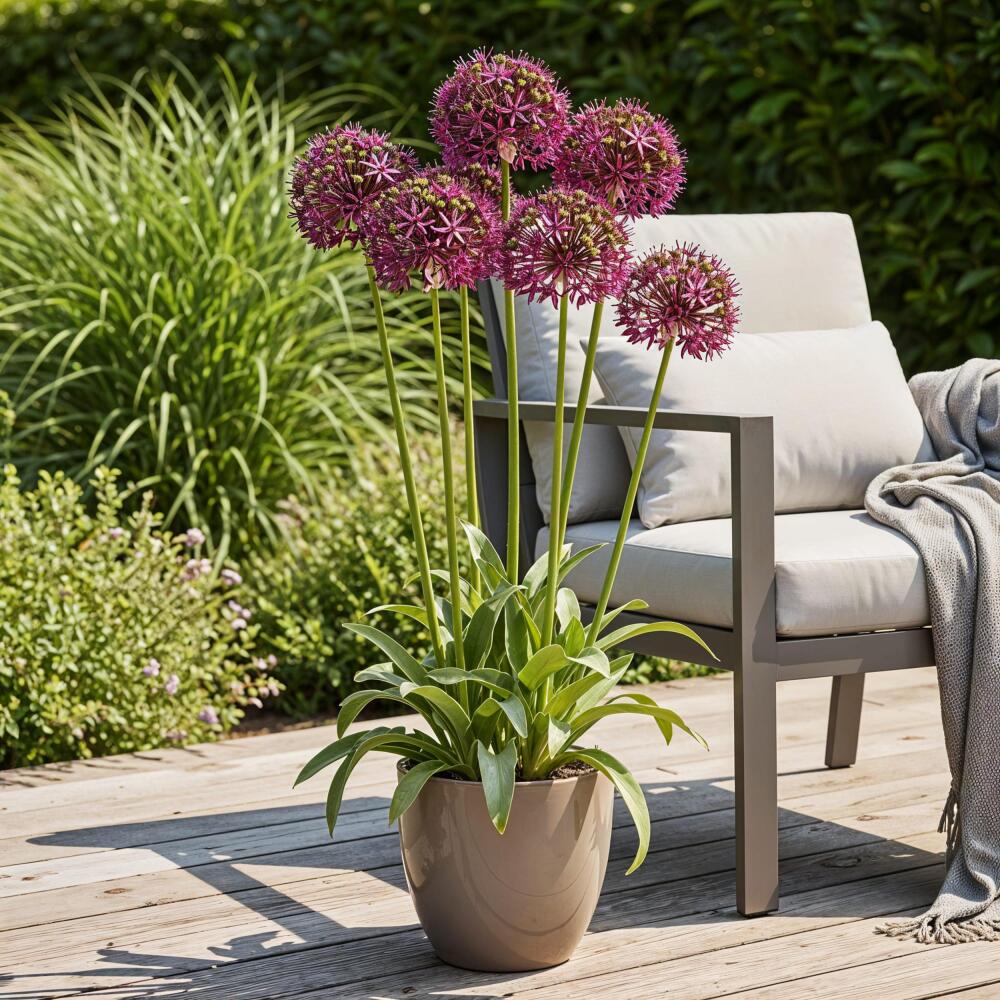
Miami suits a sunny sheltered place with fertile, well-drained soil. Wind shelter may help tall stems. Also check what happens beneath the surface after prolonged rain. A border regularly waterlogged in winter is unfavourable despite good summer lighting. The specialist source suggests a suitable container as an alternative for heavy saturation-prone soil. It needs sufficient depth, a stable base and free drainage. A small gravel-filled hole in dense clay does not replace a permeable environment.
Plant in autumn and find the site again
Plant in autumn while ground is workable. Set the tip upwards and base depth on the actual bulb and package instructions. The grading class in the shop name is not a self-measured diameter and should not be converted into an enormous planting depth. With dry earth a little water helps soil settle. A discreet marker keeps the resting group findable. Plan later neighbours at the same time: Miami should stand above them while lower leaves accompany gradually declining basal foliage.
Follow spring attentively and moderately
Moisture checking during shoots is especially worthwhile in containers and unusually dry weather. Water as needed and let water drain. Good supply does not mean constantly wet soil. Add nutrients accounting for substrate and existing reserves; ornamental onions need no fixed weekly feeding schedule. Observe stems and leaves together. The tall flower head and declining basal foliage may belong to natural development. A single yellow leaf is therefore insufficient reason to immediately add more water or fertiliser.
After flowering the garden scene keeps changing
You may remove spent stems or initially leave their structure. Prepare neighbouring planting for Miami’s above-ground dieback. Green leaf remains stay until they naturally die, then can be tidied as needed. Bulbs remain in the soil as perennial storage organs. Record actual flowering timing and purple shade under different light in the plant book. This shows which neighbours fit temporally and avoids a design working on only one flowering day.
Improve the group rather than continually starting anew
When a group looks weaker the next year, consider light, winter moisture and competition together. If needed, daughter bulbs can be carefully detached after flowering and cultivated at a prepared position. Work gently and keep the original group traceable. Containers stand sheltered from persistent winter rain; plants there face cold and moisture fluctuations more strongly than in borders. Bulbs are not intended for eating. A photograph from the same perspective shows whether the open umbel still works well at the intended viewpoint.
One plant, several views
Good to know
What flower colour does Miami have?
Reddish purple.
Is Miami a densely closed globe?
RHS describes an open dome-shaped umbel.
How tall does the plant grow?
Up to about a metre at flowering.
What is delivered?
Fifteen bulbs for planting.
Is heavy wet soil suitable?
Persistently waterlogged soil is unfavourable; a suitable container may be an alternative.
Must ornamental onion be fed constantly?
No. Supply follows position, substrate and recognisable need.
Sources and editorial note
- Exotenherz: offer and original images (03/10/2026)
- RHS – Allium Miami, growth and position (03/10/2026)
- RHS – growing ornamental onions (03/10/2026)
Shop offer, article number, GTIN, availability and originals checked directly on 02/10/2026; specialist acceptance on 03/10/2026. Specialist sources read directly. Shop variant, quantity, SKU, current orderability and both original shop images checked directly. Specialist sources read on 03/10/2026. Images show later flowering, not delivery condition. Commercial grading classes not taken as measured bulb or tuber diameters. Specialist acceptance against published Pflanzenwelt portraits; no tool or Wawi changes.