
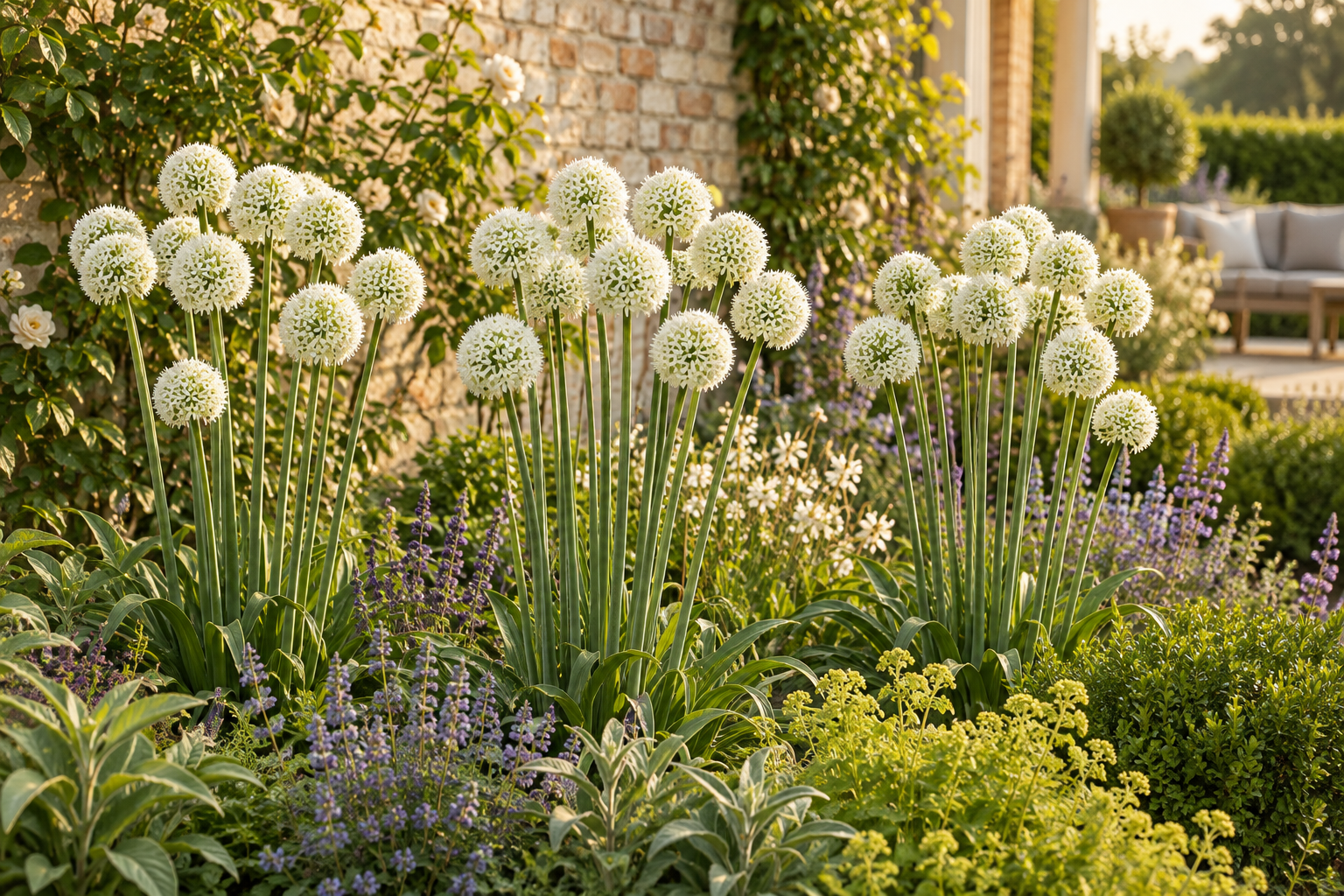
This plant at Exotenherz
Check the shop offer for current availability, price and what is included.
Product and delivery details are given in the individual offer.
Your care table
| Topic | What to do | Why it helps |
|---|---|---|
| Light | Choose a sunny sheltered area. | A dark background should not lead to deep shade. |
| Soil | Use fertile earth with drainage. | Avoid winter wetness and summer waterlogging. |
| Planting time | Plant in workable ground in autumn. | Mark bulbs that will later rest. |
| Spacing | At least about 20 cm as a guide. | Tall neighbouring growth must be planned too. |
| Depth | Choose according to packaging and actual bulb. | A commercial grade is not a measurement. |
| Water | Check moisture during shoots. | Containers respond faster to dryness. |
| Foliage | Await natural decline. | Do not prematurely remove green leaves for appearance. |
| Division | Separate daughter bulbs in autumn if needed. | A suitable group need not move annually. |
For young plants, feel the soil directly at the root ball. The surface and deeper soil may have different moisture levels.
Water thoroughly after planting; later, water according to the soil, weather and establishment rather than a fixed calendar.
Avoid standing water. For plants in containers, also check that water runs out of the drainage hole.
White above a quiet planting
Mount Everest places white flower globes on tall ridged stems. Many small star flowers form a densely arranged head about twelve centimetres in diameter. The pale colour is especially clear before dark foliage. With flowering height up to about 1.2 metres, the cultivar can be shown among lower perennials rather than hidden right at the back. A view from a garden chair can be as appealing as from the path. Its effect comes from an upright line and individual clearly visible globes, not from as many different colours as possible in a small space.
Three bulbs begin a garden scene
The range offers three bulbs for planting. You do not receive a finished group in a decorative container. Plan space for each bulb and consider the imagined arrangement from several viewpoints. At least roughly twenty centimetres spacing is a starting guide for tall ornamental onions. Neighbouring plants may need even more space. A group of three need not form a precisely equilateral triangle; a slightly offset arrangement may look more natural. Actual development later decides how close together the flowers appear.
Give tall heads light and support through the position
A sunny sheltered area with fertile permeable soil suits. Grey-green leaves first stand at ground level while flower stems grow far above. Lower perennials can accompany later declining basal foliage, but should not crowd the whole shooting area. Check drainage and wind before planting. A high white globe before a dark hedge is attractive; immediately in that hedge’s deep root competition and shade, however, cultivation may be unsuitable. Design and plant supply must work together.
Prepare autumn planting gently
Set bulbs in autumn in unfrozen ground. Planting depth and packaging instructions concern the actual bulb. Commercial grade in the offer name must not be used as a measured diameter. Point tips upwards, close soil carefully and water a little during dryness. Mark the area. Resting bulbs are easily overlooked when more perennials are later planted. For containers choose enough depth, free drainage and a stable site, as tall heads shift visual weight distinctly upwards.
Supply during growth and rest afterwards
Check root-area moisture in spring. Extra border water is often needed only during prolonged dryness; containers react faster to sun and wind. Add nutrients according to actual need, accounting for substrate. Routine feeding without cause is no reliable way to larger flower globes. Watch foliage too. Adapt care to dormancy when it declines naturally. Constant summer watering of an already dormant pot can stress bulbs. One spent stem alone does not mean all green plant parts have stopped working.
White flowering has an afterwards too
Spent heads may initially stand if you like their structure. Remove unstable or troublesome stems as needed. Green leaves are not removed for a briefly tidy view. Declining remains are tidied later. Photograph the fresh white globe and later its dry form for your plant book. Together with flowering timing, this helps choose suitable neighbours. Tall ornamental onion is a garden plant, not permanent living-room decoration. Bulbs are not for the kitchen, although the genus recalls edible alliums.
Recognise a good site over several years
Mount Everest is perennial; annual flowering performance depends on cultivation conditions. When the group weakens, check position changes, soil moisture and competition. Daughter bulbs can be separated in autumn if needed. Otherwise leave suitable planting as undisturbed as possible. In a container the underground area needs more winter attention than in garden soil: stand sheltered and avoid prolonged rain wetness. A comparison photograph from the same viewpoint shows whether the white line remains visible or neighbours have closed the originally open scene.
One plant, several views
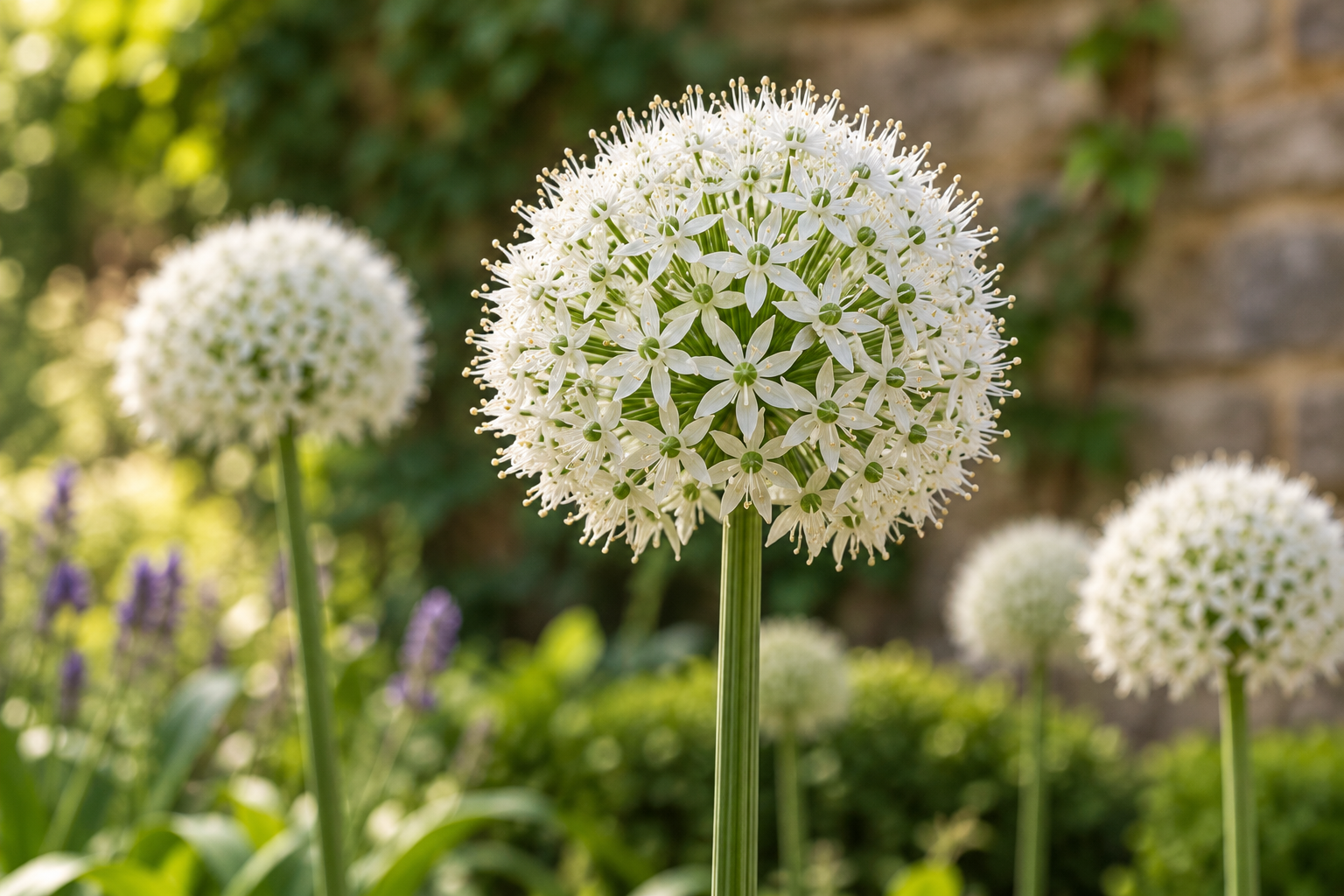
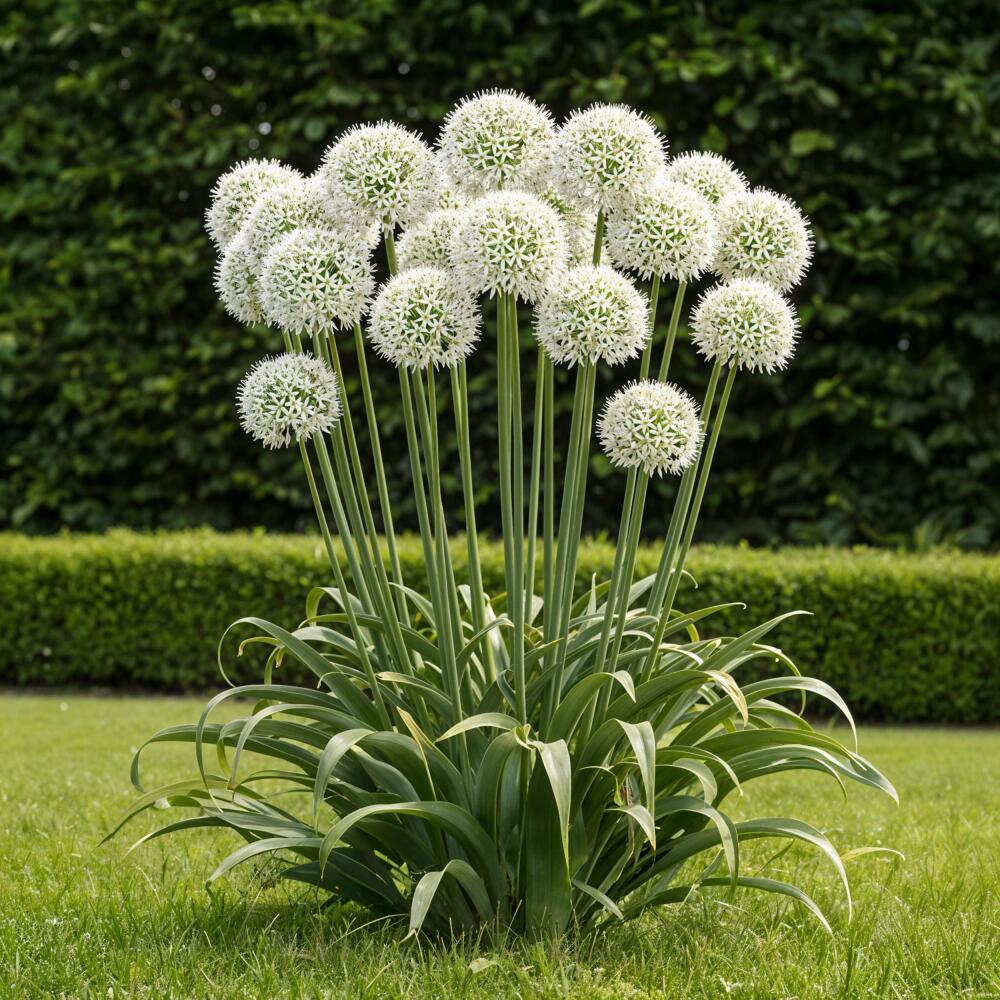
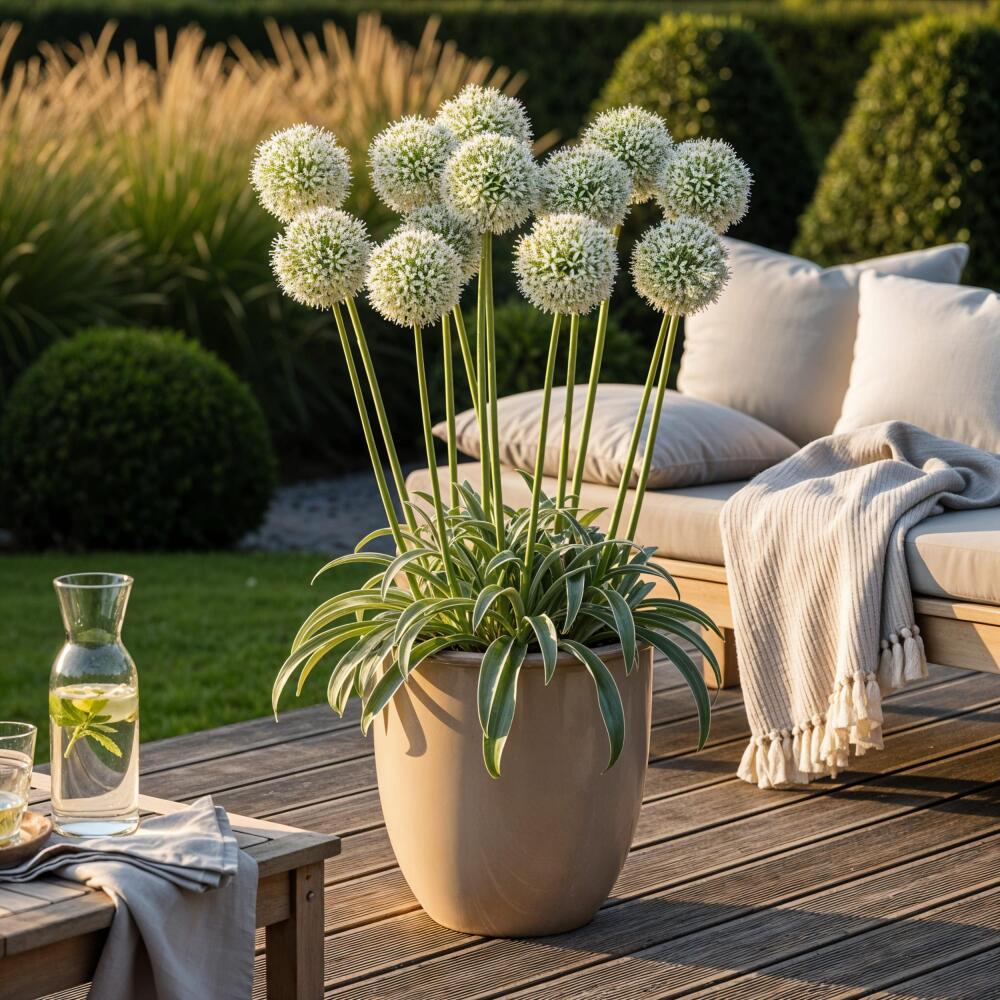
Good to know
How many bulbs are delivered?
Three for planting.
How tall does Mount Everest grow?
Up to about 1.2 metres at flowering.
How big are flower heads?
The specialist source gives up to about twelve centimetres diameter.
When does the cultivar flower?
Late spring and early summer; exact timing depends on weather and position.
Must I immediately cut dry heads?
No, they may remain as structure while stable.
Can I keep it permanently in the living room?
The cultivar is a garden bulbous plant requiring suitable outdoor conditions.
Sources and editorial note
- Exotenherz: offer and original images (03/10/2026)
- RHS – Mount Everest, botanical features and cultivation (03/10/2026)
- RHS – ornamental onions through the year (03/10/2026)
Shop offer, article number, GTIN, availability and originals checked directly on 02/10/2026; specialist acceptance on 03/10/2026. Specialist sources read directly. Shop variant, quantity, SKU, current orderability and both original shop images checked directly. Specialist sources read on 03/10/2026. Images show later flowering, not delivery condition. Commercial grading classes not taken as measured bulb or tuber diameters. Specialist acceptance against published Pflanzenwelt portraits; no tool or Wawi changes.