

This plant at Exotenherz
Check the shop offer for current availability, price and what is included.
Product and delivery details are given in the individual offer.
Your care table
| Topic | What to do | Why it helps |
|---|---|---|
| Position | Choose sun among neighbours that are not too dense. | Slender stems should grow freely and remain visible. |
| Planting | Set bulbs in autumn with tip upwards. | Summer flowering begins with rooting in the previous autumn. |
| Spacing | Use about 10–15 cm as a guide for loose groups. | An airy stand suits the small egg-shaped heads. |
| Depth | About 10–15 cm is a guide; consider the real bulb and package instructions. | Depth is not calculated from commercial grade. |
| Water | Check dryness during sprouting and stem development. | Narrow leaves and thin stems also need supplied roots. |
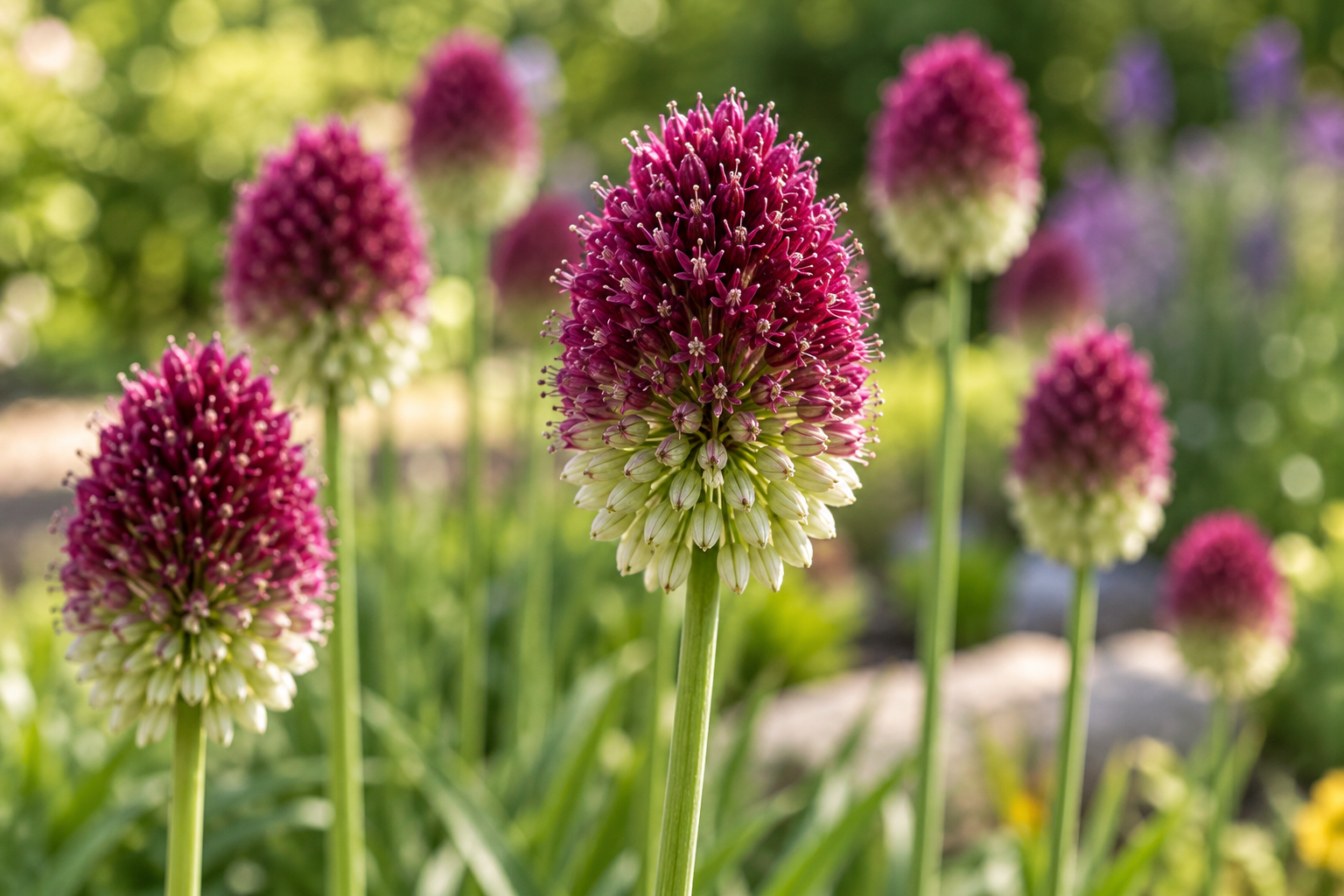
| Colour | Initially regard green at the lower fresh head as a development phase. | Wine-red colour often spreads from the top. |
| After flowering | Let foliage mature and keep dry heads if desired. | The bulb ends its active phase independently of decoration. |
| Winter | Check border drainage; protect containers from extremes. | Permanent wetness is unfavourable even for frost-tolerant species. |
For young plants, feel the soil directly at the root ball. The surface and deeper soil may have different moisture levels.
Water thoroughly after planting; later, water according to the soil, weather and establishment rather than a fixed calendar.
Avoid standing water. For plants in containers, also check that water runs out of the drainage hole.
A colour transition on a slender stem
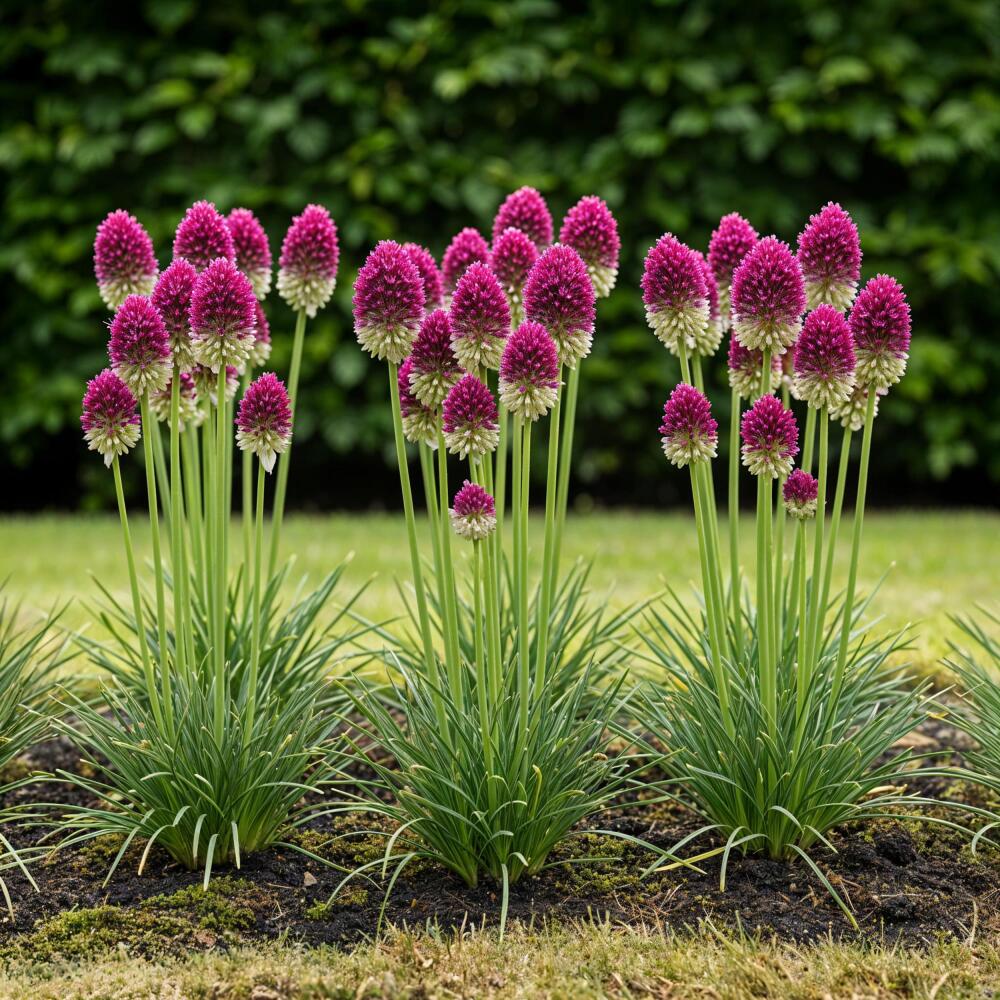
With drumstick allium, the colour change stands out first. Small dense heads turn wine red to purple from the upper part, while green may initially remain below. Their shape is more egg-like than a large perfect sphere. Thin tall stems give the planting a light moving effect. Among low grasses the heads look like little dark dots. Later height is often about 60 to 90 cm. The modest size of each head makes several plants together interesting without weighing down a border.
Spread a hundred bulbs in loose groups
The range offers 100 bulbs. The scene shows later garden growth, not a delivery of ready flowering plants. This quantity allows several groups or recurring loose strips. About 10 to 15 cm spacing is a guide for airy garden pictures; closer and wider planting have different effects. Bulbs need not be spread evenly on a grid. Lay them out first and view the area from your usual garden viewpoint. Low neighbours can surround later slender stems but should not completely remove sunlight at sprouting level.
Sun and stable soil suit the lightness
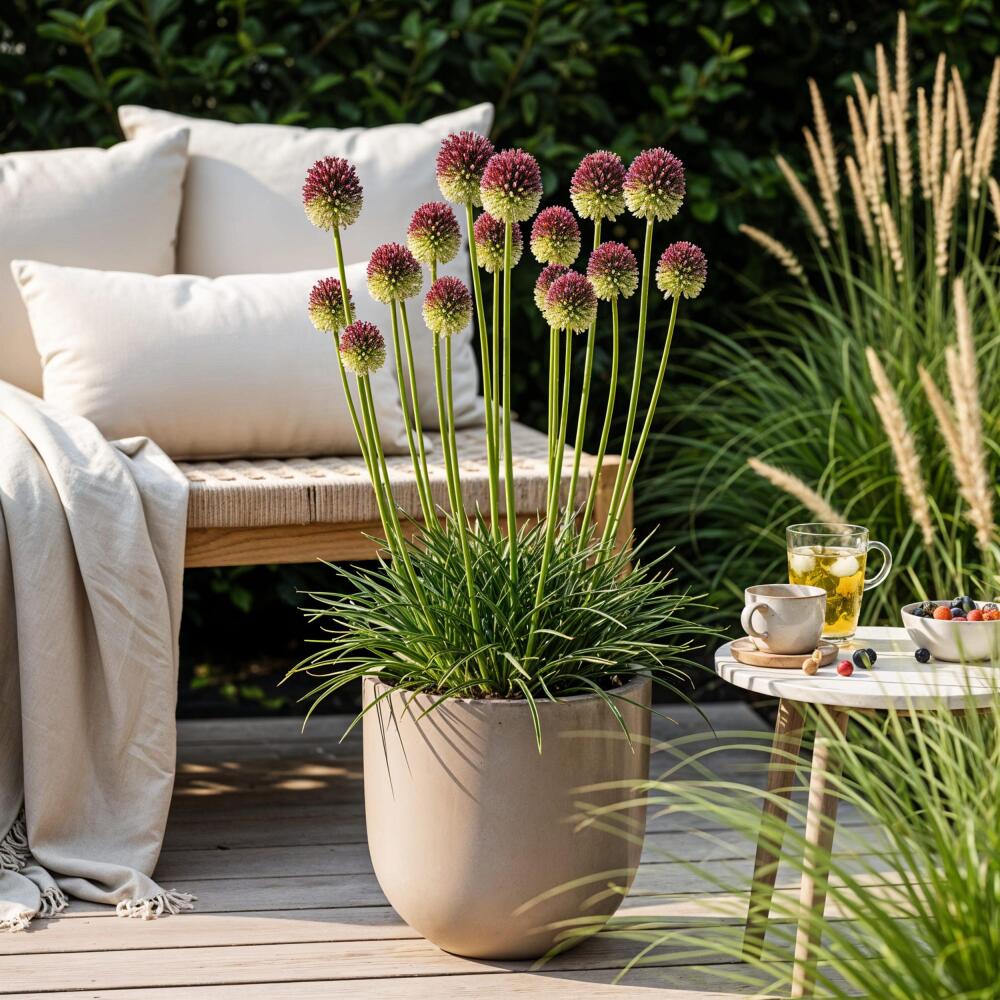
Choose a sunny site with good drainage. Thin stems do not need permanently wet soil to grow upright and healthy. Particularly in compacted areas, check whether rain stands for long periods. In normally loose garden soil, plants can develop well among other perennials. Very dense vigorous neighbouring roots leave little room. A sufficiently deep perforated container is possible but dries faster in summer. Position it so tall stems do not constantly strike furniture or railings. A sheltered garden viewpoint offers more enjoyment than a narrow passage.
Later summer flowering starts in autumn
Plant bulbs in autumn in unfrozen soil, preferably September to November, tip upwards. A common depth guide for this species’ small bulbs is about 10 to 15 cm; consider the actual bulb and packaging. Commercial sizes are not treated unchecked as measured diameters. Settle soil gently and water if dry. Mark planting sites before they disappear above ground. Having to find a hundred small bulbs individually later is unnecessary; a simple group sketch in the plant book helps the next border plan.
Later flowers extend the allium season
This species often shows heads in July and August, later than many large garden alliums. Their effect can thus be spread over different times. During sprouting and stem formation, check soil during prolonged dryness and water thoroughly if needed. Narrow leaves are no reason to forget supplies completely. Do not keep watering already wet soil. Add nutrients sparingly according to need in sufficiently supplied borders. Observe development at your own site: weather and soil influence flowering dates more than a calendar fixed to the day.
Heads change colour step by step
A green lower part on a newly opening head is not automatically a deficiency. Colour develops with the open flowers, often from top to bottom. Photos a few days apart illustrate the change. Dry heads may remain as structure after flowering or be removed. Let narrow basal foliage mature where possible and cut off only dead remains. Later in summer the dormant bulb needs no artificial permanent moisture. Among grasses, the transition often looks calmer if all dry flower stems are not cut at once.
Observe perennial groups instead of replacing annually
Bulbs can overwinter in a suitable permeable garden position. Annual disposal or routine digging up is not normal care. Over time the group may thicken; if space becomes tight, gently spread healthy bulbs during suitable rest or autumn planting phases. Containers need extra shelter from prolonged winter rain and severe freezing through. Check drainage in time and maintain markers. If flowering fails, examine light, neighbouring growth and soil together. Do not use ornamental bulbs in the kitchen. For garden care the species is perennial decoration, not a food offer.
One plant, several views
Good to know
Why is the lower head still green?
Flowers often open and colour from top to bottom. Remaining green can be part of normal development.
Is it a huge globe like Globemaster?
No. Small rather egg-shaped heads are about 2 to 4 cm wide.
What is in the offer?
100 bulbs for planting; pictures show later flowering.
Does it flower with Purple Sensation?
Often later. In our garden conditions it frequently flowers in July and August.
Can I plant it among grasses?
Yes, if the place remains sunny and neighbours do not densely crowd the bulb sites.
Must bulbs be replanted annually?
No. They are perennial and can stay in a suitable permeable garden site.
Sources and editorial note
- Exotenherz – offer and original pictures, 03.10.2026
- RHS – botanical profile and flower features, 03.10.2026
- RHS – planting ornamental onions and seasonal care, 03.10.2026
- NC State Extension – flower shape and development, 03.10.2026
Shop offer, article number, GTIN, availability and original images checked directly on 02/10/2026; specialist acceptance on 03/10/2026. Specialist sources read directly. Shop offer, SKU, availability and both originals checked directly on 03/10/2026. Specialist sources read directly. Bulbs are delivered; original shop images and AI scenes show later flowering. Shop bulb grading classes are not taken as measured diameters. Planting depth relates to the actual bulb, not a commercial grading class. Growth height describes the later garden plant. Compared with existing detailed garden portraits; distinct species or cultivar, not a quantity-variant duplicate.