
This plant at Exotenherz
Check the shop offer for current availability, price and what is included.
The linked shop is in German. Product details, availability and delivery information are provided in that shop.
Your care table
| Topic | What to do | Why it helps |
|---|---|---|
| Light | Sunny; introduce new sun exposure gradually. | Light maintains the species’ typical habit. |
| Water | During growth, water after noticeable drying. | Succulent shoots bridge dry periods. |
| Rest period | Water much more sparingly during leaf loss and limited growth. | Leaf fall can be part of the natural rhythm. |
| Compost | Use free-draining succulent compost with mineral components. | Roots must not remain constantly wet. |
| Drainage | Use a pot with holes and remove leftover water. | Standing moisture encourages rot. |
| Feeding | Feed sparingly only during visible growth. | Resting plants use few nutrients. |
| Winter | Keep bright, protected and frost-free. | Its origin does not justify frost hardiness in a small pot. |
| Safety | Allow clearance from thorns and protect hands when potting. | The strong thorns can cause injury. |
Check the compost and pot weight. The care table explains how far the compost may dry.
Water only when needed. The water should reach the root ball without spilling over the rim.
Remove surplus water from the saucer or cachepot. Then return the plant to a suitable position.
A tree from a distinctive plant world
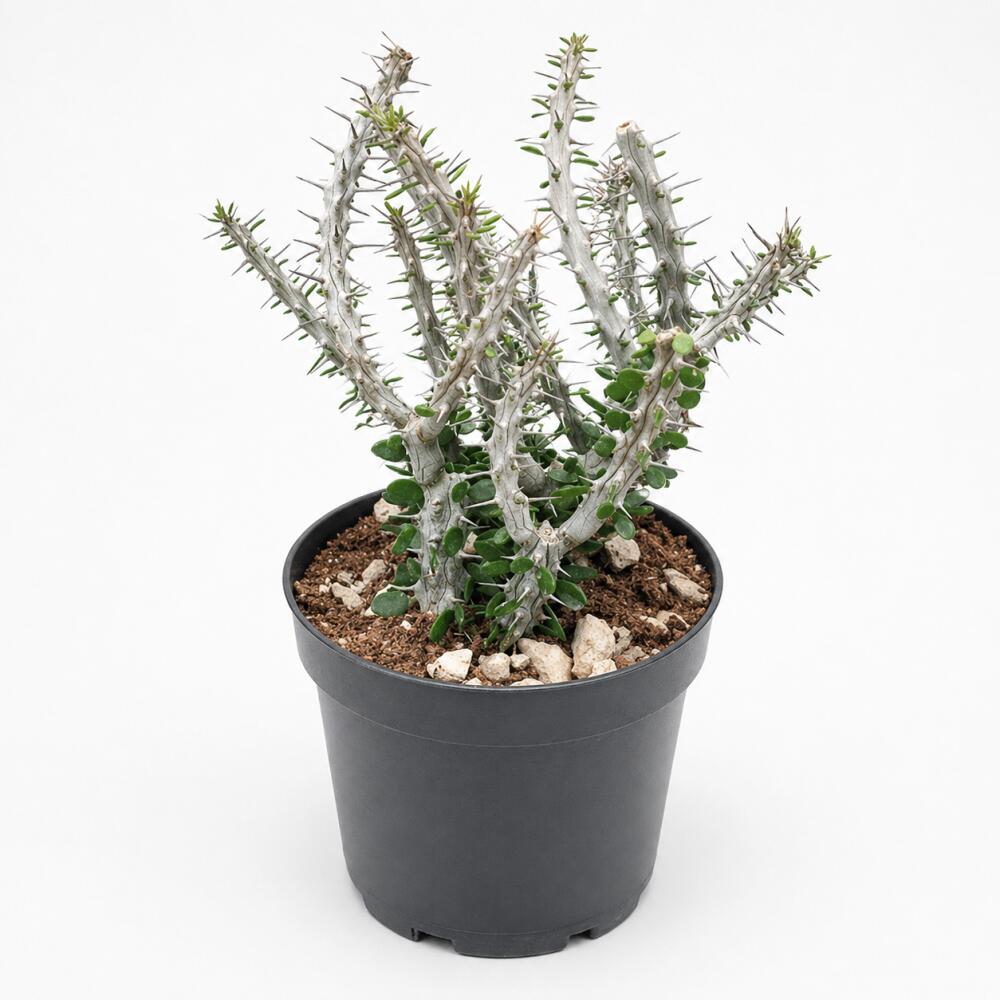
Alluaudia procera comes from dry landscapes in southern Madagascar and belongs to the Didiereaceae. Its upright, pale shoots carry strong thorns and small leaves. It is not a cactus, although its way of life is adapted to dry conditions. In nature it can become a substantial tree; a potted plant remains much smaller. The alternation between leafy growing periods and a temporarily sparser shape is particularly interesting.
Present the young plant thoughtfully
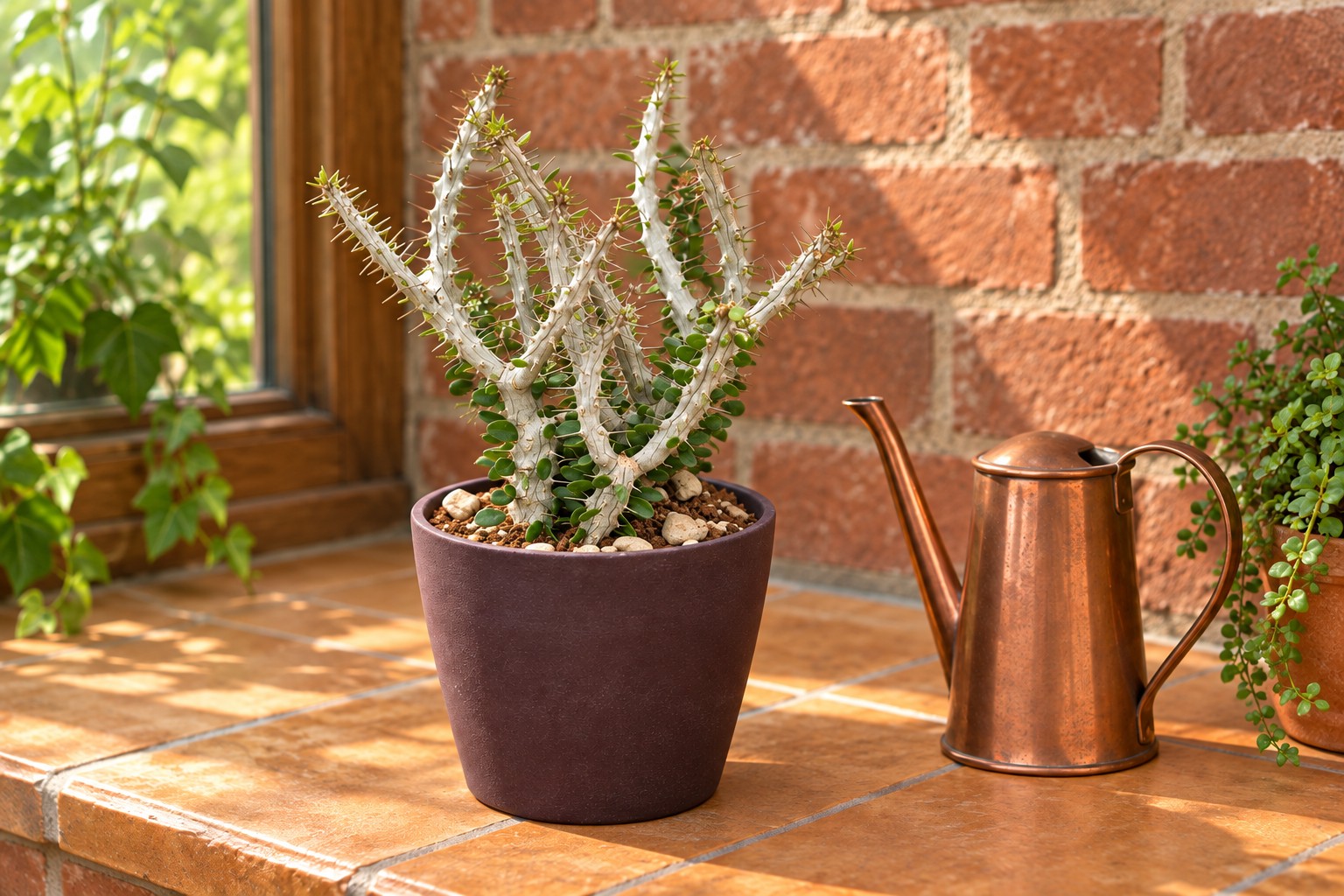
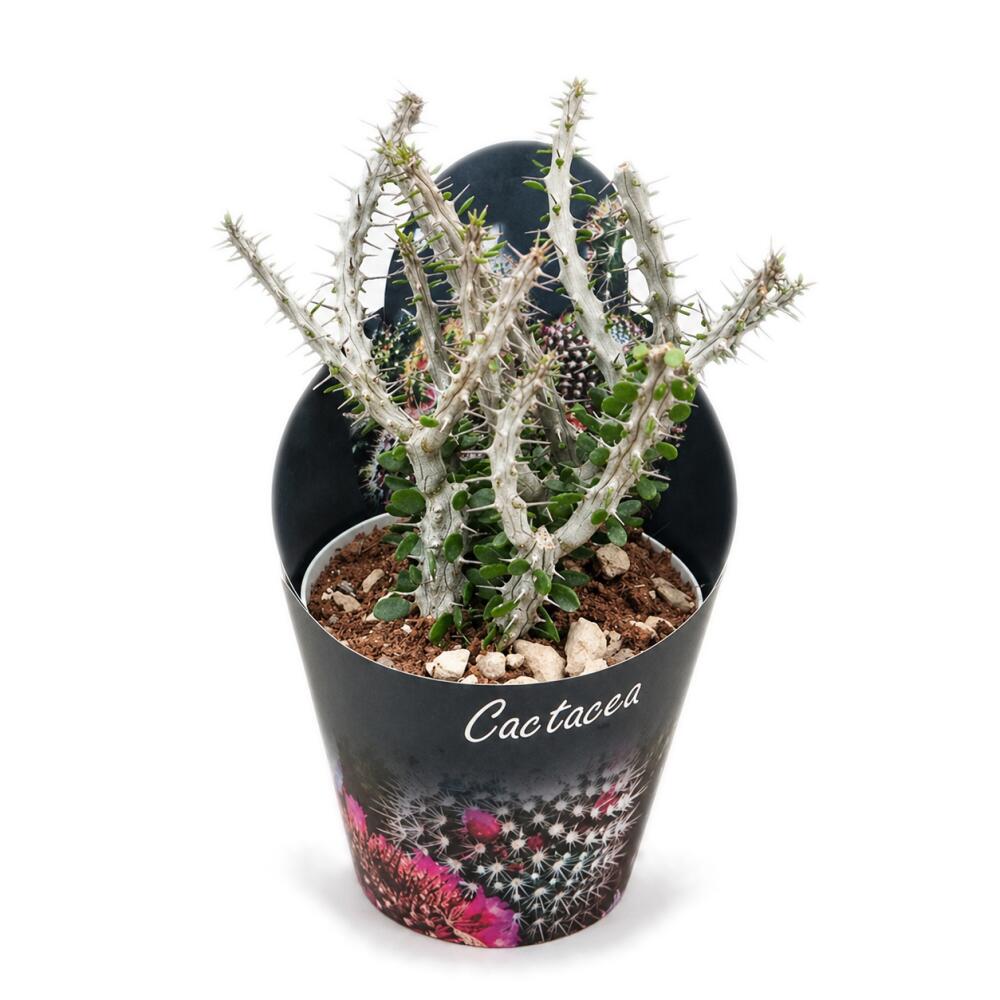
The listing offers an Alluaudia in a 14 cm pot with about 35 cm total height. Its shoots need a safe place away from narrow walkways and beyond the reach of small children or animals. A bright console or protected summer terrace position shows its silhouette well. A stable pot prevents tipping, but its size must not exceed the root ball excessively. The scene shows the young delivery size as a furnishing idea; decoration is not automatically included.
Light and warmth set the pace
Choose a sunny position and slowly acclimatise the plant to strong direct sunshine after transport or winter shelter. Warmth and air exchange are beneficial during growth. Outside, choose a wind-sheltered place and avoid persistent rain. Bring indoors frost-free in good time in autumn. A dark apartment corner is not a suitable winter solution: even a sparsely leafy succulent needs a bright position.
Observe leaves and check the root ball
During active growth, water thoroughly after noticeable drying, then allow to drain well. In a resting period, particularly with leaf loss and limited light, water much more sparingly. Leaf fall alone does not establish thirst. Firm shoots and a dry root ball may fit a rest period; soft areas together with wet compost, however, require close examination. Do not try to force new leaves with daily watering.
Free-draining compost and careful hands
Airy succulent compost with a strong mineral component and unobstructed drainage holes are important. Sturdy gloves and suitable tools protect against thorns during repotting. Choose only the next appropriate pot size and maintain the previous planting depth. Injure healthy roots as little as possible. During visible growth, sparse feeding according to the label is enough. Do not feed in advance during a resting, sparsely leafy period.
Prune little and observe closely
The striking habit needs no regular shaping cuts. Treat damaged shoots with clean tools only when necessary. Check young leaves and thorn bases for mealybugs and other sap-sucking pests. An adjustment period may follow a change of position; several changes at once make assessment harder. Instead, note light, root-ball moisture and development over a few weeks. Alluaudia is an ornamental plant and is not used as food or a home remedy.
One plant, several views
Good to know
Is Alluaudia a cactus?
No. It belongs to a different plant family, the Didiereaceae, and comes from Madagascar.
Why does it lose leaves?
A drier resting period or change of position may trigger leaf fall. Check stem firmness and root-ball moisture too.
Should I water more when leaves fall?
Not automatically. Less water is needed particularly during rest; wet compost can make things worse.
How large is this presentation?
The checked listing offers a 14 cm pot with about 35 cm total height.
Sources and editorial note
- Product and delivery contents: Exotenherz
- Málaga Botanical Garden: Alluaudia procera
- Botanische Tuinen: Alluaudia procera
Sources checked: 15 September 2026. Product details and delivery contents follow the linked shop listing. Care has been checked against the specialist sources cited and must be adapted to the plant’s condition, position and season.