
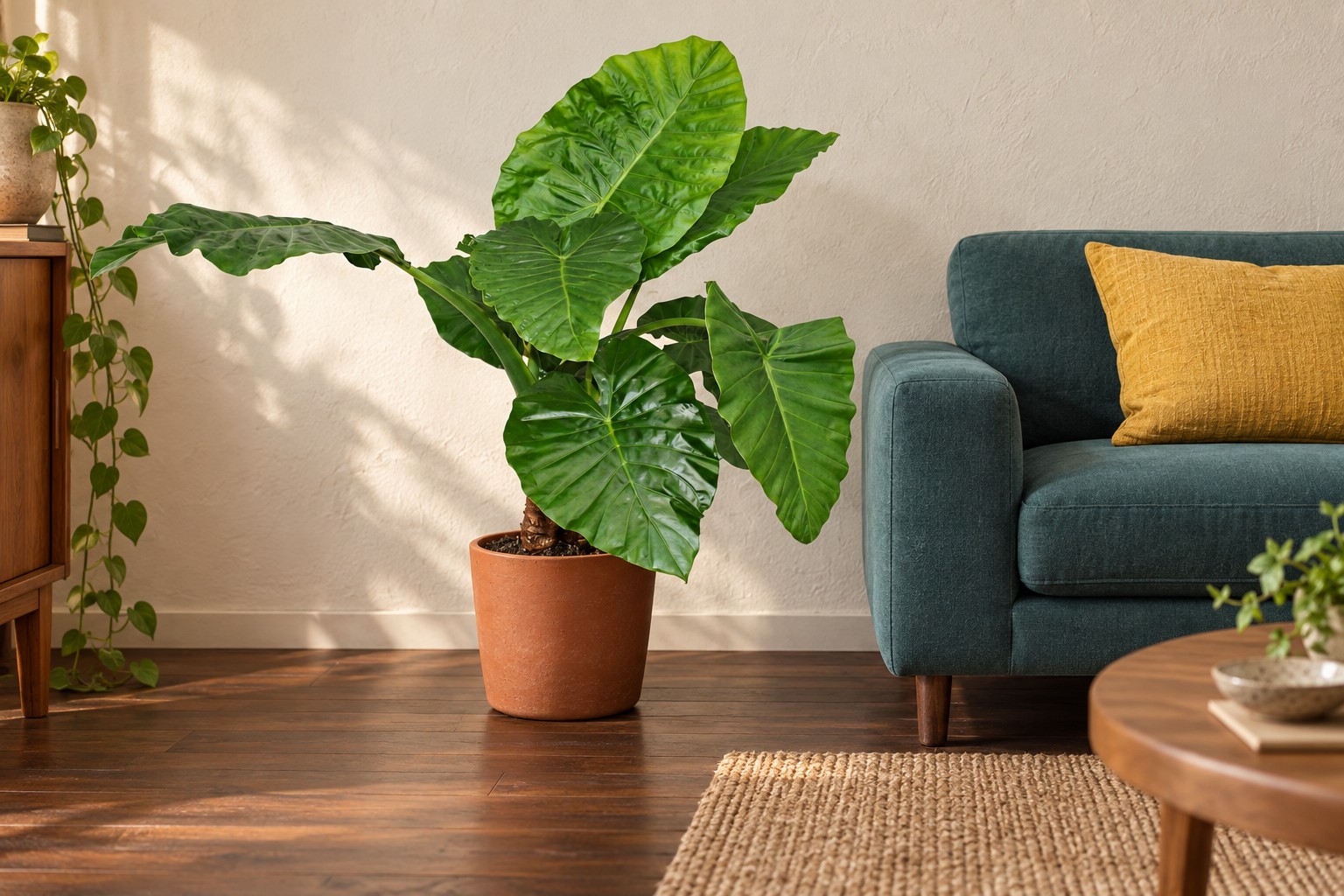
This plant at Exotenherz
Check the shop offer for current availability, price and what is included.
The linked shop is in German. Product details, availability and delivery information are provided in that shop.
Your care table
| Topic | What to do | Why it helps |
|---|---|---|
| Light | Plenty of indirect daylight, without sudden hot sunshine. | Large leaves need light without heat damage. |
| Water | Let the upper compost dry slightly without drying out the root ball. | Consistent watering supports new leaves. |
| Drainage | Remove excess after watering. | Waterlogging displaces air from the root zone. |
| Warmth | Keep warm and protected from cold draughts. | Cold stresses the tropical plant. |
| Compost | Use loose, structurally stable foliage-plant compost. | Roots need moisture and oxygen. |
| Feeding | Feed moderately during active growth according to the label. | Demand falls during low-light rest periods. |
| Checks | Regularly check leaf undersides for spider mites. | Early damage is easier to contain. |
| Safety | Do not eat; protect hands when cutting. | Plant parts and sap can be strongly irritating. |
Check the compost and pot weight. The care table explains how far the compost may dry.
Water only when needed. The water should reach the root ball without spilling over the rim.
Remove surplus water from the saucer or cachepot. Then return the plant to a suitable position.
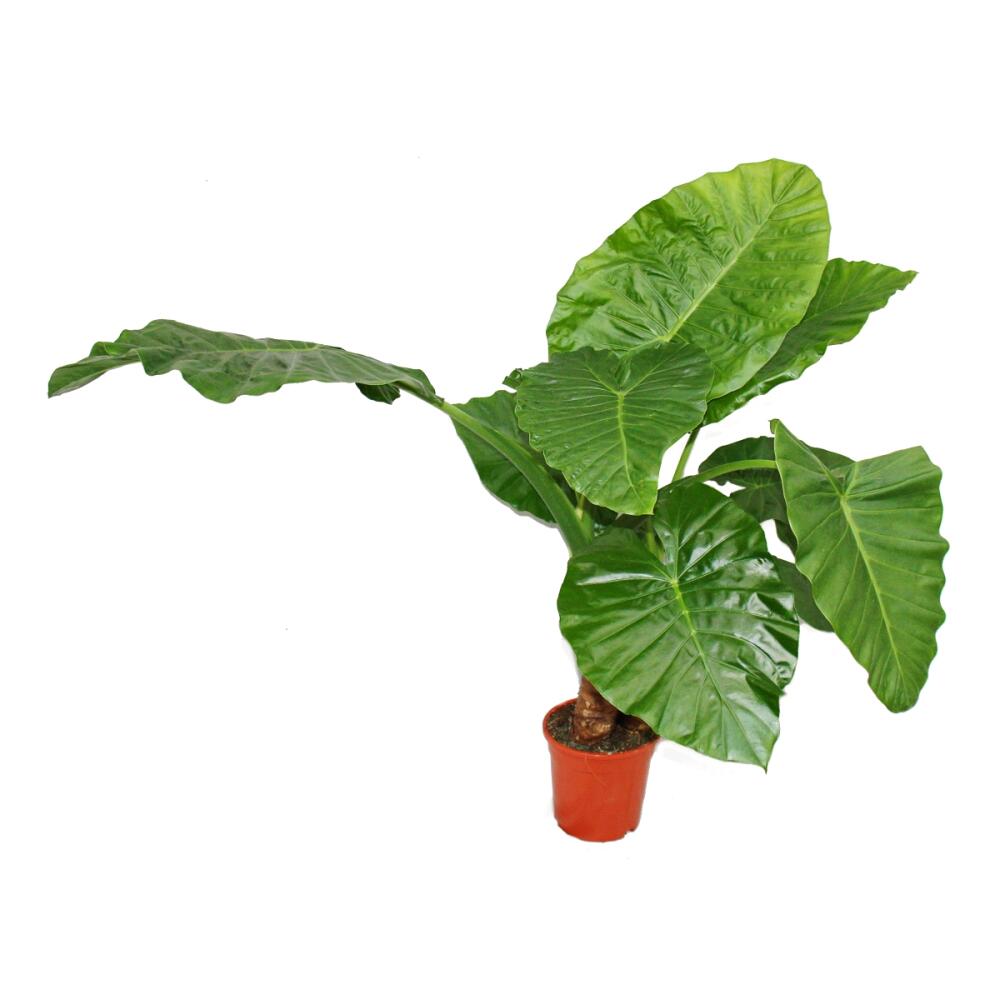
Heart-shaped leaves with a clear structure
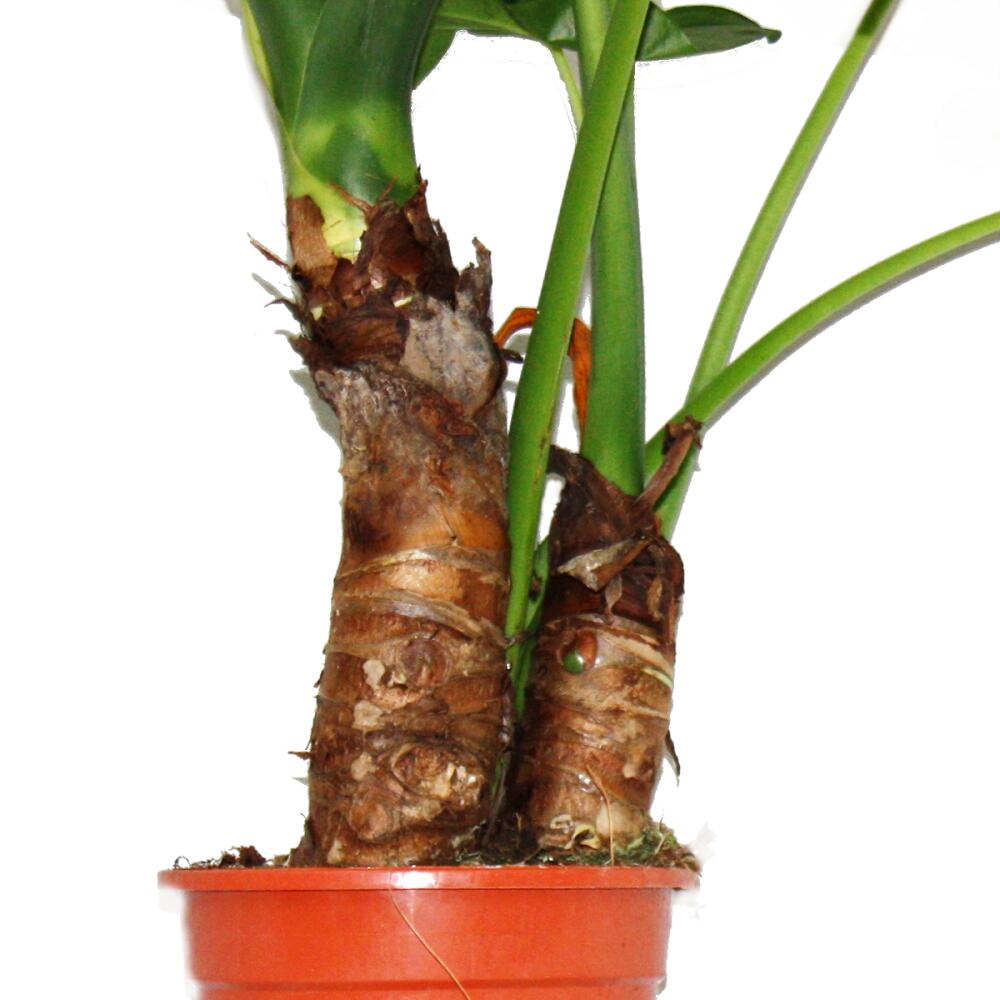
Alocasia cucullata stands out through broad green leaf blades with heart-shaped bases. Strong leaf stalks hold them upright, while veins structure the foliage. The species forms a clump of several shoots and belongs to the aroid family. Its effect comes from the contrast between large leaves and open spaces. An older outer leaf may die while a new one unfurls inside. Heavy simultaneous leaf loss, however, is examined carefully.
A larger specimen needs room
The shop listing gives a 21 cm pot and about 80–100 cm total height. This presentation belongs on the floor or a particularly secure low surface. Allow space to the sides so leaf stalks are not bent and people do not constantly brush the tips. The indoor scene shows a large plant, but not a ceiling-height one. Children and pets must not reach or nibble the foliage. The cachepot and furniture serve only as styling.
Warm, bright and free from harsh midday sun
A position with plenty of filtered daylight is favourable. Strong direct summer sun after darker conditions can damage leaves. Keep the plant away from cold draughts and direct heating warmth. Even warmth and indoor air that has not dried out make care easier. Constant misting replaces neither a suitable environment nor healthy roots. In very dry air, appropriate room arrangements and regular checks help more than wet leaves without air exchange.
Check moisture and empty the cachepot
Compost should remain slightly moist while still containing air. Check the upper layer; as soon as it dries a little, water the root ball thoroughly as needed. Allow all excess water to drain. Yellow leaves can occur with dryness, wetness, cold or ageing and are not an unambiguous instruction to water. In winter, water according to actual consumption. As growth declines or leaves become fewer, the root ball often remains moist longer.
Airy compost for strong roots
Use a structurally stable, loose mix for tropical foliage plants, for example with suitable coarse components, and a pot with drainage holes. A fully rooted specimen is moved carefully into a slightly larger pot during the growing season. Do not bury the base deeper. Feed moderately during active growth according to the fertiliser label; pause with fresh, pre-fertilised compost. A weakened, wet root ball first needs its cause investigated. More fertiliser does not make damaged roots healthy again.
Keep leaves clean and work carefully
Remove dust with a soft, slightly damp cloth, supporting the leaf blade underneath. Check undersides especially for spider mites and other sap-sucking pests. Remove dead foliage with clean tools. The plant contains irritating calcium oxalate crystals and is not edible. Wear gloves when cutting and clean tools afterwards. A quiet, carefully observed position is more valuable for this alocasia than frequent rearranging.
One plant, several views
Good to know
How much space does the listing need?
At about 80–100 cm total height in a 21 cm pot, a secure floor position with lateral clearance makes sense.
Why is a leaf turning yellow?
Individual old leaves may age. If several are affected, assess moisture, cold, light and pests together.
Is it suitable for low light?
No. It needs bright, filtered daylight, even though direct hot midday sun is avoided.
Are the leaves edible?
No. This alocasia is an ornamental plant with irritating substances and stays out of reach of children and pets.
Sources and editorial note
Sources checked: 15 September 2026. Product details and delivery contents follow the linked shop listing. Care has been checked against the specialist sources cited and must be adapted to the plant’s condition, position and season.