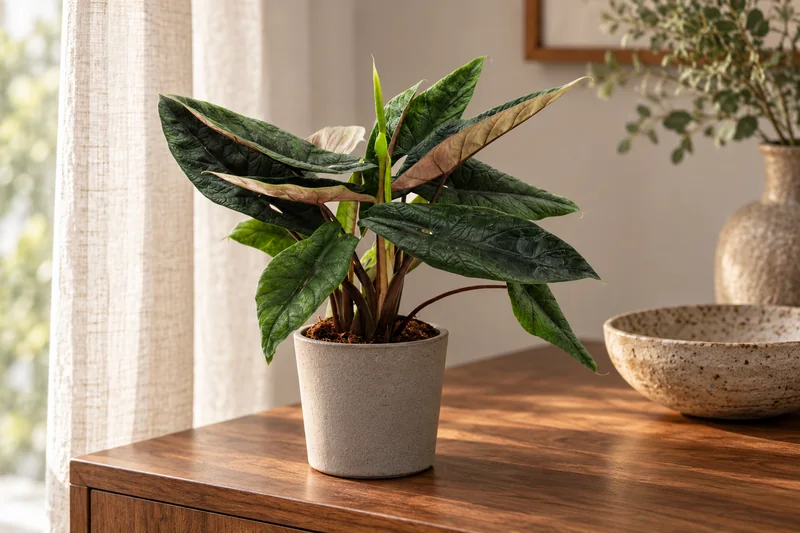
This plant at Exotenherz
Check the shop offer for current availability, price and what is included.
Product and delivery details are given in the individual offer.
Your care table
| Topic | What to do | Why it helps |
|---|---|---|
| Light | Place in bright filtered daylight. | The fine crown needs a lit position. |
| Warmth | Protect from cold draughts. | The alocasia is frost-sensitive. |
| Moisture | Water evenly in growth after checking the surface. | Wet soil is no reason for more water. |
| Drainage | Remove surplus and empty the cover. | Roots need air. |
| Soil | Choose a loose permeable mixture. | The base is not buried deeply. |
| Fertiliser | Dose according to label during growth. | Consider rest periods and prior fertilisation. |
| Rest | Reassess moisture needs when sprouting slows. | Rest does not automatically mean plant loss. |
| Handling | Do not eat; avoid sap contact. | Plant parts may irritate. |
Check the compost and pot weight. The care table explains how far the compost may dry.
Water only when needed. The water should reach the root ball without spilling over the rim.
Remove surplus water from the saucer or cachepot. Then return the plant to a suitable position.
A little plant draws large lines in the air
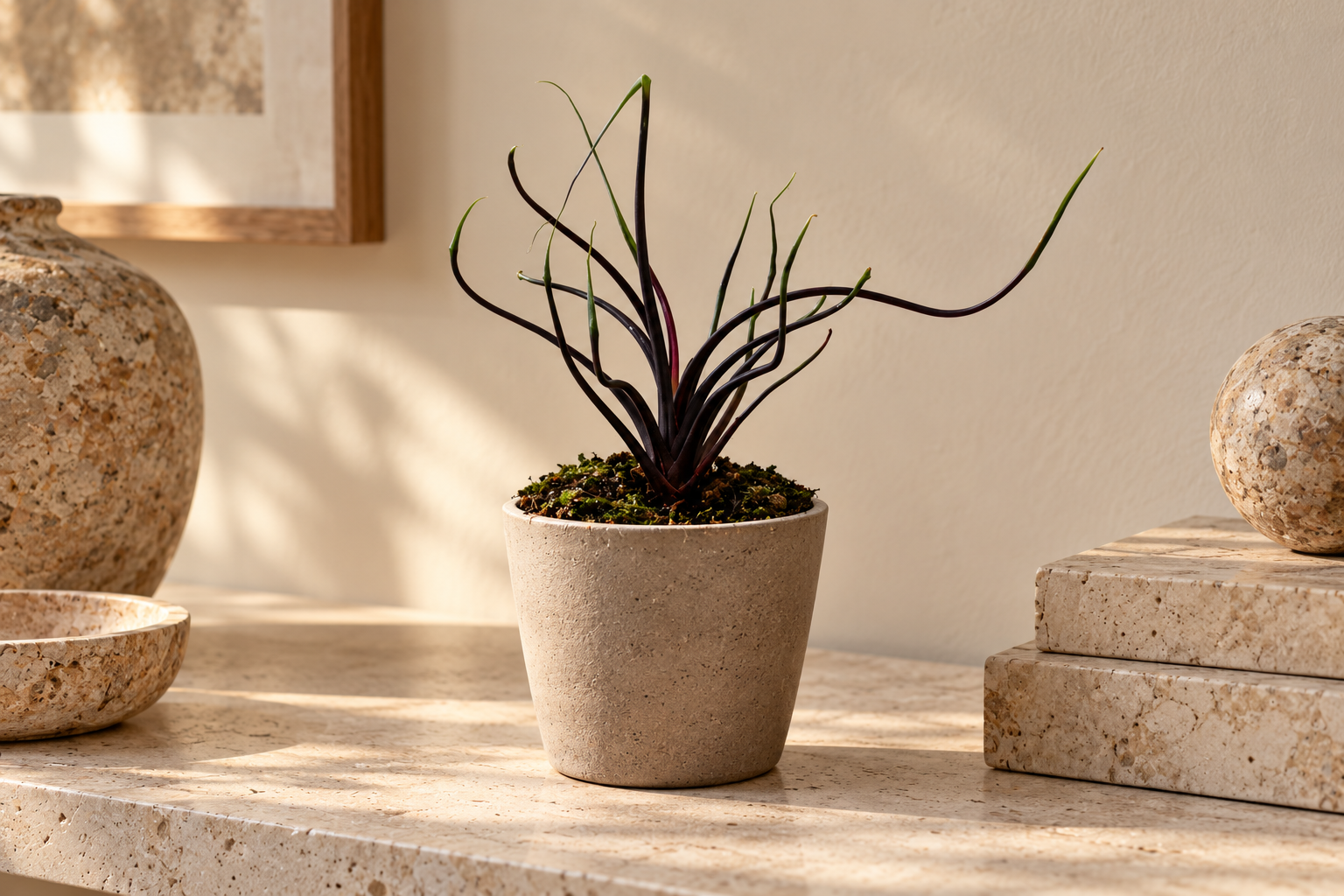
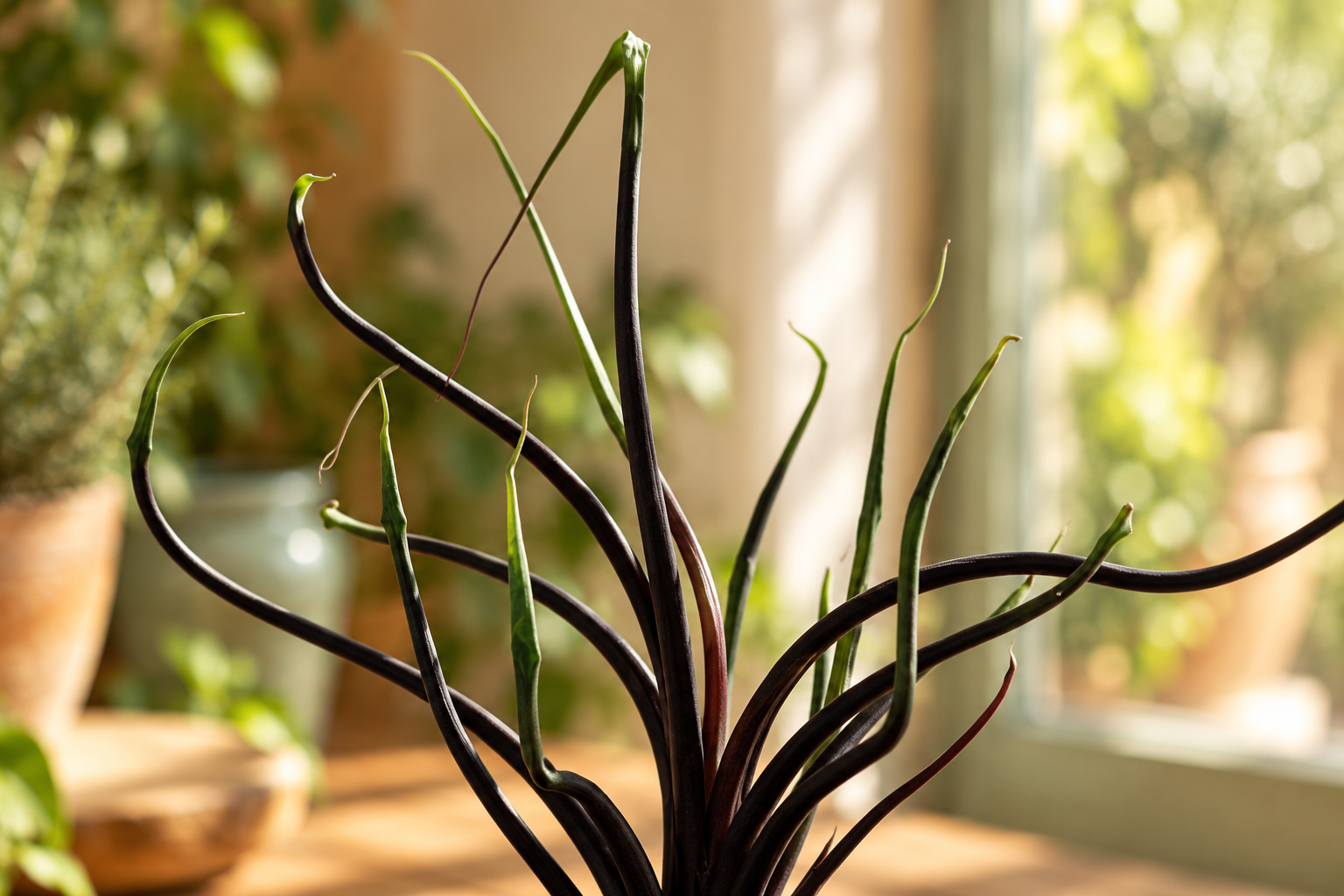
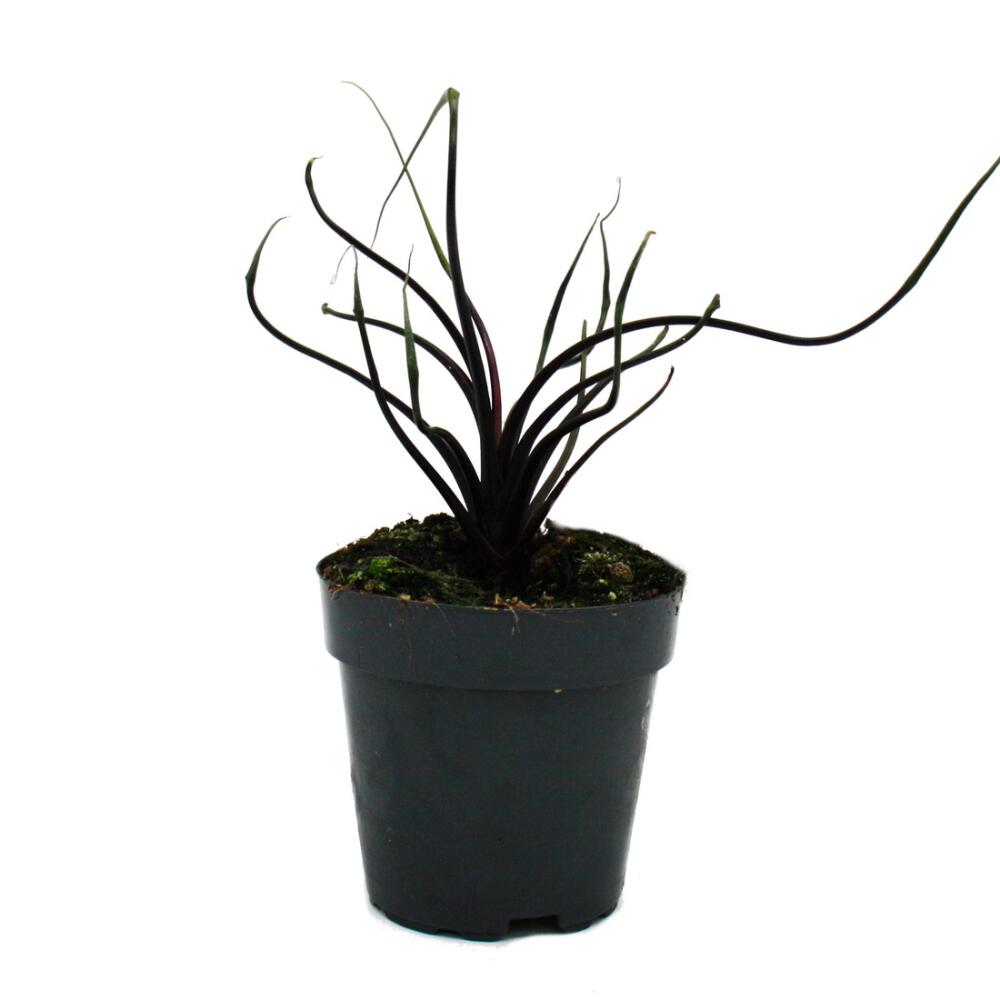
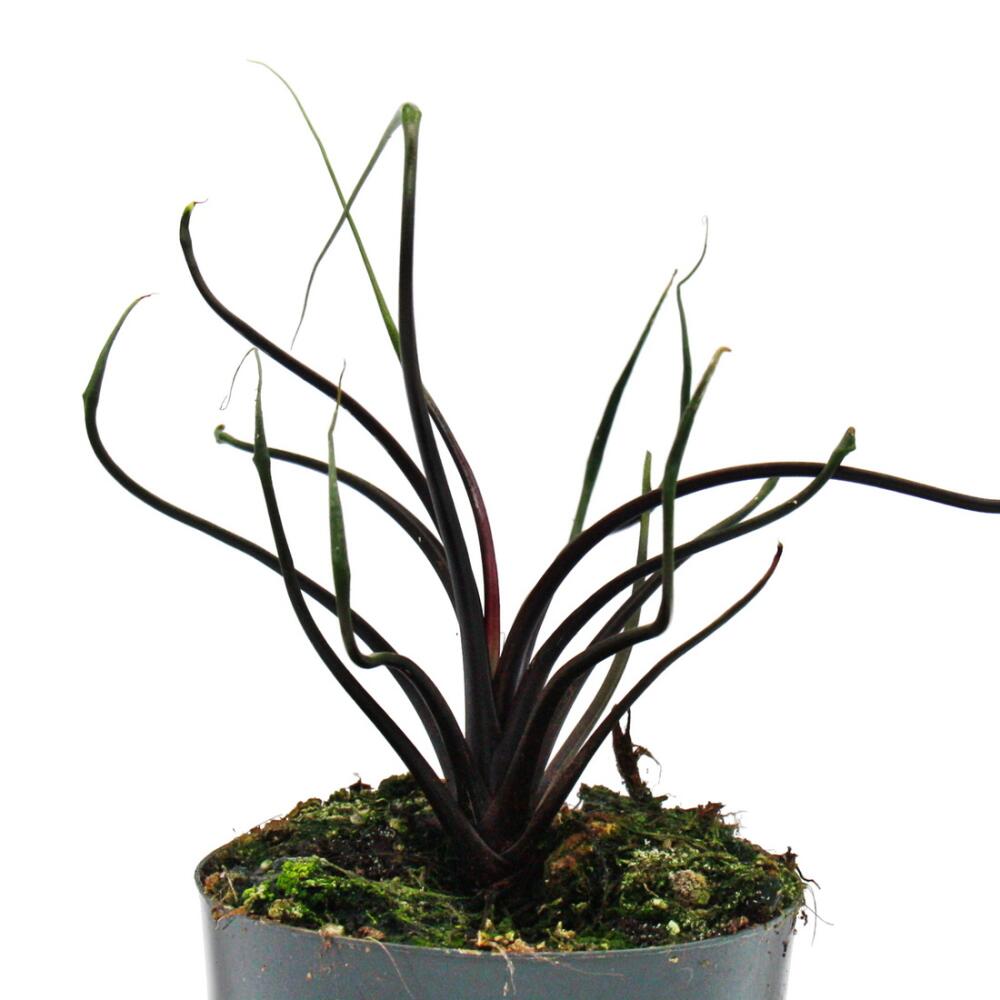
Flying Squid stands out for what it almost lacks: instead of large elephant ears, fine dark stems rise above the pot with narrow green leaf portions at their tips. Curving lines recall squid arms but remain living plant organs. The shape shows particularly well before a quiet light wall. The original depicts a young airy crown. The common shop name Alocasia plumbae remains recognisable as a trade designation; no unchecked additional species identification or new botanical name is inferred from it.
The small pot needs an accessible place
The range plant sits in a 12 cm pot and is described as about 25 to 30 centimetres total height. A free shelf or low plant position can show the dark lines beautifully. Daylight must actually reach it. A tight shelf easily presses against the fine tips. Carry by the container and release packaging gently. The small crown may look larger in an overall scene, so the size reference stays clear beside the image and in the care table.
Filtered light keeps the shape alive
Alocasia care begins with a bright warm room position without sudden harsh sun. Avoid cold draughts and strong heat directly beside a heater. Do not turn or move it with every small change. A shoot photo helps compare development over several weeks. New ends are more sensitive than older parts. Extra brightness is offered gradually. Dark stem colour belongs to the visible form and alone is no reason to conclude drought or disease.
Check the root ball below fine stems
During growth the root ball is supplied evenly without enclosing it permanently in water. Let the surface dry a little and check pot weight and moisture before the next watering. Let surplus drain afterwards and empty the cover. A small pot responds faster to warmth than a large established planting. When growth slows under less light, consumption also drops. Unchanged summer watering can then saturate the root zone. Limp stems in wet soil require drainage checks rather than another automatic watering.
The unseen base needs air and quiet
Loose permeable houseplant soil with suitable coarse components provides structure. When strongly rooted, give only slightly more pot space and do not bury the base deeply. Dose nutrients during active growth according to the fertiliser label; existing pre-fertilisation counts too. Carefully remove completely dead parts. Do not trim the unusually narrow crown into an ordinary foliage plant. Avoid sap contact while working: alocasias are not edible and contain irritating substances. Position with consideration for children and animals that might reach plant parts.
Observe a quieter phase deliberately
Alocasias may lose foliage and show a rest phase under unfavourable light or cooler conditions. This does not mean the tuber-like base must immediately be discarded. Check its condition gently, keep frost-free and adapt moisture to reduced consumption. Fixed winter treatment regardless of condition does not suit it. Combine an overall view and a close-up of green tips in the plant book. Note when fresh shoots appear. This shows whether care follows the little Flying Squid’s actual rhythm.
One plant, several views
Good to know
Why are large alocasia leaves missing?
Strongly reduced narrow leaf portions belong to the Flying Squid form.
Is it a cactus?
No. This portrait describes an alocasia from the Araceae family.
Is 30 cm the final height?
The figure describes range condition including the pot.
Does it need water daily?
Root-ball moisture, warmth and growth determine the next watering.
What if foliage retreats?
Check light, warmth, moisture and the living base; account for consumption during rest.
Sources and editorial note
- Exotenherz – offer and original pictures, 03.10.2026
- RHS – alocasias, root space and rest phases, 03.10.2026
- NC State Extension – Alocasia growth and handling, 03.10.2026
Shop offer, article number, GTIN, availability and original pictures checked directly on 02.10.2026; specialist acceptance on 03.10.2026. Specialist sources read directly. SKU, pot reference, original photos and orderability checked in the shop on 03.10.2026. Delivery height and species development separated. Specialist sources actually read; six individual sections, eight care points and five FAQs editorially compared. Currently not orderable: knowledge portrait without purchase link or social dispatch approval. No tool, Wawi or server changes. Currently not orderable: portrait without purchase link; social drafts not approved for dispatch.