
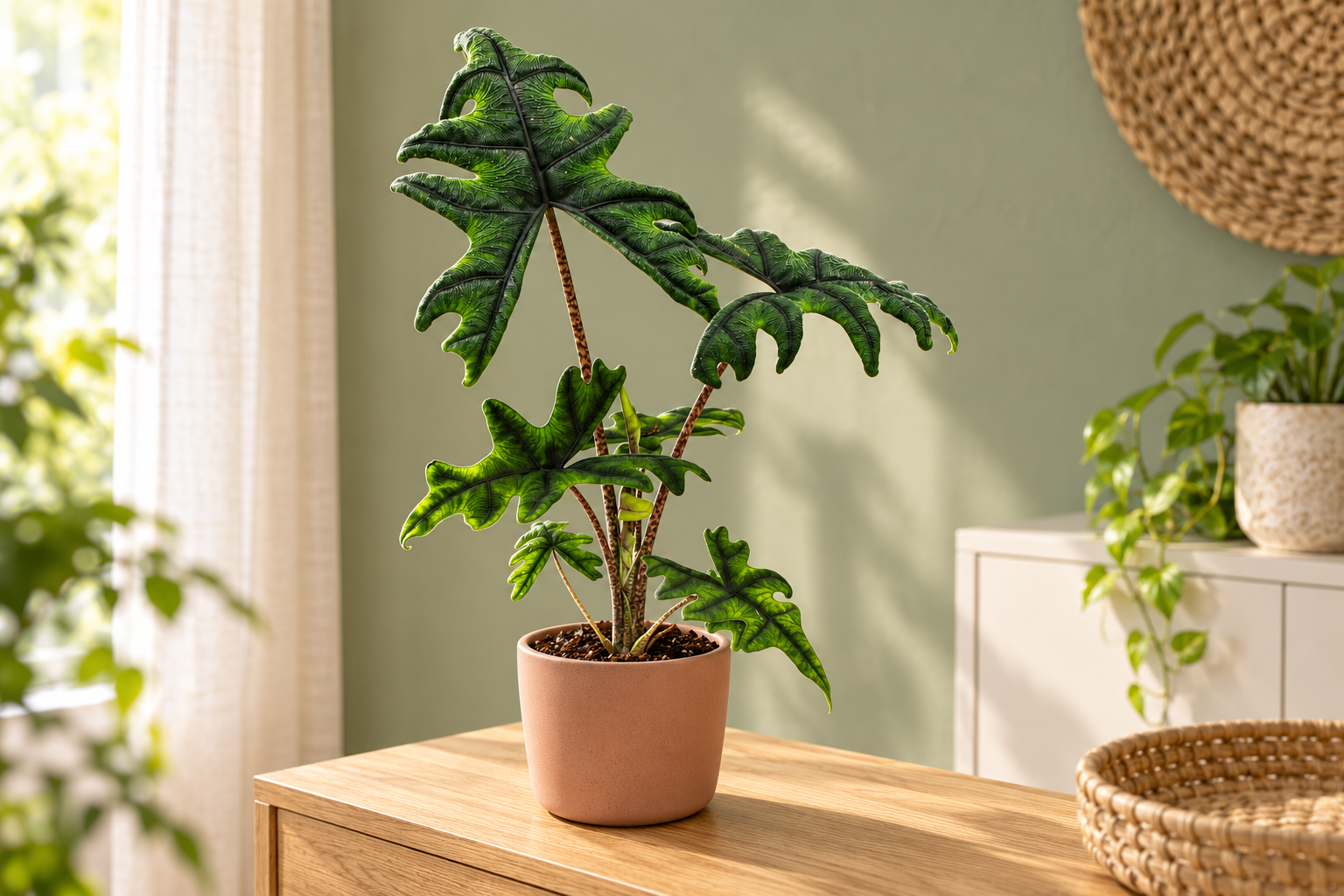
This plant at Exotenherz
Check the shop offer for current availability, price and what is included.
Check the selected shop offer for price, availability and delivery contents.
Your care table
| Topic | What to do | Why it helps |
|---|---|---|
| Light | Choose bright, indirect daylight; soften hot direct sun. | Leaf texture does not indicate a sun-tolerant garden plant. |
| Water | Allow the top layer of soil to dry slightly, then water the root ball evenly. | Regular water supply must be balanced with enough air around the roots. |
| Drainage | Use a nursery pot with drainage and remove water from the outer pot. | Lasting wetness at the bottom of the pot stresses the roots. |
| Warmth | Choose a consistently warm position without cold draughts. | This tropical plant reacts to cold air and a chilled root ball. |
| Humidity | Avoid places near heaters; humidify dry room air effectively when needed. | Care should improve room conditions, rather than merely wet the leaves briefly. |
| Substrate | Use a loose, freely draining houseplant mixture with good structure. | Moisture remains available without the soil becoming dense and short of oxygen. |
| Feeding | Feed moderately only during active growth, following the product instructions. | In low light, more fertiliser will not produce healthy new growth. |
| Leaves and roots | Clean gently, check the undersides and move to a slightly larger pot when needed. | The distinctive leaf surface and roots should remain undamaged during care. |
Check the compost and pot weight. The care table explains how far the compost may dry.
Water only when needed. The water should reach the root ball without spilling over the rim.
Remove surplus water from the saucer or cachepot. Then return the plant to a suitable position.
A leaf surface like a small landscape
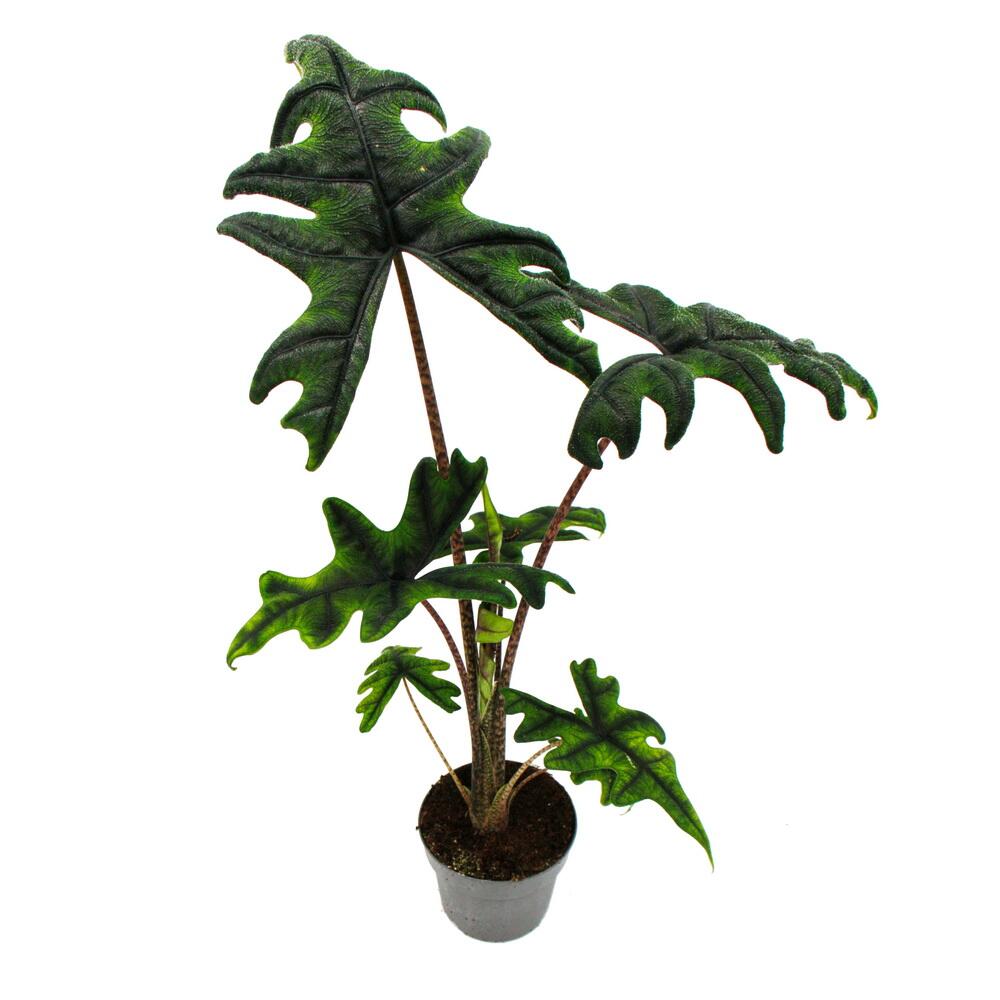
With Jacklyn, even a single leaf is full of movement. Dark veins divide the green, the surface looks strongly textured, and the edge is deeply lobed and irregularly cut. This makes the plant distinctive without needing flowers. We like it on a bright console, where you can view the leaves from the side and from the front. Do not constantly touch or bend the large surfaces into position. A leaf that is unfolding should especially be left to develop its shape in peace. A natural outline may vary slightly between leaves; that makes it neither a flaw nor a different plant species.
Jacklyn is the familiar trade name
The shop offers the plant as Alocasia tandurusa Jacklyn; slightly different spellings also appear in the trade. Behind the name is the botanical species Alocasia tandurusa from Sulawesi. This is useful for practical care: we treat it as a tropical foliage plant, not a hardy garden perennial. The offered specimen is in a 12 cm pot and is approximately 40 to 50 cm tall. A young plant changes its leaf size and silhouette as it continues growing. Delivery height is therefore not a fixed mature size, and the sample photograph does not promise a particular leaf count.
Arrange a bright position without stress
Jacklyn needs usable daylight. Its darkly marked leaves do not make it a plant for a poorly lit bookshelf. A bright indoor position with indirect light can be arranged well; soften hot direct sun through glass with a curtain when necessary. If leaves reach the glass or project into a narrow passage, choose a roomier position. After unpacking, first look at the root ball and leaves, remove the packaging gently and offer a quiet spot. Changing positions, immediate heavy feeding and unnecessary repotting do little to help it settle in. First observe how the plant grows there.
The root ball determines when to water
When watering, we check the soil rather than treating the calendar week as an obligation. The top layer may dry slightly; beneath it, the root ball should not stay persistently parched. Then water evenly and let all excess water drain away. An outer pot looks attractive but must be free of leftover water afterwards. Demand may rise in summer and fall on short days with quiet growth. Limp leaves can fit dryness, but also damaged roots in wet soil. So feel and check first before giving extra water. A root ball that is moist deep down needs no precautionary top-up.
Airy soil and a suitably sized pot
A loose houseplant mixture with suitable structural ingredients gives the roots air while still holding moisture. Dense soil that stays wet for a long time makes that balance harder. The nursery pot must have drainage holes; a layer of stones in a closed container cannot replace drainage. When a growing plant has a well-rooted root ball, we choose a pot only slightly larger for repotting. Handle the roots carefully and leave the stalk bases at their previous height. Adjust the next watering to the fresh mixture. A stable outer pot helps the tall young plant stand securely without unnecessarily enlarging its root space.
Think of the tropics, work with the room
A steadily warm position without cold draughts is important for Jacklyn. Direct heater warmth dries the air, and sometimes the root ball, in an unhelpful way. Targeted humidification can help when indoor air remains dry. A brief mist does not replace suitable room conditions, however; the plant need not keep dripping. Even in a more humid position, the roots need clear drainage. During active growth, we feed moderately according to the fertiliser instructions and allow for already fertilised substrate. Warmth, light and healthy roots must work together before additional nutrients are useful at all. More fertiliser does not improve a poor position.
Support winter and leaf renewal with patience
As the days shorten, Jacklyn may produce new leaves more slowly. The soil then often stays moist longer, and watering becomes correspondingly lighter. A bright, warm position remains right; the young plant need not be forced into a cold, dry rest. An old leaf may gradually yellow while the others remain healthy. If several leaves change rapidly, we check the root ball, roots, temperature and light more closely. Do not cut off healthy green leaves as a precaution. Clean scissors are enough for clearly dead or damaged parts. In this way, care stays calm and follows actual development.
Preserve the distinctive texture gently
We remove dust carefully, without treating the leaf surface with vigorous rubbing or leaf-shine products. Support the leaf from underneath. At the same time, check the undersides and stalk bases: fine webs, unusual speckles or cottony patches call for a closer pest check. First separate an affected plant rather than letting the infestation spread to its neighbours. Alocasia is not suitable for eating and contains irritating substances. Wear gloves when cutting and repotting, and keep sap away from eyes and mucous membranes. Indoors, we choose a safe position out of reach of young children and animals that like to nibble plants.
One plant, several views
Good to know
Are Jacklyn and tandurusa different plants?
Tandurusa is the botanical species name. Jacklyn is the common trade name for this offered plant; spelling variations also occur.
Are the deep cuts damaged leaves?
The strongly lobed outlines are part of its appearance. Let a freshly unfolded leaf grow gently; distinguish this from new tears or brown injured areas.
Does it suit a shelf?
Yes, if enough bright daylight reaches it and the leaves have sufficient room. A dark compartment deep inside the room is not a suitable permanent position.
How often should I water?
Check root-ball moisture and pot weight. Once the surface has dried slightly, water evenly and allow to drain; demand and timing change with light, warmth and growth.
Must it stay dry in winter?
No. Water less when growth slows, but do not carelessly let the root ball dry out completely. Its position stays bright and warm.
Can I plant it in a garden bed?
It is a tropical houseplant, not a frost-hardy border perennial. Permanent garden cultivation through our winter is unsuitable for the offered specimen.
Sources and editorial note
- Exotenherz: the specific delivery plant and original image
- Royal Botanic Gardens, Kew: accepted species Alocasia tandurusa and origin
- RHS: growing alocasias indoors
- NC State Extension: Alocasia, growth and handling
- Iowa State Extension: humidity for houseplants
Shop checked directly on 30.09.2026: SKU 501218072024, GTIN 4019515923120, limited stock, 12 cm pot and 40–50 cm height. Trade name Jacklyn follows the shop title; Jacklin/JackliN spellings in the description are not treated as different plants. Kew POWO confirms Alocasia tandurusa as an accepted species from Sulawesi. No unsupported registered cultivar or exact mature height is claimed. General alocasia cultivation is explained, without an invented selection-specific watering rule. Leaf morphology is visible in the original. Scene to receive separate visual acceptance. Original and scene compared directly by sight: species characteristics, leaf outline, stalk markings, proportions, soft light and labelling accepted.