
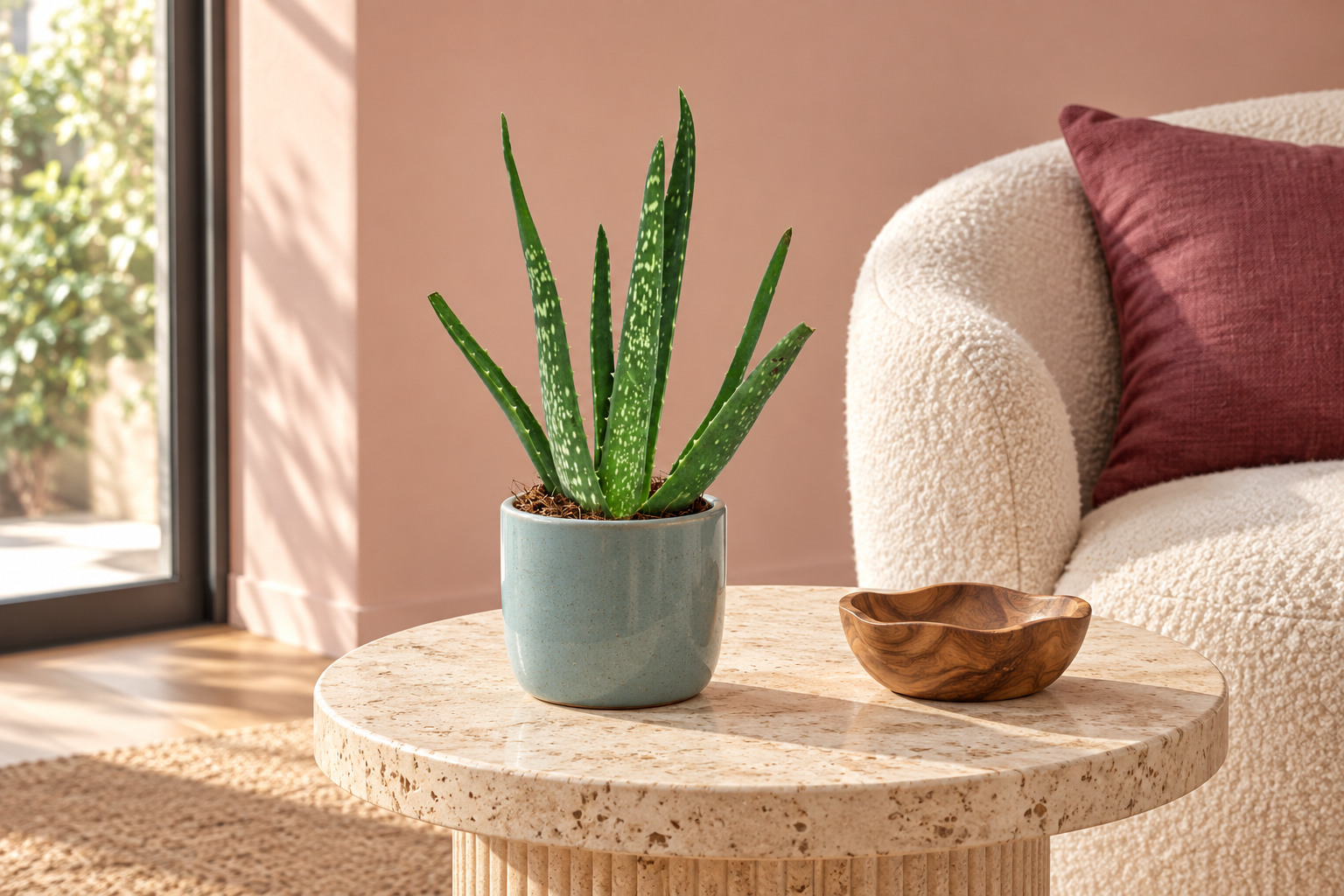
This plant at Exotenherz
Check the shop offer for current availability, price and what is included.
Link to the offer in German. Check the shop for the current price, availability and delivery contents.
Your care table
| Topic | What to do | Why it helps |
|---|---|---|
| Light | Place in very bright light and acclimatise gradually to stronger sun after buying. | An abrupt move into intense sun can damage leaves. |
| Watering | Allow the compost to dry well to completely before the next watering; then water thoroughly and allow to drain. | Water reserves in the leaves bridge dry periods; wet roots suffer. |
| Drainage | Use a nursery pot with drainage holes; empty the decorative pot after watering. | Even a small amount of water can collect at the bottom for a long time. |
| Compost | Choose stable, well-drained succulent compost. | Compost should let water through and then allow air back to the roots. |
| Fertiliser | When growth is visible, feed sparingly with a suitable fertiliser according to the label. | More fertiliser does not compensate for a dark position. |
| Winter | Place in very bright, frost-free light, avoid cool draughts and water much less according to need. | With less growth, the growing medium dries more slowly. |
| Repotting | In spring, if the root ball is cramped or the plant unstable, choose only a slightly larger pot. | Suitable pot size makes moisture checks easier. |
| Offsets | Carefully separate well-developed, preferably rooted offsets from the mother plant. | Their own roots make starting easier; small beginnings may keep growing. |
Check the compost and pot weight. The care table explains how far the compost may dry.
Water only when needed. The water should reach the root ball without spilling over the rim.
Remove surplus water from the saucer or cachepot. Then return the plant to a suitable position.
A plant with reserves in every leaf
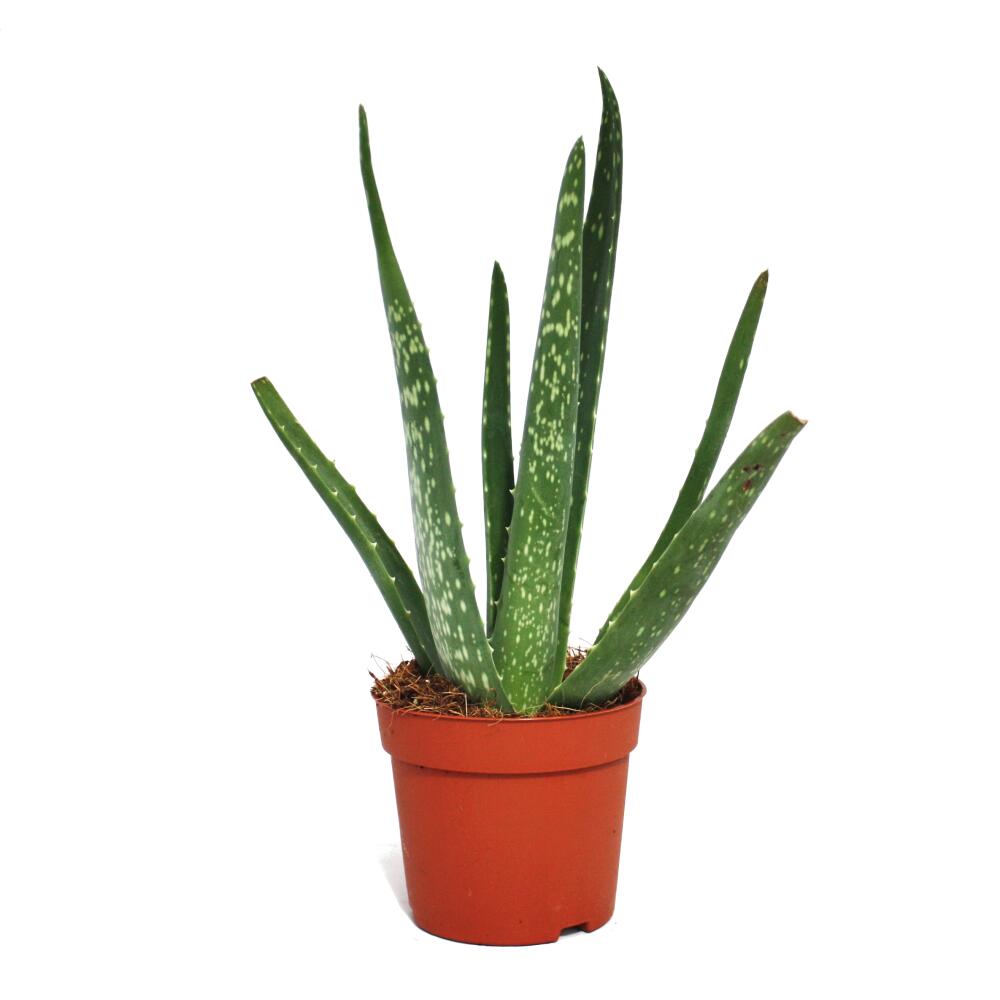
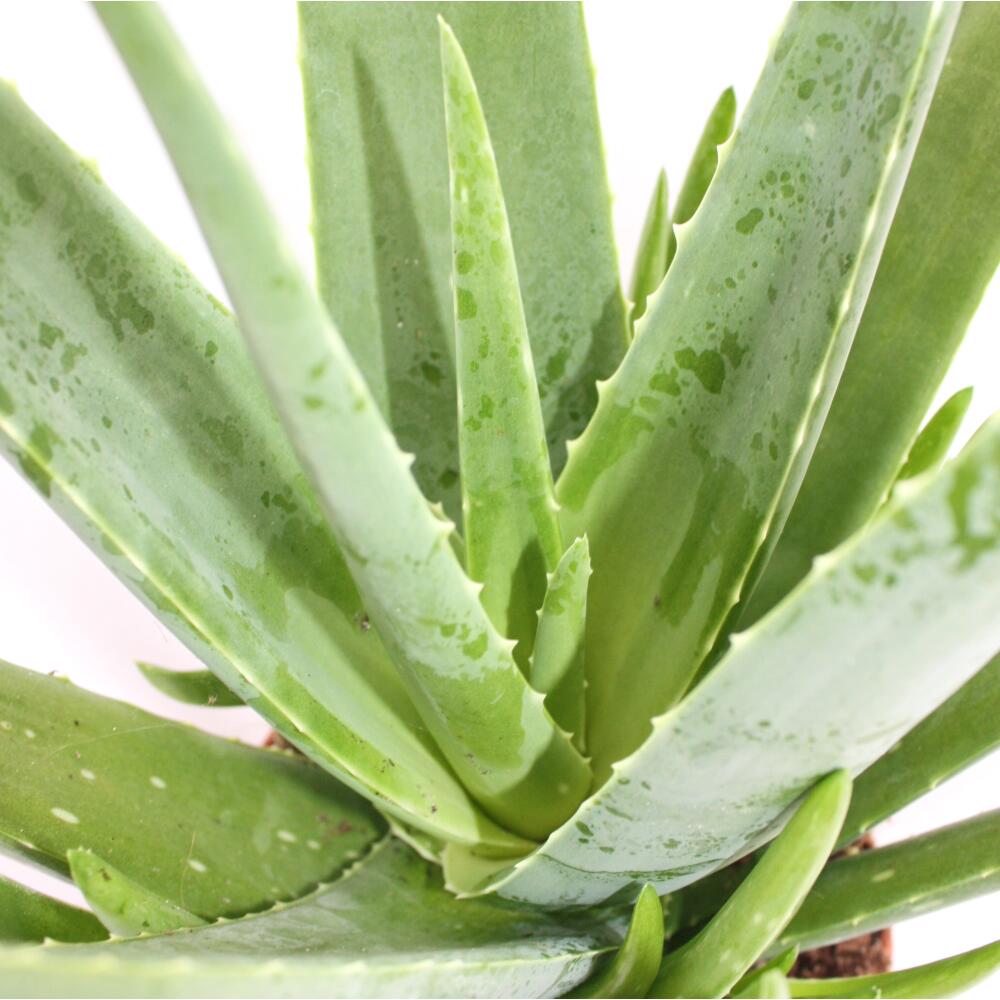
Aloe vera is a succulent. Its fleshy leaves store water; they are not an invitation to keep adding more. The leaves form a rosette around a short centre; young specimens can show pale spots. The species is now grown in many warm regions, and its origin is attributed to the Arabian Peninsula. For us, it is primarily an expressive ornamental plant: clear outlines, little effort and a growth habit you can attentively follow over the years. Flowering is not a reliable annual event in a young houseplant.
Choose a size that suits the window
The young aloe pictured is offered in a 10.5 cm pot and described as approximately 30 to 35 cm in overall height. The also-linked 12 cm version is approximately 35 cm tall. These are size offers of the same species and therefore part of this shared portrait. Allow some space at the sides too: leaves should rub neither against the glass nor a frequently moved curtain. A more widely opened window should not knock the plant over. The home scene follows the smaller version; the original image shows the actual nursery pot.
Let it settle and watch the position
After unpacking, first check that the pot stands securely, the leaves are undamaged and whether the root ball is still moist. An already moist plant does not need a precautionary welcome watering. Put it in bright light and gradually accustom it over several days to stronger sun. Watch the leaf surfaces as you do so. A bright place right by a window is usually more helpful than an attractive but dark corner. Behind glass, sun and warmth can combine strongly; temporary light protection is sensible when midday sunshine is unfamiliar.
Water with a deeper look
For aloe, the root ball decides, not the weekday. Feel more than just the very top of the compost and compare pot weight with its weight after the last watering. Once it has dried well, water the compost slowly until the root ball is reached. Remove water from the decorative pot or saucer. If the pot stays unusually heavy and moist for a long time, check light, growing medium and drainage. A small pot can reach its dry period sooner in sunny weather than a large container. A little daily sip often makes that change hard to understand.
A summer position outdoors
A sheltered position outdoors can suit it in summer once temperatures are reliably mild. Start bright but protected from intense sun, then increase sun exposure gently. Watch rain: a decorative pot without drainage must not become an unnoticed water basin. The aloe remains frost-sensitive and should come indoors in good time before cold nights. When moving it inside, check leaf bases and the pot rim. This makes accompanying pests easier to notice and lets you prepare a suitable bright winter position.
Through the low-light season
In winter, consider available light and water use together. Less growth often means longer watering intervals. A dry surface alone is not enough as a signal in a large pot; check the remaining moisture. At the same time, a small plant should not dry away unobserved for months. Avoid frost, cold air directly from a tilted-open window and a constantly wet root ball. Stop feeding during a pause in growth. It is best to note the winter position in your plant book, because experience at that particular window is more valuable than a general calendar rule.
Repot without unnecessary stress
Changing pots is useful when roots densely fill the root ball or stability is lacking. Spring provides good conditions for a healthy plant to start afresh. Choose a pot with clear holes and only a little additional room. A loose succulent mix is more suitable than heavy compost that stays wet for a long time. Hold the plant by the root ball, not the leaf tips; fleshy leaves can break. Gently remove loose old growing medium. If roots were injured, avoid a constantly wet root ball afterwards. Do not simultaneously feed freshly repotted plants heavily.
Offsets: the natural route to a second aloe
Small rosettes can develop beside the mother plant. First give them time to develop substance and their own roots. At the next suitable repotting, carefully open the root ball and release a well-developed offset. Use a clean tool if a connection needs cutting, and place the offset in a small pot of free-draining compost. It needs light and attentive moisture checks. Single cut leaves are not a reliable shortcut to a new Aloe vera; rooted side shoots are the more sensible choice at home.
What soft, brown or wrinkled leaves can mean
Several soft leaves with wet compost are a reason to check roots and leaf bases. Wrinkled leaves in a light, dry pot, on the other hand, can indicate a lack of water. There is no certain diagnosis from a photo or leaf colour alone. Consider the course of events: did damage follow a position change, a cold spell or repeated watering? Also check for unusual coatings and small creatures. Old damage does not disappear; what matters is whether new damage develops. Where possible, change one cause specifically and observe the response.
Enjoy it as an ornamental plant
The linked offer is explicitly intended as ornamental and not for consumption. We therefore give no instructions for harvesting, eating or making skin preparations from this plant. Its story is interesting enough without deriving a healing promise. Keep it out of reach of nibbling animals and small children. Gloves protect from sap when removing damaged leaves. For care, healthy new growth matters more than a flawless old leaf tip; a living plant may show its development.
One plant, several views
Good to know
Do I have to water Aloe vera every week?
No. Check moisture in the root ball and water only after it has dried well. Pot size, sunshine and season change the interval.
Why do leaves bend over?
Possible causes include mechanical stress, too little light or water and root problems. Check position and root ball before watering again.
Can aloe stay outdoors in winter?
This offer is not a hardy garden plant. It needs a bright, frost-free place indoors.
Do I have to cut the tips?
Keep healthy tips intact. A shortened tip will not grow back into its original shape; damaged spots alone are not a reason for heavy pruning.
Can I use the leaves?
The shop plant is labelled as ornamental and not for consumption. This portrait covers its horticultural care.
Sources and editorial note
- Product and delivery size: Exotenherz
- Another size: Aloe vera in a 12 cm pot
- NC State Extension: Aloe vera
- RHS: indoor cacti and succulents
- Wisconsin Extension: small aloes
Sources checked: 14 September 2026. Delivery sizes and trade names come from the shop; botanical information and care have been assessed using the linked specialist sources. Adapt care to the plant’s condition, position and season.