
This plant at Exotenherz
Check the shop offer for current availability, price and what is included.
Product and delivery details are given in the individual offer.
Your care table
| Topic | What to do | Why it helps |
|---|---|---|
| Light | Choose a sunny sheltered site. | Mediterranean garden anemone, not woodland anemone. |
| Soil | Prepare loose and freely draining. | Persistent wetness poorly suits tubers. |
| Preparation | Soak dry tubers for a few hours before planting. | Plant promptly afterwards in prepared soil. |
| Planting time | Preferably spring outdoors; autumn only protected. | Plan weather and winter cultivation. |
| Planting | Set about 5 cm deep and 15 cm apart. | Specialist guide; also follow actual packaging. |
| Water | Supply according to soil moisture during growth. | Check free drainage especially in containers. |
| Rest | Keep the tuber site dry after foliage dies back. | No permanent summer watering. |
| Winter | Plan protected cultivation in cold regions. | A container can be moved as needed. |
For young plants, feel the soil directly at the root ball. The surface and deeper soil may have different moisture levels.
Water thoroughly after planting; later, water according to the soil, weather and establishment rather than a fixed calendar.
Avoid standing water. For plants in containers, also check that water runs out of the drainage hole.
A little bowl full of colour
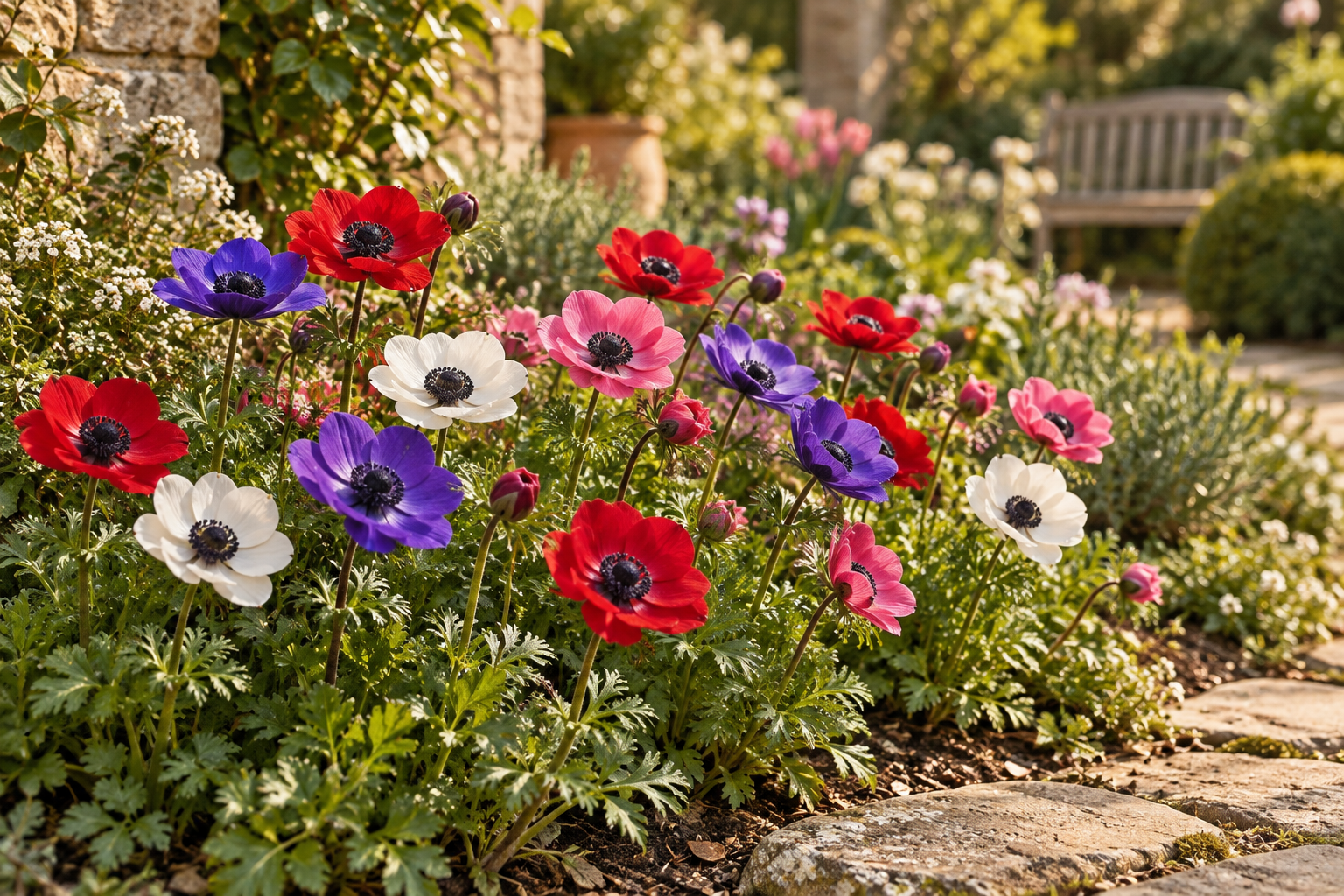
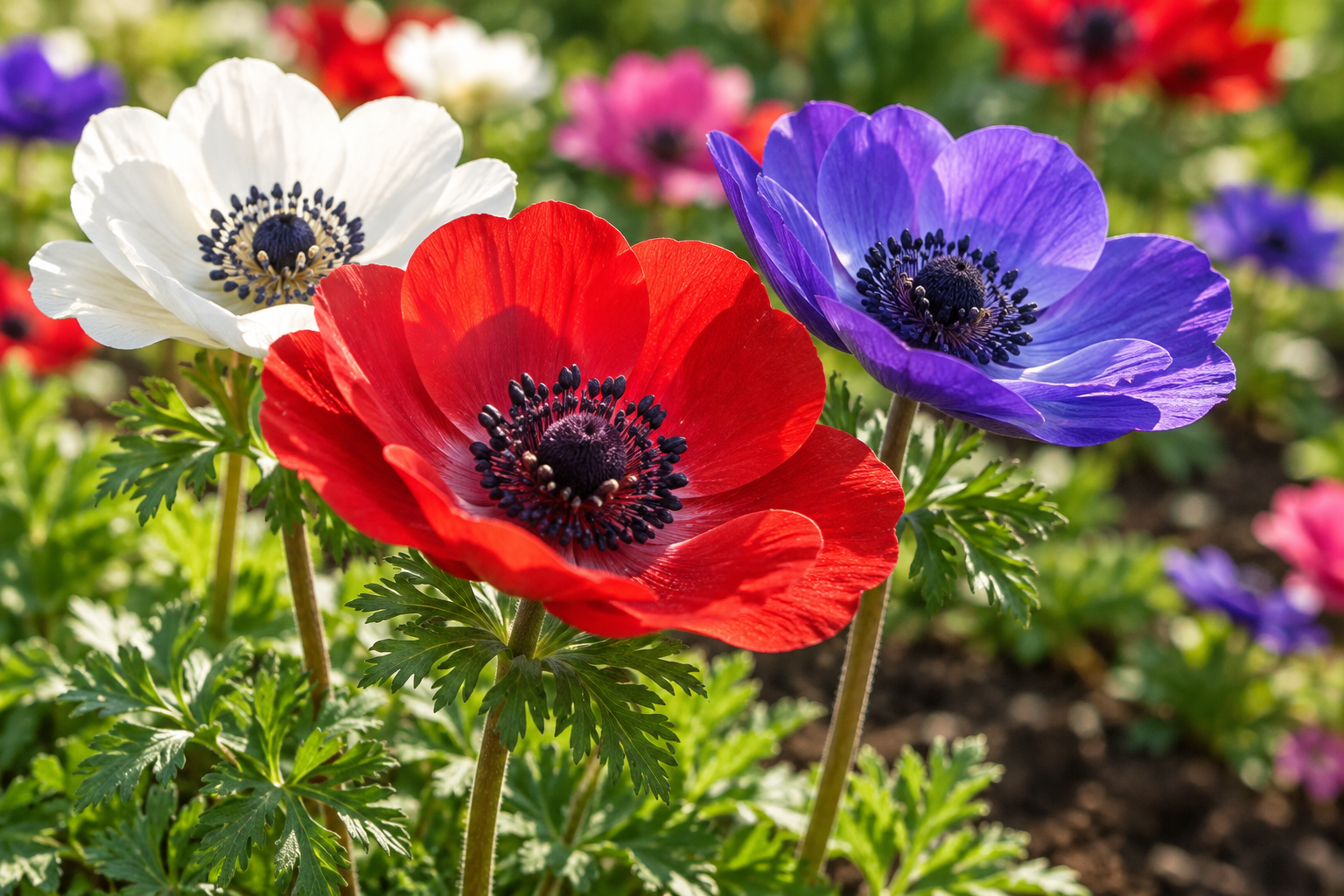
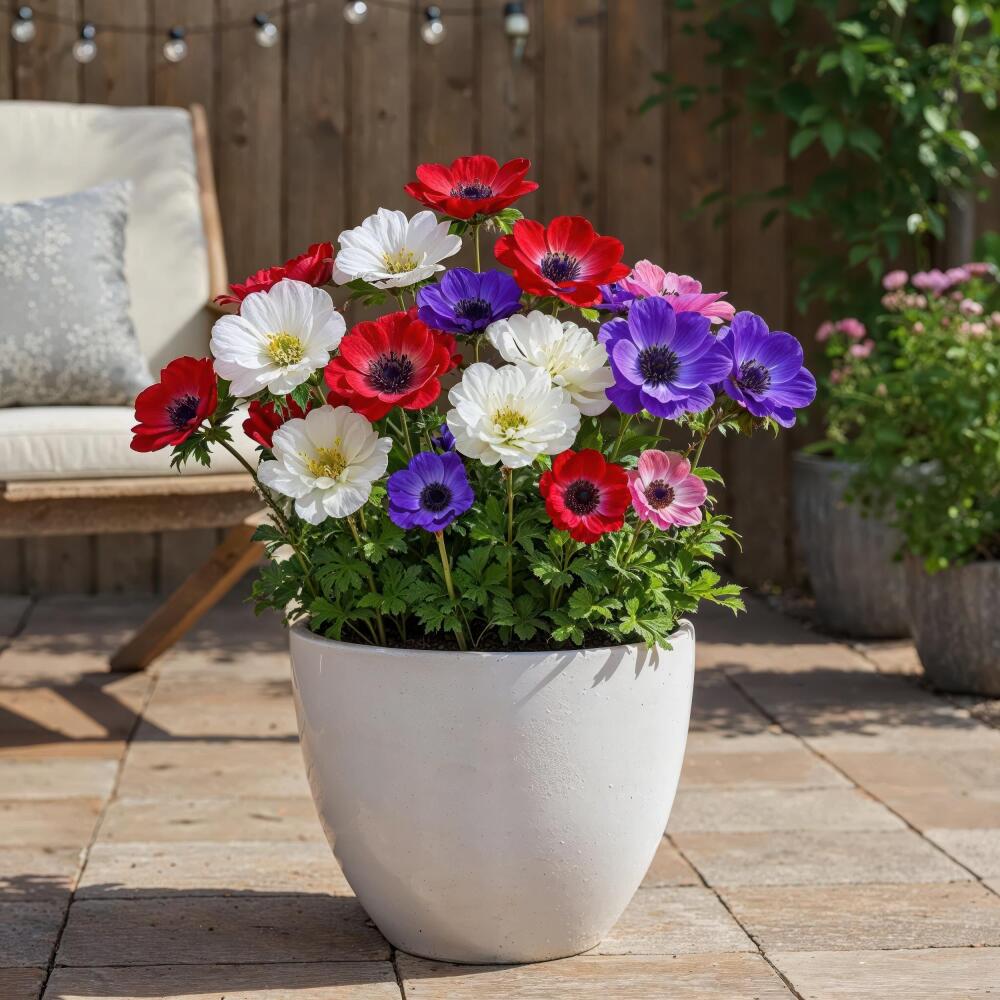
Garden anemone opens its flowers like little colourful bowls. Broad petals in red, violet-blue, pink or white surround the usually dark centre. Beneath sits finely divided almost parsley-like foliage. De Caen Mix combines several shades without every small group looking alike. Flowers and leaf patterns can be viewed closely beside a sunny garden path. The mixture is attractive in a terrace container too: upright stems bring colour above the rim without making a large shrub.
Thirty tubers that must grow first
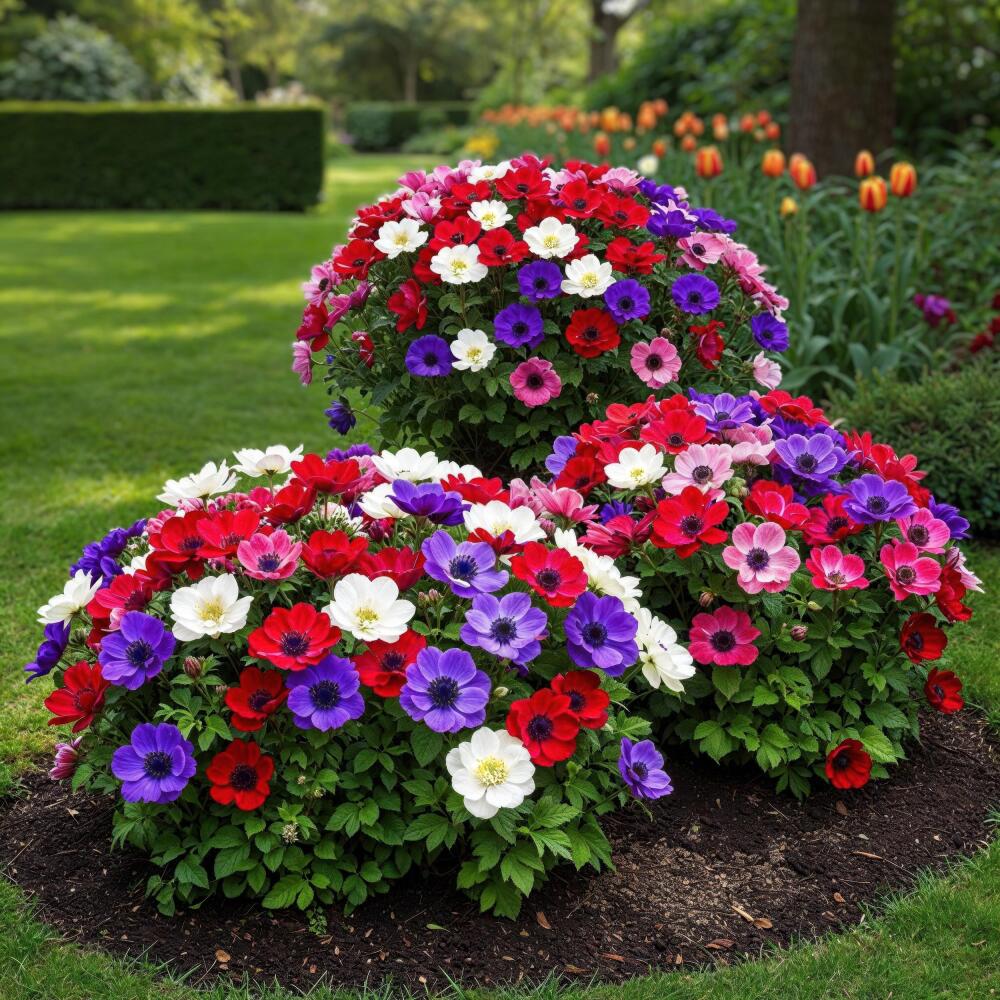
The offer contains thirty tubers for planting. Flowering photographs show a later garden moment; a planted container is not included. We do not use the shop title’s commercial grade as a personally measured diameter. Divide planting material into a few loose groups rather than fill every free site equally densely. Individual flowers can then be distinguished. In a mixture, exact colour distribution is open. Plan a colourful combination rather than an order with a fixed number of red or white blooms.
Sun needs a dry retreat
Anemone coronaria belongs to Mediterranean anemones. A sunny sheltered site and soil with good drainage are the starting point. A moist corner beneath a densely leafy tree suits other anemones better than this group. Check after rain whether water stands on the planned area for long. Container holes must stay open. Plants need water during sprouting; during later rest the tuber site should remain dry. This change matters more than a rigid weekly watering amount.
Plant according to season and weather
The RHS recommends spring for outdoor planting. Autumn planting needs a mild sheltered site or protected container cultivation. Soak dry tubers for a few hours in clean water before planting. The specialist supplier gives about five centimetres depth and fifteen centimetres spacing as De Caen guidance. Tubers need not be aligned towards an unmistakable tip. Follow package instructions too. Prepare ground before soaking so planting material can be planted promptly afterwards.
Accompany shoots without saturating soil
Check soil moisture during growth and flowering. A small container may dry quickly on a sunny day but must not stand permanently in water. Water near ground when soil needs it. In a nutrient-containing border, blanket extra fertilising is not the first step. In containers adapt supplies to substrate, growth and fertiliser label. Watch young shoots for slugs. If a plant appears weak, inspect the actual root site and moisture before responding with extra water or fertiliser.
Preserve a rest site after flowering
Let foliage complete its yearly cycle. Summer is not a period of permanently wet soil for these tubers. A movable container can be sheltered from persistent rain after flowering. Winter space also belongs in planning in cold regions; sheltered frost-free container quarters may be more sensible than a blanket frost promise. Do not place tubers and plants among food and keep away from curious pets. Gloves are a practical choice when handling planting material.
Recognise the mixture next year
Photograph a whole group and one open flower. Record planting date, position and start of flowering in the plant book. Also note whether cultivation was in a border or container: these places respond differently to rain and sun. The attractive colour mixture becomes understandable personal garden experience. When a corner disappoints, comparing observations often helps more than immediately changing all care steps.
One plant, several views
Good to know
What is in the offer?
Thirty tubers for planting, not flowering potted plants.
Are colours divided in fixed amounts?
No. Distribution in the mix may vary.
How tall do plants grow?
The De Caen Group often reaches about 30–40 cm; site and cultivation influence growth.
When should I plant in the garden?
Preferably spring. Autumn planting needs suitable winter and wetness protection.
Do tubers need much summer water?
They should stay dry during the above-ground resting phase.
Can I keep them in containers?
Yes, with sun, permeable soil and good drainage.
Sources and editorial note
- Exotenherz – offer and original pictures, 03.10.2026
- RHS – De Caen Group identity and position, 03.10.2026
- RHS – caring for Mediterranean anemones through the year, 03.10.2026
- RHS Plants – De Caen Group planting guidance, 03.10.2026
Shop offer, article number, GTIN, availability and originals checked directly on 02.10.2026; specialist acceptance on 03.10.2026. Specialist sources read directly. Variant, quantity, SKU, current orderability and both original shop images checked directly. Sources read on 03.10.2026. Pictures show later flowering, not delivery condition. Commercial size grades not used as measured bulb or tuber diameters. Specialist acceptance with published Pflanzenwelt portraits; no tool or Wawi changes.