
This plant at Exotenherz
Check the shop offer for current availability, price and what is included.
The linked shop is in German. Product details, availability and delivery information are provided in that shop.
Your care table
| Topic | What to do | Why it helps |
|---|---|---|
| Light | Position in bright, filtered light. | Enough light supports growth and new flower spikes. |
| Water | Let the upper compost dry slightly, then water thoroughly. | Roots need moisture and air. |
| Drainage | Remove remaining water from the decorative pot. | Constant wetness encourages root damage. |
| Warmth | Keep warm and free from cold draughts. | Tropical anthuriums are sensitive to cold. |
| Compost | Use a loose houseplant mix that retains its structure. | Coarse ingredients preserve air spaces. |
| Fertiliser | Feed moderately during growth, following the label. | Overfeeding cannot replace suitable light levels. |
| Flower care | Remove spent stems cleanly at the base. | Healthy leaves remain to sustain the plant. |
| Safety | Do not eat the plant; protect your skin when cutting. | Sap and plant parts may cause irritation. |
Check the compost and pot weight. The care table explains how far the compost may dry.
Water only when needed. The water should reach the root ball without spilling over the rim.
Remove surplus water from the saucer or cachepot. Then return the plant to a suitable position.
The colour is in the bract
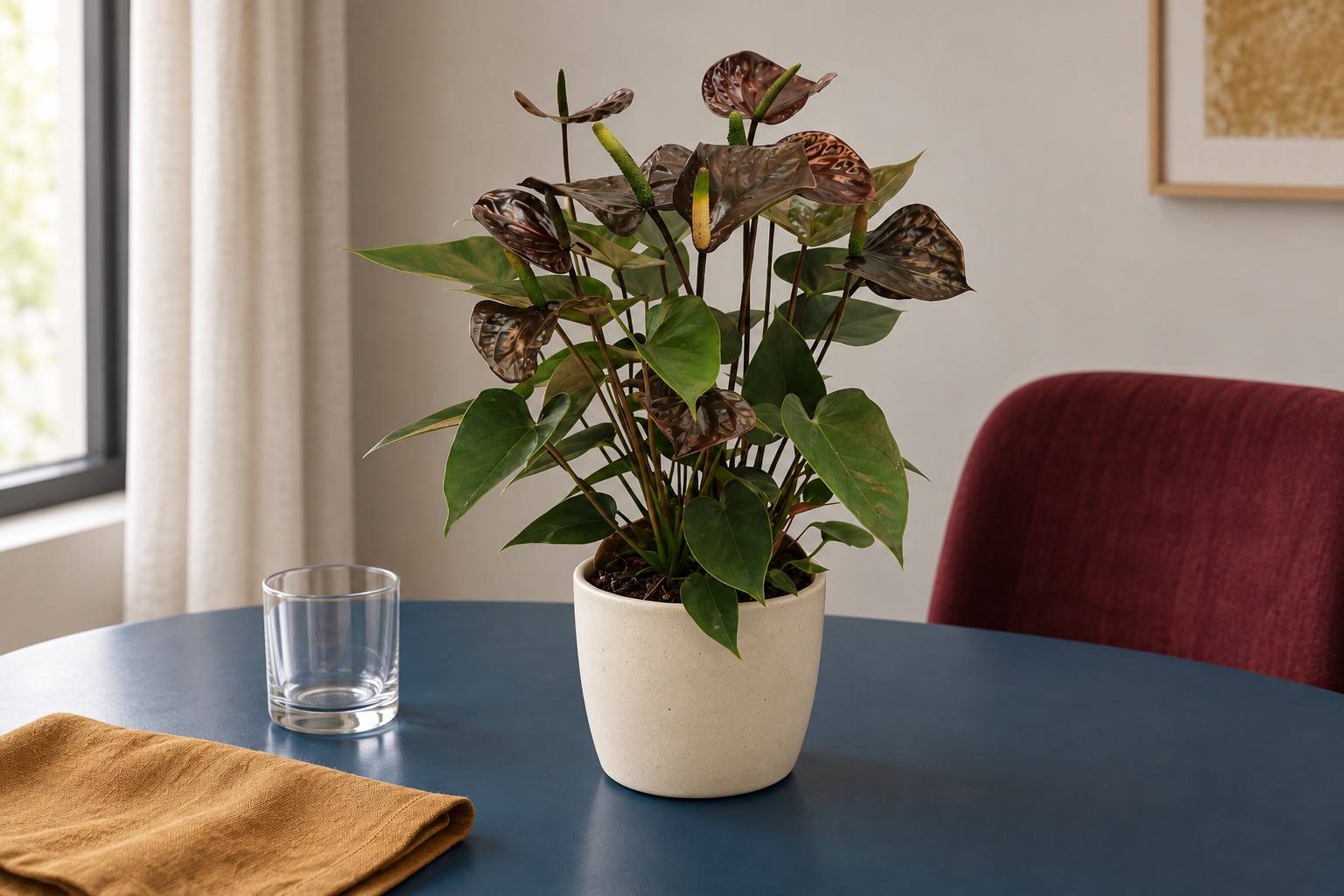
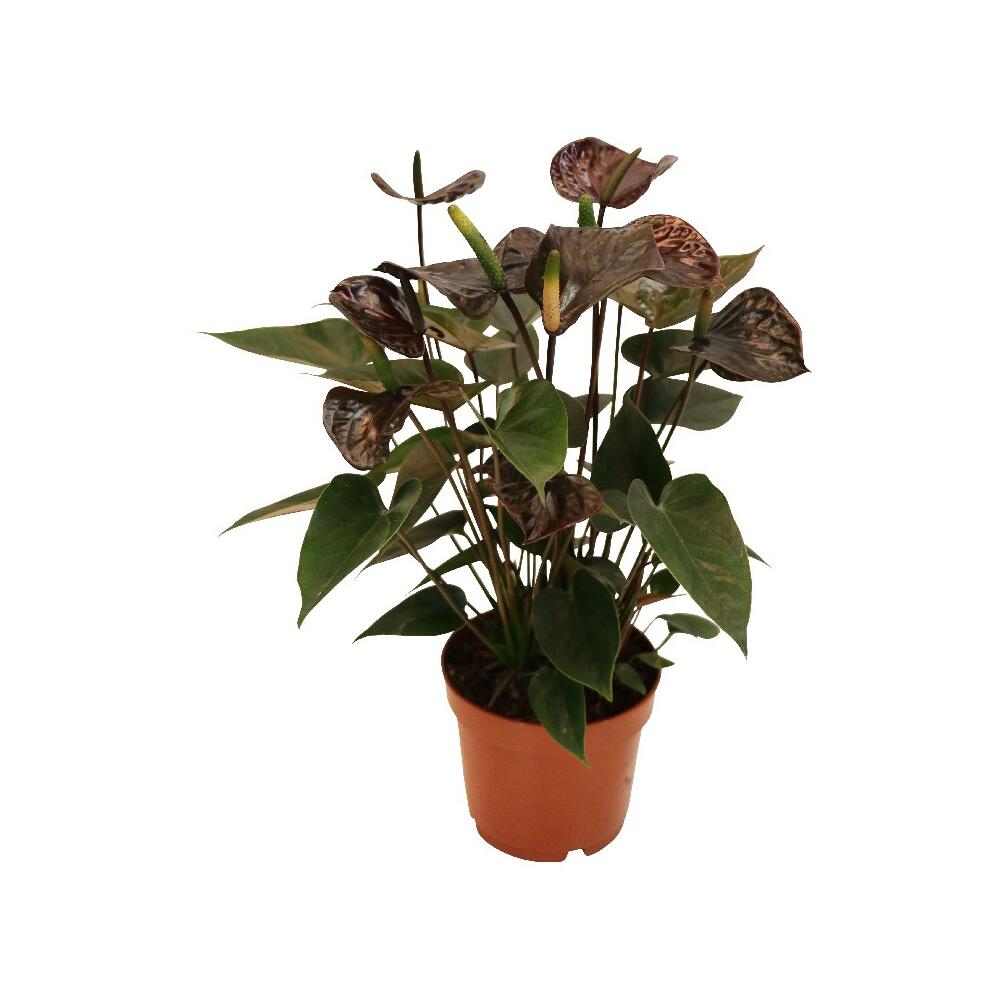
The striking brown-red leaf is a spathe, a bract. The actual small flowers sit on the spadix in its centre. Black Karma displays dark, warm shades that look more chocolate-brown or wine-red depending on age and light. A pure, unchanging black would be the wrong expectation. Glossy green foliage provides a calm counterpoint. Old flower spikes age naturally; their colour can change before they dry out.
An anthurium in a manageable size
The offered plant comes in a 12 cm pot and is approximately 35–40 cm tall. A bright dining table or chest of drawers provides space for foliage and flower spikes. Keep the plant readily accessible for checking the compost. The illustrated arrangement follows this size; the decorative pot and furnishings are display examples. The number and development stage of the bracts vary in living plants. The original photograph helps distinguish the variety and delivery form from an interior display idea.
Warm light rather than hot sun
Plenty of filtered daylight and a warm, draught-free position are suitable. Hot direct summer sun can damage leaves, while a dark spot makes new flower spikes harder to produce. Keep the plant away from radiators and cold gaps around windows. It does not need constant moving as soon as a bract fades. Check first whether it is actively growing at all. In winter, the natural flowering rhythm may slow down.
Check the compost with a finger before watering
Let the top layer of compost dry slightly, then wet the root ball evenly. Low-lime water at room temperature is suitable. Remove excess water so the roots have air again. Limp leaves in a heavy, wet pot call for a root check. They are not a reason to add more water. With less light and warmth, intervals between watering become longer; during warm, active growth, the small pot may dry faster.
Maintain structure in the pot
A loose mix for tropical houseplants with suitable coarse ingredients is better than compacted, constantly wet compost. When repotting, provide only a little more room and keep the base at the same height. Feed moderately during active growth, following the label. Spent stems can be removed with clean tools close to their base. Keep healthy green leaves, as they sustain the plant.
Gloss without leaf-shine products
Gently wipe dust away with a soft, slightly damp cloth, supporting the leaf from below. This is also a chance to check undersides and petiole bases for pests. The plant contains irritating calcium oxalate crystals and is not edible. Gloves protect you when cutting, especially if your skin is sensitive. Children and pets should not have access to plant parts. A well-kept leaf shines without extra sprays.
One plant, several views
Good to know
Are the flowers really black?
The bracts display dark brown-red shades. Light and age affect their appearance; a constant deep black is not promised.
Why is it not flowering at the moment?
Check light, root condition and the season. New flower spikes need good growing conditions and do not appear continuously.
Should I use leaf shine?
A soft, damp cloth is enough to remove dust. Additional leaf-shine products are not needed for care.
Is it pet-friendly?
Pets must not nibble it. This anthurium contains irritating substances and should be placed out of their reach.
Sources and editorial note
Sources checked: 15 September 2026. Product details and delivery contents follow the linked shop listing. Care has been checked against the cited specialist sources and should be adapted to the plant’s condition, position and season.