
This plant at Exotenherz
Check the shop offer for current availability, price and what is included.
The linked shop is in German. Product details, availability and delivery information are provided in that shop.
Your care table
| Topic | What to do | Why it helps |
|---|---|---|
| Light | Plenty of indirect daylight without hot midday sun. | New leaves need energy but remain sensitive to sun. |
| Warmth | Keep consistently warm, preferably above approximately 18 °C. | Cold stresses this tropical species. |
| Water | Let the surface dry slightly and water the root ball with care. | Neither constant wetness nor severe dry periods are suitable. |
| Compost | Use a coarse, airy anthurium mix. | Strong roots need open pores. |
| Drainage | Allow to drain completely after watering. | Standing water encourages rot. |
| Fertiliser | Feed sparingly during active growth, following the label. | Sensitive roots do not tolerate excessive feeding. |
| Leaf care | Let new leaves unfold by themselves and dust gently. | Young tissue is easily damaged. |
| Safety | Do not eat the plant; avoid contact with sap. | Irritating substances require protected handling. |
Check the compost and pot weight. The care table explains how far the compost may dry.
Water only when needed. The water should reach the root ball without spilling over the rim.
Remove surplus water from the saucer or cachepot. Then return the plant to a suitable position.
Decorative foliage with clear outlines
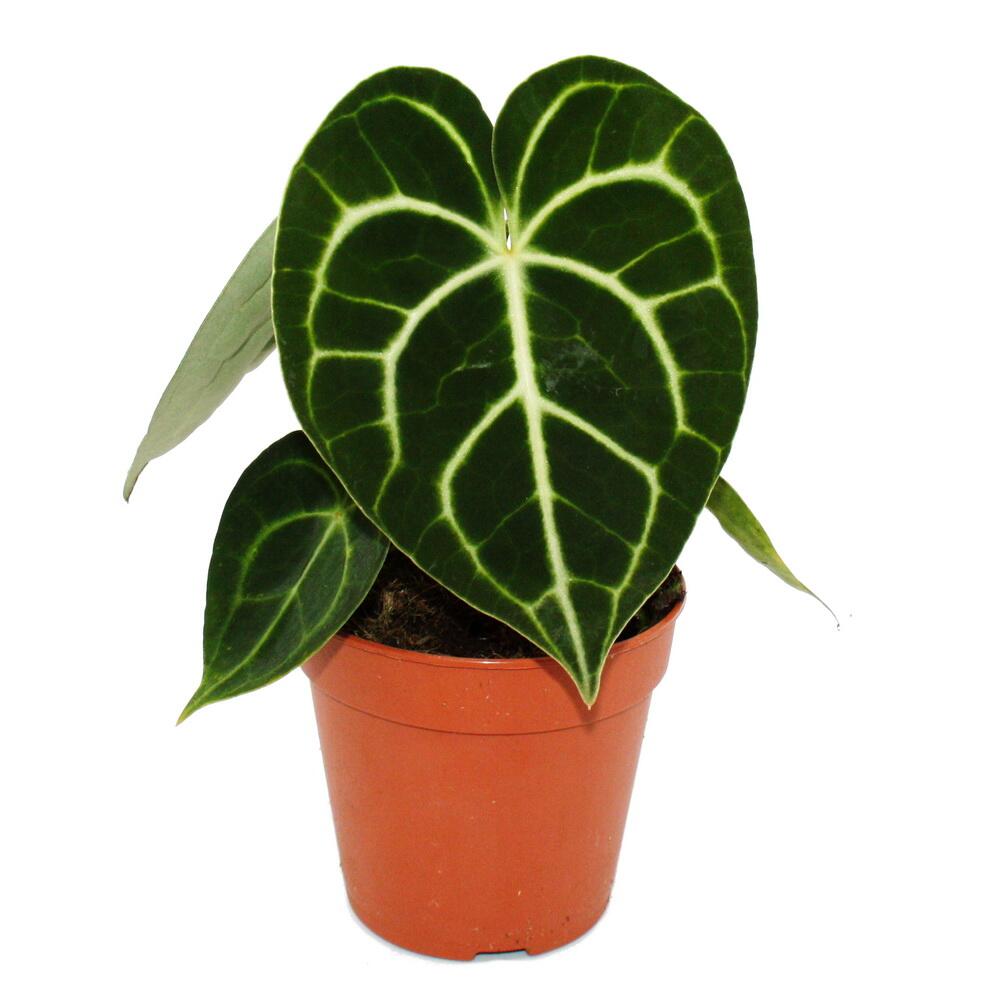
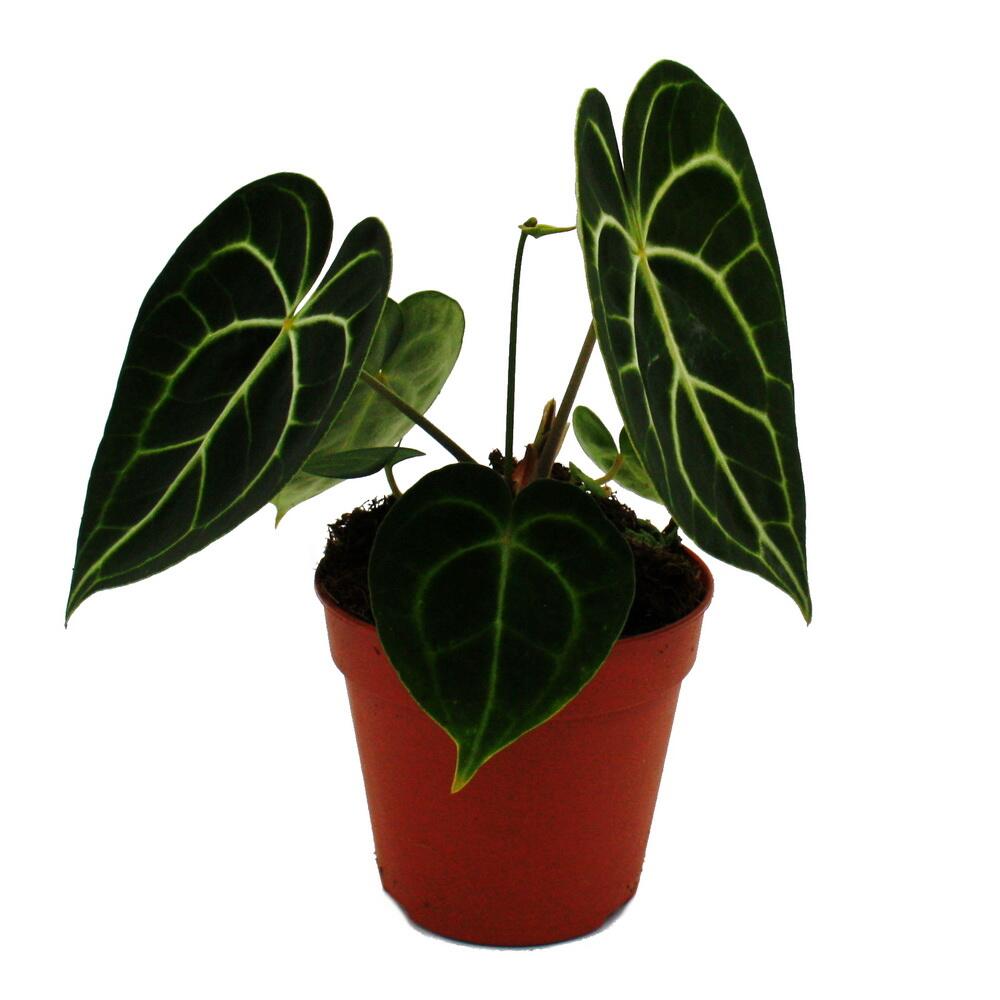
Anthurium clarinervium has firm, heart-shaped leaves with strikingly pale veins. The surface looks velvety, especially when light falls from the side. Young leaves may initially be softer and differently coloured; they firm up after unfolding. The species is grown mainly for this foliage. Its less conspicuous flower spikes do not resemble the colourful bracts of classic flowering anthuriums. Each leaf of this species is also a unique living example.
Delivery size and room needed later
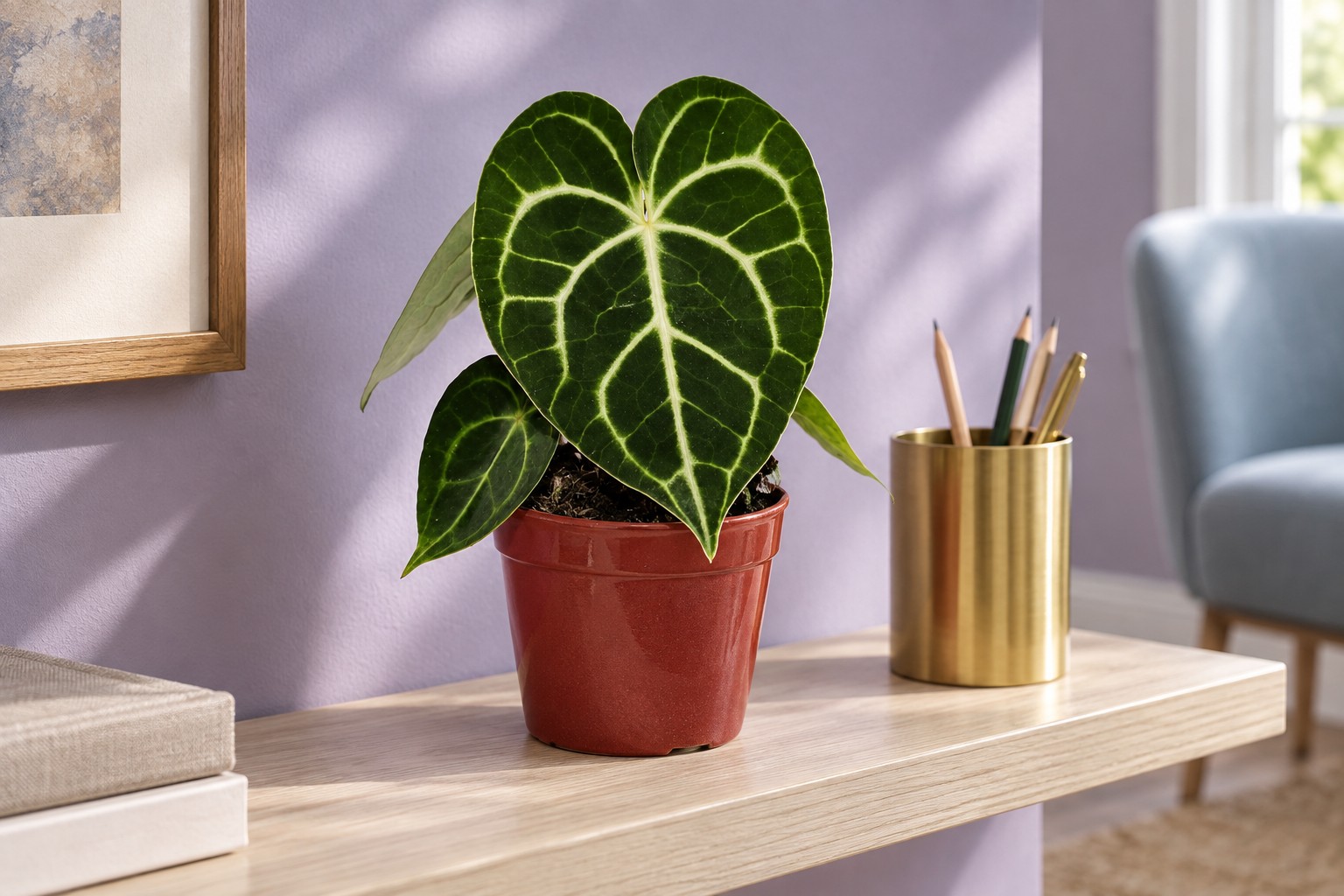
In the checked listing, the plant comes in a 12 cm pot and reaches approximately 25–30 cm in total height. A bright, stable surface shows off the leaf pattern without pressing the leaves against furniture edges. Over time, new leaves may take up more room. The interior scene therefore does not replace planning for future space. The decorative pot and accessories are not automatically included. The original photograph remains the reference for the appearance of the offered plant.
A consistently warm position
Plenty of indirect light, warm conditions and protection from cold draughts are suitable. The RHS recommends indoor temperatures above approximately 18 °C. Shield the plant from harsh midday sun. Balanced humidity helps leaf development, but wet leaves in still air are unhelpful. Do not pull or assist a new leaf as it unfurls. Patience protects the still-soft tissue better than a well-meant intervention.
Water with the compost mix in mind
Check both the surface and the weight of the pot. An airy mix may dry slightly at the top; the root ball should be neither constantly soaked nor repeatedly dried out completely. Use low-lime water at room temperature where possible and let all excess drain away. Less water is used in a cooler or darker position. Assess yellow leaves alongside the roots, light and temperature rather than treating them solely as a sign of nutrient deficiency.
Strong roots need open pores
A coarse, humus-rich anthurium mix with suitable bark and mineral ingredients maintains structure in the pot. Heavy potting compost alone often stays wet for too long. Handle healthy roots gently when repotting and choose only a suitable, slightly larger container. Feed moderately, following the label, while new growth is visible. Pause feeding with a fresh, pre-fertilised mix or a resting plant. Remove dead stems with clean tools.
Care gently for velvety foliage
Dust carefully and avoid vigorous rubbing or leaf-shine sprays. Inspect undersides and stems for thrips, spider mites and mealybugs. Observe unusual new damage early and initially separate an affected plant. Anthuriums are not edible; calcium oxalate crystals can cause strong irritation. Protect your skin when cutting and keep plant parts out of reach of children and pets. Quietly watching new leaves is one of the most enjoyable moments of caring for this species.
One plant, several views
Good to know
Should I open a rolled-up new leaf?
No. It should unfold by itself. Pulling or pressing can permanently damage young tissue.
Is ordinary heavy potting compost suitable?
An airier anthurium mix that retains its structure is preferable because the strong roots need plenty of oxygen.
Why are there no colourful flowers?
Clarinervium is grown as a foliage anthurium. Its heart-shaped leaves with pale veins are its main attraction.
Can it stand in a cold hallway?
A consistently warm position is more suitable. Avoid cold draughts and prolonged low temperatures.
Sources and editorial note
Sources checked: 15 September 2026. Product details and delivery contents follow the linked shop listing. Care has been checked against the cited specialist sources and should be adapted to the plant’s condition, position and season.