
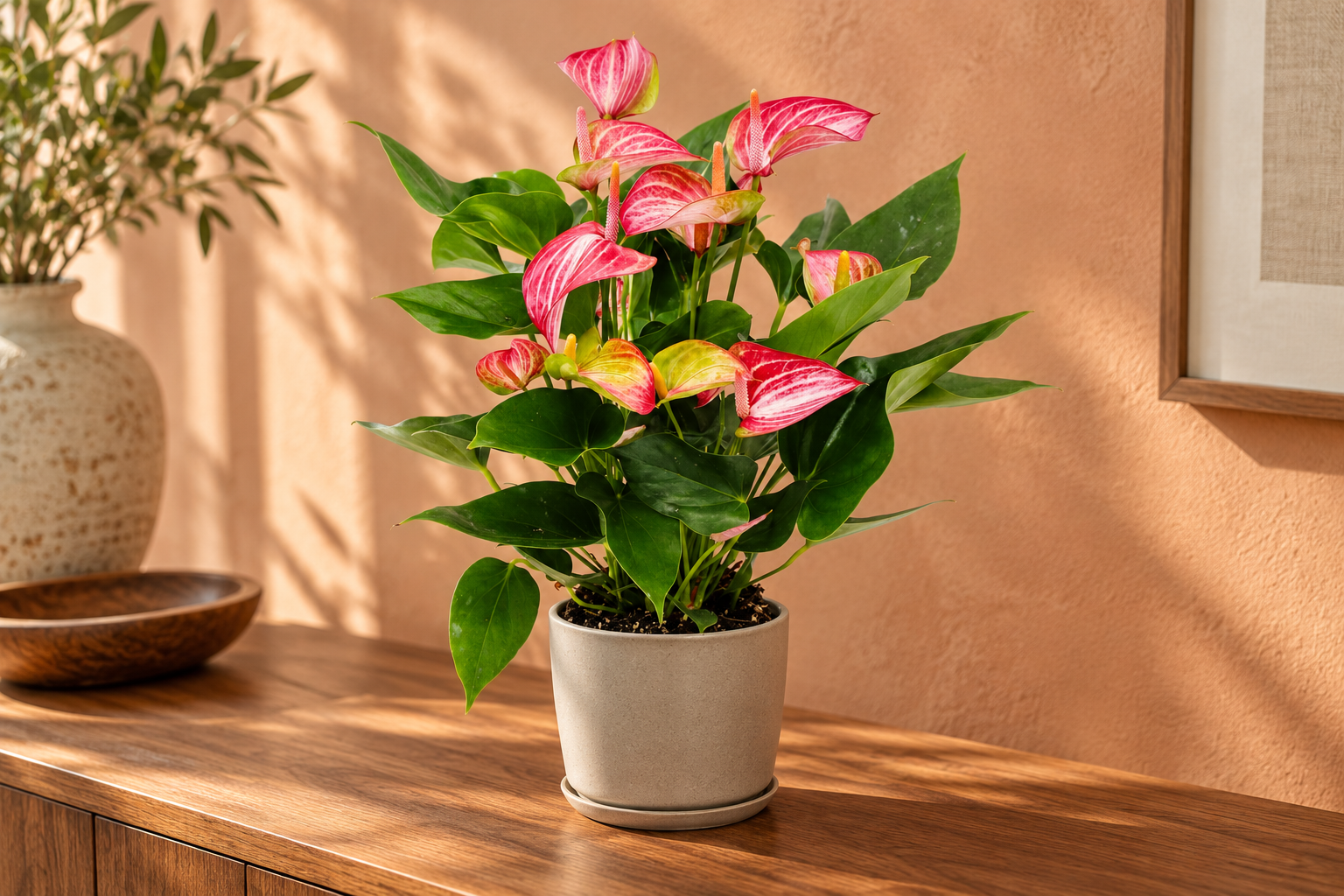
This plant at Exotenherz
Check the shop offer for current availability, price and what is included.
Check the shop for the current price, availability and offer contents.
Your care table
| Topic | What to do | Why it helps |
|---|---|---|
| Position | Place brightly, in filtered light and warmth. | The crown needs suitable growing conditions. |
| Water | Supply the rootball after the surface has dried slightly. | Moisture decides, rather than the calendar. |
| Cover pot | Remove remaining water after drainage. | Decorative pots must not become waterlogged either. |
| Substrate | Use a loose, structurally stable houseplant mix. | Retain air pores. |
| Repotting | Provide a little more room when necessary, at the same planting depth. | Do not bury the base. |
| Nutrients | Dose according to the label during growth. | More fertiliser cannot replace light. |
| Bracts | Remove old stems cleanly; do not pull on young hearts. | New buds remain undamaged. |
| Safety | Do not eat; avoid sap contact. | The plant contains irritating substances. |
Check the compost and pot weight. The care table explains how far the compost may dry.
Water only when needed. The water should reach the root ball without spilling over the rim.
Remove surplus water from the saucer or cachepot. Then return the plant to a suitable position.
A pattern that follows the bract
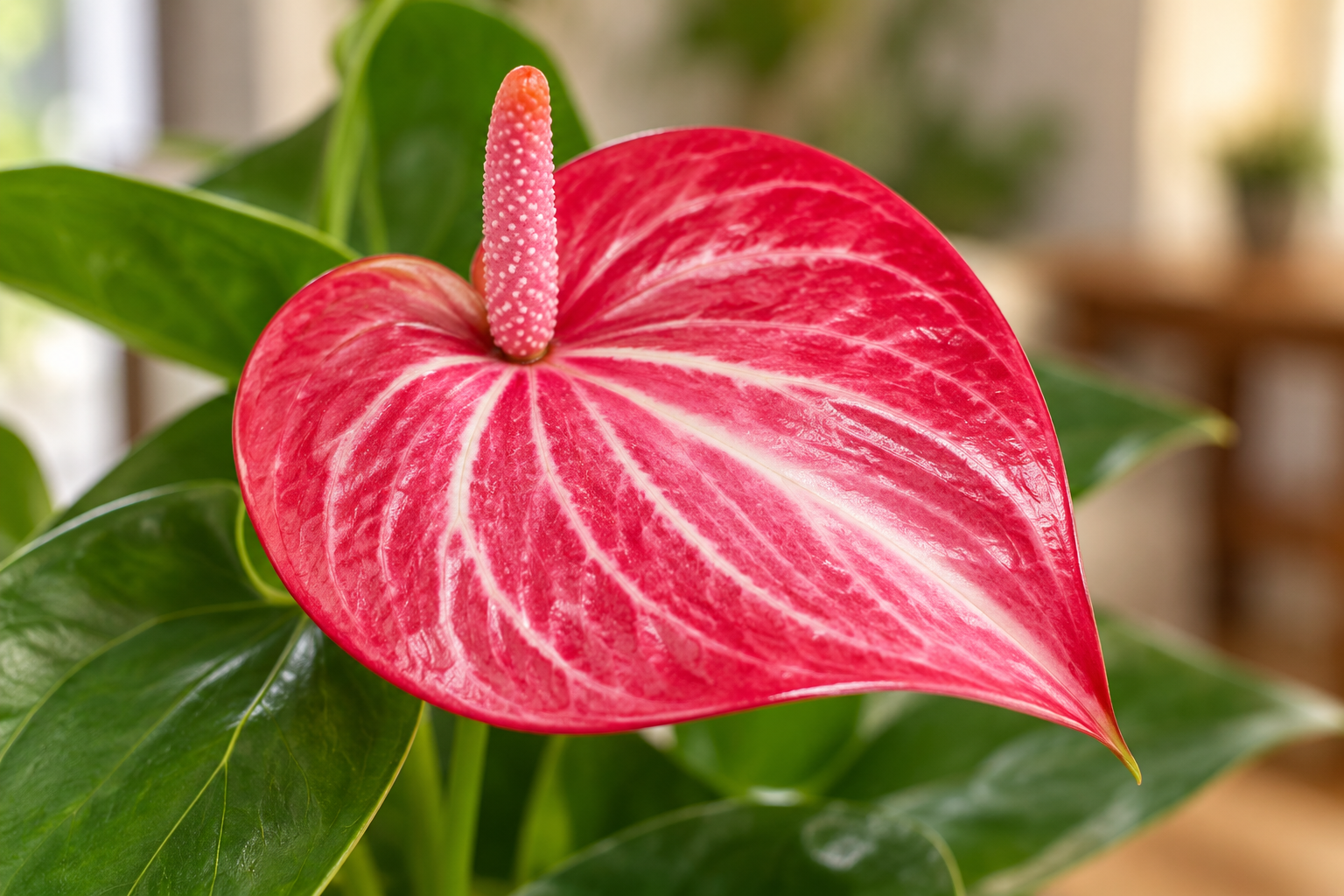
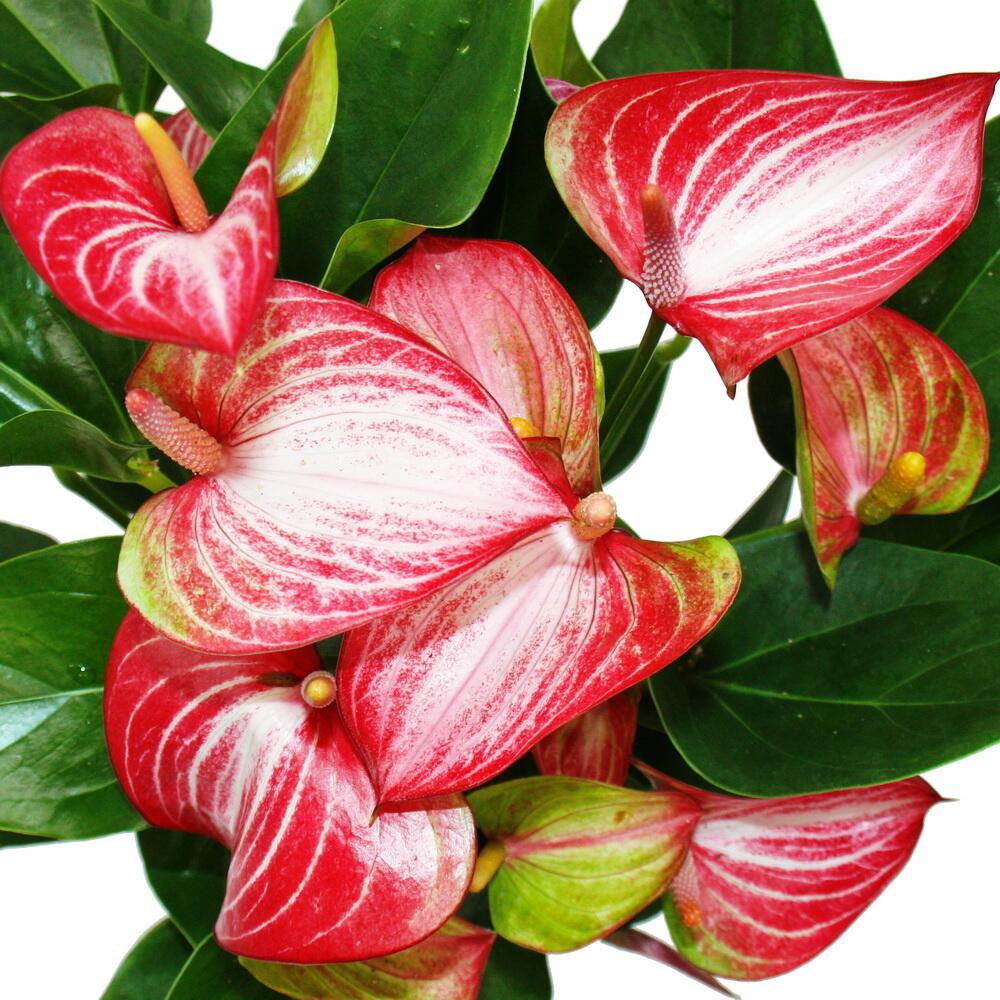
Fine white lines run through Livium’s pink-red bracts. They follow the veins and give the heart-shaped surfaces a distinctive rhythm. Green foliage creates a quiet background. The breeder describes the Livium series through these markings; our specific offer shows the pink-red form. Another series colour is not transferred. The actual flowers sit on the small spadix; the striped heart is a bract. Close up, you can see that the white lines belong to the plant and are not added decoration.
Keep the hearts in view
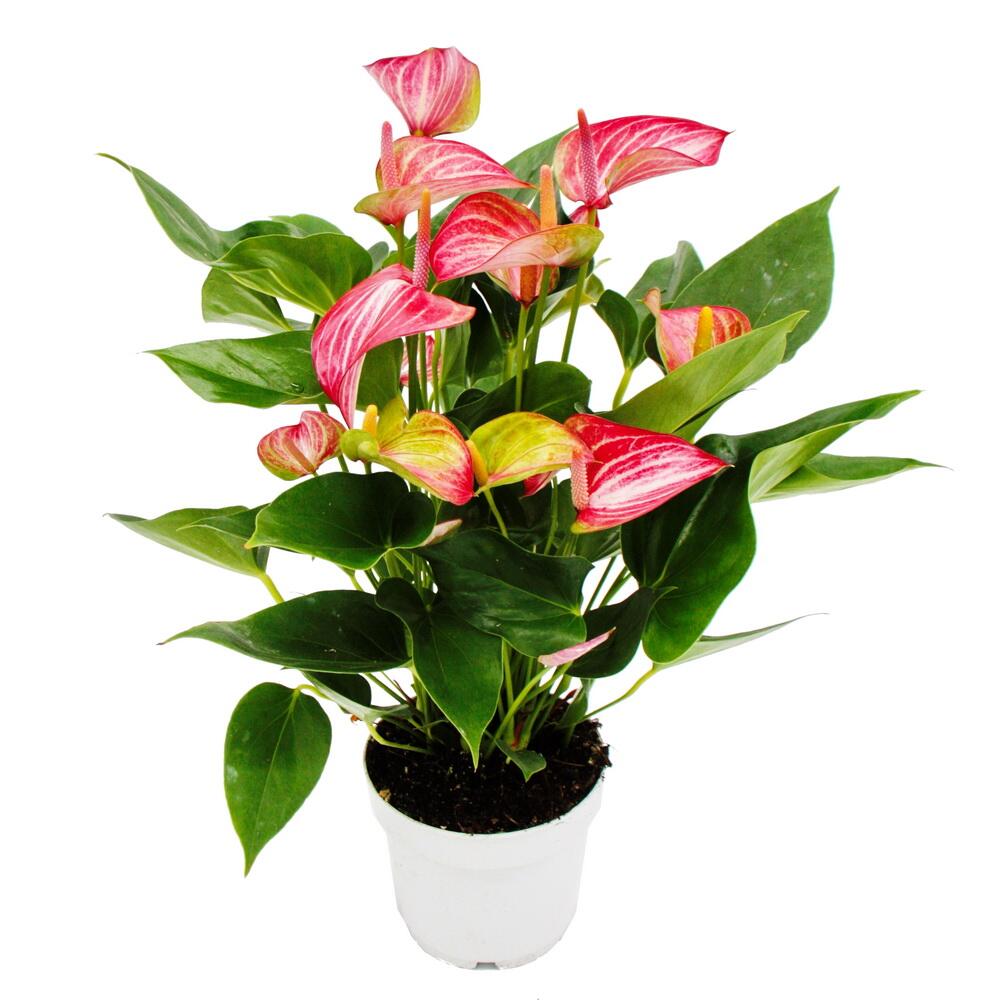
In the offer, Livium stands in a 14-cm pot and is approximately 35 to 40 centimetres in total height. Its crown can look unconfined on a bright console or low table. Position it so other objects do not bend the bracts. A stable cover pot is checked when watering rather than making the root zone invisible. The original photograph shows the offered developmental stage. The number and position of bracts may vary. The scene idea therefore does not promise that every individual white line pattern or flower stem will be delivered exactly the same.
Filtered light brings out the markings
Choose a bright, warm indoor position protected from harsh direct sunshine. A living plant needs more than good light for a photograph. Check whether it receives enough daylight throughout the day and whether a hot patch of sunshine moves onto the crown later. Avoid cold draughts and immediate proximity to heating. Allow the plant to develop new leaves undisturbed. Older bracts may change over time without every colour change indicating a care mistake. Compare old and new flower spikes rather than using the pattern on a single heart as the only measure.
Keep wetness in view even inside a lovely cover pot
Allow the upper soil to dry slightly, then supply the rootball and let it drain completely. Empty cover pots before returning the plant to its position. Use soft, room-temperature water where possible. The dense crown may hide the soil surface; gently lifting out the pot helps with checks. A heavy, still-wet rootball needs no further watering by the calendar. Reduced winter brightness may lower water use. Limp leaves alongside damp soil call for a look at drainage and the base, not automatically an extra quantity of water.
New stems need a healthy root space
A loose, structurally stable mix with suitable coarse ingredients combines moisture and air. A heavily rooted ball receives a little more pot space when needed. The base stays at its previous height. During active growth, feed according to the fertiliser label and account for pre-fertilised soil. Remove fully aged flower stems at the base with clean tools and retain healthy leaves. More fertiliser cannot compensate for a dark position. The next striped spathe comes from plant development and cannot reliably be forced by a rigid pruning or feeding instruction.
A pattern for the personal plant book
A bract close-up shows the white lines, while a whole-plant photograph shows their effect in the crown. Together they provide a good memory of the plant. Note the light-facing side and new leaves if you want to compare development. Gently remove dust from firm green leaves and look at their undersides too. Do not rub the more delicate bracts vigorously. Anthuriums are not eaten; plant sap can irritate skin and mucous membranes. Place safely away from children or pets and work carefully when cutting. The decorative markings do not change this basic care.
One plant, several views
Good to know
Are the white stripes painted?
No. They belong to the characteristic bract markings of the Livium series.
Is Livium Orange described here?
No. The specific shop original shows a pink-red form; other series colours are not transferred.
Are all hearts always striped the same?
Markings and developmental stage can vary in living plants.
What should I do if new flower spikes are absent?
Check light, growth and rootball condition together, rather than automatically feeding more.
Is the delivery height the mature height?
No. Approximately 35–40 cm total height describes the offered condition.
Sources and editorial note
- Exotenherz: offer and original photographs (03.10.2026)
- Anthura – Livium series and white bract lines (03.10.2026)
- Costa Farms – indoor anthurium care (03.10.2026)
- RHS – root space and flower care (03.10.2026)
Shop offer, article number, GTIN, availability and original photographs checked directly on 02.10.2026; specialist acceptance 03.10.2026. Specialist sources read directly. SKU, delivery measurements, original photographs and orderability checked in the shop on 03.10.2026. Care compared with actually read RHS, producer and Extension sources; selection shape checked against the original. Currently not orderable: knowledge portrait without purchase link, social draft without sending approval. No tool or Wawi changes. Currently not orderable: knowledge portrait without purchase link; social drafts not approved for sending.