
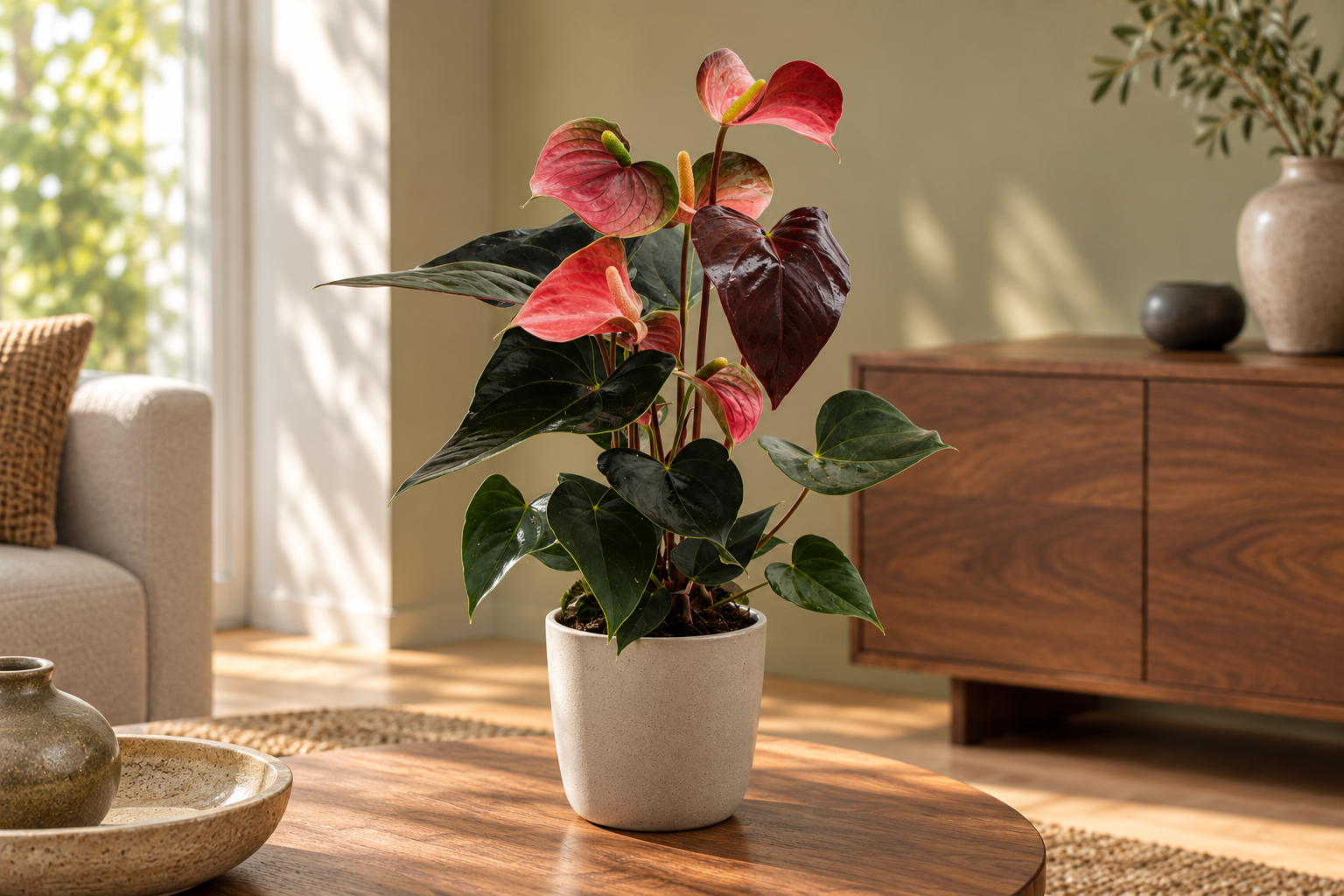
This plant at Exotenherz
Check the shop offer for current availability, price and what is included.
Check the shop for the current price, availability and offer contents.
Your care table
| Topic | What to do | Why it helps |
|---|---|---|
| Light | Place brightly in filtered light. | New flower spikes need a suitable position. |
| Warmth | Keep evenly warm, without cold draughts. | The tropical plant is frost-sensitive. |
| Water | Let the upper soil dry slightly, then supply water. | Assess rootball moisture rather than the day of the week. |
| Drainage | Empty the cover pot after watering. | Air should return to the roots. |
| Substrate | Choose a loose, structurally stable mix. | Coarse ingredients retain pores. |
| Fertiliser | Dose according to the label during growth. | Consider existing fertiliser and light. |
| Tidying | Remove old flower stems cleanly at the base. | Retain healthy foliage. |
| Handling | Do not eat; protect skin when cutting. | Plant sap can irritate. |
Check the compost and pot weight. The care table explains how far the compost may dry.
Water only when needed. The water should reach the root ball without spilling over the rim.
Remove surplus water from the saucer or cachepot. Then return the plant to a suitable position.
A play of colour that changes with the plant
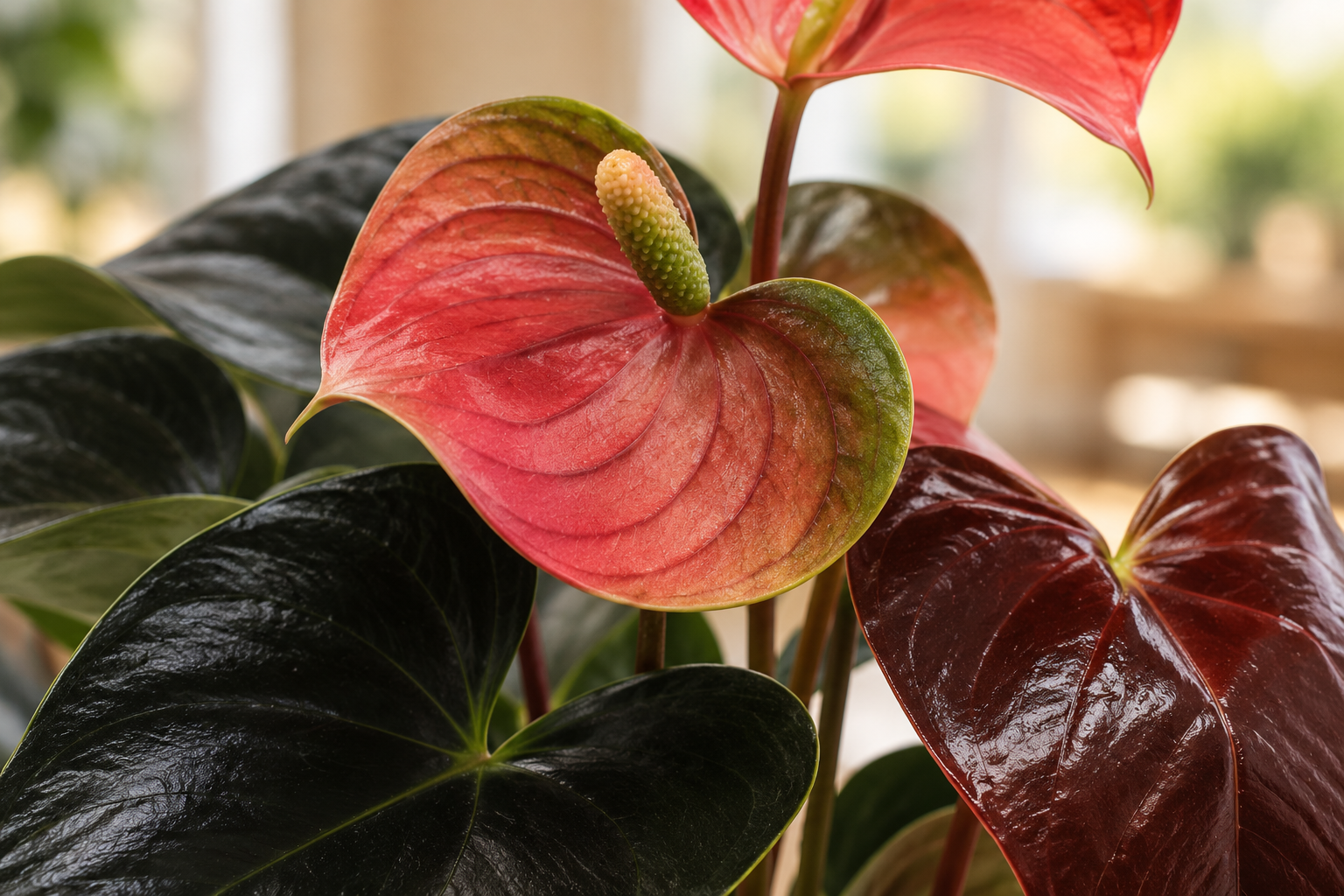
Rainbow stands out through warm colour transitions: pink and red meet copper-coloured or greenish areas, above dark glossy foliage. The contrast between younger and older bracts makes the crown particularly interesting. The name does not mean a plant with every rainbow colour. The conspicuous surface is called a spathe; the actual small flowers sit on the spadix. The original photograph shows the specific offered character. How many flower spikes are present together and which tones they currently carry change with the living plant.
The crown gets its own position
The offered size reference is a plant in a 14-cm pot approximately 40 to 50 centimetres in total height. A bright table or low sideboard lets foliage and coloured bracts remain visible together. Do not position it between tall objects that press sideways against the leaves. Carry the pot when lifting it, not the stems. The crown may grow larger; the stated delivery height is not a growth limit. The cover pot and furnishings in the scene show a display idea, while the original photograph describes the offered plant form.
Brightness without harsh midday sun
A bright, warm indoor position with filtered daylight suits the flamingo flower. Light must actually reach the leaves: an attractive shelf deep inside the room may be too dark. Observe the position in the afternoon too, when a pale wall reflects sunshine. Avoid cold draughts and immediate proximity to heating. If an older bract becomes greener, that alone is no judgement on the position. Look at the whole crown and new leaves. Care then stays guided by its development rather than prompting another move with every colour change.
Check the rootball first, then water
Allow the upper soil to dry slightly, then supply the rootball evenly. Use soft, room-temperature water where possible and allow excess to drain. Empty a closed cover pot afterwards. Slight surface dryness is different from a completely parched rootball. Check pot weight too, especially when denser foliage blocks the view of the soil. In winter the soil may remain damp longer. A fixed weekday then fits less well than a brief check before each watering. Limp foliage in wet soil calls for a look at drainage and roots.
Air in the root space accompanies new flower spikes
A loose, structurally stable houseplant mix with suitable coarse ingredients keeps the root space free-draining. Where roots are dense, give only a little more pot space and do not bury the base deeper. Dose nutrients during active growth according to the fertiliser label; account for pre-fertilised soil. Old, fully faded stems can be removed cleanly at the base. Healthy leaves are retained. A flowering pause is assessed together with brightness and growth. Extra fertiliser alone is neither a solution to darkness nor a guarantee of immediate new bracts.
Record the colour development in the plant book
A close-up alongside a whole-plant photograph later shows how a bract has changed. Note its position and the condition of new leaves as well. Carefully remove dust with a soft damp cloth, supporting the leaf. When checking, also look at undersides and stem bases. Anthuriums are not edible; irritating sap requires careful work and safe positioning around children or animals. The shop often uses the spelling andreanum. The botanical Andraeanum group is written with an extra a; the offered name Rainbow Champion is retained.
One plant, several views
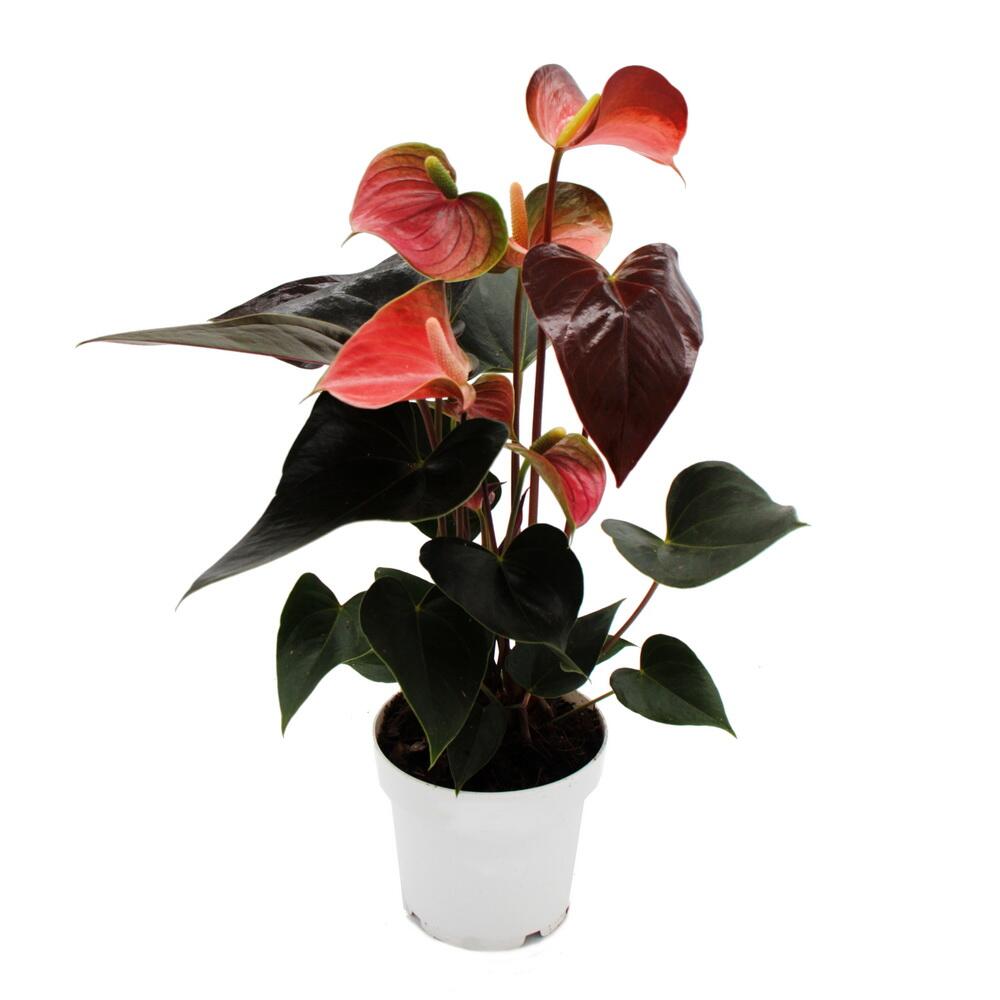
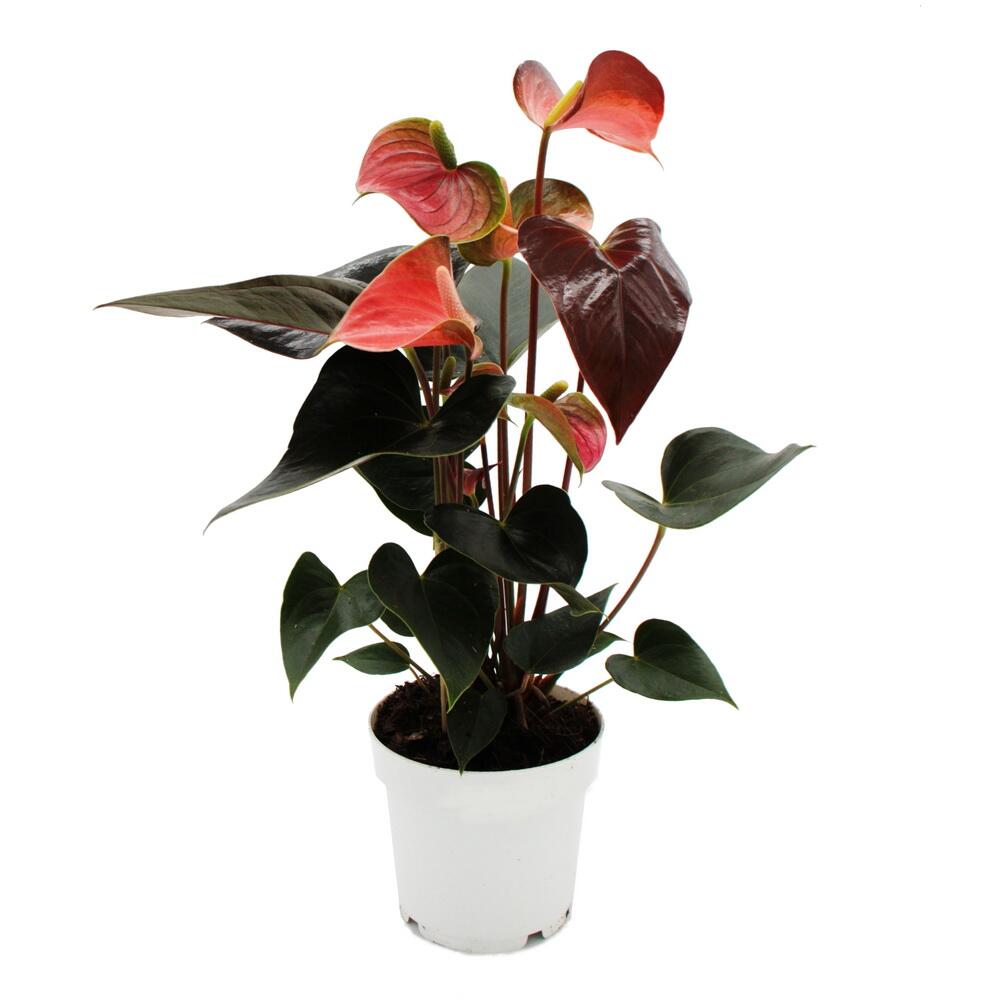
Good to know
Does Rainbow carry every rainbow colour?
No. The original shows warm pink-red, copper-coloured and greenish transitions.
Is the coloured leaf a flower?
It is a bract; the actual small flowers sit on the spadix.
Why is a bract becoming greener?
Age and development can change the colour. Also assess new leaves and the whole plant.
Will the plant remain 50 cm tall?
Total height describes its offered condition, not an established later mature height.
Does it need fixed planting spacing?
As an individual houseplant it needs free crown space; bed spacing makes no sense here.
Sources and editorial note
- Exotenherz: offer and original photographs (03.10.2026)
- RHS – anthurium cultivation and flower spikes (03.10.2026)
- Costa Farms – indoor cultivation and rootball care (03.10.2026)
- NC State Extension – botanical classification and handling (03.10.2026)
Shop offer, article number, GTIN, availability and original photographs checked directly on 02.10.2026; specialist acceptance 03.10.2026. Specialist sources read directly. SKU, delivery measurements, original photographs and orderability checked in the shop on 03.10.2026. Care compared with actually read RHS, producer and Extension sources; selection shape checked against the original. Currently not orderable: knowledge portrait without purchase link, social draft without sending approval. No tool or Wawi changes. Currently not orderable: knowledge portrait without purchase link; social drafts not approved for sending.