
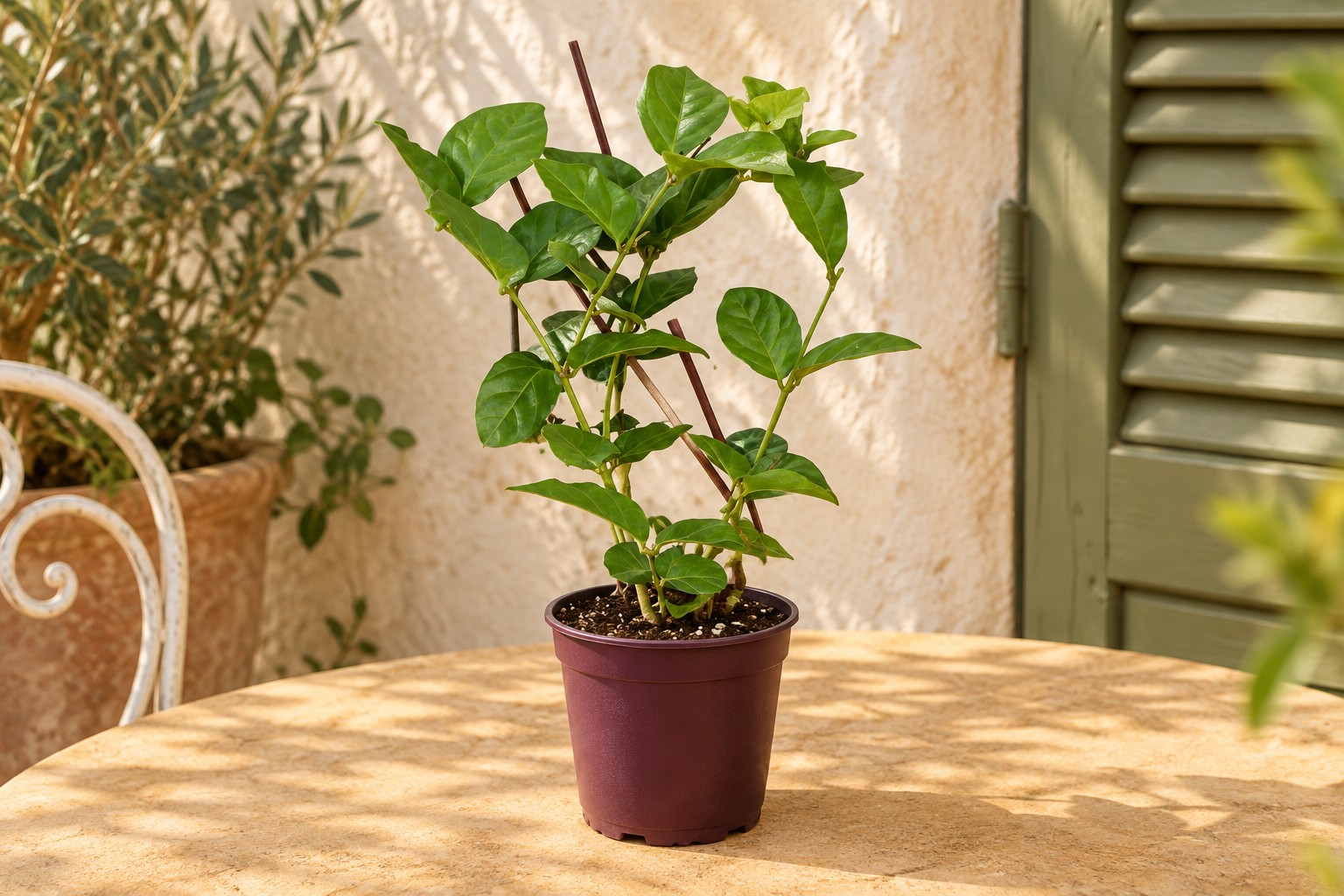
This plant at Exotenherz
Check the shop offer for current availability, price and what is included.
Link to the offer in German. Check the shop for the current price, availability and delivery contents.
Your care table
| Topic | What to do | Why it helps |
|---|---|---|
| Light | Keep very bright and gradually acclimatise to direct sun. | Light supports growth and possible flowering. |
| Warmth | Keep warm, sheltered and frost-free year-round. | Jasminum sambac is a tropical jasmine. |
| Water | Let the upper compost dry somewhat, then provide evenly. | Strong wet-dry fluctuations stress shoots and buds. |
| Drainage | Remove leftover water and keep drainage holes clear. | Persistent wetness threatens roots. |
| Compost | Use loose, humus-rich container compost. | The root ball needs moisture and air. |
| Fertiliser | Feed moderately during active growth according to the label. | Needs decrease in winter rest. |
| Shape | Guide shoots loosely and shorten gently after flowering phases. | Constant tip cutting may remove developing buds. |
| Winter | Overwinter bright and check regularly for pests. | Dark warmth and dry air make growing harder. |
Check the compost and pot weight. The care table explains how far the compost may dry.
Water only when needed. The water should reach the root ball without spilling over the rim.
Remove surplus water from the saucer or cachepot. Then return the plant to a suitable position.
Jasmine with a tropical character
Jasminum sambac belongs to the olive family. Glossy oval leaves sit on shoots that can be loosely guided as they lengthen. White flowers can develop a distinct scent. Flower shape and doubling depend on the particular form; no additional variety is claimed without a confirmed variety name. Arabian jasmine is not the hardy, yellow-flowered winter jasmine. Its tropical character determines growing in a container or bright room.
Get to know the young delivery plant
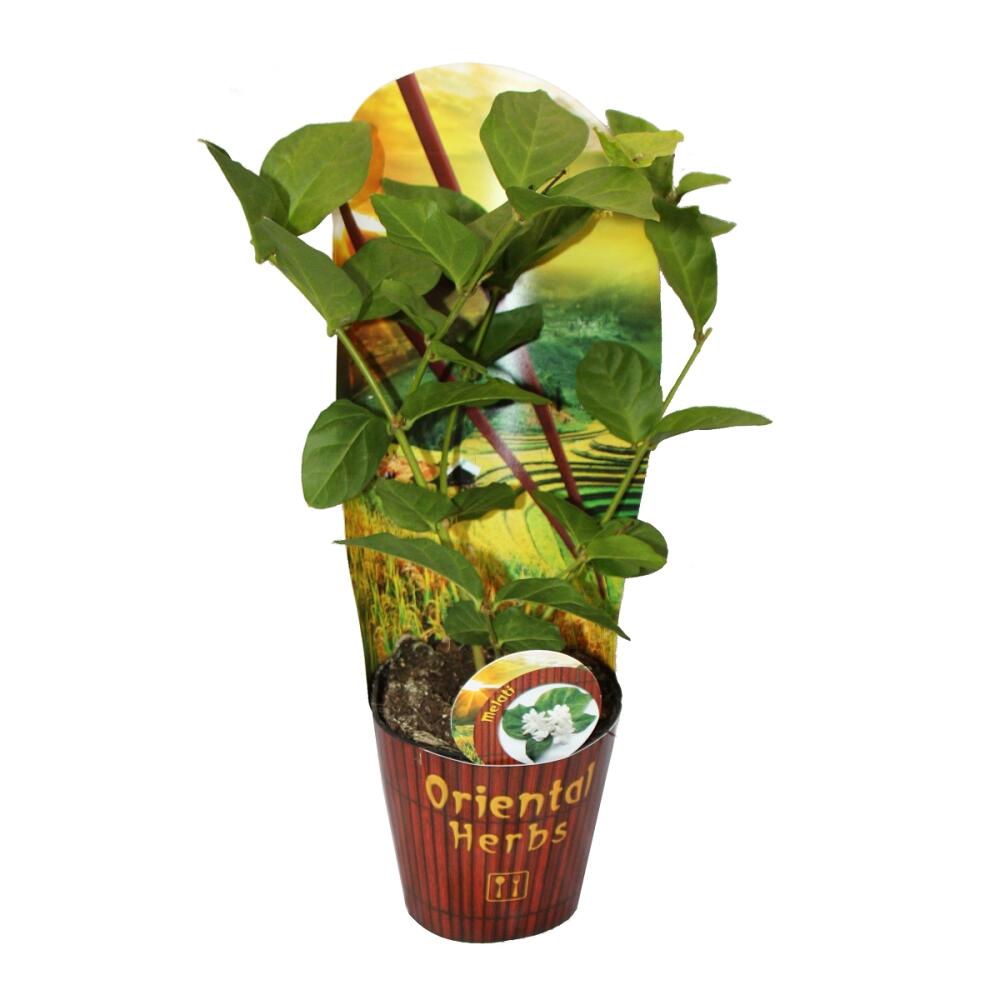
The offer states a 12 cm pot and approximately 25–30 cm overall height. The original photograph shows a young supported plant. The AI scene therefore adds no invented masses of flowers but presents the green delivery form as a decorating idea. A warm, sheltered summer place may support later flower development. Decorative pot and furnishings are not automatically included. Flower number, timing and duration are not firmly promised for a living plant.
Warmth, light and some protection
Plenty of daylight is important. Gradually acclimatise the plant to direct sun; light protection may help in hot midday sun. Outdoors, shelter it from wind and bring it in promptly before cool autumn nights. A dark, warm winter position is unfavourable because warmth and light do not match. Avoid cold draughts. The plant must remain frost-free throughout the year.
Water evenly and allow drainage
Check the upper compost and water when it has dried a little. Strong growth uses more than a quiet winter phase. A small pot dries rapidly in summer warmth, but constantly wet soil is still no solution. Remove excess water after watering. Bud or leaf drop can be linked with abrupt changes of position, dryness or root problems. Check conditions before adding more water or fertiliser.
Guide shoots and reshape after flowering
Long shoots can be fastened loosely to a support. Ties must not cut in. Where needed, gently reshape after a flowering phase instead of continually cutting new tips that may carry buds. Use loose, humus-rich container compost with good drainage. Move to a slightly larger pot when clearly well-rooted. Feed moderately according to a suitable label during active growth; hold back accordingly in low light and on a resting plant.
Overwinter a scented plant attentively
Before bringing it in, inspect leaf undersides and stems for scale insects, mealybugs and spider mites. Check occasionally in its winter quarters and ventilate appropriately. Cleanly remove wilted flowers and dead parts. Jasmine being used for tea elsewhere does not automatically mean every ornamental plant is edible. Here, care as a scented ornamental is the focus. A healthy winter condition provides the better starting point for the next warm half-year.
One plant, several views
Good to know
Is this hardy jasmine?
No. Jasminum sambac overwinters frost-free and is not equivalent to hardy winter jasmine.
Is the delivered plant already flowering?
This is not firmly promised. The checked original shows a young green plant with approximately 25–30 cm overall height.
Can it stand outdoors in summer?
Yes, warm and sheltered after gradual acclimatisation to stronger light. Bring it back in before cold weather.
Can I make tea from its flowers?
No blanket permission to consume this ornamental-plant offer is given. Explicit product and treatment guidance would be decisive.
Sources and editorial note
Sources checked: 15 September 2026. Product information and delivery contents follow the linked shop offer. Care has been checked against the stated specialist sources and remains subject to plant condition, position and season.