
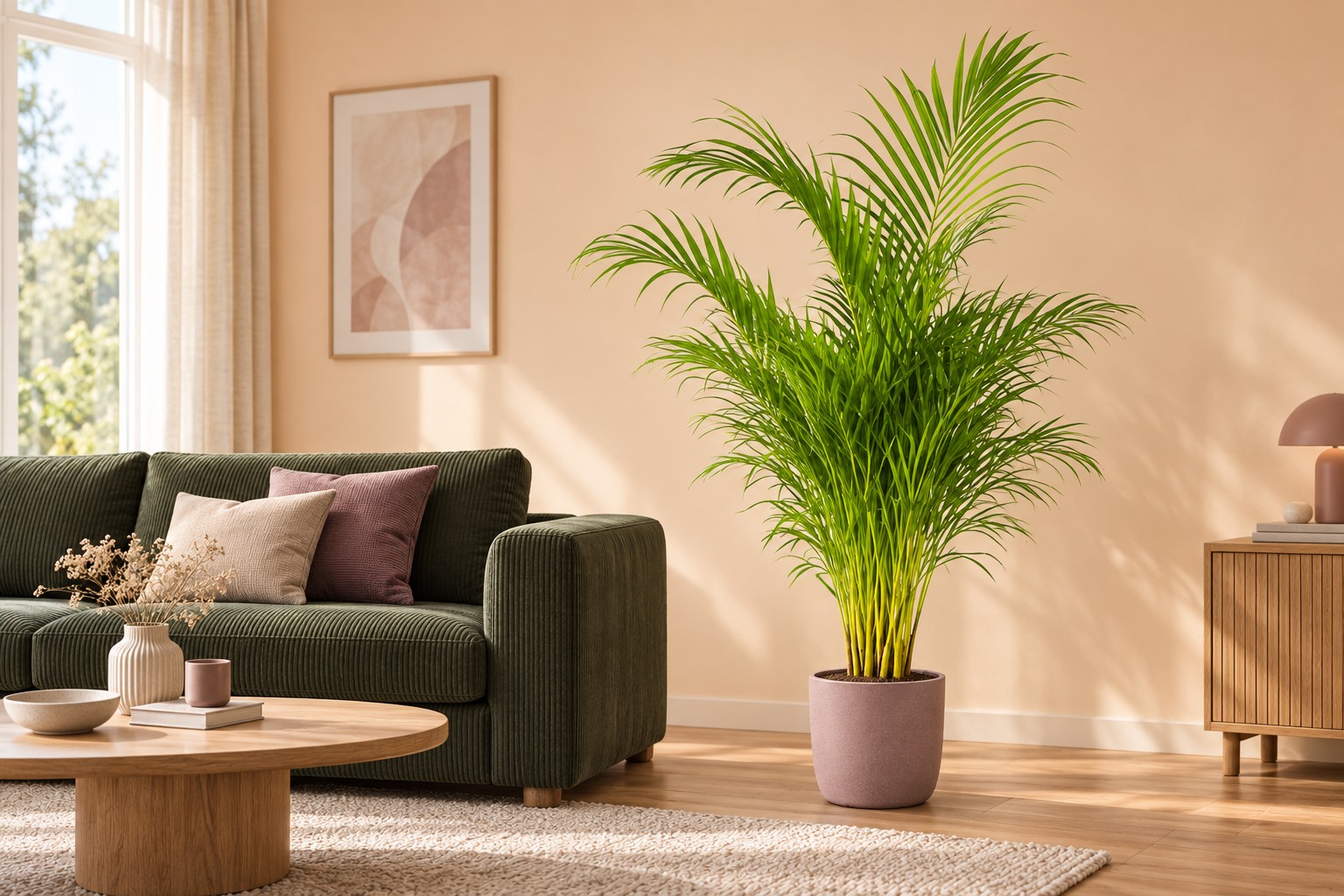
This plant at Exotenherz
Check the shop offer for current availability, price and what is included.
The linked shop is in German. Product details, availability and delivery information are provided in that shop.
Your care table
| Topic | What to do | Why it helps |
|---|---|---|
| Position | Keep bright with indirect light, warm and protected from cold draughts. | A dark corner is insufficient even for a shade-tolerant palm. |
| Water | Keep slightly moist, allowing the surface to dry briefly. | Reach the root ball evenly and remove excess water. |
| Compost | Use a humus-rich, well-drained, structurally stable mix. | Dense root balls also need air. |
| Feeding | During growth, feed regularly at a weak dose according to product instructions. | Do not overfeed in response to brown tips. |
| Room climate | About 18–25 °C; keep away from strongly drying radiators. | Combine higher humidity with gentle air exchange. |
| Winter | Reassess water needs and usually reduce watering. | Less light slows consumption. |
| Pruning | Remove only fully dead fronds. | Leave growing points and young spears undamaged. |
| Monitoring | Check undersides and stalk bases for pests. | Spot fine webbing and sticky areas early. |
Check the compost and pot weight. The care table explains how far the compost may dry.
Water only when needed. The water should reach the root ball without spilling over the rim.
Remove surplus water from the saucer or cachepot. Then return the plant to a suitable position.
A palm with several familiar names
The shop calls this palm Dypsis lutescens. Kew lists Chrysalidocarpus lutescens as the accepted name; both names refer to the same species here. Areca palm is also a widespread trade name. The plant comes from Madagascar and forms numerous slender stems with yellow-green areas. Its leaflets sit along a curved central axis. This pinnate form clearly distinguishes it from fan palms, whose leaf segments radiate out from a shared area.
Planning height and width before buying
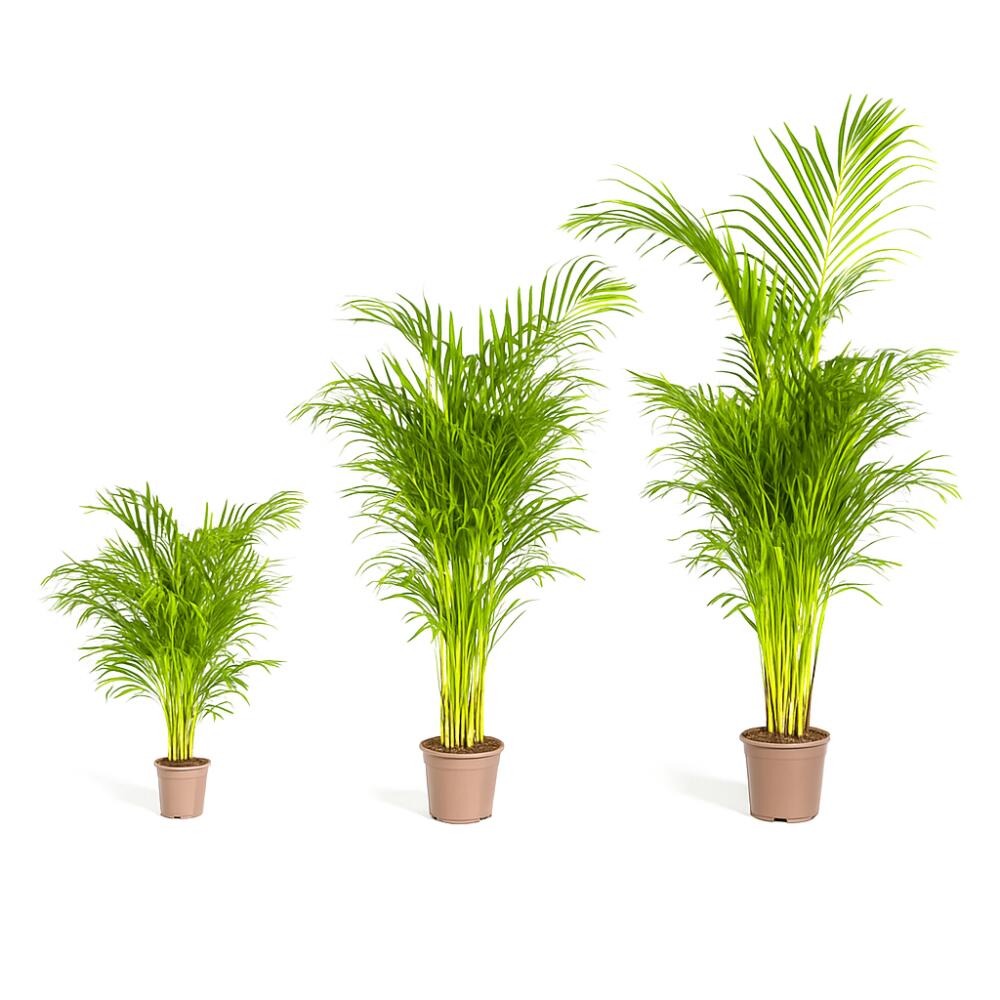
The selected offer provides several heights from 80–100 to 150–170 cm. Our scene shows an example of the large variant. The original photo places comparison sizes side by side; the order includes the selected variant. Fronds extend considerably beyond the pot and should not crowd a seating area. A quiet wall can emphasise their fine pattern. A uniform pot diameter is not established in the combined offer and is therefore not stated as a fixed size for all variants.
Combining light and room climate appropriately
Bright indirect light encourages even development. A somewhat shadier position can work, but very dark corners are unsuitable. Avoid hot direct sun initially and make position changes gradually. The shop’s approximately 18–25 °C recommendation suits a warm room. Air often becomes very dry directly beside a radiator. Higher humidity may help but must accompany fresh air without a cold draught. Constantly wetting the fronds does not replace a good room climate.
Slightly moist yet well aerated
Let the surface dry a little and check moisture below. During growth, the root ball should receive an even supply without standing in water. Water slowly so the centre of the dense root ball is reached, and remove excess. Less may be needed in winter. Large, multi-stemmed plants can look thirsty even when their pot interiors remain wet; size alone therefore does not decide the next application. Checking is more important than a fixed calendar.
Preserving palm hearts and healthy fronds
Each stem has a sensitive growing point. Do not pull open or shorten new spears and still-folded fronds. Remove fully dead foliage carefully but retain healthy green fronds. When clearly well rooted, move to a suitable next pot size with little root disturbance. A well-drained, humus-rich mix is useful. During growth, feed regularly at a weak dose according to product instructions. Ever-larger doses of fertiliser cannot turn brown tips green again.
Looking closely at fine leaves regularly
Spider mites, scale insects or other sap-sucking pests may be noticed late in dense foliage. Check leaf undersides and stalk bases, particularly during the heating season. Brown tips may relate to dry air, inappropriate watering or root problems. Yellowish stalks are partly a natural feature and should be assessed differently from a softening trunk. The palm enriches the room visually; no specific health effects or replacement for regular ventilation are promised.
One plant, several views
Good to know
Are Dypsis and Chrysalidocarpus two different palms?
In this case, they are two botanical names for the same species; Kew lists Chrysalidocarpus lutescens as accepted.
Why are some stalks yellowish?
Yellow-green stalks belong to the species. Soft tissue or progressive damage, however, require closer investigation.
Can I pull new fronds apart?
No, they unfold by themselves. The sensitive palm heart must not be injured.
Which size does the scene show?
A large example plant from the 150–170 cm height variant. The desired variant is chosen in the shop.
Sources and editorial note
- Product and delivery contents: Exotenherz
- NC State Extension: plant profile
- Royal Botanic Gardens, Kew: botanical classification
Sources checked: 15 September 2026. Product information and the contents of delivery follow the linked shop offer. Care advice was checked against the cited specialist sources and should still be adapted to the plant’s condition, position and season.