
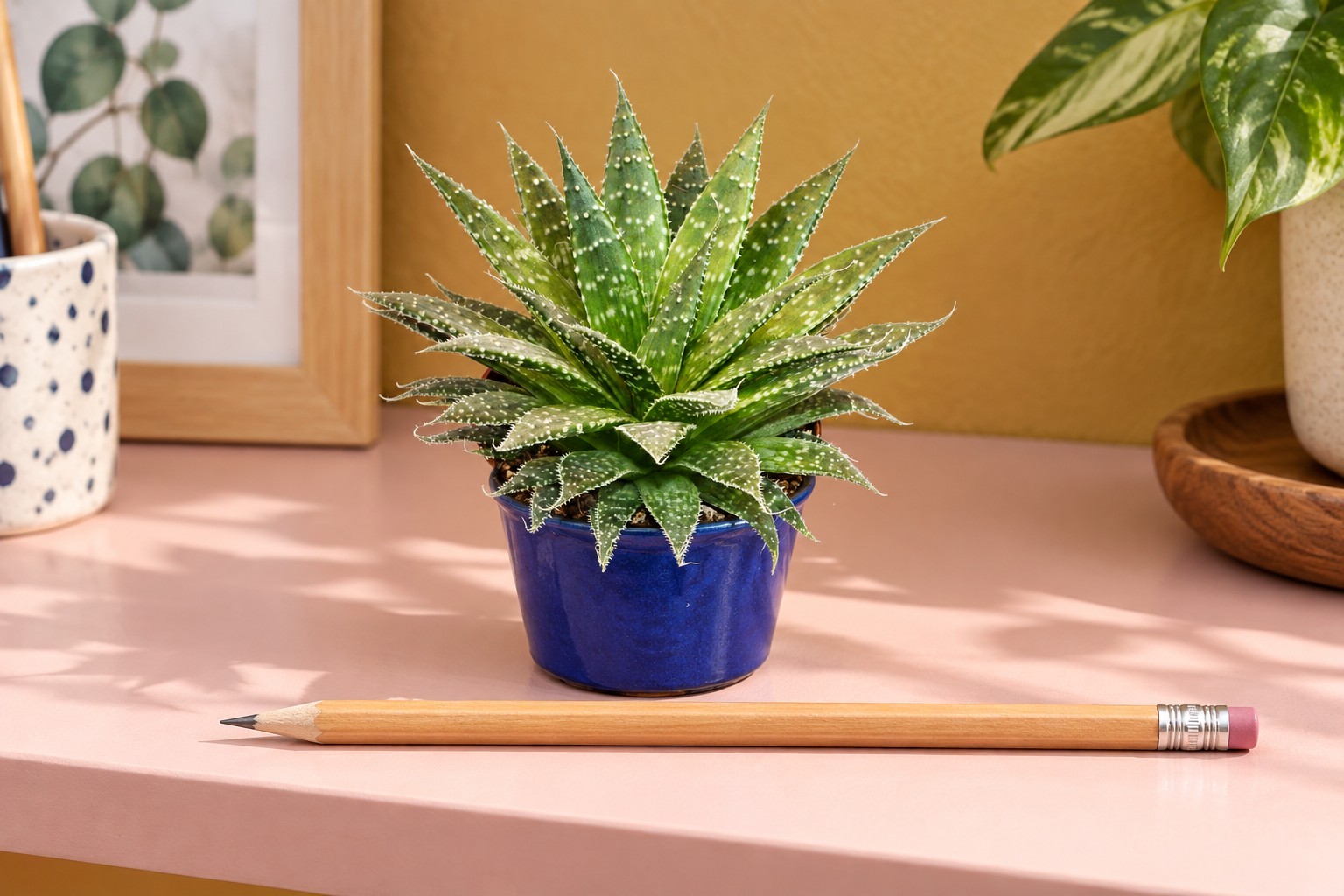
This plant at Exotenherz
Check the shop offer for current availability, price and what is included.
The linked shop is in German. Product details, availability and delivery information are provided in that shop.
Your care table
| Topic | What to do | Why it helps |
|---|---|---|
| Light | Very bright; acclimatise gradually to direct sun. | Light maintains a compact rosette. |
| Water | Let the compost dry well between watering. | Fleshy leaves store water. |
| Rosette | Water the compost; avoid constant wetness in the centre. | Leaf bases are prone to rot when wet. |
| Compost | Use mineral-rich, free-draining succulent compost. | Roots need to regain air quickly. |
| Pot | Use drainage holes and move to a slightly larger pot only as needed. | An oversized compost volume stays wet for a long time. |
| Fertiliser | Feed sparingly during growth, following the label. | The miniature does not need heavy nutrient applications. |
| Winter | Keep bright and frost-free and water much more sparingly. | Less growth means less consumption. |
| Safety | Do not eat it or use it as an Aloe vera home remedy. | Aristaloe is a different ornamental plant. |
Check the compost and pot weight. The care table explains how far the compost may dry.
Water only when needed. The water should reach the root ball without spilling over the rim.
Remove surplus water from the saucer or cachepot. Then return the plant to a suitable position.
A rosette with patterns of its own
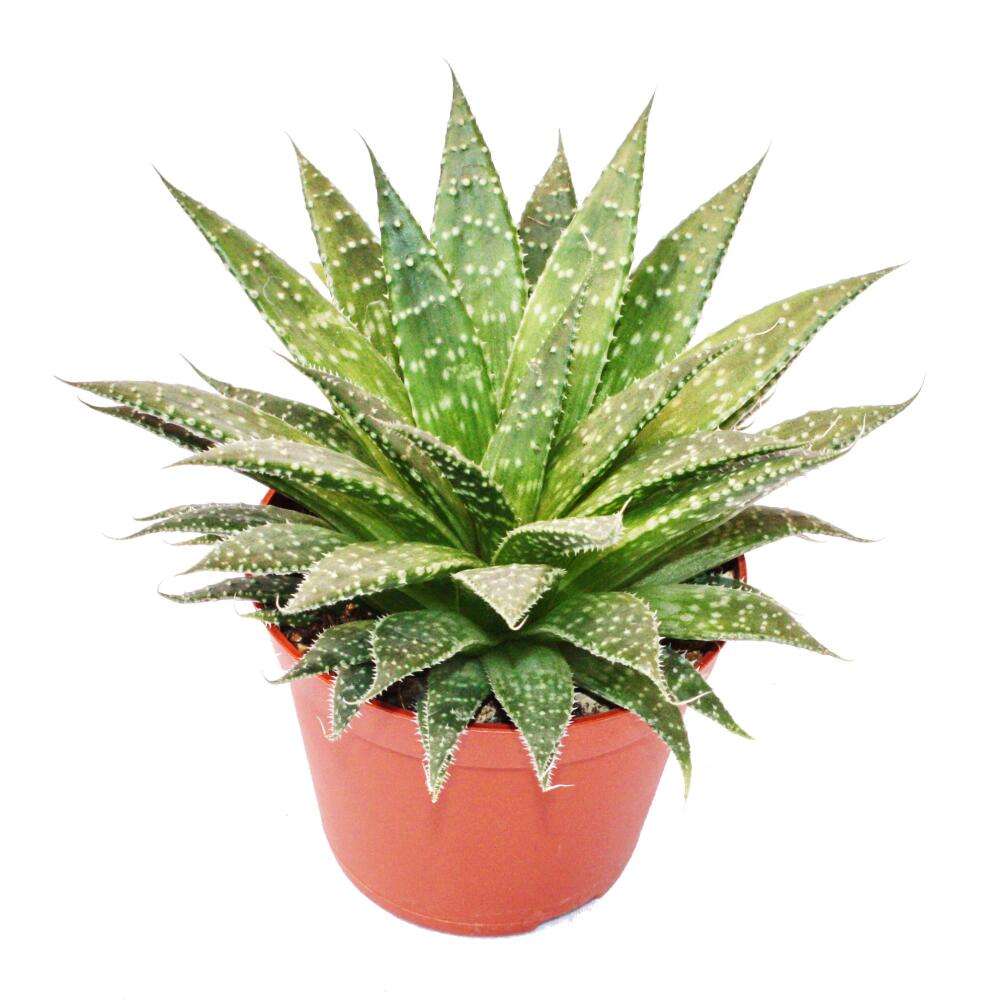
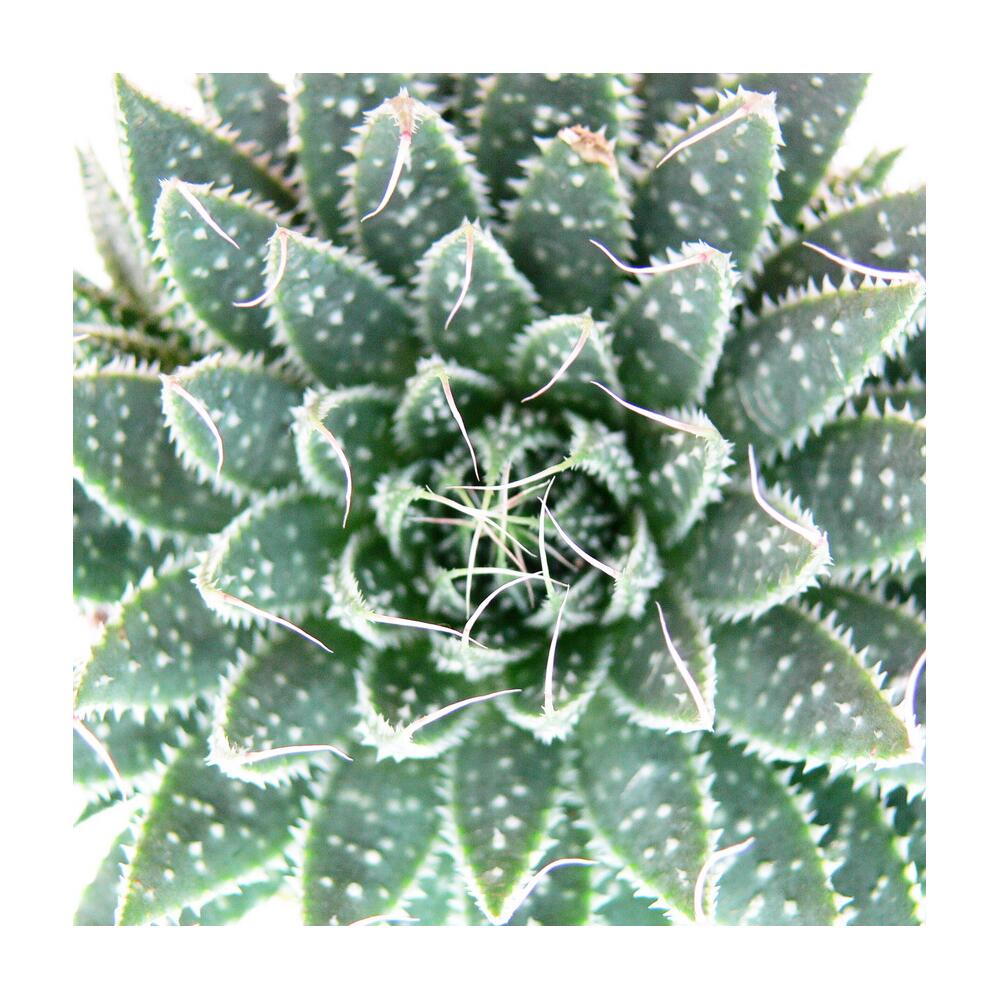
Aristaloe aristata was long known as Aloe aristata. Its triangular, fleshy leaves have small white bumps and fine structures along the margins. A characteristic fine bristle sits at the tip. It is not Aloe vera and is not used for skin applications or as food. Offsets may form over time. The white dots belong to the plant and must not be confused with a suddenly appearing pest deposit that can be wiped away.
Start genuinely small
The listing comes in a 5.5 cm pot and is described at approximately 6–8 cm. It is a young miniature plant. The scene therefore uses a small everyday object as a size reference and does not show a large mature rosette. A very bright, easily accessible position is sensible. Even with sparing care, the small quantity of compost must be checked regularly. A decorative pot and accessories are included only if the shop explicitly lists them.
Increase light gradually
A bright to sunny position supports compact growth. Acclimatise to direct sun gradually after transport or a darker position. Pale, long new leaves may indicate too little light. A sudden reddish colour may instead be linked to strong stress from sun or dryness. Check conditions rather than treating colour alone as a desirable decorative feature. The small plant stays frost-free.
Water and let it dry again
Let the compost dry well between watering. Water thoroughly as needed and let the pot drain completely. Aim water at the compost rather than allowing it to collect permanently in the rosette’s centre. Assess wrinkled leaves alongside root-ball moisture and roots. A wet root ball can also cause disrupted water supply. Water much more cautiously in winter when growth slows, without leaving the miniature unobserved to parch completely.
Keep the rosette base clear
Free-draining succulent compost with a mineral structure and open drainage holes are important. Maintain the previous planting depth when repotting. Choose a slightly larger pot only if there is a clear need for root space or room. Healthy offsets may initially remain with the parent; sufficiently developed ones can later be separated carefully. Feed sparingly during growth, following the label, and account for fresh, pre-fertilised compost.
Small checks prevent large problems
Look between leaves and around the base for mealybugs. Remove completely dead outer leaves carefully without tearing the rosette apart. Soft, dark areas in wet compost are a warning sign. A bright, frost-free winter position and dry pauses help avoid such problems. Keep the plant away from nibbling pets and small children. Its appeal lies in close observation, not frequent touching.
One plant, several views
Good to know
Is this Aloe vera?
No. Aristaloe aristata is a different species and is not recommended for the same uses.
Are the white dots pests?
The fixed white bumps belong to the species. Check new deposits that wipe away or animals separately.
How large is the miniature?
The listing states a 5.5 cm pot and approximately 6–8 cm size.
When should I separate offsets?
Only when sufficiently developed, preferably with roots of their own. Small groups may stay together initially.
Sources and editorial note
Sources checked: 15 September 2026. Product details and delivery contents follow the linked shop listing. Care has been checked against the cited specialist sources and should be adapted to the plant’s condition, position and season.