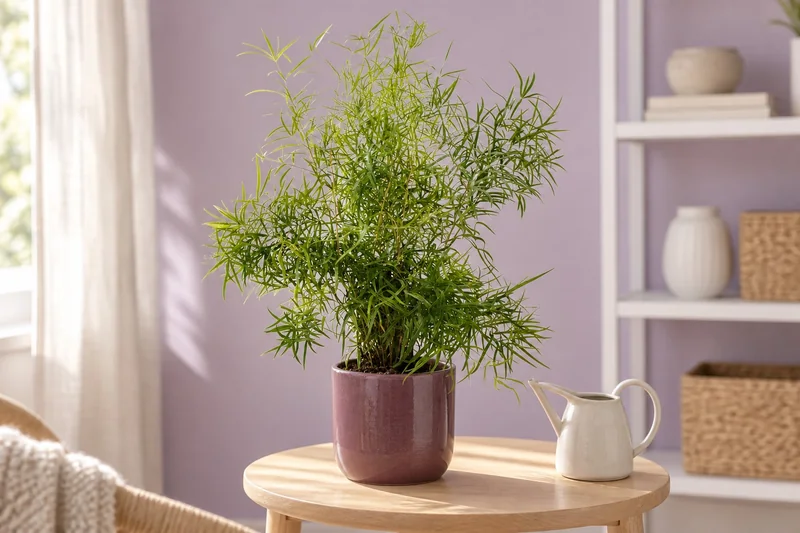
This plant at Exotenherz
Check the shop offer for current availability, price and what is included.
The linked shop is in German. Product details, availability and delivery information are provided in that shop.
Your care table
| Topic | What to do | Why it helps |
|---|---|---|
| Light | Place somewhere bright, preferably in filtered daylight. | Light maintains strong green shoots. |
| Water | Let the upper compost dry a little, then water regularly. | Repeated drying may cause yellowing and shedding. |
| Drainage | Remove remaining water from the decorative pot. | Storage roots cannot tolerate constant waterlogging. |
| Compost | Use loose, humus-rich compost in a pot with drainage holes. | Roots need space, moisture and air. |
| Repotting | Move to a slightly larger pot in spring if roots exert strong pressure. | Strong roots can quickly fill small pots. |
| Fertiliser | Feed during active growth, following the label. | Fresh shoots need an appropriate nutrient supply. |
| Winter | Keep bright and frost-free, watering according to lower use. | The plant is not a winter-hardy garden fern. |
| Safety | Do not eat berries and handle thorny shoots carefully. | This is ornamental asparagus, not vegetable asparagus. |
Check the compost and pot weight. The care table explains how far the compost may dry.
Water only when needed. The water should reach the root ball without spilling over the rim.
Remove surplus water from the saucer or cachepot. Then return the plant to a suitable position.
A fern-like appearance without being a fern
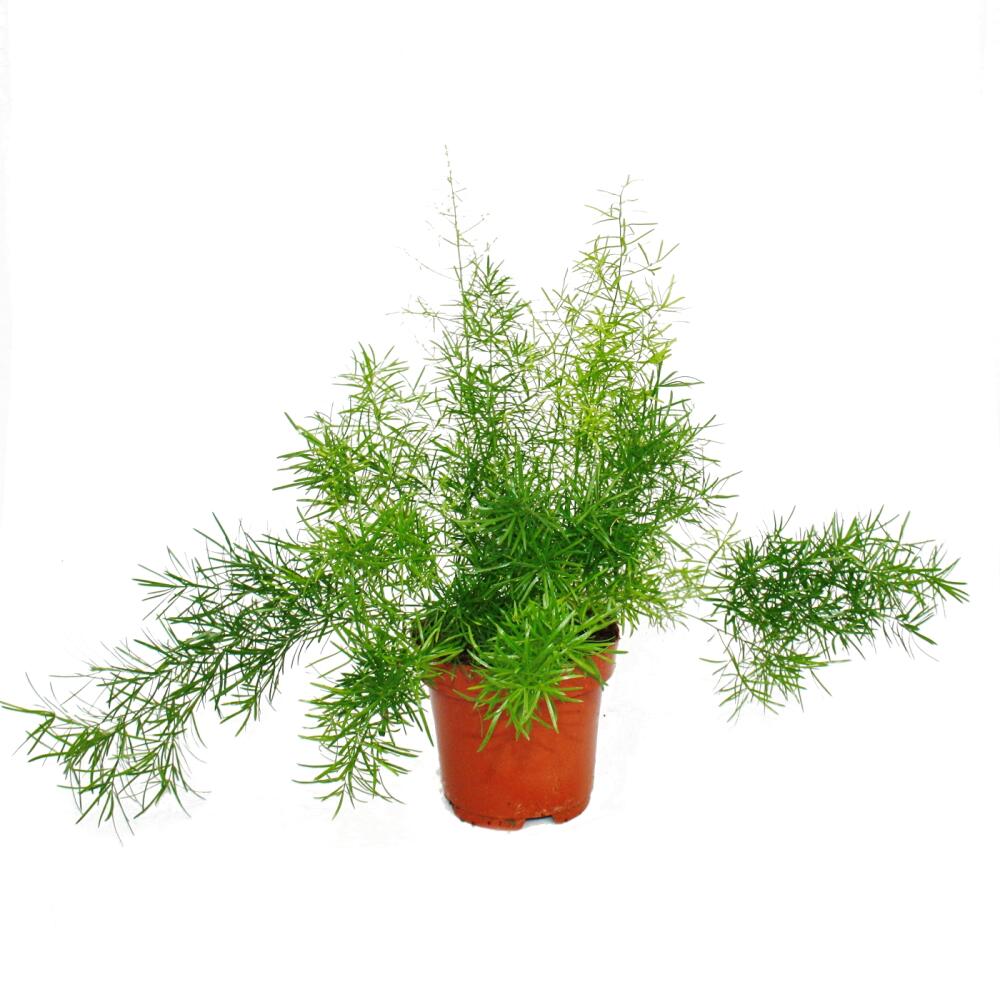
Asparagus fern belongs to the asparagus family, not to the ferns. Its fine green structures are mainly modified shoot parts known as cladodes. The listing uses the name Asparagus densiflorus; other classifications such as A. aethiopicus are also encountered in trade for Sprengeri types. The loose, trailing form in the original photograph is the reference here. Strong roots with storage organs form below ground. This robustness does not mean a small pot can remain permanently unchecked.
An airy habit needs room to the sides
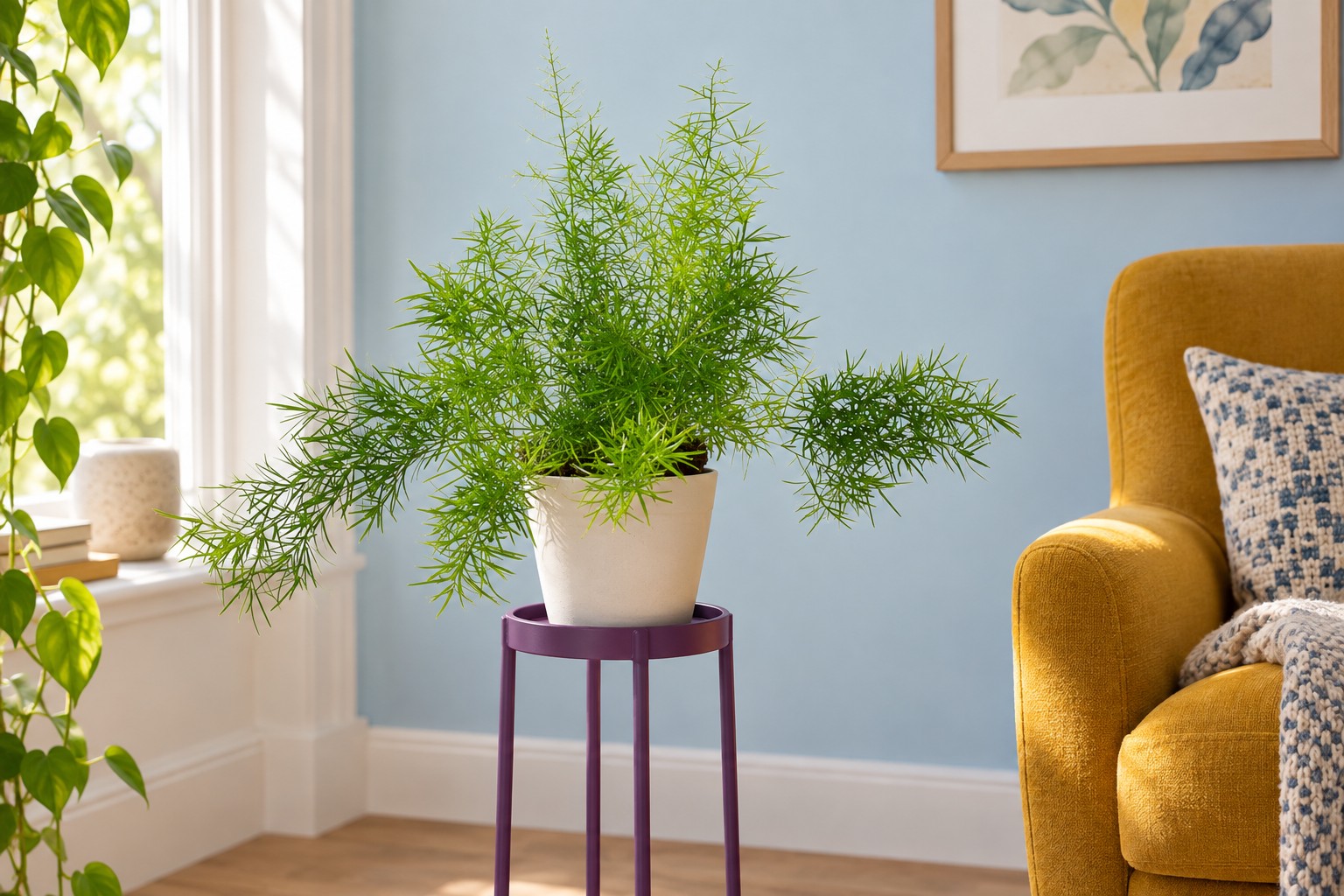
The listing comes in a 12 cm pot and reaches approximately 40 cm total height. Delicate shoots can extend further to the sides. A raised, stable surface or later a suitable hanging basket displays the loose habit well. Keep the plant accessible for watering. Shoots may carry small thorns and should be handled carefully. The interior scene shows a display idea; the pot cover and furniture are not promised components.
Light supports fresh green growth
A bright position with indirect daylight is suitable. Gentle sun may also suit it after acclimatisation. For a summer position outdoors, make the change gradually and bring it indoors frost-free in good time in autumn. Growth weakens in very dark corners and foliage may yellow. Avoid direct, dry radiator heat. Turning it occasionally helps if the shoots grow one-sidedly towards the light.
Water regularly without waterlogging
Let the upper layer of compost dry a little, then water thoroughly as needed. Remove excess. An established asparagus fern withstands a brief dry spell better than many delicate plants, but repeated drying can cause yellow, shedding shoots. Wet, damaged roots also lead to problems. Check the root ball before adding more water. Use usually falls in winter, while a vigorous summer root ball can dry surprisingly quickly.
Strong roots occasionally need more room
If roots densely fill the pot, distort it or the compost dries very quickly, a slightly larger container is sensible in spring. Use loose, humus-rich compost and ensure drainage holes. Careful division is possible with large, strong plants but initially unnecessary for small specimens. Feed during active growth, following the fertiliser label. Remove yellow or dead shoots cleanly at the base; healthy new shoots need space to emerge.
Check fine foliage and possible fruits
Watch for spider mites, mealybugs and other sap-sucking pests. Inspect the dense, fine structure carefully rather than combing roughly through it. Older plants may produce small flowers and red berries. These are not food and must stay away from children and pets. Thorny shoots also need a suitable position. Despite the relationship, asparagus fern is not a substitute for vegetable asparagus. Its value lies in its lively, airy foliage effect.
One plant, several views
Good to know
Is asparagus fern a true fern?
No. It belongs to the asparagus family; its fine green cladodes merely create a fern-like impression.
Why is the greenery shedding?
Dry spells, insufficient light or poor roots often play a part. Check the root ball and position together.
Can it go outdoors in summer?
Yes, in a suitable sheltered place after gradual acclimatisation to light. Bring it back inside before frost.
Can its berries be eaten?
No. The berries are unsuitable for eating and must be kept away from children and pets.
Sources and editorial note
Sources checked: 15 September 2026. Product details and delivery contents follow the linked shop listing. Care has been checked against the cited specialist sources and should be adapted to the plant’s condition, position and season.