
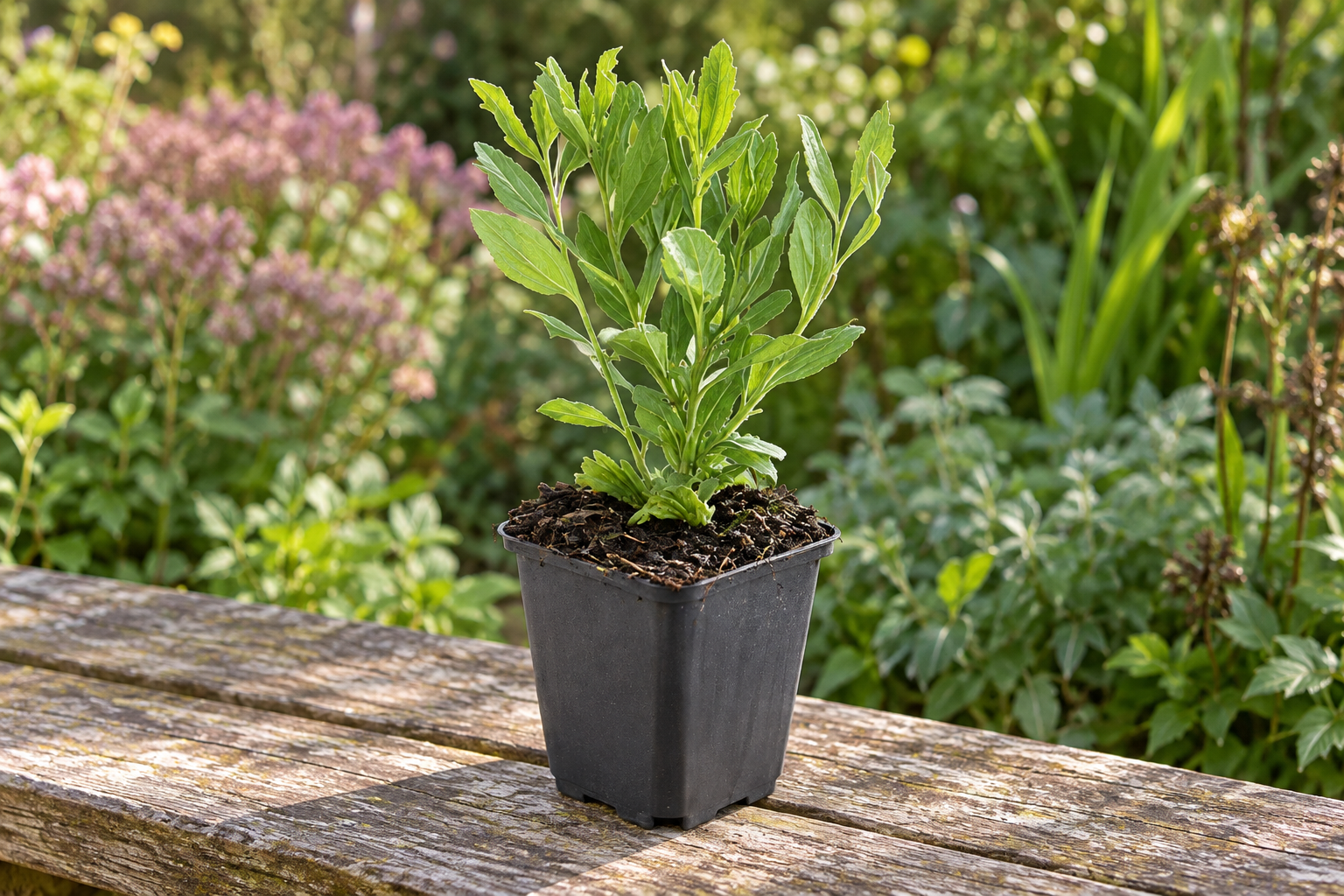
This plant at Exotenherz
Check the shop offer for current availability, price and what is included.
Check the shop for the current price, availability and offer contents.
Your care table
| Topic | What to do | Why it helps |
|---|---|---|
| Position | Choose a sunny to lightly partly shaded garden position. | Pale flowers need light; permanent dark shade is a poor starting point. |
| Soil | Loosen the border and prepare moderately nutritious drained soil. | Roots need moisture but not a permanently saturated hollow. |
| Planting | Plant the moistened root ball at its previous level and water slowly. | Good soil contact helps young roots continue growing. |
| Watering | Check the root ball during the first weeks and water thoroughly as needed. | A young set plant cannot yet handle dry weather with a large root system. |
| Feeding | Allow for existing spring nutrients and supplement moderately. | Additions should support supply, not force especially soft growth. |
| Neighbours | Do not squeeze the group between already-large clumps. | Light, air and space remain important after the first season. |
| Pruning | Remove dead stems in autumn or before fresh spring growth. | Healthy dry winter stems may initially remain as structure. |
| Division | Divide older dense groups in spring and replant strong pieces. | This renews the colony; new pieces need establishment care again. |
For young plants, feel the soil directly at the root ball. The surface and deeper soil may have different moisture levels.
Water thoroughly after planting; later, water according to the soil, weather and establishment rather than a fixed calendar.
Avoid standing water. For plants in containers, also check that water runs out of the drainage hole.
White lightens the autumn border
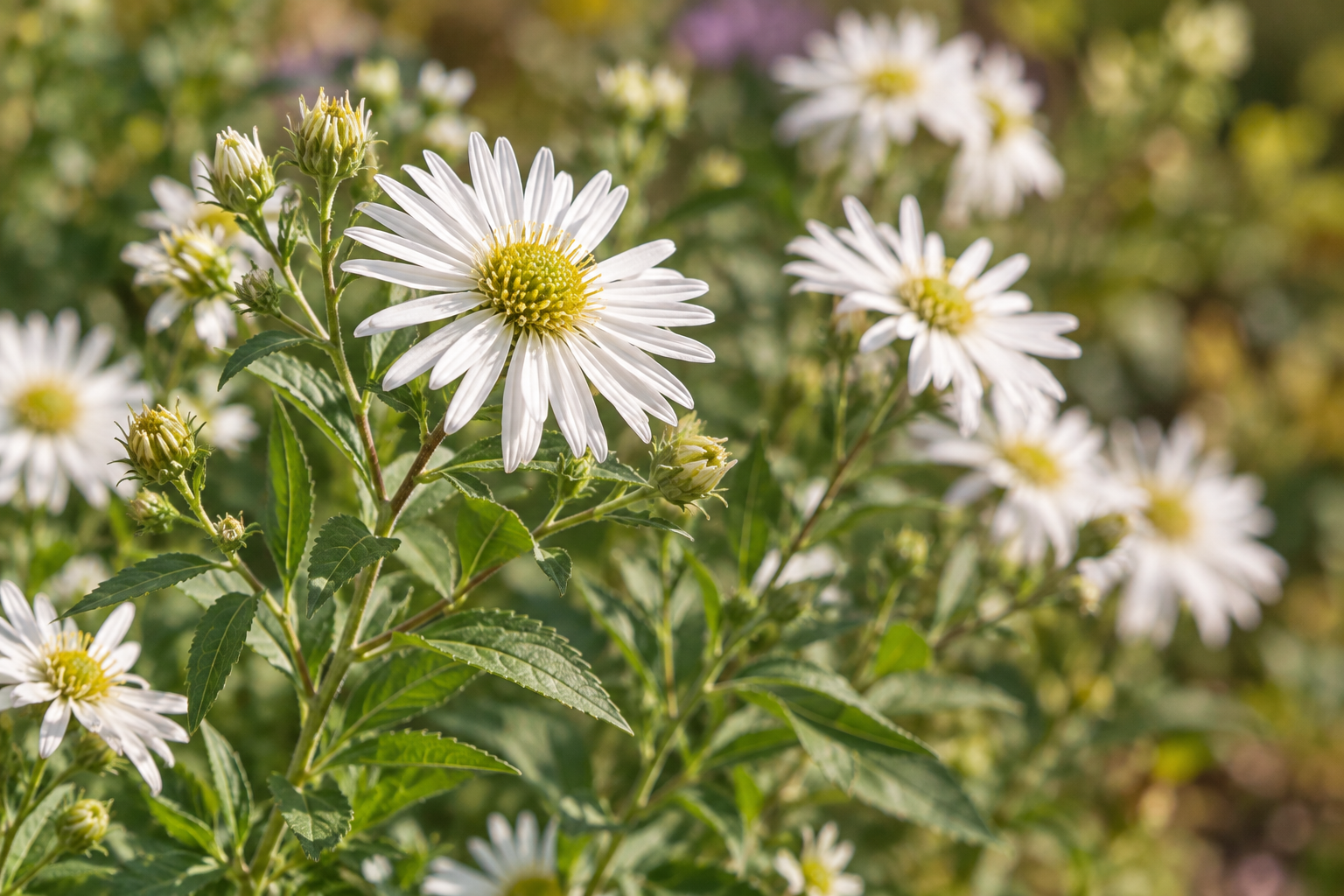
Ashvi bears many small white aster heads with yellow centres. Slender rays look open and light, especially against a darker hedge or among still-green perennials. Colour combines calmly with silvery grasses and late-colouring foliage without requiring every neighbour to flower simultaneously. Close up, pale stems and pale-green toothed leaves are visible. This green foundation remains part of the garden image; the perennial is not just white flowers. Flowering falls in autumn. Start, duration and abundance vary with position and year, and a young delivery plant has no finished flowering border.
Ashvi remains the same cultivar across different species names
The shop spells it Aster ageratioides Ashvi. The directly read RHS profile uses Aster ageratoides ‘Ashvi’ and also lists assignments as Aster trifoliatus and Aster trinervius with subspecies ageratoides. These specialist names help find it again but do not describe additional offers here. The Ashvi cultivar name and supported white flowers determine this selection. It is perennial and deciduous, renewing above-ground growth during the season before dying back later. A winter cut-back position is therefore not automatically a lost planting. Watch spring growth before filling the area anew.
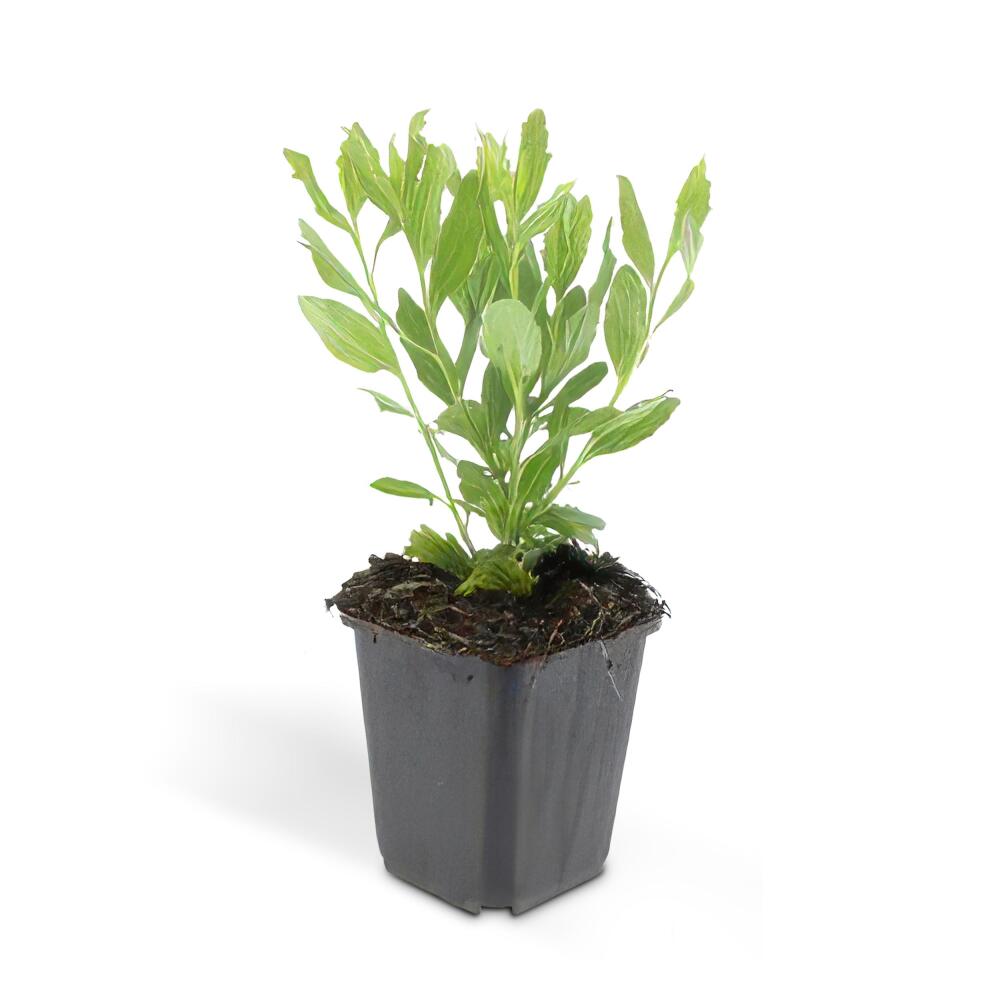
Delivery condition shows development beginning
The original shop photograph shows Ashvi as a young green plant without open flowers. Each plant in the offered sets has a 9 cm pot at approximately 10–25 cm total height including the container. These figures describe delivery. For developed garden growth the shop states about 50–70 cm, while the specialist profile describes 60–90 cm. Do not plan on 70 cm as a secure upper limit. Depending on conditions the colony may grow taller and occupy more lateral room. About 40–50 cm planting distance serves as shop guidance. What matters is how closely already-large neighbouring clumps approach the young pots.
White belongs in a well-lit position
Sun to light partial shade and moderately fertile, well-drained soil favour Ashvi. Deep shade beneath dense woody plants deprives later growth of light. An open woodland edge may suit if the young perennial avoids strong neighbours’ root competition. Look closely before planting: where does rain collect, where does soil stay very dry, and where is a vigorous clump already growing? Loosen usable root space and preserve drainage. In very compacted soil, one small loose hole does not improve the whole area. Visible border design and below-surface conditions must match.
Establishment needs water in the right place
Spring or autumn suit planting provided soil is frost-free and not waterlogged. Moisten the small container root ball, unpot gently and plant at its previous level. Firm surrounding soil and water slowly and thoroughly. Initially inspect directly at the former pot root ball. Roots first need to grow outwards before accessing surrounding moisture reserves. In warm dry weather check more often and water the base as required. Permanently wet soil remains unfavourable. Demand changes faster in containers than borders; regular checking and open drainage are particularly important there. Fertiliser cannot replace a dry root ball.
Space and colony checks preserve the pale effect
As Ashvi grows, simple management preserves its effect. Reduce crowding neighbouring shoots before white heads disappear among them. Check leaves occasionally, particularly in dense groups. A whitish coating may be powdery mildew and should be distinguished from normally pale foliage. Moderate spring nutrition allowing for existing border supply is a sufficient starting point; repeated heavy doses do not solve position problems. Older over-dense groups can be divided in spring and replanted with strong pieces. Every division starts another establishment period for those pieces even if the parent plant was well established.
After white flowers comes rest
As autumn flowering ends, stems gradually dry. Healthy material may remain as winter structure if you enjoy that garden image. Remove it no later than before new spring growth; take visibly diseased material out earlier. During winter rest it remains important that water does not stand at the root base. Shelter containers outdoors and keep drainage open. Next spring the green growth rebuilds, with white flowers following later in the year. This sequence needs patience. Supporting Ashvi from a small green delivery root ball and allowing later growth room provides a calm pale accent in the late garden.
One plant, several views
Good to know
Is Ashvi definitely white-flowered?
RHS describes white heads with yellow centres. This portrait concerns named Ashvi, not a random aster mixture.
Why does the shop say ageratioides?
The specialist profile spells ageratoides and lists older assignments as synonyms. Ashvi has been reconciled as the same identity for this offer.
How tall can Ashvi become?
The shop gives 50–70 cm guidance, RHS 60–90 cm. Allow extra height for vigorous garden growth; there is no fixed centimetre limit.
Is flowering on delivery promised?
No, the original shows a green flowerless young plant. The flower detail shows later garden development.
Can Ashvi grow at a woodland edge?
A well-lit edge with light partial shade may suit. Deep shade and strong root competition are less favourable.
How should I water the small set plants?
Check directly at the root ball and water thoroughly at the base as needed. Establishing roots cannot yet reach surrounding reserves.
When can I divide the group?
In spring, older over-dense groups can be rearranged using strong pieces. Attend to water supply again afterwards.
Is the bare winter position normal?
Ashvi is deciduous and renews above-ground growth. Remove dead stems and watch fresh shoots in spring.
Sources and editorial note
- Exotenherz: offer and original photographs (03/10/2026)
- RHS: Ashvi, white flowers, heights and synonyms (03/10/2026)
- RHS: planting, watering and dividing asters (03/10/2026)
- Exotenherz: directly orderable set of 6, own SKU/GTIN (03/10/2026)
- Exotenherz: directly orderable set of 12, own SKU/GTIN (03/10/2026)
- Exotenherz: directly orderable set of 60, own SKU/GTIN (03/10/2026)
Shop offer, article number, GTIN, availability and original images checked directly on 03/10/2026. Specialist sources read directly. Shop and specialist names reconciled as one identity. RHS 60–90 cm presented transparently against shop 50–70 cm. Clean flowerless original gallery 2 unchanged.