
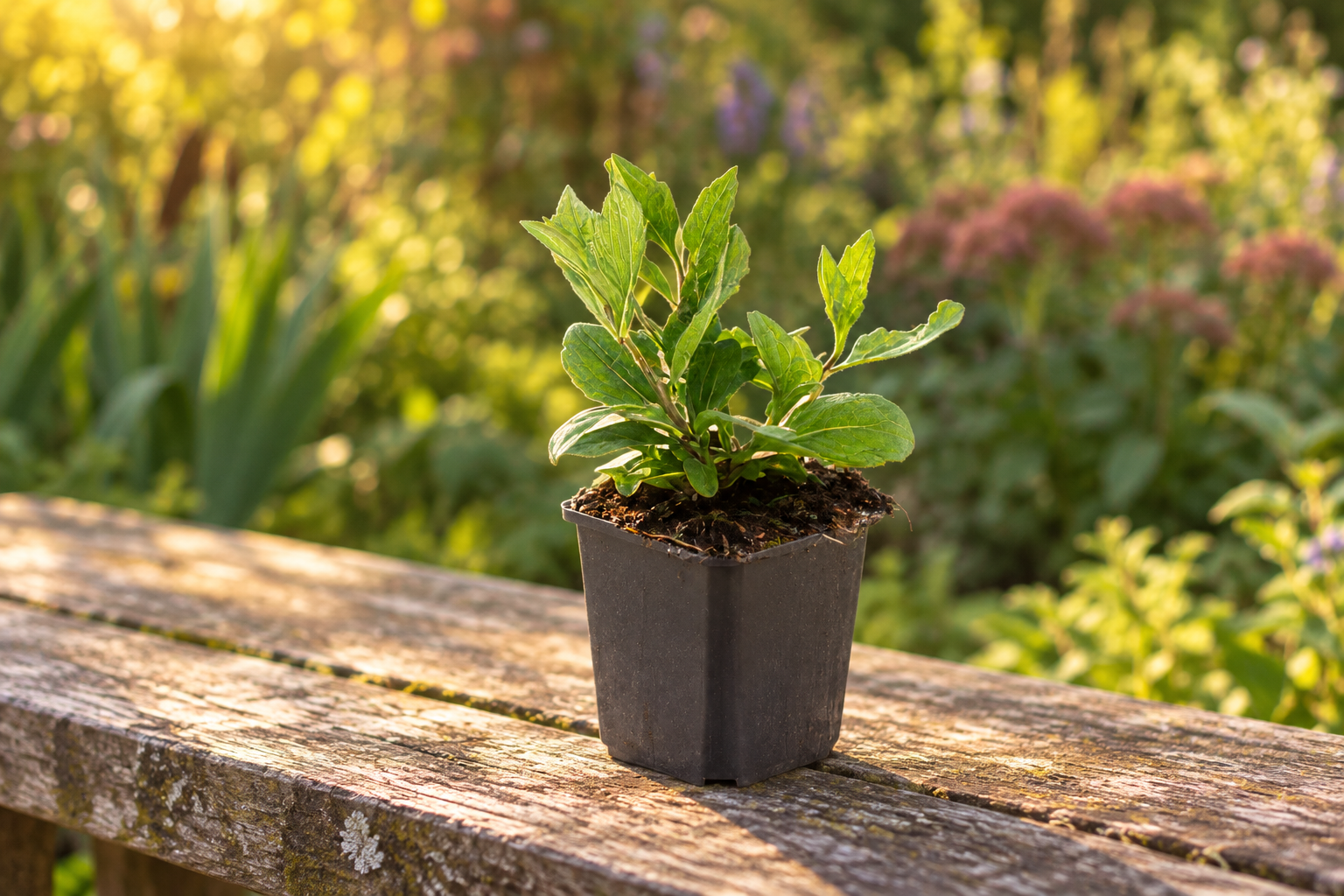
This plant at Exotenherz
Check the shop offer for current availability, price and what is included.
Check the shop for the current price, availability and offer contents.
Your care table
| Topic | What to do | Why it helps |
|---|---|---|
| Position | Choose a bright position where Asran can grow sideways. | The vigorous colony fits a broad border better than spaces between small sensitive neighbours. |
| Planting | Moisten the root ball, plant at the previous level and water thoroughly. | The small pot root ball needs good contact with prepared garden soil. |
| Soil | Loosen the area and maintain drainage. | Root moisture and soil air belong together. |
| Watering | Check directly at the root ball while establishing and water thoroughly when dry. | A small delivery root ball lacks established colonies’ reserves. |
| Feeding | Assess existing spring soil supply and supplement moderately. | Vigorous growth does not justify constant heavy feeding. |
| Runners | Check border edges annually and dig out unwanted edge pieces. | Asran can considerably leave its original planting area. |
| Pruning | Remove dead stems in late autumn or before new growth. | Healthy dry winter stems may stay visible until spring. |
| Division | Divide an overwide colony in spring; replant strong pieces. | This limits the area and provides new planting material. |
For young plants, feel the soil directly at the root ball. The surface and deeper soil may have different moisture levels.
Water thoroughly after planting; later, water according to the soil, weather and establishment rather than a fixed calendar.
Avoid standing water. For plants in containers, also check that water runs out of the drainage hole.
Many small flowers rather than one grand entrance
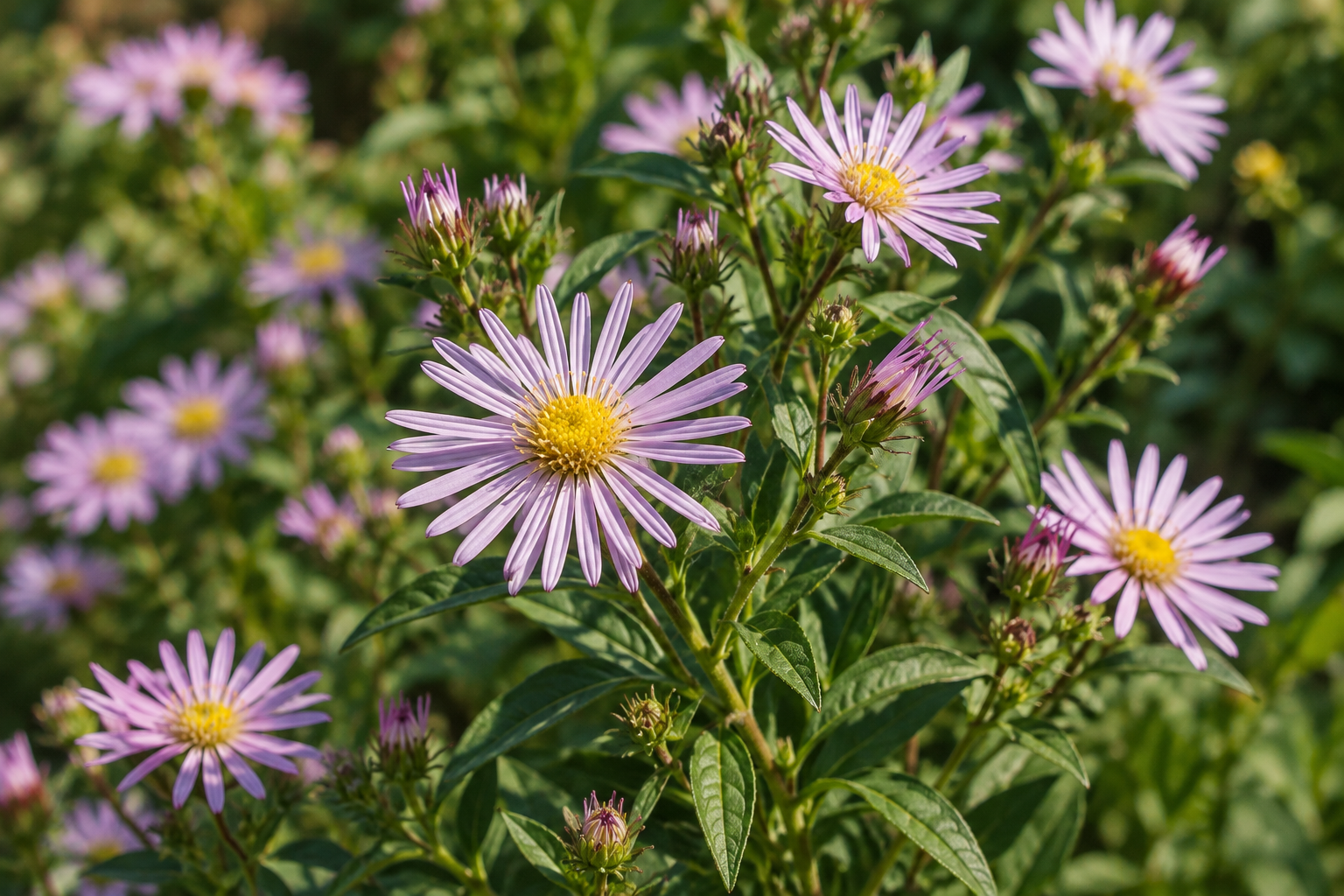
Asran thrives on the number of small flowers. Fine violet-pink to pale violet-blue rays surround yellow centres throughout branched green growth. From afar it looks like a loose coloured border; up close individual heads appear. This calm repeated shape suits upright grasses or larger leaves especially in the late garden. The German perennial evaluation observed rich flowering from late August to late October. That describes its trial, not a fixed calendar for every garden. Weather, position and development shift start and end; a freshly planted specimen need not display the same flower volume.
Its name remains recognisable through older specialist names
The offer calls it Aster ageratioides Asran. Specialist usage usually spells the species ageratoides; RHS lists Aster ageratoides ‘Asran’, also naming assignments as Aster trifoliatus or Aster trinervius with subspecies ageratoides. These names describe the same known garden cultivar, not extra set plants. Asran is perennial and deciduous: visible growth rebuilds during the season and dies above ground later. It does not form an unchanging small cushion. This vigorous perennial can gain lateral room by runners. Its strength is particularly welcome where a broader living border may form.
Delivery begins with a small green root ball
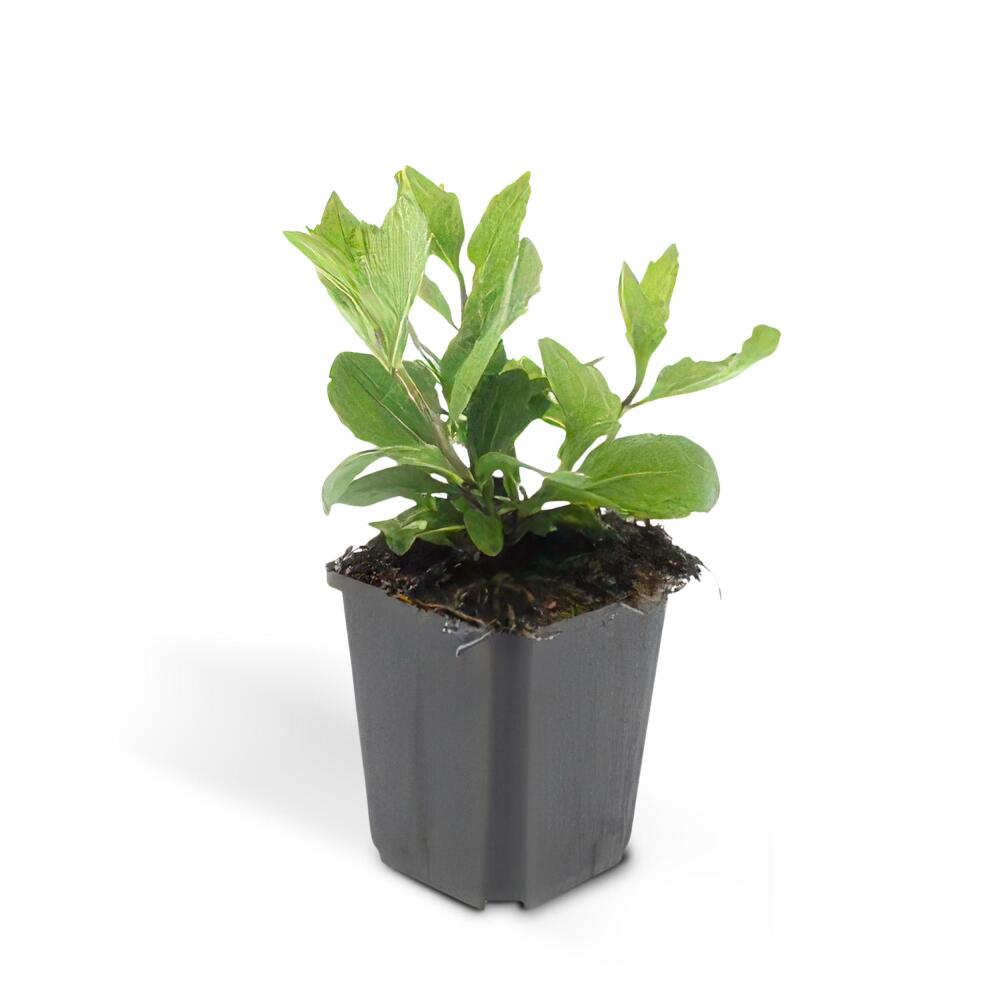
The unchanged original shows young flowerless Asran in a black nursery pot. Sets are offered with 9 cm pots and approximately 10–25 cm total height including the pot. Garden coverage forms only with development. The shop gives about 50–70 cm guidance; the specialist profile describes about 60 cm, while German evaluation reached 70–100 cm. These differences show how strongly conditions shape growth. Allow taller stems under vigorous development. Height is no fixed maximum guarantee. Approximately 40–50 cm spacing starts the group plan, while later spread needs extra room.
A bright border with enough distance from neighbours
Sun to light partial shade and moderately nutritious free-draining garden soil provide a workable starting point. A tight spot beneath dense evergreen woody plants is less suitable for the desired flower border. Consider neighbours too: small slow-growing perennials should not immediately enter the future spreading area. Lay pots out first and keep the border edge accessible for work. Loosen connected root space rather than individual narrow holes. Excess rain must drain. A compact permanently wet hollow cannot reliably be improved by just a little loose soil around the pot root ball.
Soil contact counts at planting
Spring and autumn are favourable if soil is frost-free, workable and not waterlogged. Moisten the root ball before unpotting. Plant at its previous level, firm soil gently and water slowly and thoroughly. Over the following weeks check whether the former pot root ball receives water. A wet surface alongside does not prove this. In warm dry weather check more often and supply the base as required. Soil should take in air again between watering. Older Asran’s strong effect is no reason to leave small plants unsupported through their first summer.
Manage the colony before it takes over the edge
Once established, Asran merits an annual look at its edges. New shoots outside the intended area show where it has moved sideways. Remove these edge pieces with roots instead of merely clipping green tips. For a larger correction, divide in spring and rearrange vigorous pieces. They need establishment watering again afterwards. Supplement nutrients moderately according to soil supply; more fertiliser does not replace sensible area planning. Large containers restrict spread but require regular water, root-space and drainage checks. The small delivery pot is not permanent garden accommodation.
The annual rhythm remains visible after autumn flowers
After flowering, healthy dry stems may initially remain as winter structure. Remove dead material no later than before new growth; diseased parts should leave promptly. Check leaves occasionally, especially in dense growth: a whitish coating may indicate powdery mildew and deserves examination. Air between plants and appropriate water supply help more than hastily using arbitrary treatments. Fresh spring shoots signal the next annual cycle. Asran need not then fit the same small delivery area. Giving it room and managing the edge creates a lively late-summer flower border.
One plant, several views
Good to know
Is Asran a small cushion aster?
Its later colony can grow vigorously and produce runners. It suits a broader border; small neighbours need distance.
Why do heights differ?
Shop and specialist profiles give guidance; the trial observed taller plants. Position and supply alter growth; 70 cm is no safe upper limit.
Are ageratioides and ageratoides different plants?
Here the shop intends the known Asran cultivar. RHS spells ageratoides and lists older assignments as synonyms.
Are set plants already flowering?
The original used is flowerless. Flower coverage and development may differ by delivery date; later garden flowers are no delivery promise.
How do I limit spread?
Inspect edges and dig out unwanted rooted runners. Larger colonies can be rearranged through spring division.
Does Asran need water after planting?
Yes, check the small root ball attentively in dry weather and water thoroughly. Established colonies have different reserves from delivery plants.
When should I cut stems?
Dead stems may be removed in late autumn. Healthy dry winter growth may remain until before fresh spring shoots.
Can Asran stay in a pot?
A sufficiently large container with drainage is possible. The 9 cm delivery pot is too small; water and root space require regular checks.
Sources and editorial note
- Exotenherz: offer and original photographs (03/10/2026)
- RHS: Asran, synonyms and garden cultivation (03/10/2026)
- Perennial evaluation: Asran, flowering, height and runners (03/10/2026)
- RHS: planting and caring for asters (03/10/2026)
- Exotenherz: directly orderable set of 6, own SKU/GTIN (03/10/2026)
- Exotenherz: directly orderable set of 12, own SKU/GTIN (03/10/2026)
- Exotenherz: directly orderable set of 60, own SKU/GTIN (03/10/2026)
Shop offer, article number, GTIN, availability and original images checked directly on 03/10/2026. Specialist sources read directly. Synonyms reconciled as one cultivar identity. Shop height transparently bounded against specialist profile and trial. Runner growth explained. Original gallery 2 clean and unchanged.