
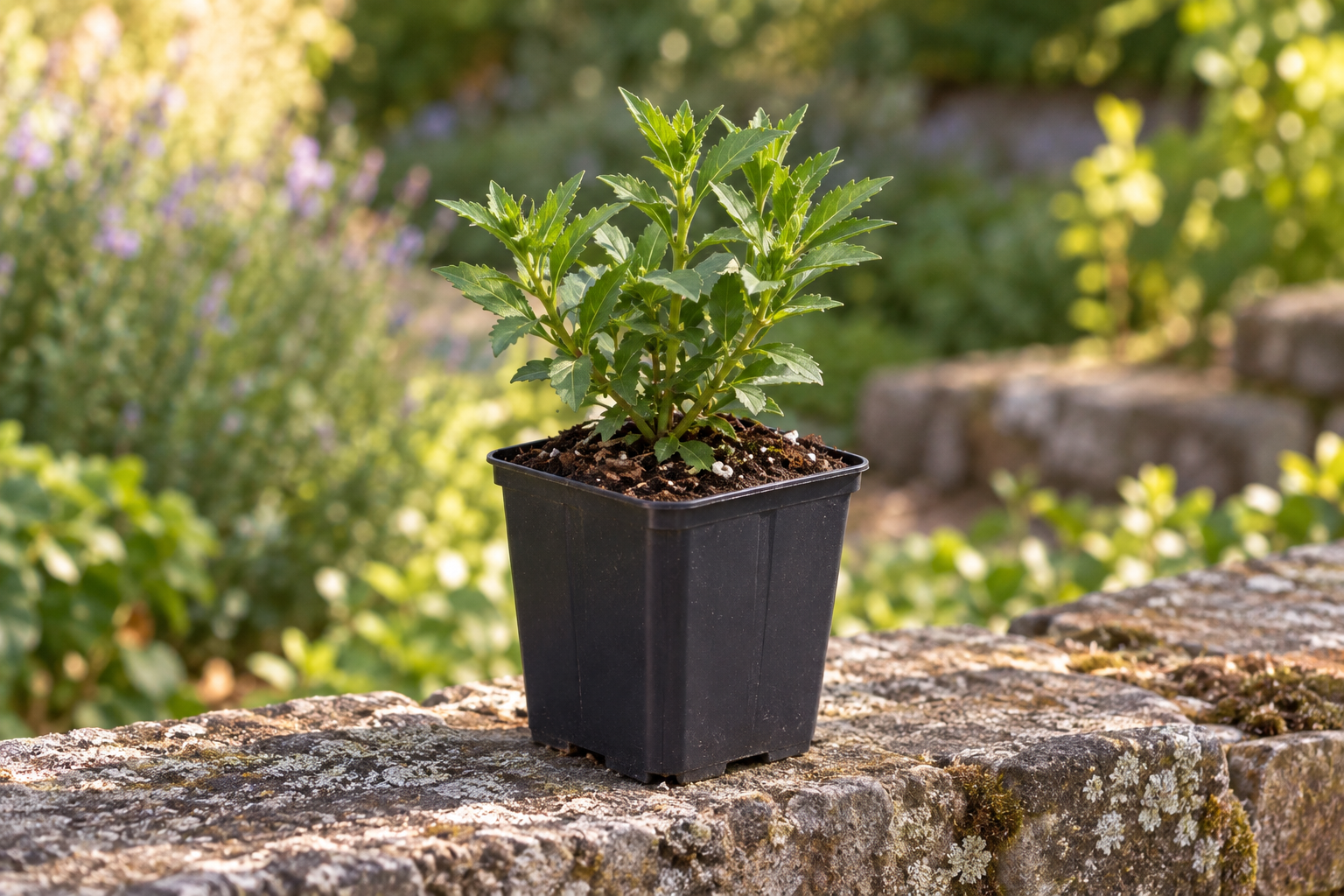
This plant at Exotenherz
Check the shop offer for current availability, price and what is included.
Check the shop for the current price, availability and offer contents.
Your care table
| Topic | What to do | Why it helps |
|---|---|---|
| Position | Choose a well-lit garden position. | Small flowers look clearer among open neighbours than in dense shade. |
| Soil | Loosen moderately nutritious soil and maintain drainage. | Airy root space supports perennial development. |
| Planting | Plant the moist root ball at its previous level and water gently. | The young perennial needs contact with surrounding soil. |
| Watering | Check roots during establishment and water thoroughly as needed. | Small set plants do not yet have far-reaching garden roots. |
| Feeding | Allow for existing border supply and keep additions moderate. | Strong fertiliser is no substitute for a bright position. |
| Spacing | Lay out about 30–40 cm apart as guidance; move large neighbours farther away. | Later spread must not crowd young shoots. |
| Pruning | Remove dead stems no later than before new spring growth. | Healthy dry autumn stems may initially remain. |
| Colony care | Divide older over-dense groups in spring and replant strong pieces. | The perennial can then rebuild with sufficient space. |
For young plants, feel the soil directly at the root ball. The surface and deeper soil may have different moisture levels.
Water thoroughly after planting; later, water according to the soil, weather and establishment rather than a fixed calendar.
Avoid standing water. For plants in containers, also check that water runs out of the drainage hole.
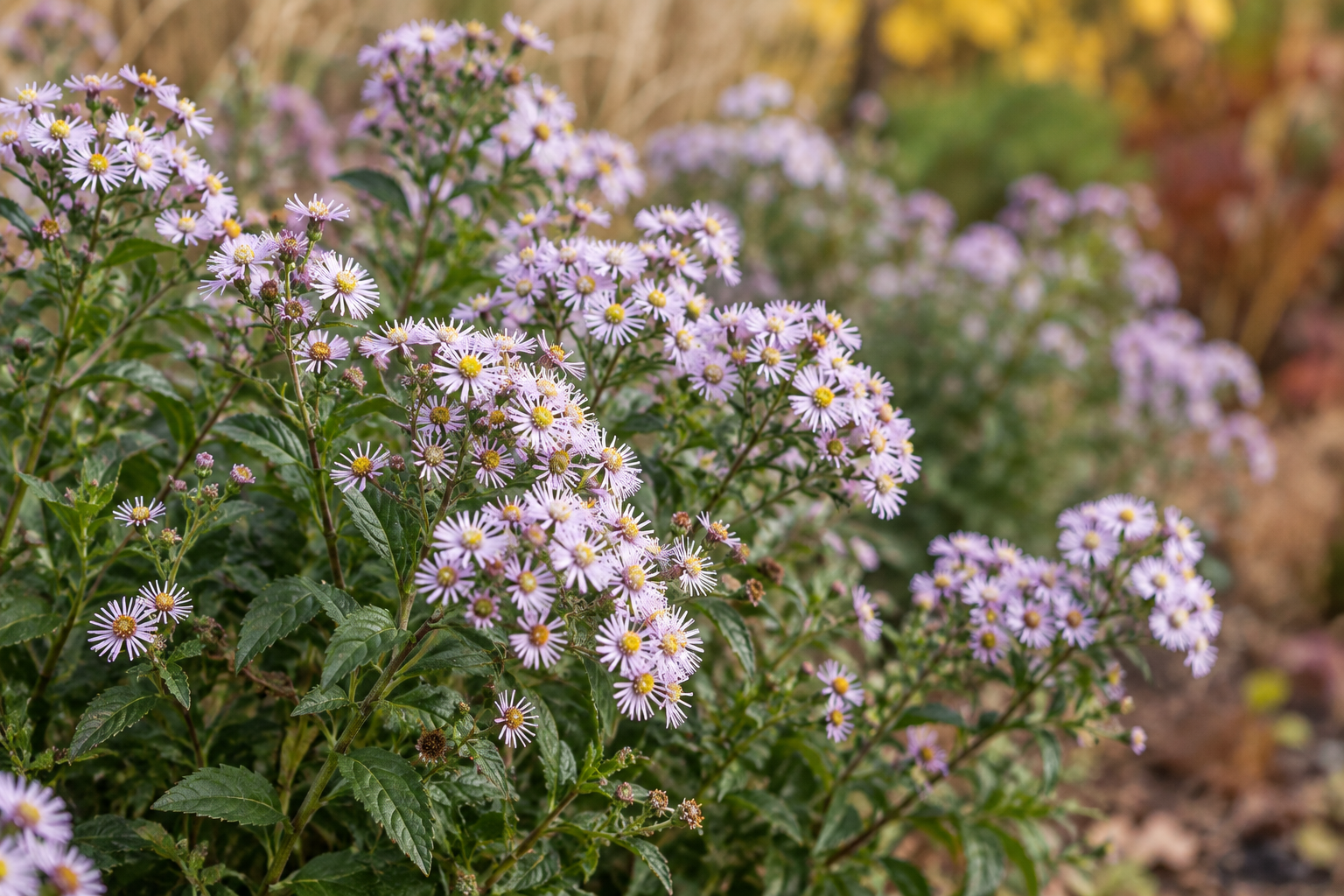
Small stars lend the autumn border a light line
Stardust’s name suits its garden image: many small pale-lilac heads scatter like pale dots over darker green leaves. Fine narrow rays surround yellow centres. Repetition and loose branching create the impression, not individual heavy heads. Among grasses or beside larger leaves, the small stars stay visible. Close up, toothed leaf margins and green growth beneath appear. The specialist profile describes long autumn flowering. Start and duration also depend on weather and development. Established colonies’ flower volume is no measure for a freshly delivered young plant.
Stardust can also be found under longer names
The offer names Aster ageratioides Stardust. Specialist sources use ageratoides; the read RHS profile is under Aster trinervius subsp. ageratoides ‘Stardust’ and also names Aster trifoliatus subsp. ageratoides. These classifications are transparently treated here as names of the same known cultivar. They establish neither another identity nor a new quantity variant. Garden planning uses supported features: small pale aster flowers, darker toothed foliage and perennial deciduous growth. When old stems disappear in winter, the living base stays in the soil. Fresh green growth begins the new season before autumn reveals small flowers again.
Later height develops from young greenery
The clean original shows small green Stardust without open flowers in a black pot. Sets contain 9 cm pots at approximately 10–25 cm total height including the container. Later garden growth is separate. The shop gives about up to 50 cm guidance; RHS describes approximately 60 cm. That specialist figure shows 50 cm is no safe maximum. Later spread matters too. The shop suggests about 30–40 cm spacing for laying out. Check existing neighbours’ space needs. A young plant just fitting a gap may later be crowded by strong clumps.
Light and root space work together
Sun to light partial shade is a workable start for Stardust. Choose a position with enough light where fine flowers do not disappear under dense neighbouring foliage. Moderately fertile drained soil supplies root moisture without staying permanently wet. Observe where rain stands before planting. Loosen compacted areas and prepare a small connected patch. A narrow root ball amid hard soil needs more than a cosmetically loose surface. Containers also require light, enough room and free drainage. The small nursery pot is delivery accommodation, not a permanent place for mature coverage.
Reach the small root ball during establishment
Spring or autumn suit planting in frost-free non-waterlogged soil. Moisten the root ball before unpotting and plant at its previous level. Firm gently and water slowly and thoroughly. Check directly at the original root ball during subsequent weeks. Its moisture may differ from adjoining soil, and roots first need to spread. In warm dry weather check more often and water the base as needed. A saturated wet root zone needs no automatic further watering. Check again during longer dry periods later. Moisture changes faster in pots because reserves are smaller.
Colony management keeps small flowers visible
Stardust’s fine flowering effect benefits from space around the group. Reduce neighbour shoots lying over asters and keep the border edge accessible for watering. Add nutrients moderately according to existing soil supply. More fertiliser solves neither dark positions nor repeatedly dried-out soil. Inspect leaves occasionally: a whitish coating may be powdery mildew and deserves checking. Spring division can renew older dense groups. Plant strong pieces at suitable distances and support root establishment again. Care then follows the actual planting rather than a fixed annual intervention programme.
After the stars begins another annual cycle
Once autumn flowering ends, above-ground stems gradually dry. Healthy material may remain for a while, giving the winter border structure. Remove it no later than before spring growth; take diseased parts out earlier. Keep drainage free in winter, especially in containers and hollows. A sheltered outdoor position helps pot roots without making this a warm houseplant. In spring green structure appears first. Fine lilac heads return only later in the year. Give young Stardust time and plan its small starry group as part of a living changing perennial border.
One plant, several views

Good to know
Why does the specialist profile say trinervius?
RHS uses Aster trinervius subsp. ageratoides Stardust and lists other related name assignments. This portrait reconciles them as the same known cultivar.
Does Stardust safely stay under 50 cm?
No, the shop figure is guidance. The specialist profile describes approximately 60 cm; actual garden growth depends on position.
What colour are the flowers?
Rays are pale lilac, centres yellow. Fine star-like structure differs in effect from heavy double flowers.
Is the delivery plant already flowering?
The original shows a green flowerless young plant. Later flower images are no promise for every delivery condition.
Is 30 cm spacing enough?
The shop gives approximately 30–40 cm starting guidance. Large neighbouring clumps and later colony spread also need consideration.
Can it grow in light partial shade?
A well-lit spot with light partial shade may suit. Dense dark neighbouring foliage is less favourable for the intended flowers.
When should I remove old stems?
No later than before fresh spring growth. Healthy dry stems may initially remain after autumn flowers.
When should I divide?
In spring for an older over-dense colony. Strong new pieces need establishment support afterwards.
Sources and editorial note
- Exotenherz: offer and original photographs (03/10/2026)
- RHS: Stardust, names, flowers and cultivation (03/10/2026)
- RHS: planting asters and caring for them through the year (03/10/2026)
- Exotenherz: directly orderable set of 6, own SKU/GTIN (03/10/2026)
- Exotenherz: directly orderable set of 12, own SKU/GTIN (03/10/2026)
- Exotenherz: directly orderable set of 60, own SKU/GTIN (03/10/2026)
Shop offer, article number, GTIN, availability and original images checked directly on 03/10/2026. Specialist sources read directly. RHS profile under trinervius and synonyms transparent; shop spelling ageratioides documented. Sun/light partial shade from cultivation section, no full-shade promise. 50/60 cm heights separated.