
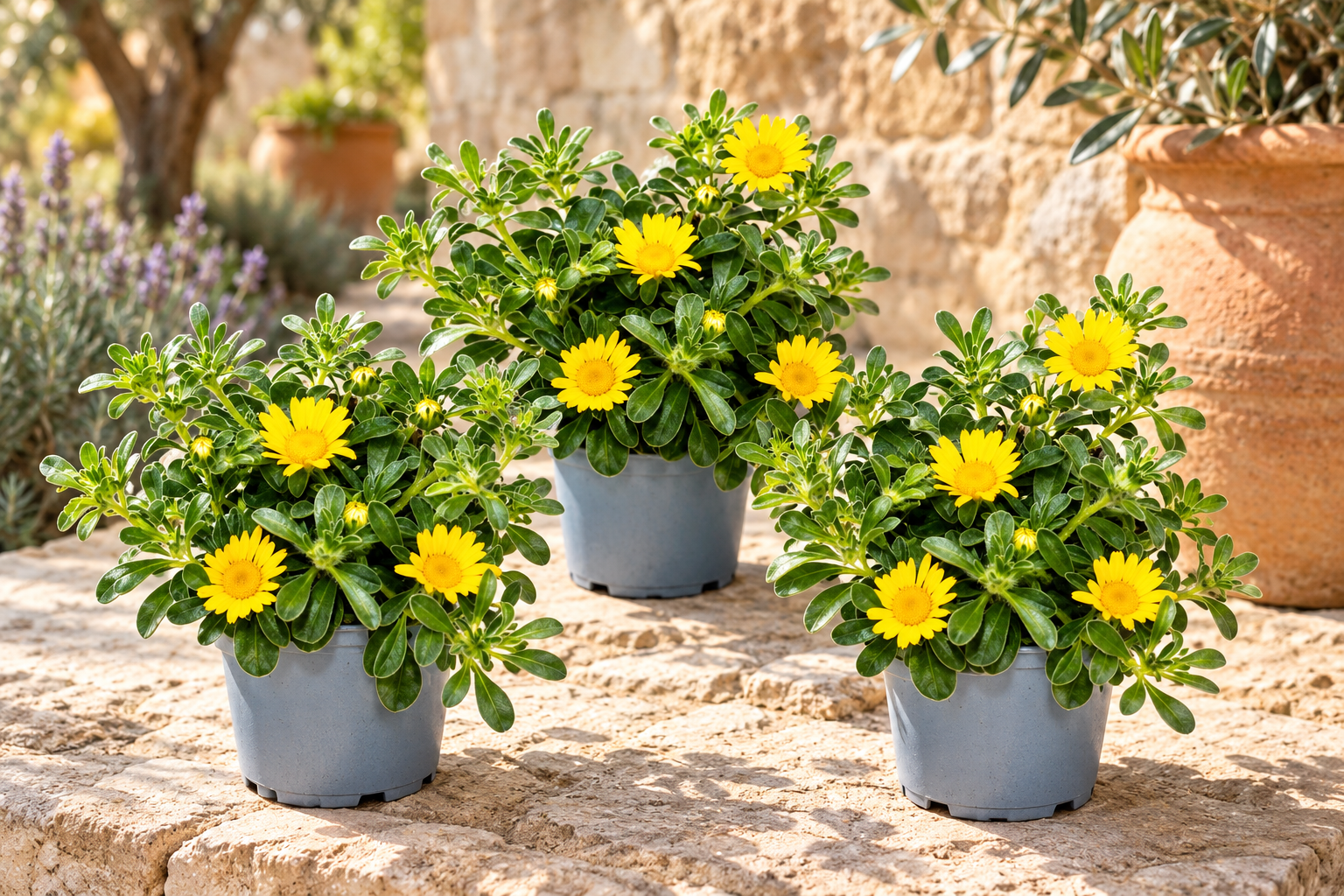
This plant at Exotenherz
Check the shop offer for current availability, price and what is included.
Check the shop for the current price, availability and offer contents.
Your care table
| Topic | What to do | Why it helps |
|---|---|---|
| Light | Place in sunshine and acclimatise gradually. | The young crown needs a suitable transition. |
| Soil | Choose well-drained planting soil. | Roots should not remain permanently wet. |
| Water | Water precisely after surface drying. | Do not let small pots dry completely for long periods. |
| Drainage | Check the cover pot and remove excess water. | Rain can collect in the container. |
| Nutrients | During growth, feed moderately according to the label. | Young-plant production recipes are not household instructions. |
| Flowers | Carefully remove faded flowers. | Retain healthy new shoots. |
| Shape | Allow the low crown to develop with room to the sides. | Regular heavy shearing is unnecessary. |
| Winter | Plan frost-free conditions for continued cultivation. | Perennial growth is no proof of frost hardiness. |
Check the compost and pot weight. The care table explains how far the compost may dry.
Water only when needed. The water should reach the root ball without spilling over the rim.
Remove surplus water from the saucer or cachepot. Then return the plant to a suitable position.
Golden flowers stand out through their yellow centre
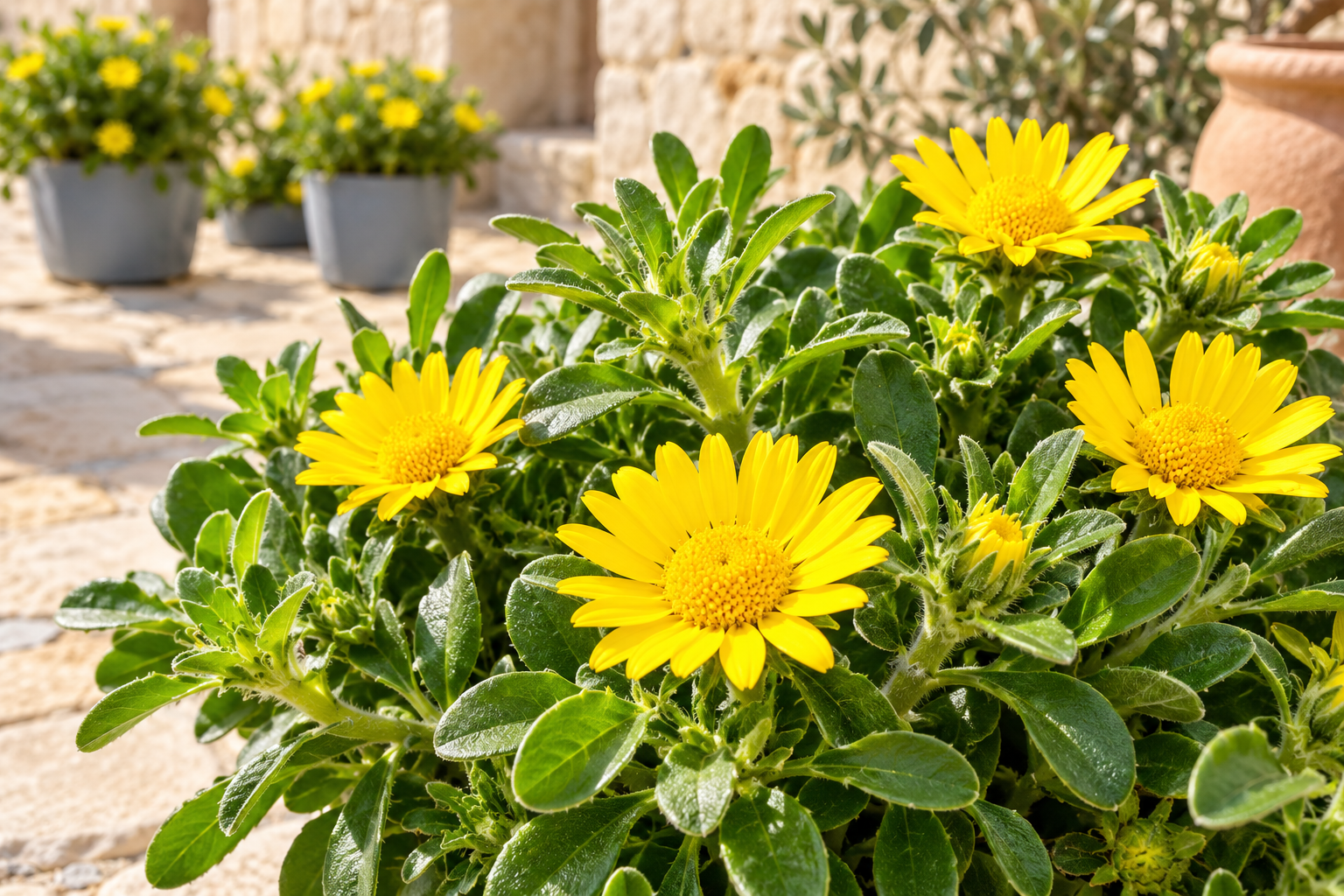
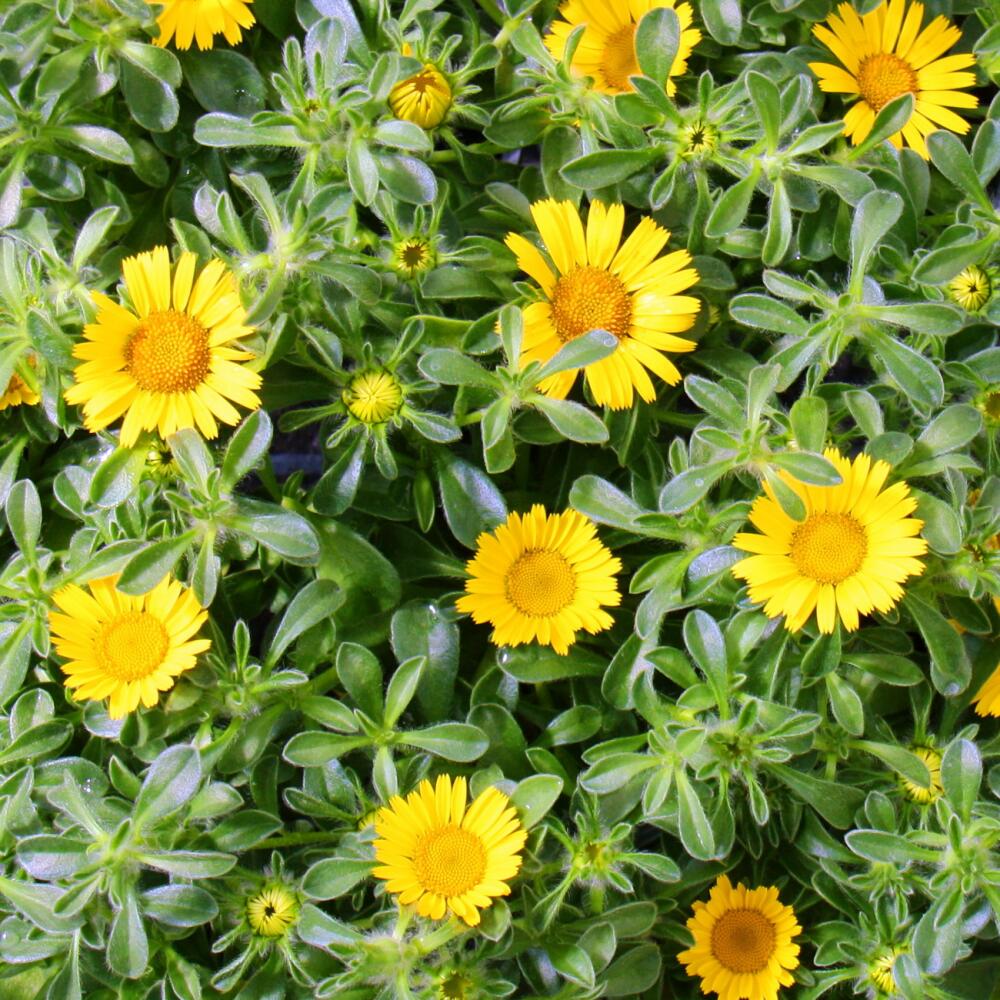
Asteriscus maritimus carries golden-yellow flower heads above narrow, elongated to spoon-shaped green leaves. The centre stays yellow too. That distinguishes its appearance from the dark buttons of a Sanvitalia. A warm stone edge or a sunny patio container can accommodate the low crown well. The shop calls it Asteriscus maritimus; the RHS lists Pallenis maritima as the botanical name with this synonym. Goldtaler and Dukatenblume remain familiar German trade names, without turning them into a particular selection such as Aurelia.
Start a sunny group with three small crowns
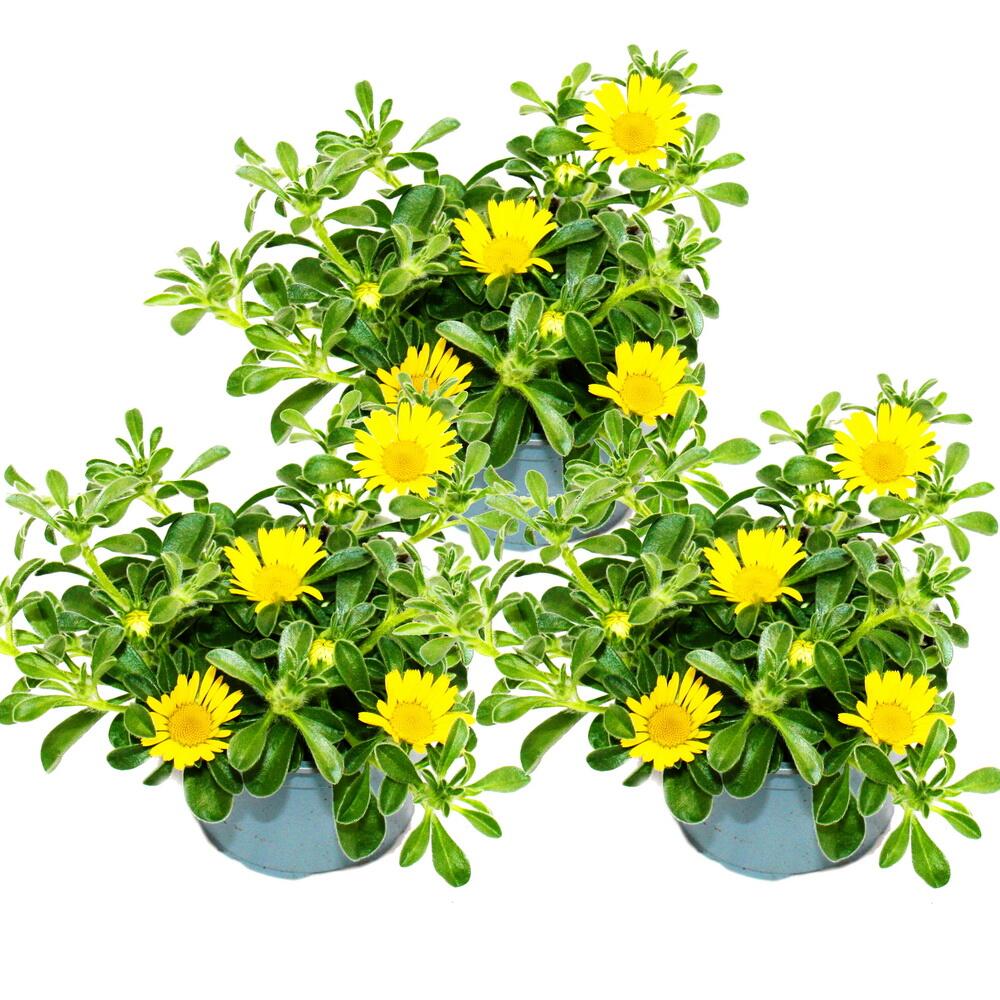
The set contains three plants in 11-cm pots, with a stated plant height of about 20 to 25 cm. Their later width may extend beyond the small pot. For a loose group, around 25 to 35 centimetres apart is a horticultural guide depending on container and development. Arrange the plants before planting, rather than lifting them out of packaging by their flowers. A young flowering set is not yet an established bed covering. The original photograph remains the reference for the offered form.
Sunshine and soil structure belong together
Asteriscus maritimus suits a sunny position with well-drained soil. Gradually introduce young plants to strong outdoor light after protected cultivation. In cold locations, plant only after frost risk has passed. Against a warm wall, we also check air movement and access for watering. The low crown need not disappear among taller summer flowers. Free areas to the sides make its many small flower heads visible and later allow observation of new shoots without having to push the whole planting apart.
Allow slight drying, avoid prolonged drought
Check the soil and pot weight. Between water applications, the upper soil may dry; then supply water precisely and allow excess to drain. A sunny position does not mean regularly letting the small rootball dry out completely. Conversely, permanently heavy wet soil can burden the root space. After rain, look inside cover pots and saucers. If shoots become soft or individual leaves look unusual, moisture and the base belong in the assessment. An attractive yellow floral display alone does not reveal root condition.
Accompany the naturally low shape
Free-draining planting soil is the foundation. Feeding follows growth, substrate and the fertiliser label; professional young-plant recipes are not adopted as household doses. Faded or damaged parts can be carefully removed. Constant heavy pruning is not a necessary part of care. Keep the crown airy and look at young tips and leaf undersides when changes occur. The number of new flower heads depends on development and cultivation. It is neither guaranteed by removing every older flower nor forced with additional fertiliser.
Perennial does not mean frost-proof in the garden
Pallenis is a perennial plant from warm regions, but is frequently used for a single season in cold garden locations. For continued cultivation, we plan frost-free conditions rather than promising safe outdoor overwintering in Germany. Winter changes water use; a small pot is still checked, not forgotten. A group photograph and a close-up of the yellow flower centre help in the plant book. The plant then remains recognisable as its own plant beside other yellow summer flowers, and its crown’s development can be followed.
One plant, several views
Good to know
Are Asteriscus and Pallenis different offers?
Pallenis maritima is the botanical name; Asteriscus maritimus is listed as a synonym.
Does the flower have a dark button centre?
The associated original plant shows a yellow centre.
Is the Aurelia selection promised?
No. No such selection is named in the offer.
Does it never need water because it likes sun?
The small rootball still needs controlled supplies.
Does perennial mean winter-hardy?
No. Safe outdoor overwintering in cold locations is not promised.
Sources and editorial note
- Exotenherz: offer and original photographs (03.10.2026)
- RHS – Pallenis maritima, synonyms and family (03.10.2026)
- Missouri Botanical Garden – Asteriscus maritimus, species cultivation (03.10.2026)
Shop offer, article number, GTIN, availability and original photographs checked directly on 02.10.2026; specialist acceptance 03.10.2026. Specialist sources read directly. Specific SKU, measurements, original photographs and orderability checked directly in the shop on 03.10.2026. Specialist sources read in full; shop name and botanical synonyms remain distinguishable. Currently not orderable: knowledge portrait without purchase link, social drafts without sending approval. No Wawi, server or tool changes. Currently not orderable: knowledge portrait without purchase link; social drafts not approved for sending.