
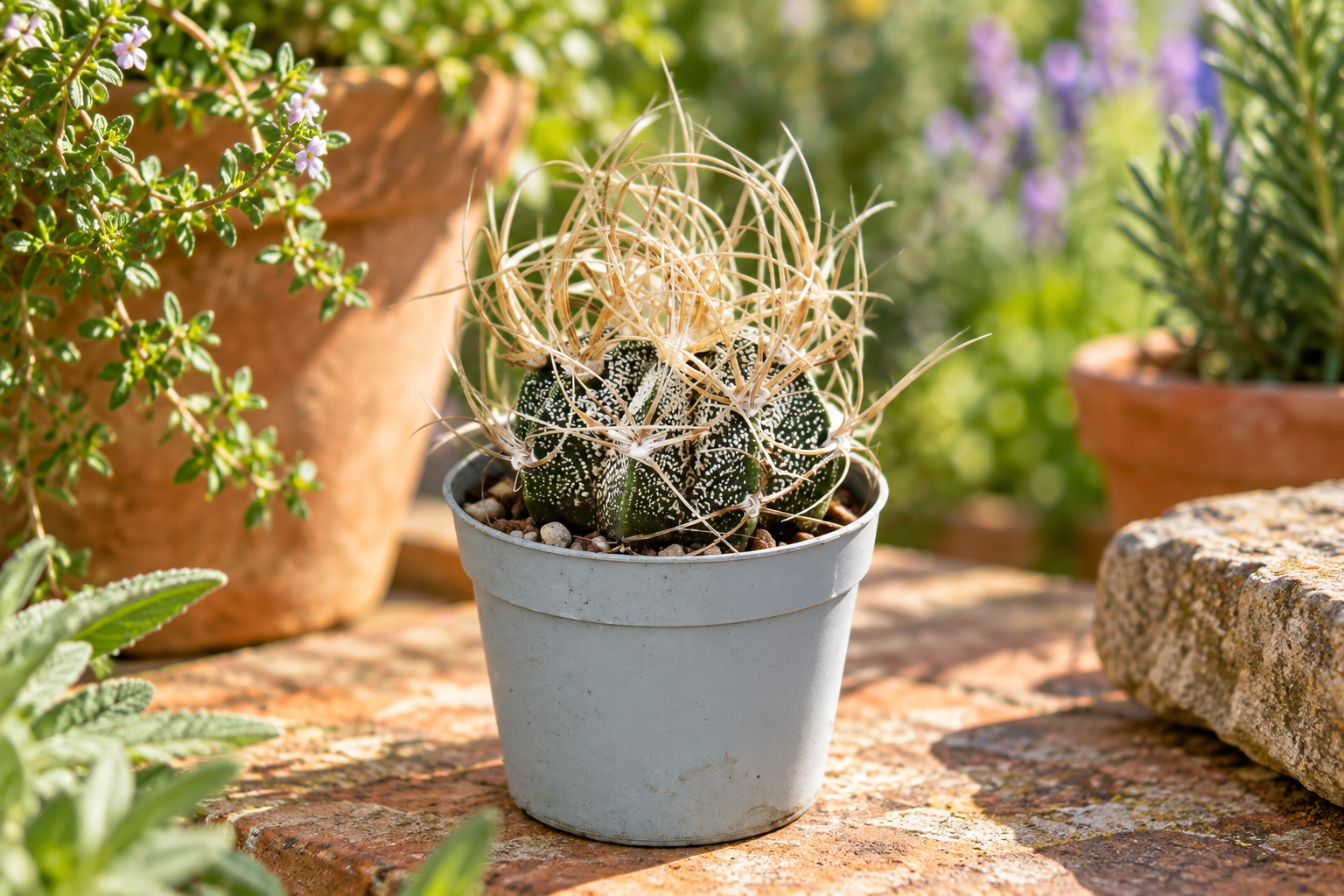
This plant at Exotenherz
Check the shop offer for current availability, price and what is included.
Product details, availability and delivery information are provided in the shop offer.
Your care table
| Topic | What to do | Why it helps |
|---|---|---|
| Position | Choose very bright; increase direct sun slowly after purchase. | The species needs much light, but a previously protected small cactus may develop sun patches after abrupt change. |
| Summer outdoors | Use only a warm place sheltered from persistent rain, returning inside before first frost. | Light and air help; continually wet roots and frost do not suit this potted plant. |
| Watering | During growth water only after clear drying, then let excess drain. | The body stores water while permanently moist medium removes air from roots. |
| Growing medium | Use mineral free-draining cactus medium and a nursery pot with open drainage hole. | Fine grading and free drainage let the small root ball dry after watering. |
| Repotting | Only with tight roots in spring, into a slightly larger pot; protect long spines with folded paper. | An oversized pot stays wet too long; unprotected gripping injures plant and hands. |
| Feeding | During visible growth in the brighter half-year give cactus feed sparingly; pause in winter. | A small slow-growing plant needs measured nutrients rather than strong growth with low light. |
| Winter rest | Keep bright frost-free, very dry during rest and inspect the body before each small watering. | With little light and activity the cactus evaporates and consumes hardly any water. |
| Inspection | Occasionally inspect ribs and areoles for mealybugs or scale without damaging spines. | Small pests can initially go unnoticed between long spines. |
Check the compost and pot weight. The care table explains how far the compost may dry.
Water only when needed. The water should reach the root ball without spilling over the rim.
Remove surplus water from the saucer or cachepot. Then return the plant to a suitable position.
A small ball with a wild mesh
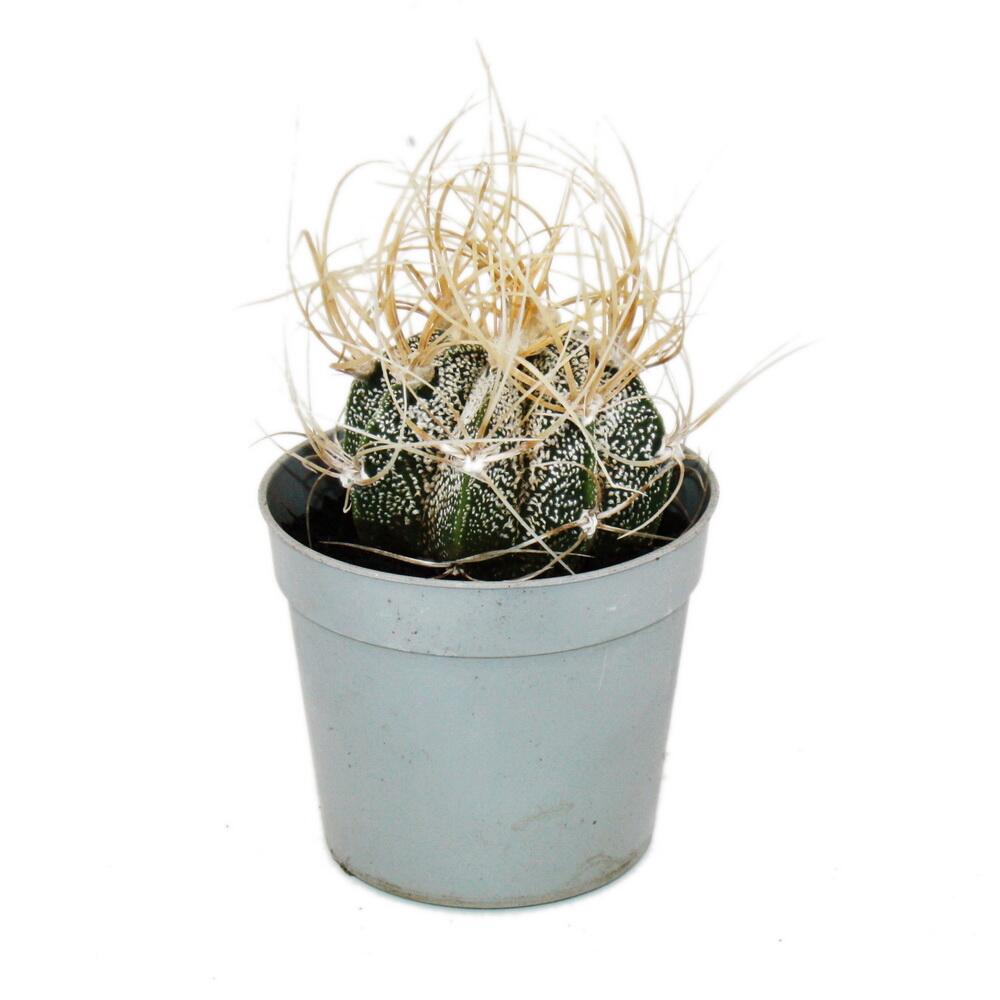
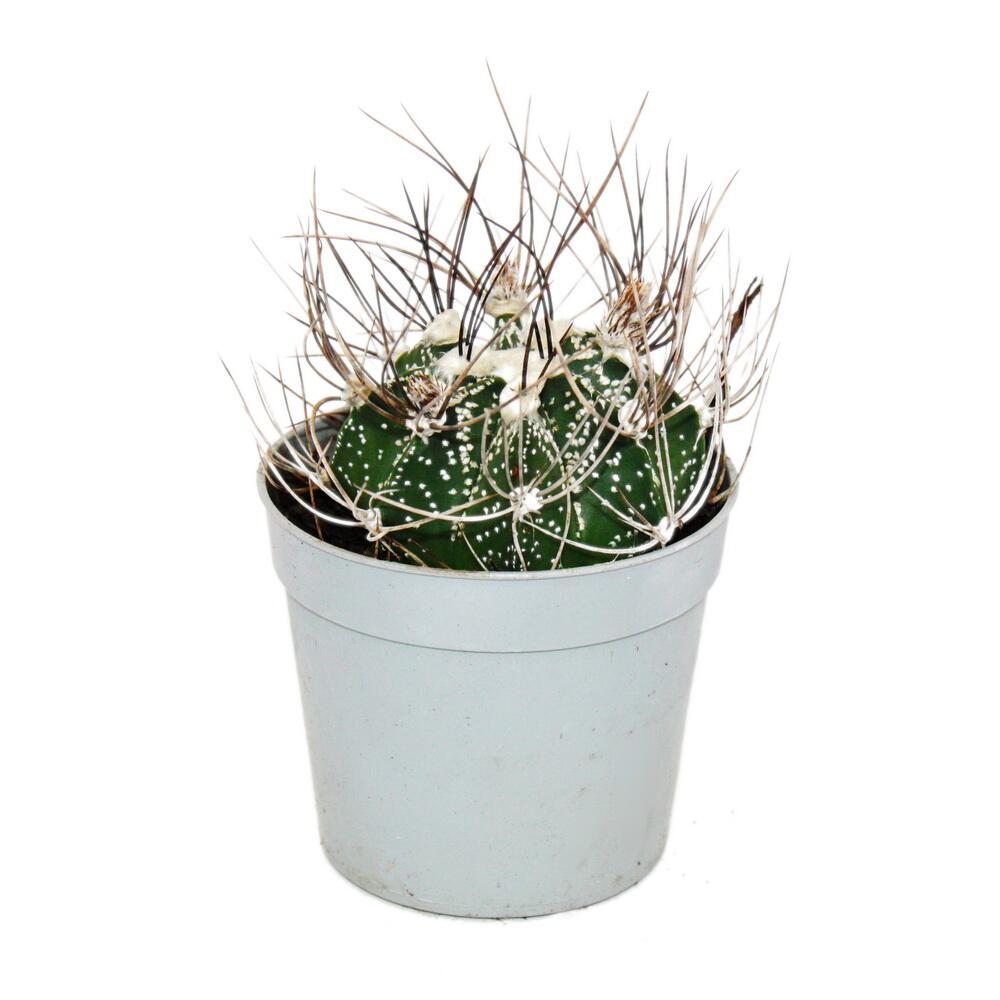
Even unpacking shows why the goat’s horn name fits. Long thin spines grow from little woolly points on ribs, curving and crossing above the dark-green body. Irregular light speckles sit between. The offered Astrophytum capricorne in a 6.5 cm pot at around 6–8 cm total height is still young. Only one cactus appears in the original shop image; long spines make it look bigger than the actual small pot. I therefore do not grip the top, but first lift the pot and check it stands securely after transport. A little space around it displays the clear form especially well.
Light yes, but not full sun overnight
The species loves light. A very bright window or sheltered summer place outdoors keeps ribs squat. After shipping and greenhouse culture I do not immediately put the young cactus in blazing midday sun. First a few days of bright filtered light, then gradually more direct sunshine allow the surface to adapt. Outdoors choose somewhere the pot does not stand in rain for days. A cool balcony night differs from frost; once the cold season begins, return it to a bright frost-free place. On a dark shelf it would not retain compact shape long term.
The root ball gets water, not the calendar
Cacti are often watered by a fixed monthly schedule. With this small pot I look more closely: once mineral growing medium has dried deeper in the root ball, thorough spring and summer watering is possible. Afterwards water must drain freely underneath and be removed from the decorative pot. Constantly moist soil is more dangerous to roots than a brief dry phase. The speckled body stores water, but that does not invite forgetting it through a whole warm growing year. If it stays soft or changes colour, check roots, moisture and light before reflexively watering again.
A snug freely draining root space is better
The small nursery pot need not be replaced immediately after purchase. For later spring repotting I choose only a little more space and cactus medium with a good mineral content. The container needs an open drainage hole; an undrained decorative bowl suits only as an outer pot. To avoid breaking long curved spines, hold the body with folded paper or carefully manoeuvre the old pot. Set it at the same depth, rather than burying the green body. A thin gravel layer may look tidy but does not replace a draining root ball. Feed sparingly in the brighter half-year only after new growth appears.
Winter rest belongs to care
Small desert cacti grow slower in our winters. Astrophytum capricorne then stays as bright as possible and frost-free, not in a warm dark room corner. Keep the root ball almost dry and watch the body: less evaporation means less water need. A short dry resting phase differs from an overlooked plant in dusty heated air. Once visible spring growth and brighter days return, increase watering gradually. RHS describes yellow summer flowers in older plants; the delivered small cactus has no flowers in shop images. I therefore promise none next season but give it time, light and healthy roots first.
Spines reveal much during care inspection
When looking at fine spines I also see woolly areoles and ribs. Mealybugs or scale can hide there, especially among closely spaced plants. Check from a little distance in good light rather than reaching fingers through the mesh. Individual older spines need not share one colour; new growth and a firm green body are better health guides. This species needs no cutting. Brightness, water after root-ball checks and dry winter rest let you watch the young ball slowly become a characterful cactus.
One plant, several views
Good to know
Why is it called goat’s horn cactus?
Long often-curved spines resemble little horns. The German bishop’s-cap name is common for ribbed Astrophytum species; botanically this one is Astrophytum capricorne.
How big is the plant offered?
The shop states a 6.5 cm pot and about 6–8 cm total height. Mature species size does not measure the delivered young plant.
Must it be watered every month?
No. During bright growth check the root ball and water only after clear drying. During winter rest it stays almost dry.
Can it go outside in summer?
Yes, to a warm bright rain-protected place after slow acclimatisation. Bring indoors before frost.
Why is my young plant not flowering yet?
Flowering is not promised on this small delivery plant. Maturity, enough light and suitable winter rest matter more than a fixed date.
Does it need a bigger pot?
Only once roots really fill the ball. A slightly larger drained container with free-draining cactus medium suits better than a large decorative pot staying wet long.
Sources and editorial note
- Exotenherz: exact variant, article number, measurements, stock and original images (accessed 30 September 2026)
- RHS: Astrophytum capricorne, features, growth, light and culture (accessed 30 September 2026)
- RHS: indoor cacti and succulents, watering, growing medium and winter rest (accessed 30 September 2026)
- NC State Extension: Astrophytum genus overview, distinguishing A. capricorne (accessed 30 September 2026)
Shop checked live on 30 September 2026: article number 276920112023, GTIN 4019515921379, 6.5 cm pot, around 6–8 cm total height, immediately available at that time. Originals 1 and 2 visually compared with scene: small ribbed green ball, white speckles, long curved light to brownish spines. RHS species profile and cactus-care guide directly read; general NC State genus overview confirms features. Shop images show no flower; later summer flowering is described only as species potential, not delivery or flowering promise. Recheck availability before transfer.