This plant at Exotenherz
Check the shop offer for current availability, price and what is included.
Check the shop for the price, current availability and what is included.
Your care table
| Topic | What to do | Why it helps |
|---|---|---|
| Light | Very bright; introduce direct sun gradually. | A young plant from sheltered cultivation may not tolerate sudden strong sun. |
| Water | During growth, water only after good root-ball drying. | Water reserves do not replace a healthy airy root space. |
| Drainage | Let all water drain and empty the outer pot. | Standing water may damage root and shoot bases. |
| Compost | Structurally stable freely draining cactus mix with mineral content. | Fine compacted compost stays too wet in the small pot. |
| Feed | Moderately during active growth according to the product. | Pause during winter rest. |
| Winter | Bright and frost-free, watering considerably less often. | Cool wet roots are particularly at risk. |
| Surface | Do not rub off or polish white scales. | They belong to the natural appearance. |
| Checks | Watch for mealybugs, unusually thin new growth and soft dark patches. | Early checks help distinguish insufficient light or root problems from normal ageing. |
Check the compost and pot weight. The care table explains how far the compost may dry.
Water only when needed. The water should reach the root ball without spilling over the rim.
Remove surplus water from the saucer or cachepot. Then return the plant to a suitable position.
A star cactus with its own signature
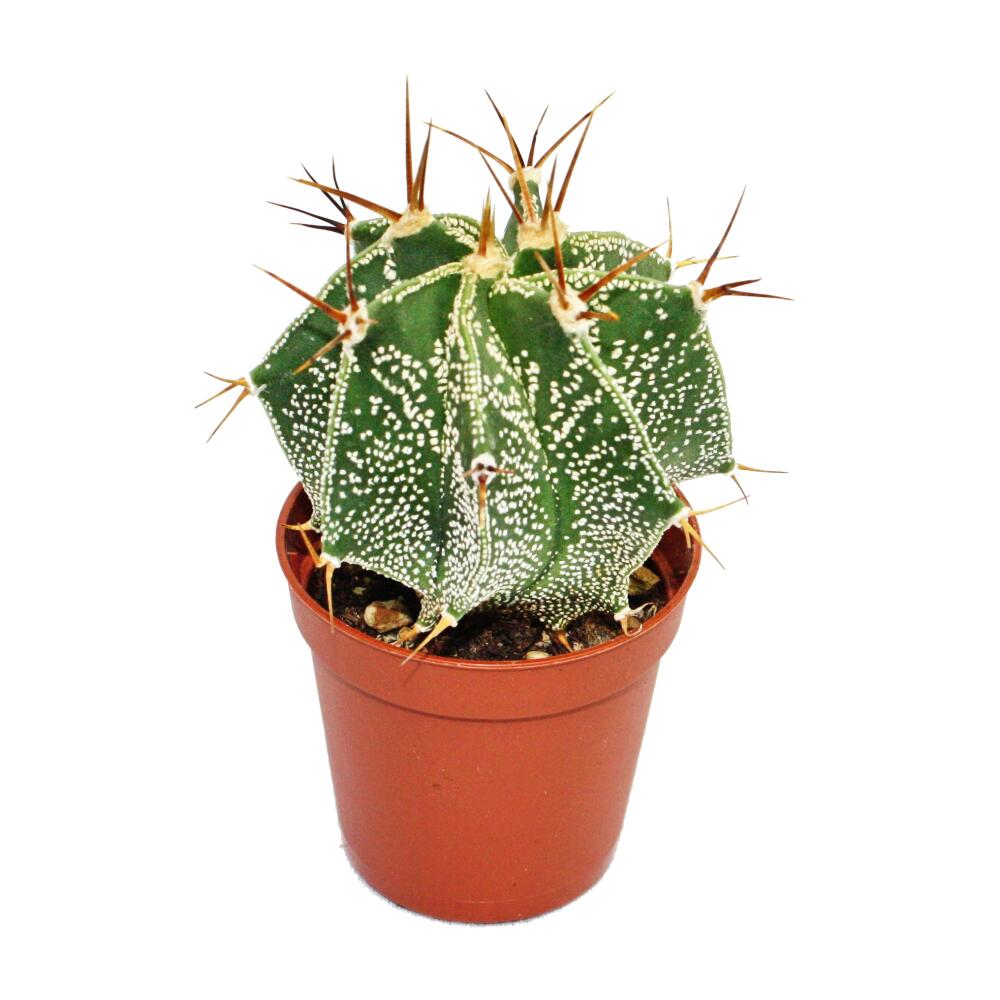
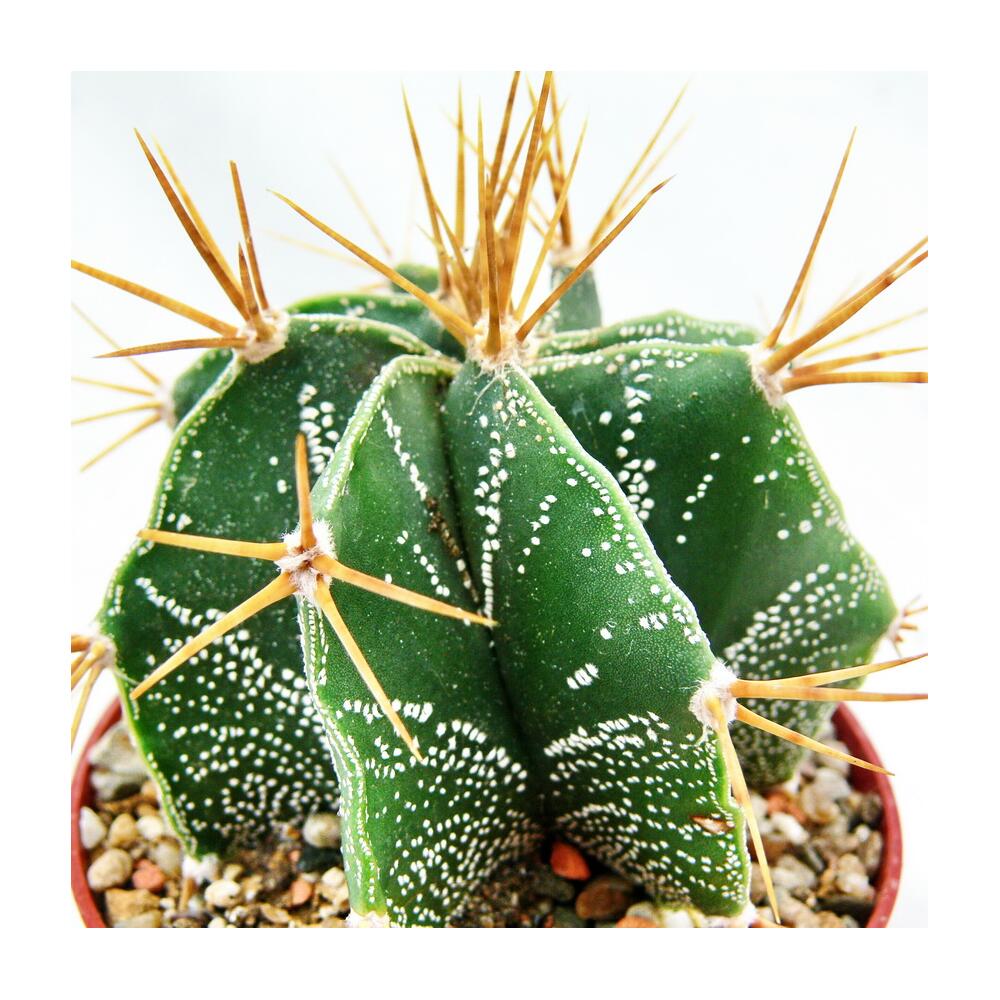
Strong ribs divide the green body into clearly recognisable segments. White woolly scales form spots and sometimes bands on the surface. Yellowish to brownish spines sit at the areoles. This cactus therefore must not be equated with the often spineless bishop’s cap Astrophytum myriostigma. Pale markings belong to the plant and are not a coating to clean away. Up close, the varied distribution of flecks is visible. Individual markings are normal in living plants.
Assess the small delivery plant correctly
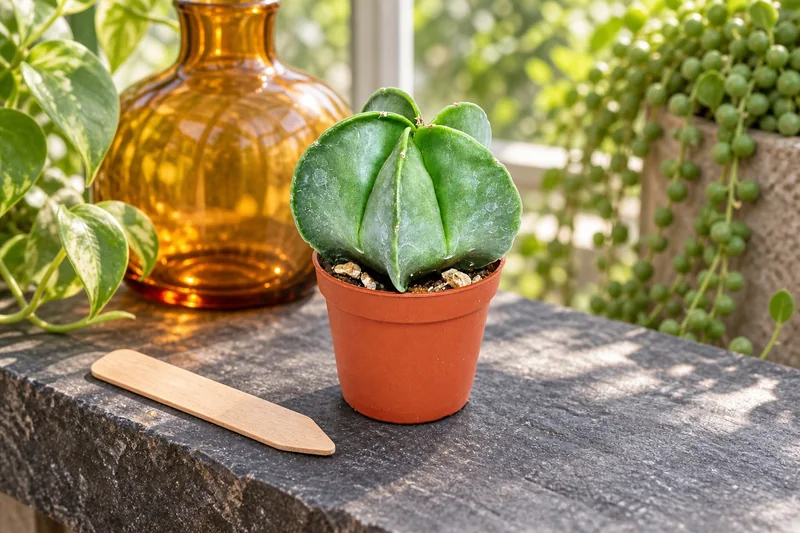
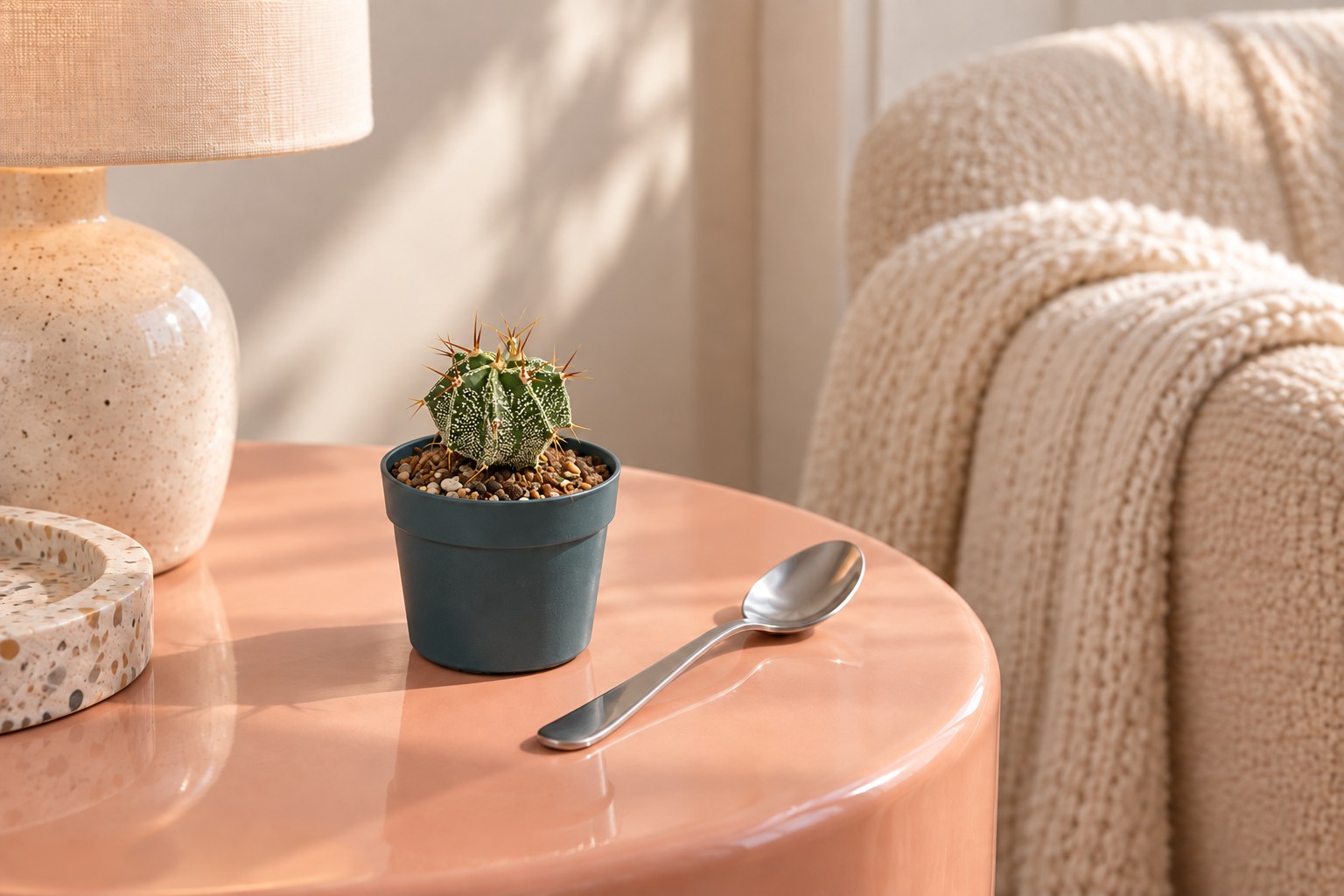
The offer describes a 5.5 cm pot and around 6 to 8 cm overall height. The approximate age of two years is shop information, not a promise of imminent flowers. At miniature size, the body is still spherical to shortly columnar. A mature Astrophytum ornatum may become considerably larger and more columnar. The scene therefore deliberately shows a small young cactus with a modest crown of spines. An outer pot is included only if expressly stated in the current offer. Do not lift by the plant body.
Plenty of light with gentle acclimatisation
A very bright position is the most important foundation for strong compact growth. Increase direct sun gradually, especially after shipping or a move. The RHS recommends bright filtered light under glass, so a young plant need not immediately receive the hottest position behind a south-facing pane. Ventilation and shelter from prolonged rain help in summer. An outdoor stay makes sense only in suitable warm conditions. The small pot must neither overheat nor remain constantly soaked in rain.
Adapt water to actual growth
In the warm growing season, water thoroughly after good drying and then let drain. A fixed weekly plan considers neither weather nor compost or pot size. Check the root ball by weight and carefully by moisture without grasping between spines. In lower light and a cooler winter position, consider use and give much less water. A bright frost-free rest is useful. Dryness in the correct rhythm protects against permanent wetness; it does not imply months of drying during vigorous summer growth.
Handle roots and the white surface gently
The mix should let water through while giving fine roots support. Suitable mineral ingredients such as pumice improve structure. A pot with drainage holes is necessary. Move only when needed into a slightly larger container, protecting against spines with suitable aids. Do not press the ribs or brush off white scales. During growth, sparing cactus feed according to the product is sufficient. Heavy feeding forces neither prettier markings nor compensation for lack of light.
Patience for flowers and an attentive eye
Older sufficiently developed plants may produce large pale-yellow flowers. Flowering is not guaranteed for this small young offer. Seed sowing suits propagation; cutting the single healthy body up for a cutting experiment is not sensible beginner care. Inspect areoles and the root collar regularly for mealybugs. Dry firm ageing of the lower surface requires different assessment from suddenly soft dark tissue. With such a change, check the root ball and water supply first rather than reflexively adding water.
One plant, several views
Good to know
Are the white spots mould?
Firm white scales and flecked bands belong to Astrophytum ornatum. A new soft or wipeable coating needs its own inspection.
Is it spineless like a bishop’s cap?
No. Astrophytum ornatum has clear spines and should not be touched unprotected.
Does the small plant flower immediately?
Flowers are not guaranteed. Maturity and suitable cultivation matter more than the approximate age.
Does it always stay spherical?
Young plants appear spherical to shortly columnar. The body may become noticeably more columnar with development.
Sources and editorial note
- Product and delivery contents: Exotenherz
- Royal Horticultural Society: plant and care information
- Royal Horticultural Society: plant and care information
Sources checked: 15 September 2026. Product information and the contents of delivery follow the linked shop offer. Care advice was checked against the cited specialist sources and should still be adapted to the plant’s condition, position and season.