

This plant at Exotenherz
Check the shop offer for current availability, price and what is included.
The linked shop is in German. Product details, availability and delivery information are provided in that shop.
Your care table
| Topic | What to do | Why it helps |
|---|---|---|
| Light | Bright, filtered light without hot midday sun. | Light keeps shoots strong and foliage attractive. |
| Water | Let the surface dry slightly, then water evenly. | Roots need moisture without remaining waterlogged. |
| Drainage | Empty the decorative pot after watering. | Standing water encourages root and stem damage. |
| Warmth | Keep warm and free from draughts. | Cold air stresses the begonia. |
| Compost | Use loose, humus-rich houseplant compost. | Its structure retains air in the root ball. |
| Fertiliser | Feed moderately during growth, following the label. | Requirements often decrease in winter. |
| Shape | Support long shoots loosely or shorten them above a node. | The cane begonia can be encouraged to branch. |
| Safety | Do not eat the plant; take care when handling sap. | Begonias contain irritating substances. |
Check the compost and pot weight. The care table explains how far the compost may dry.
Water only when needed. The water should reach the root ball without spilling over the rim.
Remove surplus water from the saucer or cachepot. Then return the plant to a suitable position.
Spots on living foliage
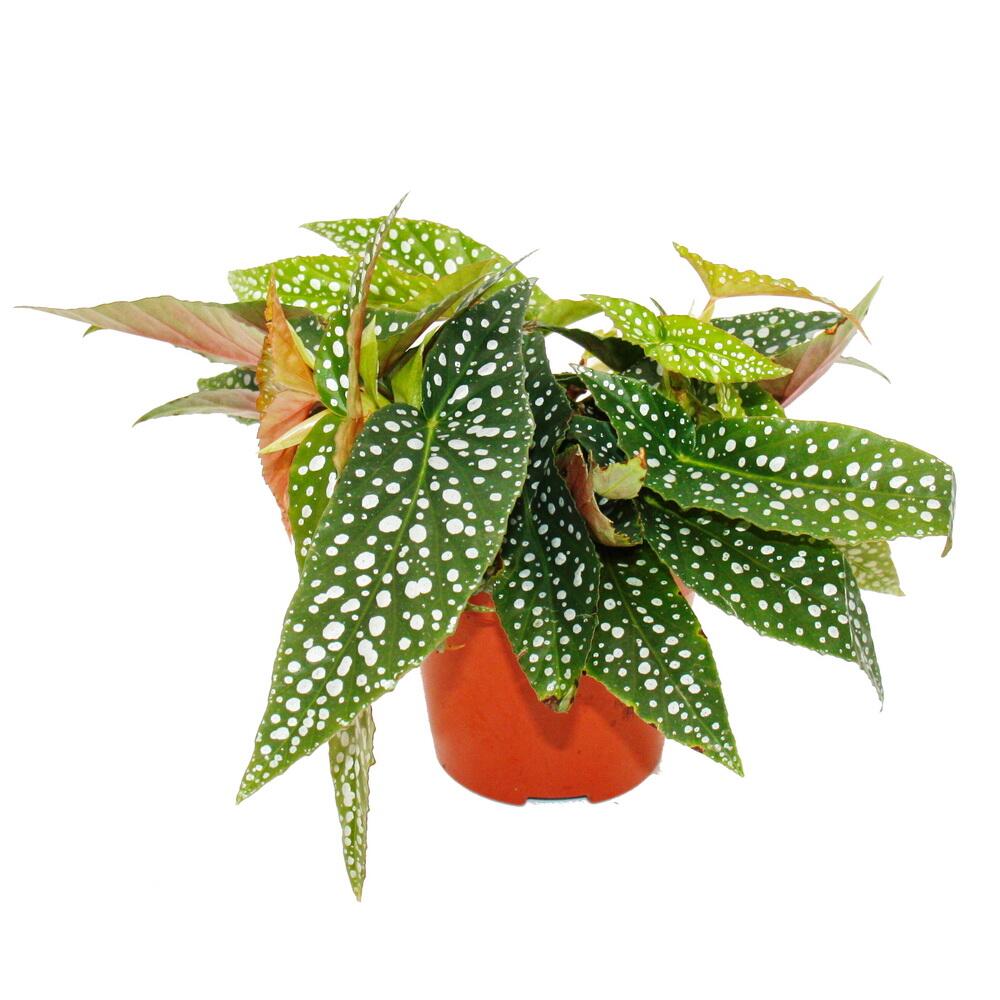
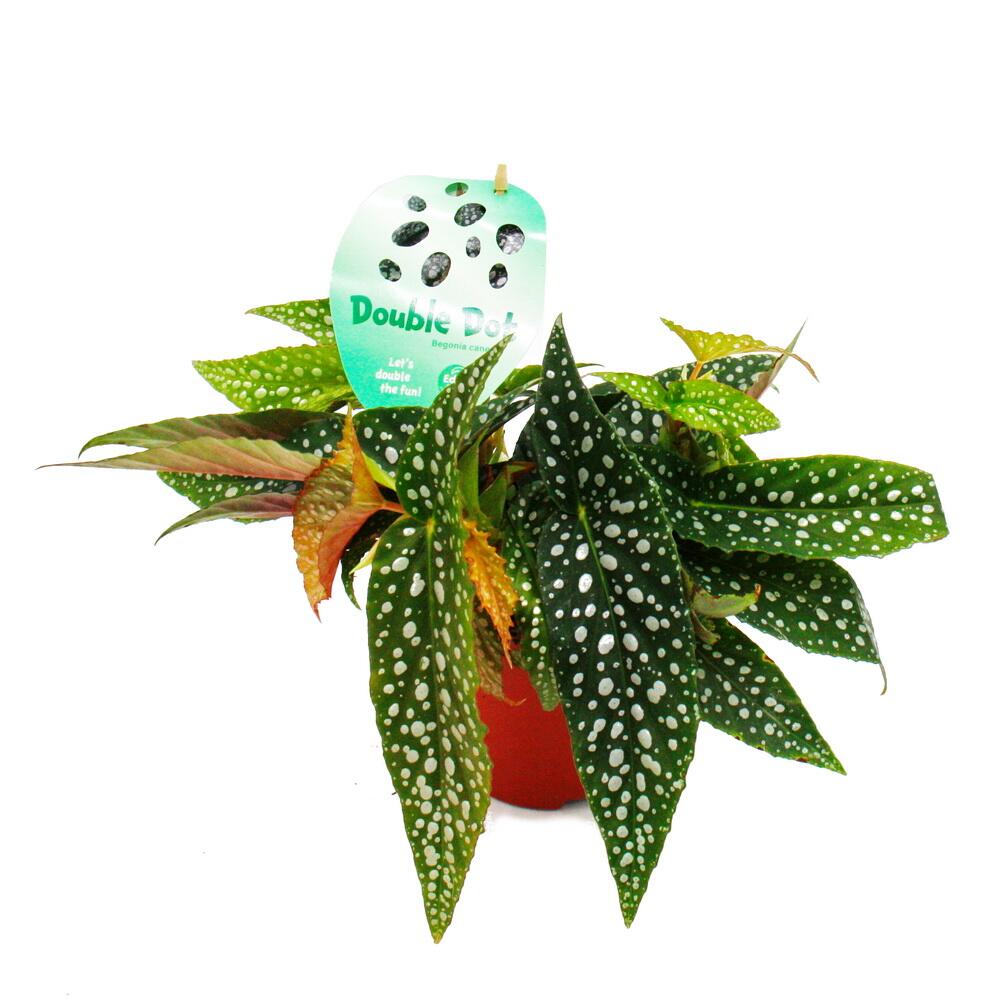
Begonia maculata belongs to the begonias with upright, jointed stems. Its asymmetric leaves carry pale spots and often have a reddish underside. Double Dot is offered in the shop as a distinctive form of this foliage begonia. It does not grow from a shallow creeping rhizome like Begonia masoniana. This difference matters for care: as the shoots lengthen, they occasionally need support and targeted pruning, while the foliage takes up space to the sides.
A small plant with room to develop
The checked version comes in a 12 cm pot and is approximately 15–20 cm tall. It is a young plant, not a fully grown, tall begonia bush. A bright side table makes the spots easy to see. Its later size depends on cultivation and pruning. Do not press the leaves close to walls or other plants. The scene shows one decorative option; the pot cover and furnishings are not automatically part of the item.
Filtered light and steady warmth
A bright spot without hot midday sun is suitable. Insufficient light may encourage long, weak shoots; strong direct sun after a dark position can damage leaves. Avoid cold draughts and direct heat from a radiator. Good humidity and gentle air exchange are helpful, but constantly wet foliage is not. During darker months, a suitable bright position matters more than frequent feeding.
Let the top dry and ensure drainage below
Check the upper compost and pot weight before watering. When the surface has dried a little, water the root ball evenly. Then let excess water drain away. Water directly onto the compost. Do not water again immediately if leaves are limp: a wet, damaged root ball can produce the same reaction as dryness. Assess yellow leaves and soft stems alongside moisture and temperature.
Support and prune with the nodes in mind
Longer shoots can be attached loosely to a suitable support without constricting them. If needed, shorten them with clean tools above a healthy node. Side shoots may form below it. Avoid severe pruning on a plant that is already weakened. Loose, humus-rich houseplant compost and a slightly larger container when the root ball is filled with roots support development. Feed moderately during active growth, following the fertiliser label.
Keep decorative foliage healthy
Inspect leaf undersides and stems for mealybugs, thrips and other sap-sucking pests. Remove dead parts promptly without sacrificing healthy foliage for a perfect silhouette. Let new leaves unfold undisturbed. Begonias are not food; plant parts and prunings should stay out of reach of children and pets. Gloves are useful when working in contact with sap. A stable position and small, regular checks preserve the spotted pattern most reliably.
One plant, several views
Good to know
How large is the delivered plant?
The listing states approximately 15–20 cm total height in a 12 cm pot. The plant can continue growing afterwards.
Should it be treated like a rhizomatous begonia?
No. It forms upright, jointed shoots and is more likely to need support and targeted pruning as it grows taller.
Why are the shoots getting long?
Too little light can encourage soft, stretched growth. Improve its position and gently shorten healthy shoots if needed.
Do I need to mist the leaves?
Constantly wet foliage is unhelpful. Suitable humidity, root-ball watering and air exchange are more important.
Sources and editorial note
Sources checked: 15 September 2026. Product details and delivery contents follow the linked shop listing. Care has been checked against the cited specialist sources and should be adapted to the plant’s condition, position and season.