

This plant at Exotenherz
Check the shop offer for current availability, price and what is included.
The linked shop is in German. Product details, availability and delivery information are provided in that shop.
Your care table
| Topic | What to do | Why it helps |
|---|---|---|
| Light | Bright, filtered light without hot midday sun. | The sensitive foliage needs light without scorching. |
| Water | Let the upper compost dry slightly, then water evenly. | Constant wetness puts roots and the rhizome at risk. |
| Leaves | Water directly onto the compost and avoid keeping the foliage wet. | Textured leaves retain water for longer. |
| Warmth | Keep warm and protected from cold draughts. | Cold can encourage leaf and root damage. |
| Compost | Use a loose, humus-rich mix; do not bury the rhizome deeply. | The stem axis needs an airy surface. |
| Fertiliser | Feed sparingly during growth, following the label. | Excessive salts put strain on the roots. |
| Checks | Inspect leaf undersides, petiole bases and new spots. | Early observation helps narrow down the causes. |
| Safety | Do not eat the plant and keep it away from pets that nibble. | Begonias are ornamental plants containing irritating substances. |
A pattern that differs on every leaf
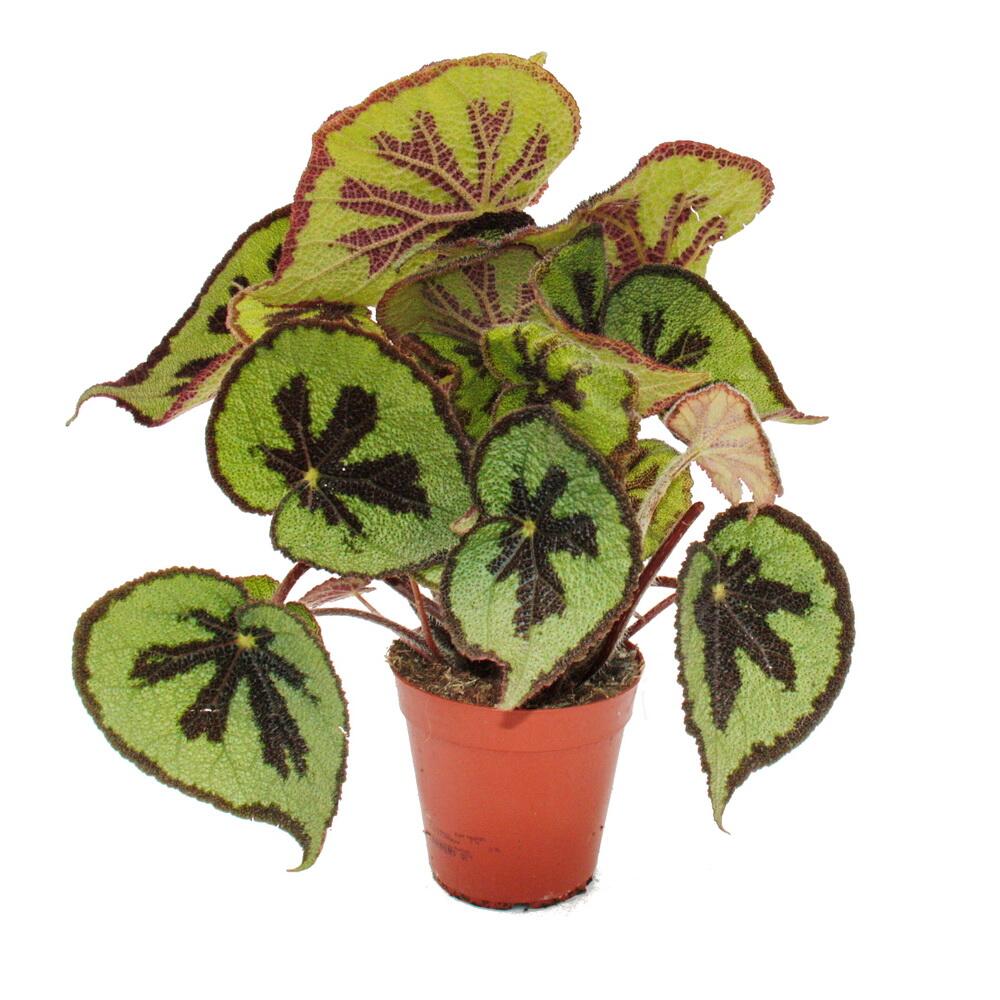
Begonia masoniana is known for its dark, cross-shaped leaf pattern. Mountain also has a pronounced, uneven surface. Its asymmetric leaves arise from a creeping rhizome, a thickened stem axis. Its structure therefore differs from that of a tall stemmed or cane begonia. Small flowers are possible, but its main appeal lies in the foliage. Colour, relief and leaf size change as the plant develops and do not repeat a product photograph exactly.
Decorative foliage at eye level
The offered version comes in a 15 cm pot and is approximately 30–40 cm tall. A bright sideboard provides a good view of the leaf texture. Allow some space at the sides, as damp leaves pressed together dry poorly. Despite the interesting surface, frequent touching or rubbing is unhelpful. The illustrated scene suggests a display at this general scale; the decorative pot and home accessories are not automatically included in the delivery.
Warmth without harsh sun
Bright, indirect daylight is suitable. Hot direct sunlight behind glass can damage the foliage, while a dark position weakens growth. Keep the begonia warm and free from draughts. Balanced humidity helps, but a closed, soaking-wet environment without air exchange is no solution. A bright spot away from a radiator offers better conditions. When airing the room, do not let cold air pass directly over the leaves.
Distinguishing moist from wet
Water only when the top layer of compost has dried slightly. Then wet the root ball evenly and let it drain. Pour water onto the compost where possible, rather than over the textured foliage or the rhizome. Limp leaves call for a look inside the pot first: either dryness or wet, damaged roots may be responsible. In winter, slower growth means less water is used. Fixed watering days therefore work poorly.
The rhizome stays near the surface
Use a loose, humus-rich, free-draining mix. When repotting, keep the rhizome in its previous position close to the surface; do not cover it deeply. A suitable, slightly wider container can be useful, but an oversized volume of compost is not. The pot needs drainage holes. Feed sparingly during active growth, following the label. Remove damaged or dead foliage with clean tools without unnecessarily injuring the healthy rhizome.
Watch for spots and small visitors
Check leaf undersides and petiole bases for mealybugs and other sap-sucking pests. Assess new spots alongside moisture, air exchange and sunlight. The leaf’s relief itself is natural, not pest damage. The plant is not intended for eating; plant parts and especially the rhizome should stay out of reach of children and pets. Small, regular care tasks maintain attractive foliage better than frequent spraying or drastic pruning on a hunch.
One plant, several views

Good to know
Is the uneven leaf surface damage?
No. The pronounced relief is part of this begonia’s appearance. Assess new spots or soft areas separately.
Can it grow in full sun?
Hot direct sunlight is unsuitable. Plenty of filtered daylight is a better choice.
Should the rhizome be covered with compost?
Keep its previous position close to the surface when repotting. Deep burial increases the risk of rot.
How do I keep the leaves clean?
Dust them gently without rubbing the surface. Constant spraying is not a necessary care task.
Sources and editorial note
Sources checked: 15 September 2026. Product details and delivery contents follow the linked shop listing. Care has been checked against the cited specialist sources and should be adapted to the plant’s condition, position and season.