
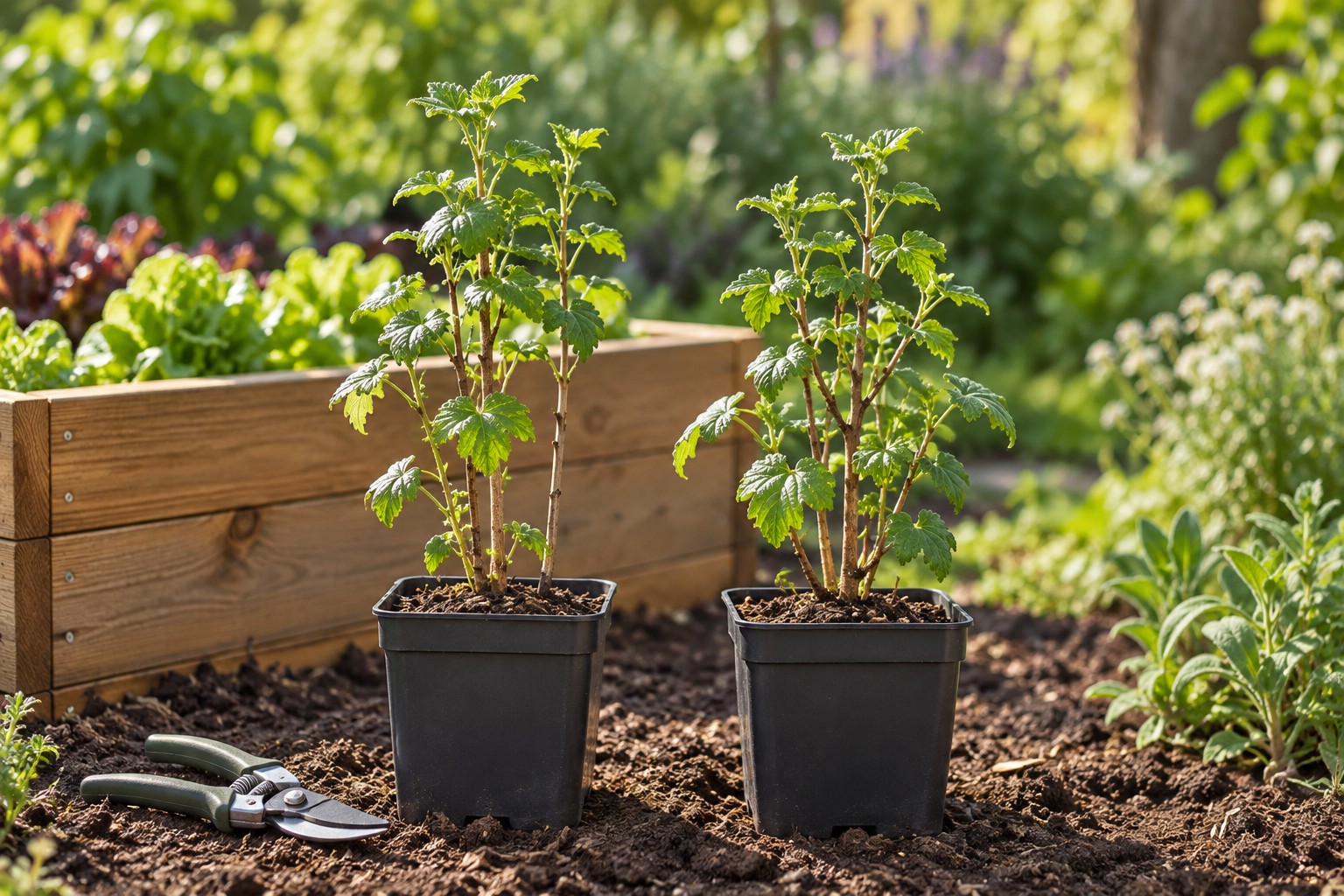
This plant at Exotenherz
Check the shop offer for current availability, price and what is included.
Product details, availability and delivery information in the shop.
Your care table
| Topic | What to do | Why it helps |
|---|---|---|
| Position | Sunny to lightly partly shaded, away from frost pockets. | Good light and protected flowers improve the starting conditions. |
| Water | Supply water evenly while establishing and during dry spells. | Young roots cannot yet reliably reach deeper soil moisture. |
| Soil | Humus-rich, moisture-retentive and well drained; keep competition away. | Waterlogging and severe drying impede development. |
| Nutrients | As needed in spring; take existing compost supplies into account. | Extra fertiliser is not automatically necessary in well-supplied soil. |
| Pruning | Gradually remove older shoots close to the ground and retain young ones. | Blackcurrants benefit from ongoing rejuvenation. |
| Container | Large container with drainage; favour garden planting in the longer term. | This vigorous shrub needs more space permanently than a delivery pot provides. |
| Harvest | Pick ripe berries carefully and use them promptly. | Bruising and prolonged warm storage reduce quality. |
| Winter checks | Inspect buds and wood, and protect container root balls. | Do not unknowingly pass on suspicious buds as cutting material. |
Check the compost and pot weight. The care table explains how far the compost may dry.
Water only when needed. The water should reach the root ball without spilling over the rim.
Remove surplus water from the saucer or cachepot. Then return the plant to a suitable position.
A flavour that remains unmistakable
Blackcurrants taste noticeably stronger than their red and white relatives. Ben Nevis is one of the established variety names in this group. Depending on taste, the dark berries are suitable for eating fresh or for juice, jelly and other preparations. For us, enjoyment starts earlier: a well-built shrub shows in spring which young shoots will carry its next stage of development. This observation later also provides the key to appropriate pruning.
Start small and leave enough room
The offer includes two young plants, each in a 15 cm pot and around 50 cm tall. Fruit photographs show a possible later harvest. The young plants first need to form roots and a strong framework of shoots. Do not plant them so closely that they are expected to look like a closed hedge in their very first summer. An adult currant shrub needs room to branch; later, you should be able to reach easily between plants to inspect, prune and pick.
Moisture-retentive soil helps more than constantly adding new products
Sun encourages good development; light partial shade is possible. The soil should hold moisture without staying wet for a long time after every rainfall. Remove vigorous competition directly around the young shrub. A loose mulch layer kept a little away from the base reduces evaporation. Container growing requires large pots and more frequent moisture checks. The small delivery pot is only a temporary stage. Before feeding additionally, check whether the roots can actually establish well.
Bring on young wood deliberately
Ongoing renewal is important in blackcurrants. On an established shrub, remove some of the older, darker shoots close to ground level during dormancy, allowing suitable young basal shoots to take their place. Do not cut every branch to the same height as if trimming an ornamental hedge. A newly delivered small shrub first needs an assessment of its existing structure; drastic pruning according to a rule for old shrubs would be inappropriate here.
Stay attentive from flowering to harvest
Flowering is a sensitive phase: late frost can cost fruit set even when the shrub itself is winter-hardy. During dry periods, an even water supply helps, especially in the first years after planting and in containers. Berries do not become sweeter simply through extra fertiliser. Check ripeness and flavour on individual fruits and harvest cleanly into shallow containers. Fine-mesh crop protection fixed tautly must be checked regularly so that no animals become trapped in it.
Healthy buds and airy shoots
During winter pruning, also look for unusually thick, rounded buds. Such changes can indicate blackcurrant gall mites and should be clarified before propagation. Coatings on leaves, unusual spots or early heavy leaf fall also deserve attention. If necessary, collect photographs of the whole shrub and affected areas. This is more useful than applying several treatments on suspicion. Healthy planting material, an open structure and care suited to the position remain the foundation.
One plant, several views


Good to know
Do I prune Ben Nevis like redcurrants?
Not according to the same pattern. In blackcurrants, renewal through young shoots is especially important.
Can I harvest a lot immediately from the pair?
That cannot be promised. The young plants must first establish and develop suitable shoots.
Is partial shade possible?
Light partial shade is possible. A dark position densely rooted by large trees, however, makes growth and harvesting harder.
Why are some buds unusually round and thick?
This can indicate gall mites, among other causes. Have the symptom checked before taking propagation material from them.
Sources and editorial note
- Product and delivery contents: Exotenherz
- Royal Horticultural Society: plant and care information
- Victoriana Nursery: Ben Nevis variety profile
Sources checked: 16 September 2026. Product information and the contents of delivery follow the linked shop offer. Care advice was checked against the cited specialist sources and should still be adapted to the plant’s condition, position and season.