
This plant at Exotenherz
Check the shop offer for current availability, price and what is included.
Check the selected shop offer for price, availability and delivery contents.
Your care table
| Topic | What to do | Why it helps |
|---|---|---|
| Light | Plant sunny, warm and sheltered with room for an airy trellis. | Light and warmth help shoots and fruit ripen. |
| Planting | Set the root ball at its existing level; an existing graft union remains above soil. | The potted plant is not buried deeply with its entire trunk. |
| Water | During dryness, water the young root zone slowly and thoroughly. | Establishing vines and containers do not yet have large soil reserves. |
| Soil | Provide permeable well-supplied soil and clear drainage in containers. | Roots need air; persistent waterlogging harms them. |
| Support | Tie the main shoot loosely and check ties regularly. | Growing trunks must not be constricted by tight cords. |
| Fertiliser | Dose according to soil supply and actual growth. | More nitrogen and foliage do not automatically mean better grapes. |
| Pruning | Build the framework deliberately, combining annual dormant pruning with summer care. | Fruiting shoots grow from buds on the previous year’s wood. |
| Winter | Protect roots in small containers and guard new growth from late frost. | Dormancy of wood and sensitivity of fresh leaves are different things. |
For young plants, feel the soil directly at the root ball. The surface and deeper soil may have different moisture levels.
Water thoroughly after planting; later, water according to the soil, weather and establishment rather than a fixed calendar.
Avoid standing water. For plants in containers, also check that water runs out of the drainage hole.
Pale vine foliage before a warm wall
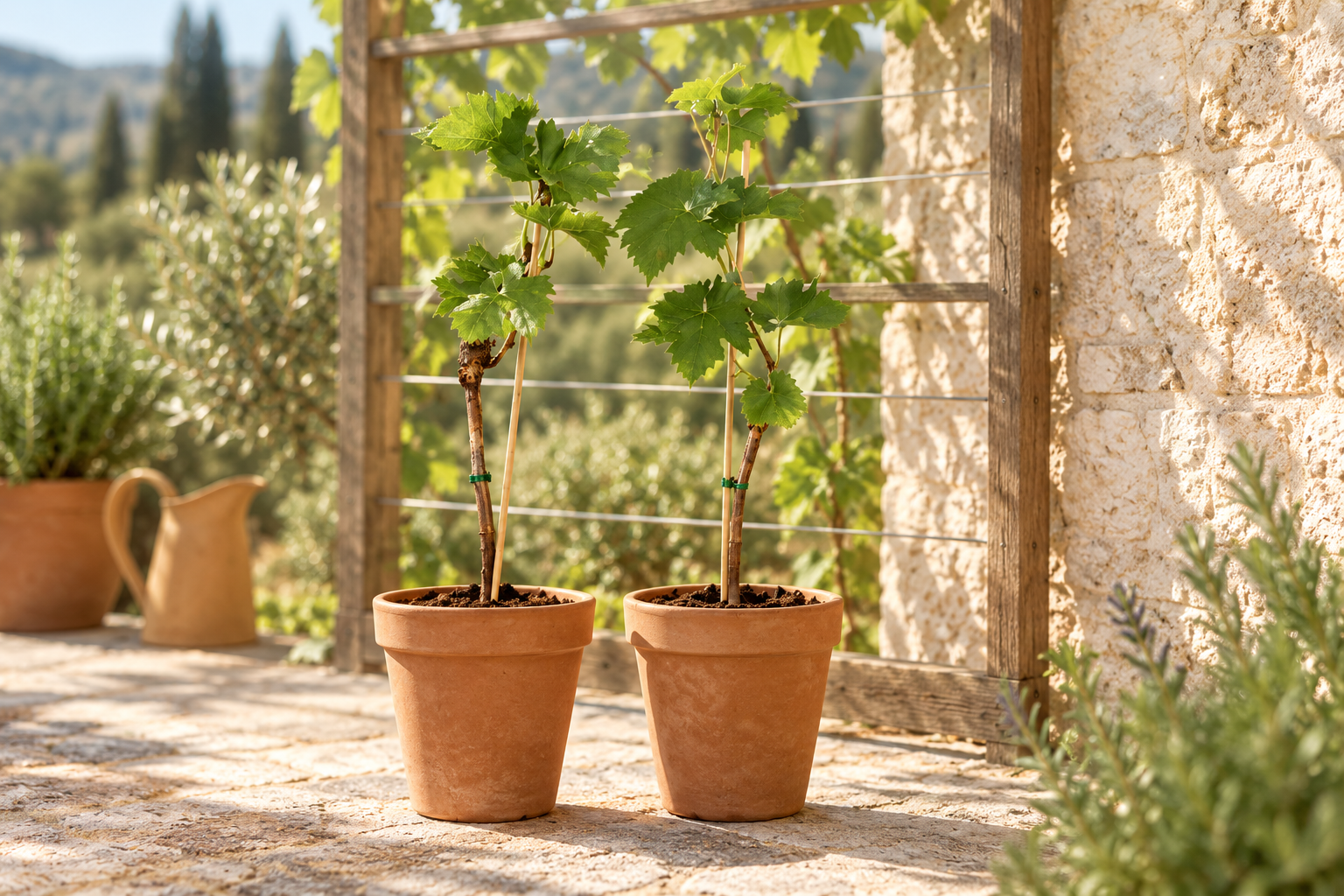
What we like about Bianca is the contrast between fine young trunks and rounded lobed leaves. It needs no finished grapes to make a garden position interesting. Before a light wall, new tendrils and each shoot’s development are easy to observe. The variety is grown for its pale fruit and also used in wine production. Our portrait begins with the young plant offer: two slender vines may arrive calmly and receive a framework that later carries more than today.
Two plants with a larger future
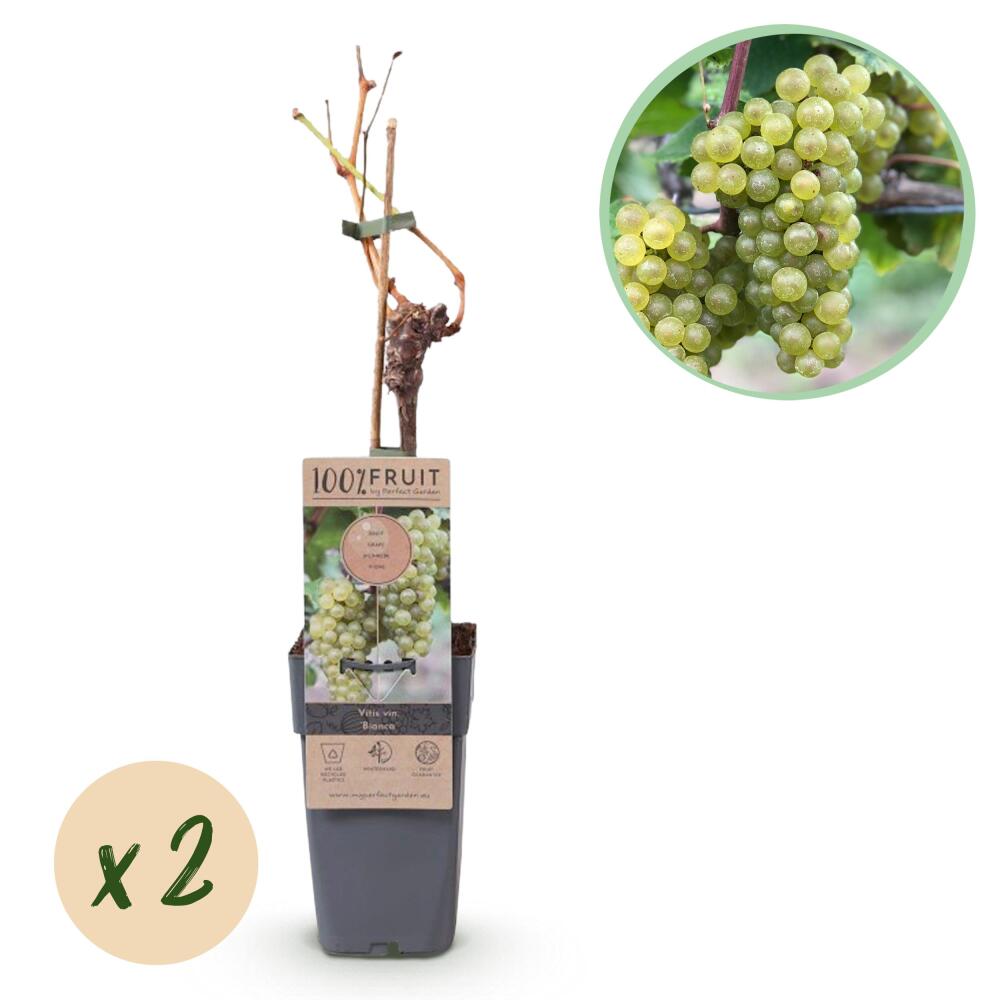
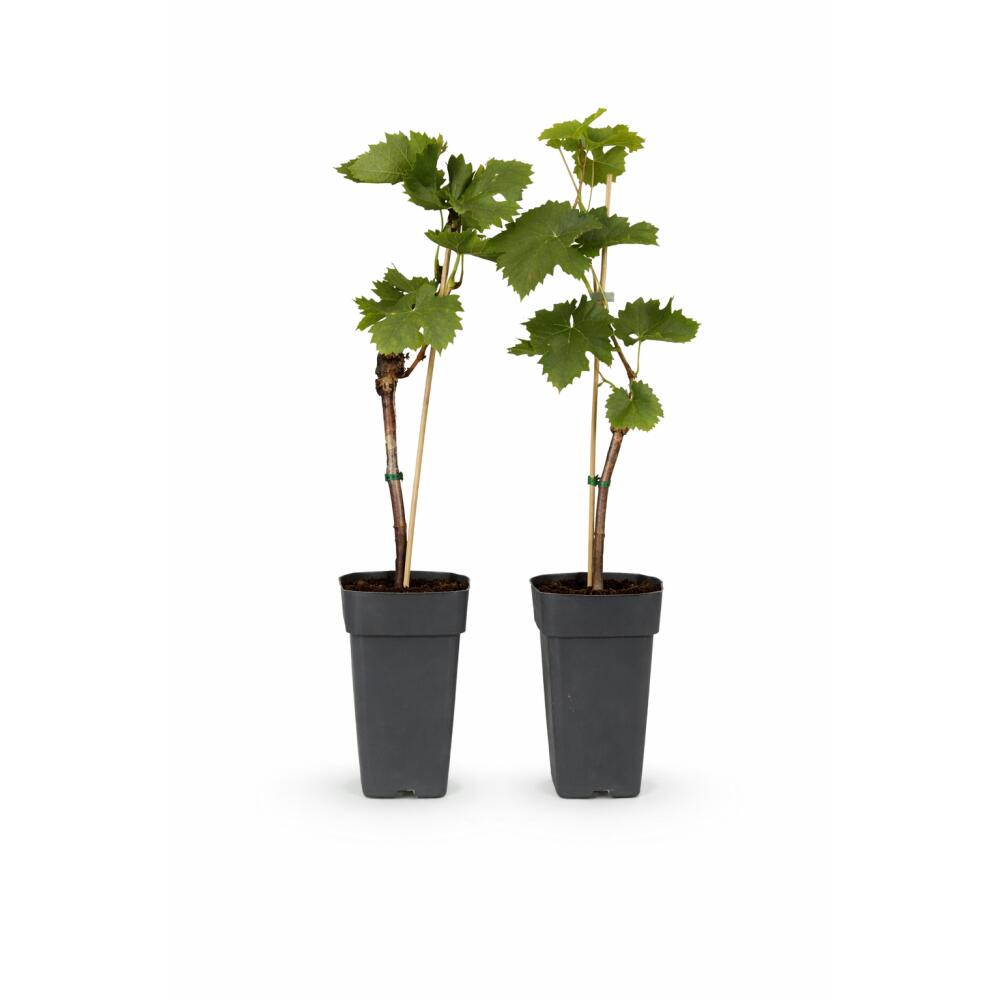
The set contains two vines, each in a 15 cm pot and about 50 cm tall overall. The shop’s fruit detail shows a possible later result, not grapes already supplied. The leafy photograph and our scene present young plants. Unpruned Bianca may reach about 2.5 to four metres; maintained trellis dimensions depend on training and pruning. We therefore plan space according to later form. Putting both small pots close together in a corner would be no good beginning for permanent root space.
Look at the framework before planting
A sunny warm sheltered position suits particularly well. A warm wall may help in a cool garden; beneath a roof overhang, watering care must remain attentive. An orderly trellis gives each main shoot its direction. About 1.2 to 1.5 metres spacing is a guide for trained vines, with more for wider framework arms. Install the climbing support before planting. Then you need not dig among new roots later and can guide soft shoots loosely straight away.
Start with a supplied root ball
During dormancy from late autumn to early spring, planting is favourable in frost-free, non-waterlogged soil; in cold locations we prefer spring. Set the root ball at its existing level. An identifiable graft union stays above soil surface. Afterwards water slowly and accompany establishment. The young vine does not yet use a large soil area. Check its original root ball even if rain has fallen in another part of the garden. In a container, this exact attention remains important because water reserves are limited.
Assess foliage, water and nutrients together
Permeable well-supplied soil makes cultivation easier. When needed, water thoroughly in the root zone without leaving water standing long. A well-growing specimen does not need precautionary large extra fertiliser amounts. First observe shoot vigour, leaves and soil supply; particularly lush foliage does not guarantee better fruit ripening. We like looking at both plants side by side regularly. Different growth may draw attention to a drier pot or a different light side before looking for an imagined variety error. Small notes make these comparisons understandable later.
Pruning creates an understandable form
A main trunk and deliberately trained arms give direction. Buds on the previous year’s wood produce new shoots where flowers and fruit can develop. Do not therefore remove every one-year piece indiscriminately. Dormant pruning orders the framework; excess shoots are trained and limited in summer. Choose the suitable pruning scheme for a cordon trellis or another form rather than mixing two systems without planning. Build stable young vines first and avoid heavy fruit loads too early. A good foundation is more valuable than one quick harvest.
Pale fruit and a calm winter phase
Inconspicuous greenish flowers may appear in early summer, then pale grapes in autumn. Actual timing depends on region and weather. Assess ripeness by taste and development; colour alone is insufficient. Carefully cut healthy grapes with their stalk and keep them away from dogs. Foliage falls in autumn while the woody framework remains. Small containers need root protection and clear drainage. Fresh shoots the following spring are again sensitive to late frost. This recurring development is precisely what makes Bianca a plant that becomes more familiar over many garden years.
One plant, several views
Good to know
Does the supplied set already carry grapes?
Not guaranteed. The set consists of two young vines; the separate shop fruit detail shows the variety later.
What colour is the fruit?
Bianca develops pale fruit described as white grapes. Ripeness depends on position and weather.
How large does it grow?
Unpruned about 2.5–4 m. Maintained trellis dimensions are determined by training and regular pruning.
When do I plant?
Preferably during dormancy in frost-free soil. Early spring is favourable in cold locations.
How far apart do the two vines stand?
About 1.2–1.5 m is a guide for trained trellises. Wider training forms need more room.
Is the fruit suitable for dogs too?
No. Keep grapes and raisins away from dogs.
Sources and editorial note
- Exotenherz: offer and original images (02.10.2026)
- RHS: planting and caring for grapevines (02.10.2026)
- RHS: outdoor vines (02.10.2026)
- RHS: pruning and training (02.10.2026)
- RHS: cordon pruning (02.10.2026)
- University of Minnesota Extension: grapevines in the garden (02.10.2026)
- University of Maryland Extension: table grapes (02.10.2026)
- RHS: Bianca (02.10.2026)
Shop offer, article number, GTIN, availability and original images checked directly on 02.10.2026. Specialist sources read directly. No seedless variety or fruit on delivery guaranteed; ultimate size considered separately as an unpruned range.