
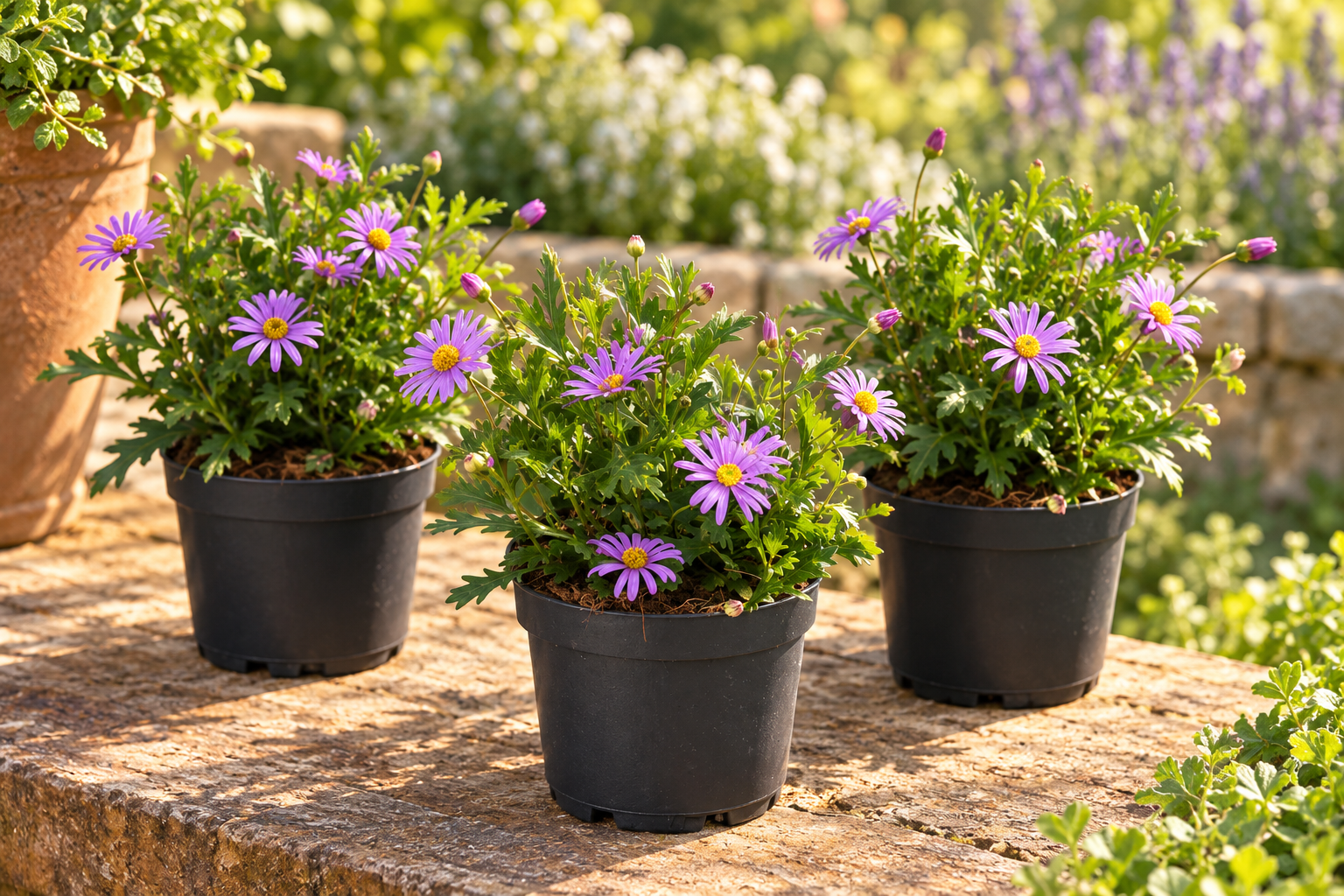
This plant at Exotenherz
Check the shop offer for current availability, price and what is included.
Check the shop for the current price, availability and offer contents.
Your care table
| Topic | What to do | Why it helps |
|---|---|---|
| Light | Place in a sunny, protected position. | Fine foliage and flowers need a functioning light position. |
| Planting | Acclimatise slowly after frost risk. | The small rootball starts without a large root network. |
| Water | Check the rootball and supply thoroughly as needed. | Drought tolerance does not mean watering is forbidden. |
| Drainage | Keep container holes open and remove excess. | Wet soil still needs air for the roots. |
| Soil | Use well-drained planting soil. | Avoid winter and summer wetness. |
| Shape | Gently pinch young tips. | Further branches can thicken the cushion. |
| Flowers | Carefully tidy faded flowers. | Healthy fine shoots remain undamaged. |
| Winter | Continue cultivation protected and preferably frost-free. | No generally safe garden overwintering is promised. |
Check the compost and pot weight. The care table explains how far the compost may dry.
Water only when needed. The water should reach the root ball without spilling over the rim.
Remove surplus water from the saucer or cachepot. Then return the plant to a suitable position.
A fine flowering cushion rather than a large flower disc
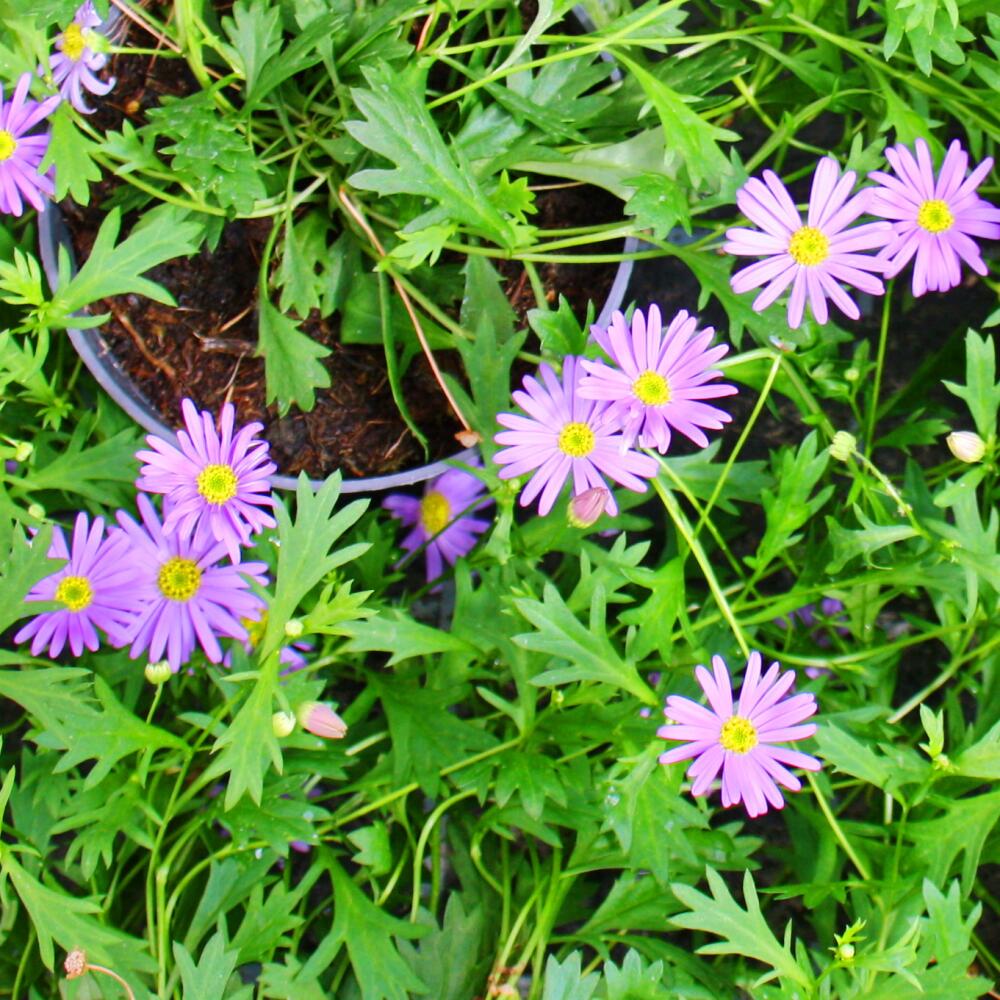
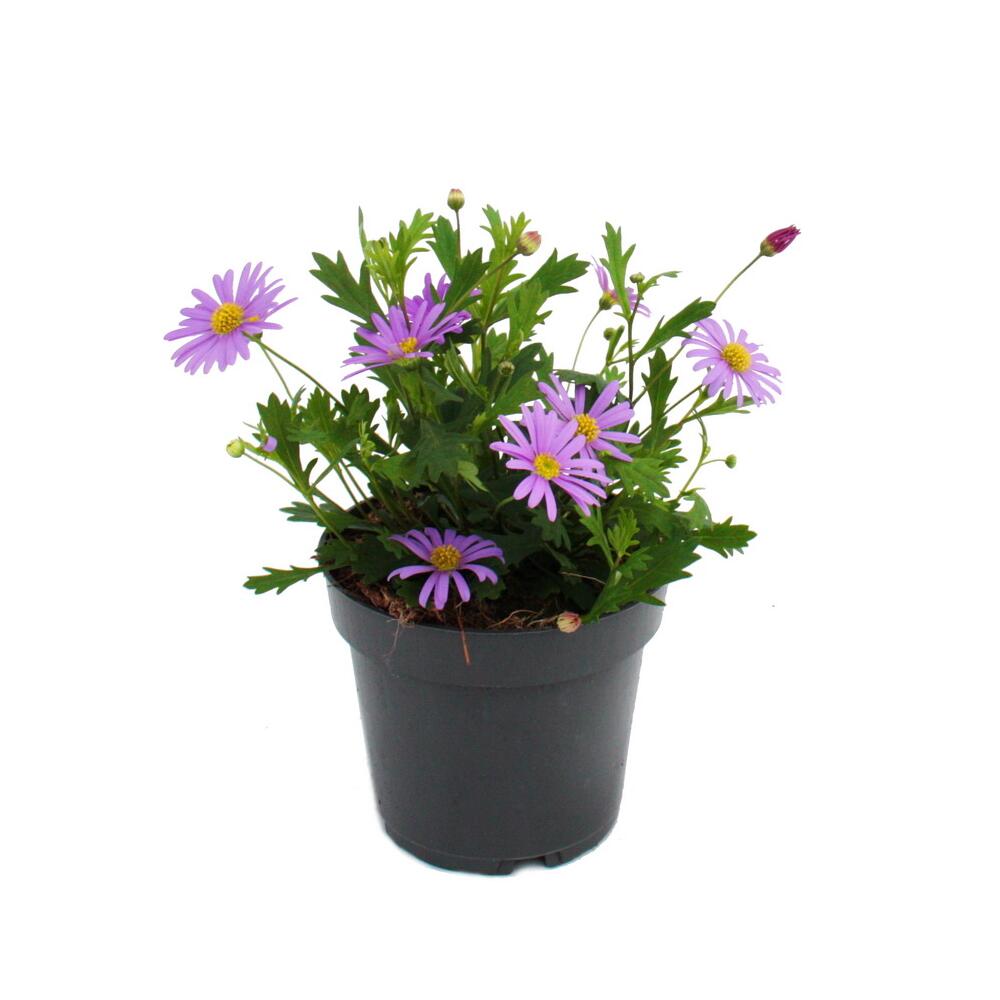
Many narrow lilac-blue rays surround the small yellow flower centre. Finely divided green foliage sits beneath the heads, strengthening the impression of a loose cushion. Blue daisy Blaue Jungs is therefore interesting close up too: individual buds stand among already open flowers, and each shoot adds a slightly different accent. The shop specifies Brachyscome multifida. This portrait describes that species and the offered trade selection, not the ordinary white lawn daisy or another Brachyscome species with a similar flower.
We plan three small plants as a growing group
The set contains three plants in 11-cm pots approximately twenty to twenty-five centimetres in plant height. This figure is not converted into total height including the pot. At the edge of a sunny window box or in a bowl, the group can develop sideways. Initially place the crowns loosely beside each other and leave room for new branches. Around twenty-five to thirty centimetres spacing is a practical starting point, not an exact width promise for the trade selection. The general species description reaches approximately forty centimetres in height.
A sunny edge with a quiet start
The species from Australia suits a sunny, sheltered position with free-draining soil. Young plants are first introduced to outdoor light and air movement. Permanent outdoor planting happens only after frost risk. Fine shoots can later grow over the edge of a sunny low stone wall. The position should remain accessible: soil must still be checkable beneath the flowering cushion. Hot wall surfaces, a barely ventilated box and wind at the outer balcony edge create different conditions from a protected bed.
Drought tolerance does not mean no supply
Well-established plants cope with drier conditions. A freshly delivered small potted plant, however, does not yet have widely distributed root space. Before watering, we check rootball and pot weight and slowly supply water when needed. Excess drains away. A dry flowering cushion is not merely sprayed from above while roots remain dry. After prolonged rain, actual container condition matters; automatically adding water can be equally unsuitable. If flowers decrease, we consider light and root supply together rather than immediately applying additional fertiliser.
Many fine branches need gentle care
Free-draining planting soil and open drainage holes help combine moisture and air. During growth, feed sparingly according to the label and count existing fertiliser. Young shoot tips can be carefully shortened to encourage branching. Remove faded heads cleanly; after a stronger flowering phase, the plant can be lightly organised. The fine growth should not be pulled from the rootball as a whole bunch. Look underneath the edge for damaged leaves and keep the plant accessible for the next check.
A long season with suitable winter expectations
The species is botanically perennial but is often used here as a summer plant. Generally safe garden overwintering is not promised. For continued cultivation, a bright, sheltered, frost-free position is the cautious choice, especially with small pots. Water use falls in the quieter part of the year. A photograph of the young group of three and a later photograph of its sideways growth fit well in the plant book. Note whether the bowl received sun, wind or rain protection. Actual proven care is then recorded alongside flower colour.
One plant, several views

Good to know
Is it the ordinary lawn daisy?
No. The offer specifies Brachyscome multifida.
Does every plant stay exactly 25 cm tall?
No. It is a young plant height, not a mature size guarantee.
Can it grow over an edge?
The species develops branched growth spreading sideways.
Should it be kept dry?
A free-draining position fits, but young rootballs are watered according to need.
Is it annual?
Botanically perennial, often used seasonally here and not generally promised as winter-proof.
Sources and editorial note
- Exotenherz: offer and original photographs (03.10.2026)
- RHS – Brachyscome multifida, growth and cultivation (03.10.2026)
- RHS – summer containers and frost risk (03.10.2026)
Shop offer, article number, GTIN, availability and original photographs checked directly on 02.10.2026; specialist acceptance 03.10.2026. Specialist sources read directly. Specific SKU, measurements, original photographs and orderability checked directly in the shop on 03.10.2026. Specialist sources read in full; shop name and botanical synonyms remain distinguishable. Currently not orderable: knowledge portrait without purchase link, social drafts without sending approval. No Wawi, server or tool changes. Currently not orderable: knowledge portrait without purchase link; social drafts not approved for sending.