
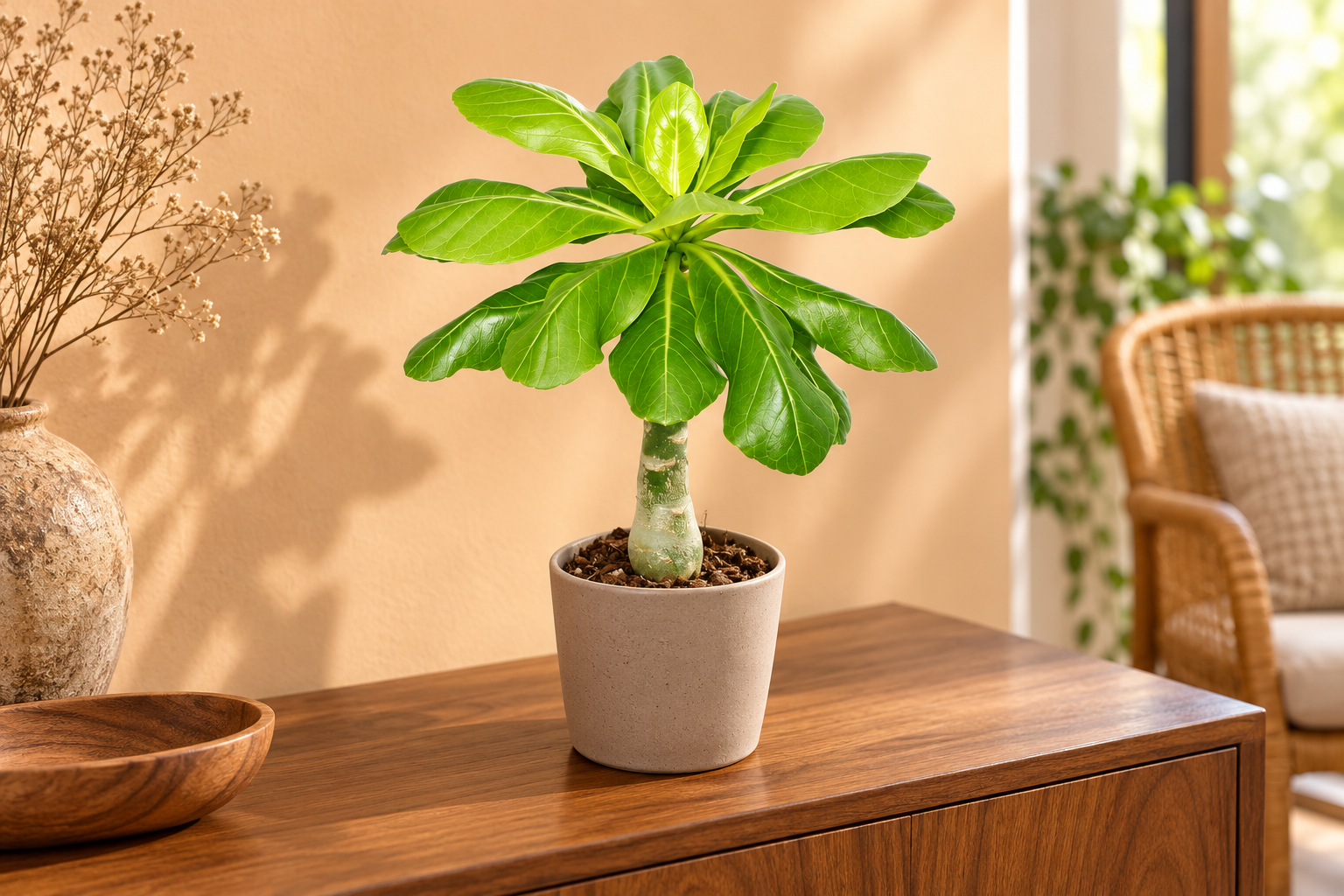
This plant at Exotenherz
Check the shop offer for current availability, price and what is included.
Check the shop for the current price, availability and offer contents.
Your care table
| Topic | What to do | Why it helps |
|---|---|---|
| Light | Start very brightly; avoid strong direct sun after shipping. | Leaves need light; newly intense sunshine requires acclimatisation. |
| Water | Water as needed after the potting soil has dried. | The fleshy stem stores water; permanent wetness threatens roots and base. |
| Drainage | Let the nursery pot drain and check the cover pot. | An invisible water reserve beneath the pot is no care aid. |
| Substrate | Choose a very free-draining succulent-suitable mix. | Air and fast water drainage are crucial for the roots. |
| Warmth | Cultivate protected and frost-free; avoid cold surfaces beneath the pot. | The Hawaiian plant is an indoor or frost-free pot crop here. |
| Nutrients | Feed cautiously during active growth according to the fertiliser label. | The offer needs no fixed feeding calendar independent of growth. |
| Repotting | Give little extra space when roots fill the pot. | A large reserve of wet soil makes moisture checks difficult. |
| Checks | Look regularly at leaf undersides and young crown areas. | Spider mites can significantly damage the leaf crown. |
Check the compost and pot weight. The care table explains how far the compost may dry.
Water only when needed. The water should reach the root ball without spilling over the rim.
Remove surplus water from the saucer or cachepot. Then return the plant to a suitable position.
A leafy stem, but not a palm
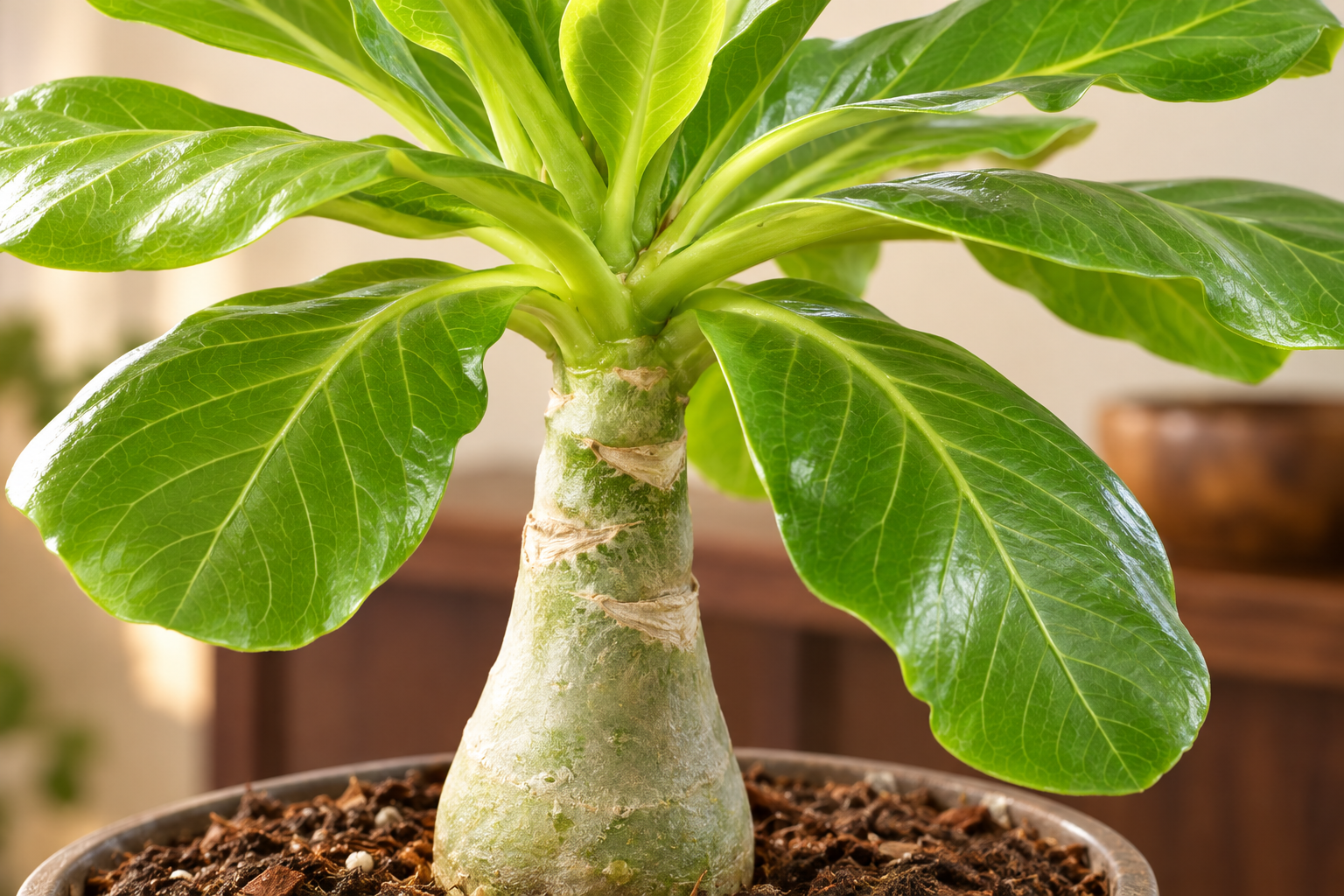
The name initially suggests a beach. Close up, however, Brighamia insignis shows quite different features from a palm: its pale fleshy stem is thickened below, and broad glossy leaves sit in a rosette above. They are spoon-shaped, slightly wavy and traversed by fine pale veins. The species belongs to the bellflower family and comes from Hawaii. The bare stem beneath the leaf crown gives it a particular calmness. On a small bright console, its shape attracts attention even with few leaves; invented palm fronds would miss this character.
The young plant remains a manageable specimen
The specific offer stands in a 12-cm pot and measures approximately 40 cm including the pot. This delivery figure is not a permanent mature height. Choose a stable cover pot from which you can easily lift the nursery pot for checks. The broad crown should stand freely to the sides rather than be pressed between books or a curtain edge. When unpacking, work at the pot, gently free the leaves and do not squeeze the fleshy stem tightly as a handle. The indoor scene shows a possible bright position. Cover pot and furnishings are not part of the plant offer.
Combine plenty of light with a gentle start
For its first position after shipping, follow the offer: bright, initially without harsh direct sunshine. The botanical cultivation guide also describes sunnier conditions for acclimatised plants; this is no invitation to immediately place a freshly unpacked specimen behind hot south-facing glass. Observe the whole day before gradually increasing sunshine. Indoors, natural light at the actual leaf crown matters. Cold draughts during ventilation and a chilled pot base are unsuitable. A warm, bright position some distance from heating airflow makes further observation easier.
The stem stores water, the roots need air
The thickened base contains water reserves. Nevertheless, the next watering is decided by the soil, not merely by the stem’s robust appearance. Let the substrate dry, check pot weight and rootball, then water as needed. Excess drains completely. A fixed weekly portion may be too little in a warm bright room and too much in a darker, cooler position. A tight cover pot easily conceals accumulated water. A softening stem above wet soil is a warning sign, not a reason for still more water. Water the soil without keeping the upper rosette constantly wet.
Take the next step with little extra soil
A very free-draining mix suitable for succulents supports the roots. When they clearly fill the pot, give only a little more room when repotting and keep the base at its previous height. Handle a loose rootball carefully rather than pulling the stem or bending the crown. During visible growth, feed cautiously according to the fertiliser label; account for fresh pre-fertilised soil. Remove dead leaves only when they can be gently loosened or cleanly taken off. A normal compact houseplant needs no routine cutting off of the stem.
Flowers are development, not a delivery promise
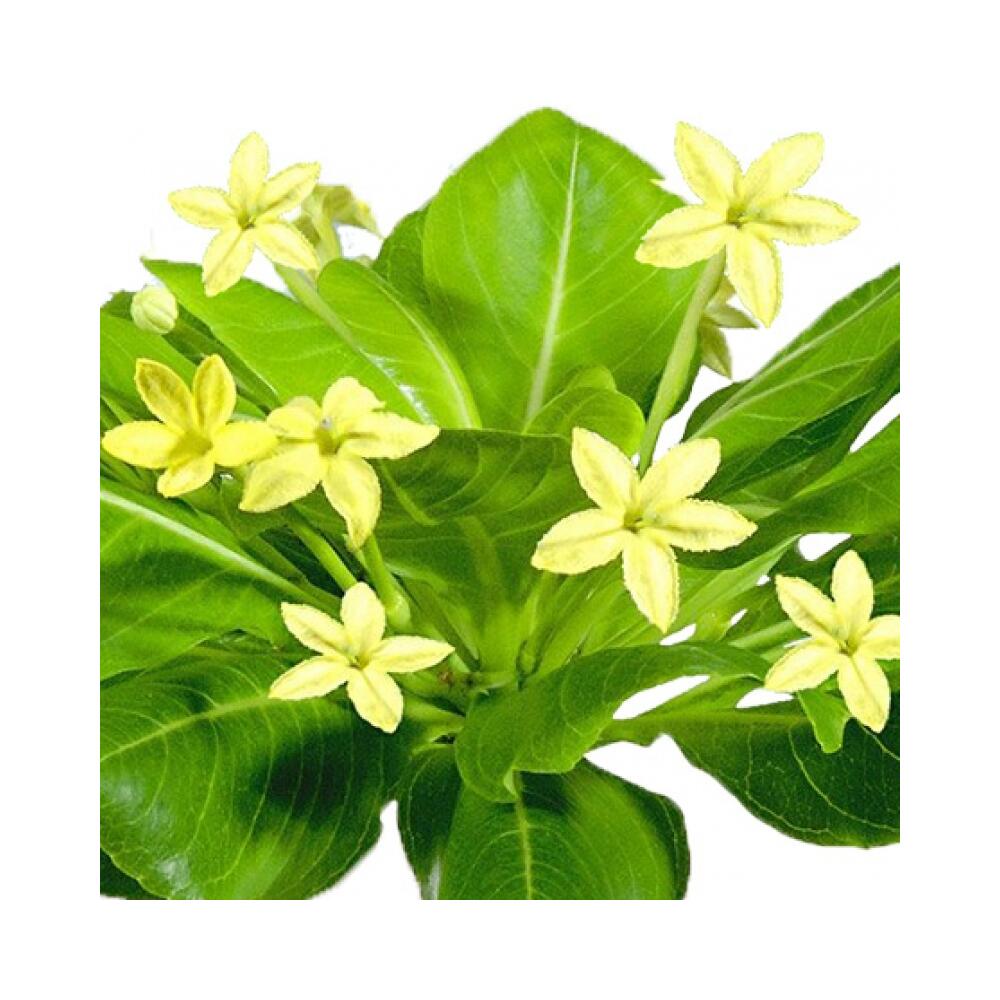
The species can carry cream-yellow to yellow tubular flowers with a star-shaped spreading rim. The original detail photograph shows this flower form. That does not promise that the offered young plant is currently flowering. Light, cultivation and development influence flower formation; a strict calendar or forced dry pause provides no reliable promise. The Hawaiian palm is interesting with its green crown too. If fewer new leaves appear, first check light and water use and adjust supplies. An occasional photograph of the same crown side is enough for observation.
The undersides reveal more than the plant name
Look regularly beneath the leaves and among young leaf bases. Spider mites are an important possible cause of fine speckles, damaged leaf surfaces and webbing in Brighamia. Do not automatically treat individual ageing leaves as pest infestation, however. Check moisture, light and base firmness at the same time. Photograph a new abnormality and investigate it specifically as early as possible, rather than sharply changing water and fertiliser together. If the plant spends some summer time protected outdoors, watch for slugs and move it inside before cold nights. The unusual stem stays healthy when root space and leaf crown are assessed together.
One plant, several views
Good to know
Is the Hawaiian palm really a palm?
No. Brighamia insignis belongs to the bellflower family and has a succulent stem base with an upper leaf rosette.
Is 40 cm its fully grown mature height?
No. The offer specifies approximately 40 cm total delivery plant height including pot.
Will I definitely receive a flowering plant?
Flowering is not promised as the current delivery stage. The original detail shows the species’ possible flower form.
Does the thick stem need water at all?
Yes. Its reserves help in dry periods, but do not replace root supply according to need after checking the rootball.
Why is the base becoming soft?
Check roots and water drainage, especially in wet soil. This is not a sign to simply add more water.
What do I check on the leaves?
Check undersides and young crown areas for fine speckles, webbing or small pests; also consider light and water balance.
Sources and editorial note
- Exotenherz: offer and original photographs (02.10.2026)
- National Tropical Botanical Garden – Brighamia care, light, substrate and pests (02.10.2026)
- University of Hawaii CTAHR – Brighamia insignis, family and features (02.10.2026)
Shop offer, article number, GTIN, availability and original photographs checked directly on 02.10.2026; specialist acceptance 03.10.2026. Specialist sources read directly. Specific offer 17092014561 with original views and description read directly on 03.10.2026: 12 cm pot and approximately40 cm total height. NTBG care sheet read in full and visually viewed, University of Hawaii profile read directly. No outdated wild-specimen count, conservation or donation advertising adopted. Light acclimatisation explains differences between the shop’s initial position and the botanical cultivation source. Original detail shows possible flowering, not a flowering delivery promise.