This plant at Exotenherz
Check the shop offer for current availability, price and what is included.
Check the shop for the current price, availability and offer contents.
Your care table
| Topic | What to do | Why it helps |
|---|---|---|
| Light | Choose bright filtered daylight without hot direct sun. | Young rosettes need protection from strong heating. |
| Warmth | Keep warm and frost-free, away from cold draughts. | These offered indoor bromeliads cannot tolerate a garden winter. |
| Root balls | Keep small root balls slightly moist but not wet. | 5.5 cm pots can dry quickly and also be overwatered easily. |
| Tanks | For forms with a recognisable water tank, provide soft water and renew it regularly. | Fresh water is better than a dirty standing reserve. |
| Drainage | Let inner pots drain and remove excess water from their covers. | Humid air does not replace an aerated root zone. |
| Soil | Use a loose freely draining bromeliad mix. | Rosette bases should not sit in dense wet soil. |
| Feeding | During growth, feed very weakly according to the bromeliad fertiliser label. | Small plants need no high nutrient doses. |
| Terrarium | Control light, moisture and air exchange; do not plant underwater. | Young bromeliads are not submerged aquatic plants. |
Check the compost and pot weight. The care table explains how far the compost may dry.
Water only when needed. The water should reach the root ball without spilling over the rim.
Remove surplus water from the saucer or cachepot. Then return the plant to a suitable position.
Four rosettes that are interesting without flowers
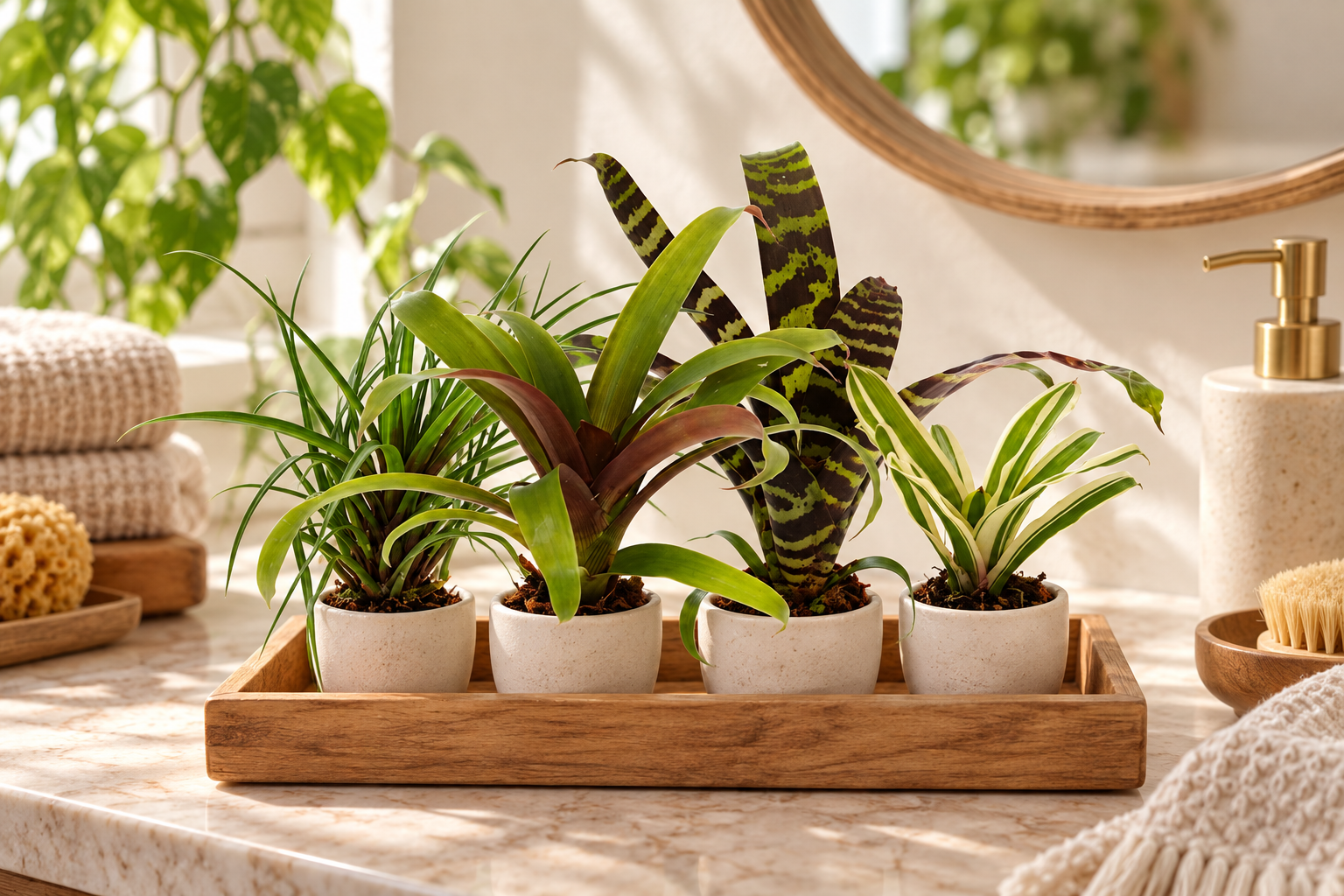
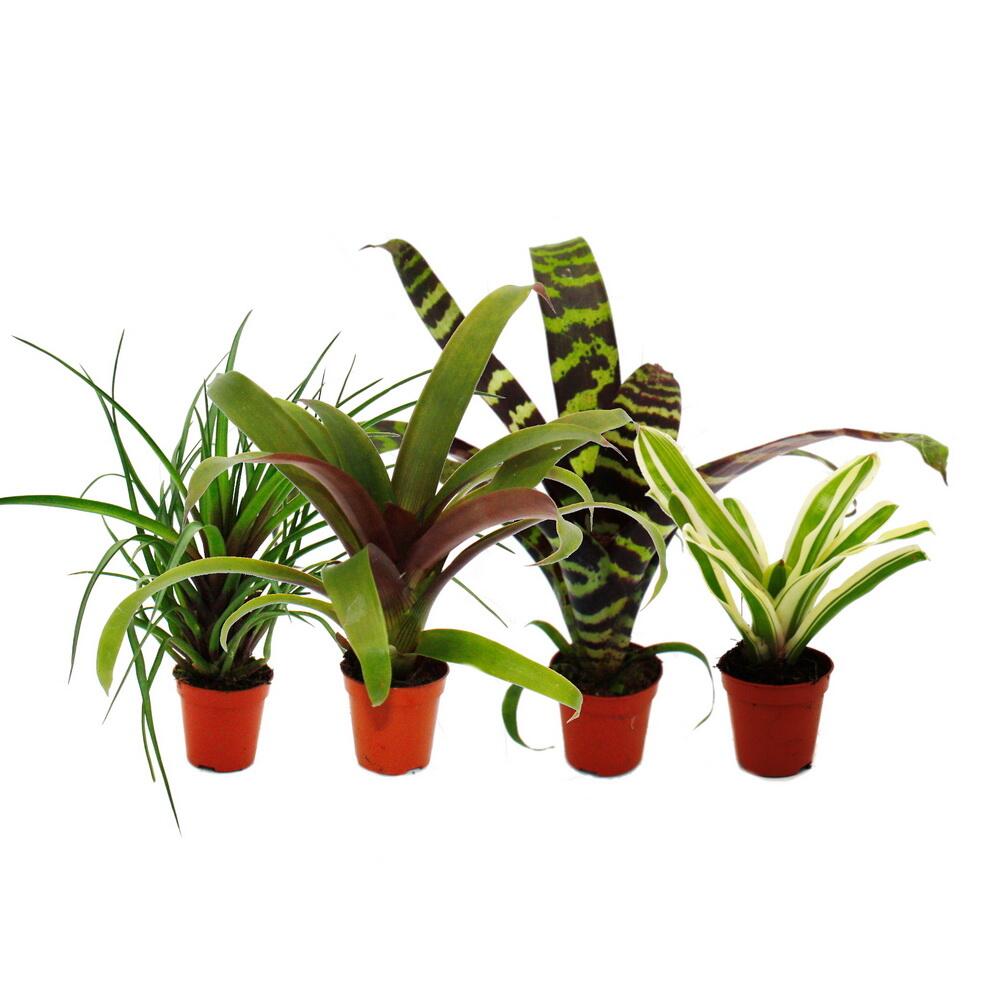
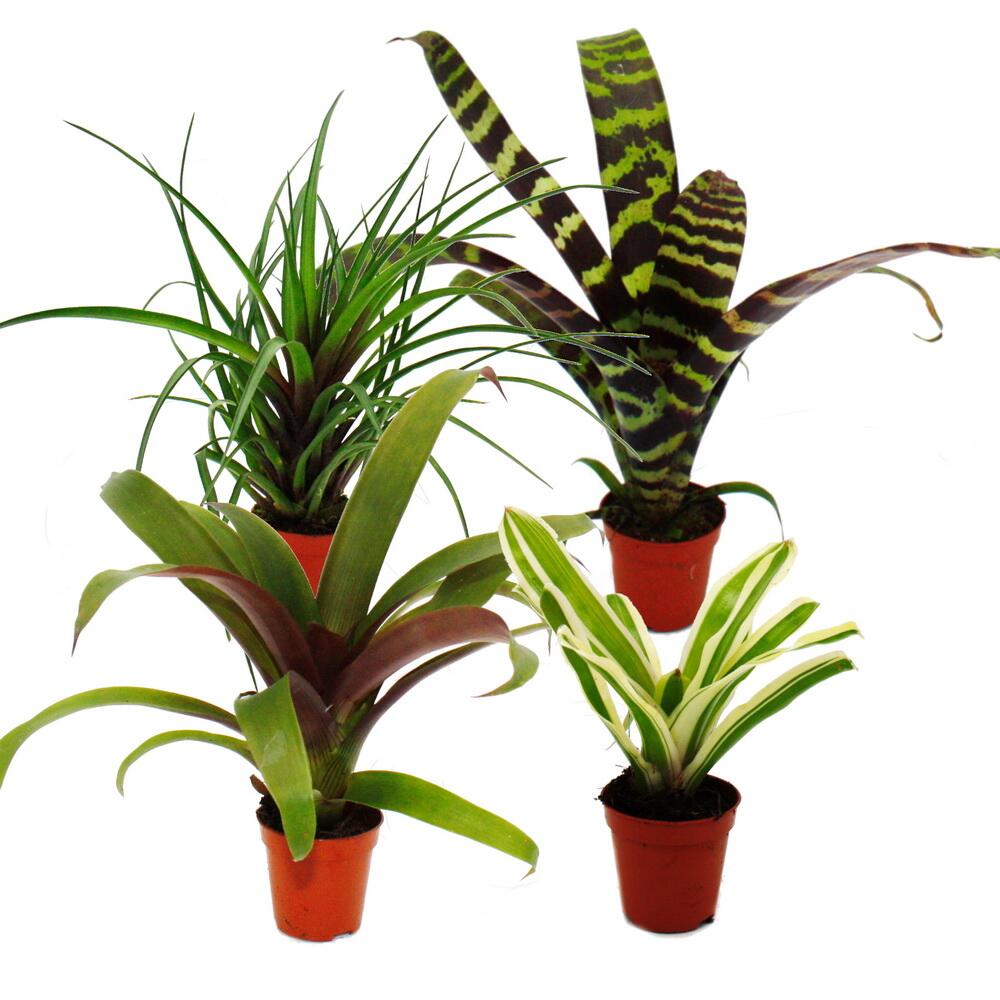
Nature’s Touch directs attention to young foliage. Banded Vriesea, a smooth Guzmania rosette, narrower Tillandsia leaves and striped Neoregelia show different lines. The set is offered without flowers. We like this quiet effect on a bright shelf where each small plant remains recognisable close up. A shallow display tray can hold the group together without hiding their pots. Green need not be uniform: leaf width, bands and direction of tips already give the four rosettes a small character of their own.
Four small pots with different delivery heights
Each plant arrives in a 5.5 cm pot. Vriesea splendens is listed at about eighteen centimetres overall height, Guzmania and Tillandsia cyanea at about fifteen, and Neoregelia at about ten. These figures include the pots and describe young delivery plants. Decorative covers and the scene’s shelf are not included. A flower head from a later image of the genus is not transferred to this delivery. The rosettes may continue growing. Keep their identities clear so when watering you can tell which form has a pronounced tank and which small root ball has lost more moisture.
A warm bright position reveals the patterns
Filtered daylight without strong direct sun suits the group. Immediately beside a hot window, even a small tray may heat rapidly. After transport, first place young plants in a sheltered spot and avoid cold draughts. A bright bathroom shelf may be suitable if daylight is genuinely present. High humidity does not make a windowless room brighter. The set is not intended for a cold garden winter. When displaying them together, leave some room between rosettes so air circulates and leaves do not remain wet against each other. This keeps their fine differences more visible.
Check root ball and tank separately
Keep small root balls slightly moist without leaving them standing in water. Briefly check each plant before watering and let excess drain afterwards. Some bromeliads form a recognisable tank in which soft water can be held. Renew this water regularly so no dirty standing reserve develops. In a young narrow rosette without a pronounced tank, do not blindly fill every centre with water. Actual structure decides. Root-ball moisture, tank water and more humid surrounding air fulfil different roles. A filled cachepot is therefore no substitute for this separate observation.
Terrarium cultivation needs light and air exchange
The offer also suits a controlled moist terrarium display. Plants do not belong underwater or with permanently wet root balls in a paludarium’s water zone. A suitable planting place must remain well ventilated and receive enough light. Small closed containers in particular may trap warmth and wetness. Control moisture rather than simply keeping the lid permanently closed. For a start, separate pots can be placed within a display and removed for checking. This keeps the set manageable, and each rosette can receive a more suitable place if necessary.
Support slow growth with little feeding
A loose freely draining bromeliad mix suits them better than heavily compacted soil. When later repotting, do not bury rosette bases deeper and choose only an appropriate pot size. During growth, feed very weakly according to the bromeliad fertiliser label. Solid fertiliser granules do not belong in a water tank. New leaves develop at their own pace; more food does not automatically create more attractive growth. Many rosette-forming bromeliads flower once and then form offsets before the old rosette gradually declines. That is a life cycle, not a reason to treat a young plant without flowers today as annual.
Care gently for the small group as it grows
Carefully remove dry outer leaf parts without injuring the centre. Also check leaf bases and tanks for dirt. Soft dark areas together with wet soil need a different response from one old leaf. Keep warm and bright in winter; reduce supply as growth slows but do not overlook small root balls. A new leaf may look different on each rosette. This diversity makes Nature’s Touch appealing: four young bromeliads that we do not reduce to one shared flower colour, but get to know through their patterns and further development.
One plant, several views
Good to know
Are the four plants flowering at delivery?
The offer is a non-flowering foliage plant set. No flower heads are promised.
Are all plants the same height?
No. Listed overall heights vary by component, approximately between 10 and 18 cm.
Can I plant them underwater?
No. In a paludarium, they need a suitable ventilated place above the water zone.
Must every rosette centre be filled with water?
Cultivate this way only forms with a recognisable water tank. Check their actual young structure and renew water regularly.
What soil suits them?
A loose freely draining bromeliad mix. Do not bury rosette bases deeper.
Do bromeliads die immediately after flowering?
Many rosettes gradually decline after flowering once and form offsets beforehand. Observe each plant’s development.
Sources and editorial note
- Exotenherz: offer and original images (02.10.2026)
- RHS: growing bromeliads, tanks and offsets (02.10.2026)
- RHS: bromeliads as houseplants (02.10.2026)
Shop offer, product number, GTIN, availability and originals checked directly on 02.10.2026. Specialist sources read directly. All four 5.5 cm pots and different delivery heights retained. No flowers generated or promised; water tanks treated according to actual form rather than filling every centre indiscriminately.