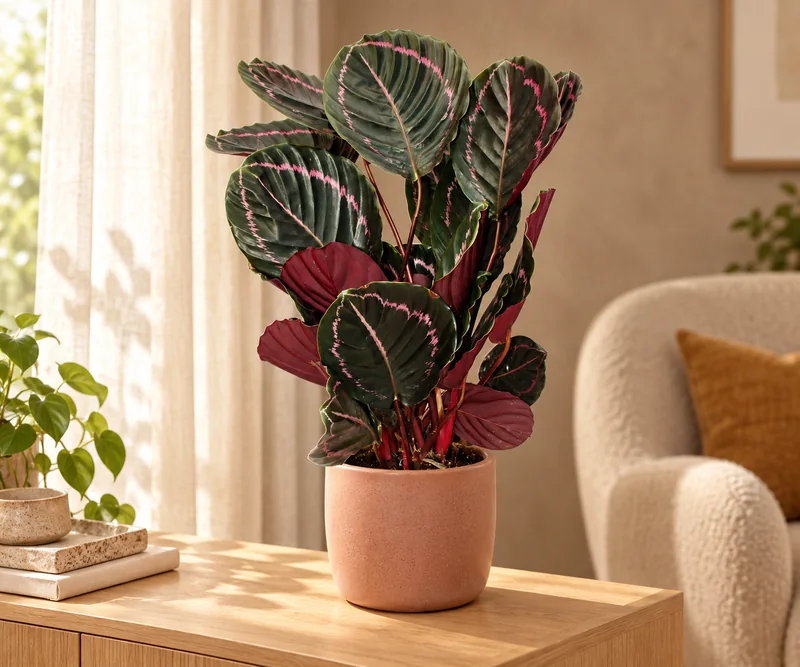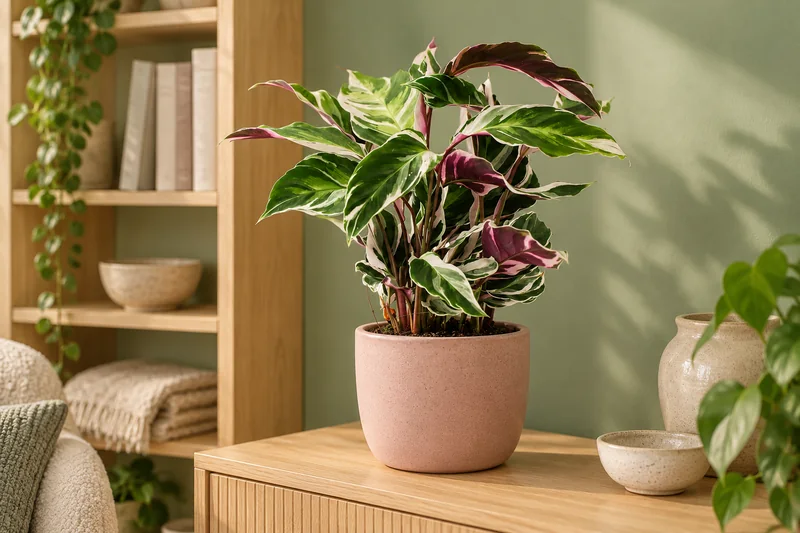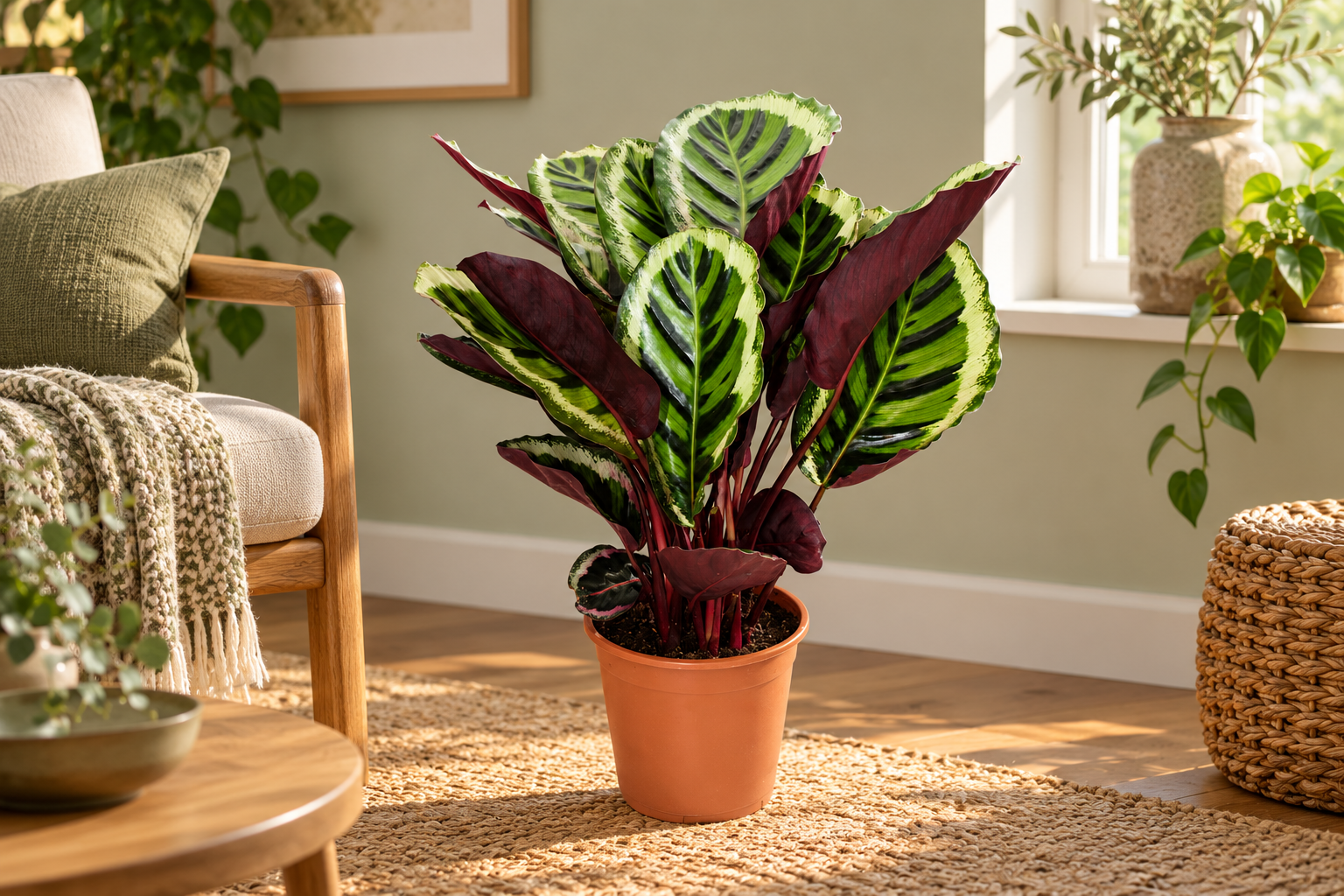
This plant at Exotenherz
Check the shop offer for current availability, price and what is included.
Check the shop for the current price, availability and offer contents.
Your care table
| Topic | What to do | Why it helps |
|---|---|---|
| Light | Place in bright indirect light. | Keep hot sun off the leaf surfaces. |
| Temperature | Warm and stable, without cold draughts. | Do not expose this tropical foliage plant to freezing cold. |
| Moisture | Keep the root ball evenly supplied, allowing the surface to dry slightly. | Avoid complete dryness and constant wetness. |
| Water | Use water low in lime and at room temperature where possible. | Also check water quality when new leaf edges develop problems. |
| Drainage | Remove excess water from the outer pot. | Hidden water can stress the roots. |
| Soil | Humus-rich free-draining houseplant compost. | Repot only when the roots genuinely need more room. |
| Leaves | Gently wipe away dust and check undersides. | Do not pull new rolled leaves open. |
| Winter | Reassess light and reduced consumption. | Do not continue the summer schedule unchanged. |
Check the compost and pot weight. The care table explains how far the compost may dry.
Water only when needed. The water should reach the root ball without spilling over the rim.
Remove surplus water from the saucer or cachepot. Then return the plant to a suitable position.
A leaf edge brings the whole pattern to life
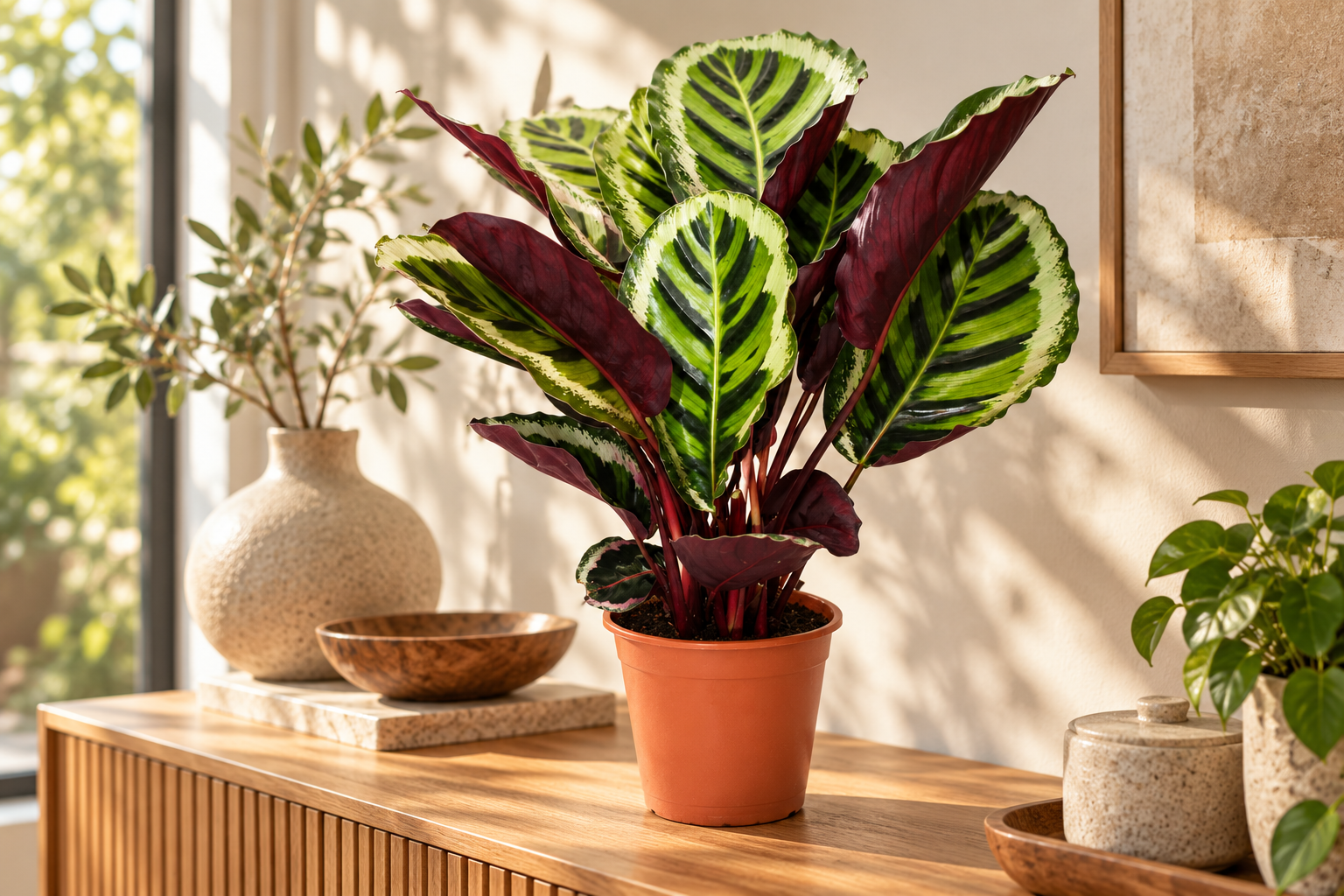
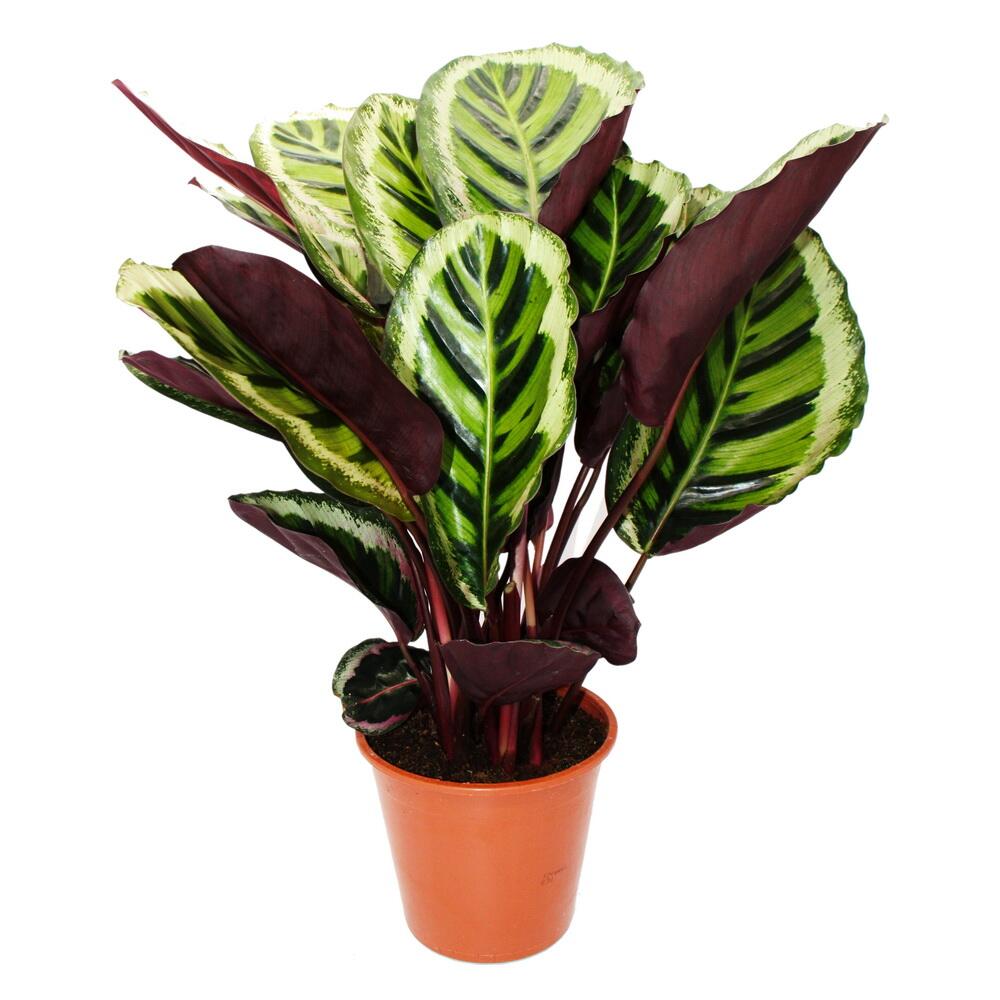
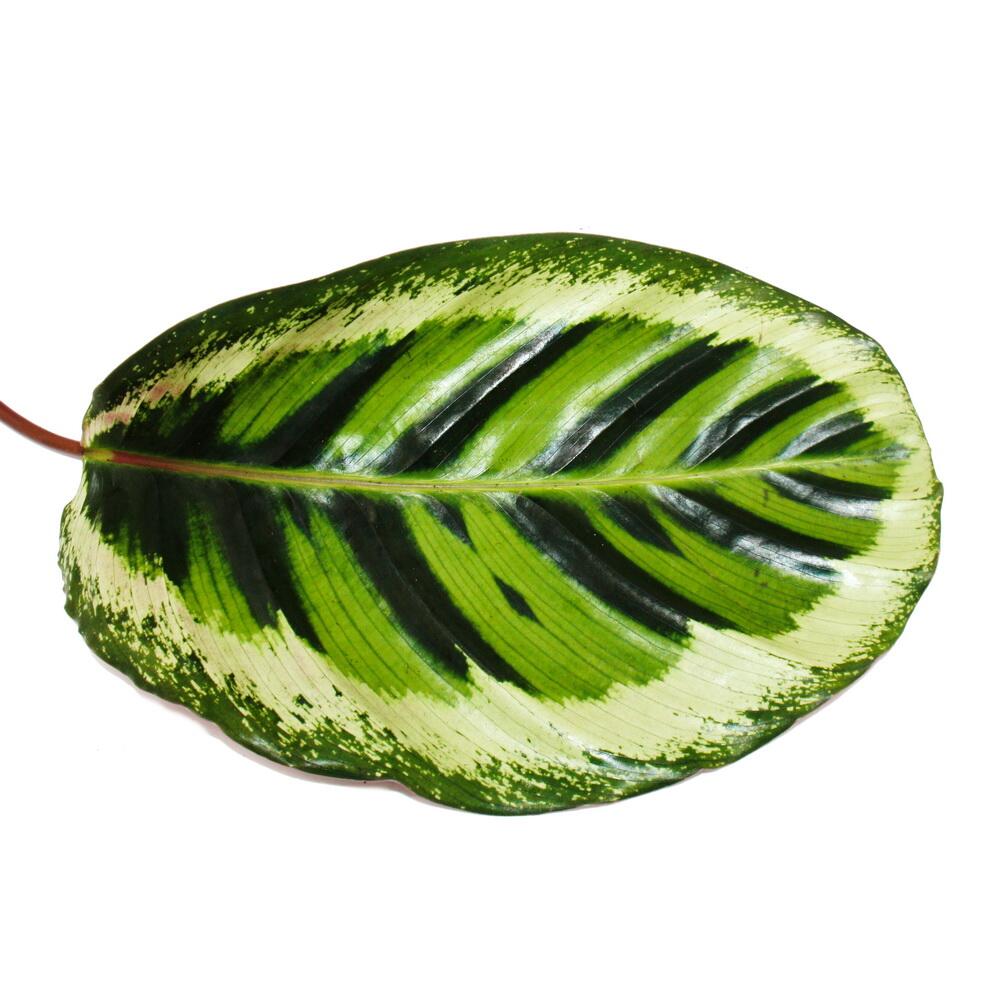
The long oval leaves end in a clear point. Pale margins frame a green pattern that runs outwards from the midrib. Some leaves also turn their purple undersides into view. Angela therefore needs no flowers to stand out on a quiet sideboard. It is best discovered slightly from the side, with room around its mobile leaf stalks. The trade name Calathea remains familiar; botanically the roseopicta relationship is now placed in Goeppertia. A spelling variant in the assortment does not establish another new species.
A large leafy crown needs a suitable position
The offer describes a nineteen-centimetre pot and approximately seventy to eighty centimetres total height. This is the assortment size, not an unchanging mature height. Support the container when carrying it and do not let the leaves catch between door frames or furniture. After transport, check the root ball first. An outer pot can complement the position nicely, but needs enough space to lift the inner pot out. This makes it easy to check for water underneath and whether the plant actually needs attention.
Brightness without scorching leaf surfaces
Angela suits a bright position with indirect light. A shaded living area can be pleasant and bright; its attractive pattern does not make a dark corner a suitable permanent place. Avoid hot direct sun. In winter, reassess whether the usual distance from the window still permits enough light. Cool draughts and direct proximity to heating stress the large leaf surfaces. Leaf positions can change during the day. Observe this movement first instead of immediately responding with extra water.
The root ball should be supplied yet still breathe
Maintain reliable moisture during growth without leaving the soil permanently wet. Once the surface has dried slightly, check the root ball and water slowly if needed. Remove excess water. Low-lime water at room temperature makes care easier. An already wet, heavy pot does not need more water simply because a leaf rolls up. Warmth, dry air and root condition belong in the same assessment. Consumption may decrease particularly in winter; a fixed summer schedule would then be an unhelpful decision.
Care for leaves and give fresh growth room
Humus-rich free-draining houseplant compost combines moisture retention with air around the roots. Repot when needed during active growth, when the root ball has genuinely filled the existing pot. Apply fertiliser moderately according to its label. Carefully remove dust with a soft damp cloth, supporting the sensitive leaves. Higher humidity may help, but a single misting does not replace a suitable room environment. Regularly check undersides for new unusual dots or fine webbing.
A pale margin is different from dry damage
The pale pattern is part of the leaf. Newly brown and dry edges, by contrast, should be investigated alongside water quality, room air and root-ball moisture. Not every brown tip proves the same mistake. Do not force a new rolled leaf open: it needs time to unfold. A photograph of the upper and lower surfaces and a note about the winter position are useful in the plant book. This helps reveal whether fresh leaves grow better in the same surroundings rather than constantly treating every individual old mark again.
One plant, several views
Good to know
Why does the portrait use Goeppertia instead of Calathea?
Calathea roseopicta is now placed botanically in Goeppertia.
Are purple undersides a sign of damage?
No. The colour is visible in the specific original photograph.
Can Angela stand in a dark shelf corner?
It needs sufficient indirect light; the decorative pattern does not replace that need.
Should I open a rolled leaf?
No. The fresh leaf unfolds by itself.
Do brown edges always mean too little water?
Check the root ball, water quality and room air together.
Sources and editorial note
- Exotenherz: offer and original photographs (03.10.2026)
- RHS – calatheas, position, water and leaf care (03.10.2026)
- NC State Extension – Goeppertia roseopicta, leaves and cultivation (03.10.2026)
Shop offer, article number, GTIN, availability and original images checked directly on 02.10.2026; specialist acceptance on 03.10.2026. Specialist sources read directly. SKU, original images, dimensions and orderability checked directly in the shop on 03.10.2026. Relevant specialist passages read and compared with the specific assortment plant. Informational portrait without a purchase link. No Wawi, server or tool changes. Currently not orderable: informational portrait without a purchase link; social drafts not cleared for sending.