
This plant at Exotenherz
Check the shop offer for current availability, price and what is included.
Check the shop for the current price, availability and offer contents.
Your care table
| Topic | What to do | Why it helps |
|---|---|---|
| Light | Place in sun and acclimatise gradually. | Even a basket under a roof may be too dark. |
| Planting time | Plant after the last frosts. | The group is frost-sensitive. |
| Moisture | Supply the root ball carefully without waterlogging. | Small containers react quickly to weather changes. |
| Drainage | Let excess water drain and check cover pots. | Rain must not create a water reservoir at the pot base. |
| Soil | Choose free-draining moisture-retaining planting compost. | Air and usable moisture belong together. |
| Nutrients | Dose according to the label during growth. | Account for fertiliser already in the compost. |
| Flowers | Do not remove every old flower individually. | The group is largely self-cleaning. |
| Hanging | Hang securely and within reach for care. | Wet containers weigh more than dry ones. |
Check the compost and pot weight. The care table explains how far the compost may dry.
Water only when needed. The water should reach the root ball without spilling over the rim.
Remove surplus water from the saucer or cachepot. Then return the plant to a suitable position.
The small flower makes the difference
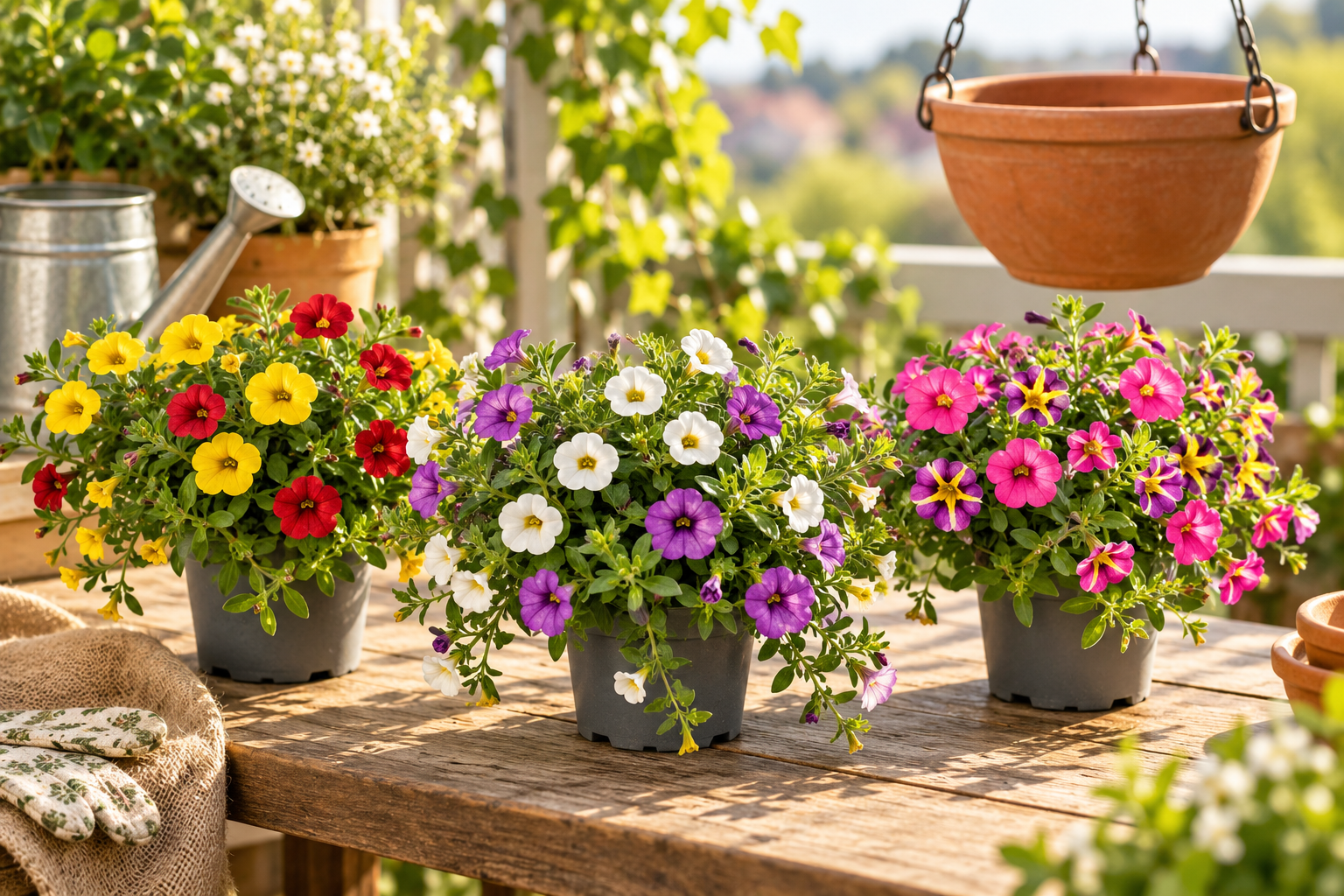
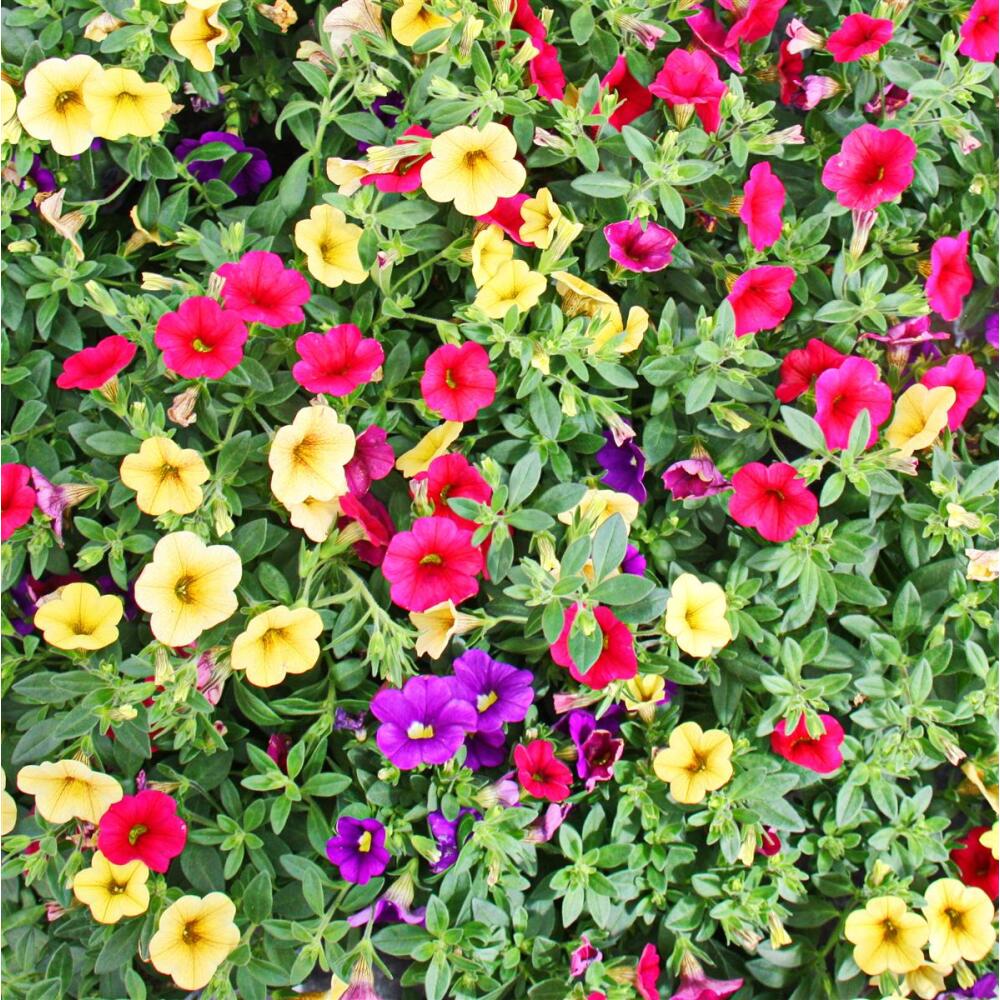
Calibrachoas carry many small funnel-shaped flowers among narrow green leaves. Yellow, white, red, pink and purple can create a lively transition over a container rim. The trade name mini trailing petunia describes the resemblance; botanically the portrait concerns Calibrachoa. The original photograph shows small single flowers, not a large-flowered double petunia. An unnamed colour selection is not equated with one fixed series. Up close, the fine branches and varied positions of the flower funnels are more appealing than a perfectly uniform flower ball.
A young set needs room above the edge
The offer names three plants in 12 cm pots, each approximately 20 to 25 cm tall. This does not promise a later length for all trailing shoots. Place the young crowns loosely alongside one another before planting. At the edge of a hanging basket they need branching room, while the centre remains accessible for moisture checks. Check the hanging fittings and load capacity for the greater weight after watering too. The scene shows only one possible colour combination. The particular assortment selection determines which plants actually come together.
Sun should reach the young crown too
A sunny outdoor position supports flower development. In deeper shade the plant may still grow foliage but flower less. After shipping or protected cultivation, acclimatise gradually; plant after the last risk of frost. A high basket beneath a deep roof can be darker than the balcony looks as a whole. Look at the crown itself. Also choose a place where you can safely take it down for watering. An attractive position combines light with practical daily observation.
Check moisture beneath the many small flowers
The free-draining soil should hold moisture without waterlogging the root ball. Check pot weight and soil before watering. A small root volume may show rapid consumption in warm wind, while a cover pot may have collected water after rain. Water slowly onto the soil and let excess drain afterwards. A pause in flowering or one drooping shoot is not an instruction to refill without control. Even a plant described as drought-tolerant should not receive weeks of dry treatment in a small container. Actual moisture determines the next step.
Not every faded bell needs individual cleaning
Calibrachoa is described as a largely self-cleaning flowering plant. Removing every old flower daily is therefore not compulsory. Damaged or dead parts can be removed selectively. With overly long, loose shoots, check light and condition before carefully shaping. Feed during active growth according to the fertiliser label and account for compost pre-feeding. Inspect distorted young foliage or fine webbing more closely rather than just adding more fertiliser. The accessible young crown makes checks easier than an unreachable high basket.
Summer development remains a living picture
Calibrachoas are mostly used seasonally, although the group is frost-sensitive and perennial. Safe outdoor overwintering is not promised for the colour selection. Continuing cultivation would require suitable frost-free conditions. Weather, development and position affect how many flowers are open together. Compare the young crown and later trailing shoots in your plant book. Note the hanging position and light-facing side too. These small observations are more useful for the next summer planting than expecting an unchanged number of flowers every day.
One plant, several views


Good to know
Are calibrachoas large petunias?
No. Calibrachoa carries the smaller funnels and narrow leaves of the associated original plants.
Must I pinch off every old flower?
That is unnecessary for this largely self-cleaning group.
Is 25 cm the eventual shoot length?
No. The shop names the height of the young plants.
Can a basket hang completely beneath a roof?
Only if the crown receives enough light and remains accessible for care.
Which colour mix is guaranteed?
The scene is an example; the offered selection remains decisive.
Sources and editorial note
- Exotenherz: offer and original photographs (03.10.2026)
- NC State Extension – Calibrachoa hybrids, flowering and container cultivation (03.10.2026)
Shop offer, article number, GTIN, availability and original images checked directly on 02.10.2026; specialist acceptance on 03.10.2026. Specialist sources read directly. Specific SKU, dimensions, original images and orderability checked directly in the shop on 03.10.2026. Specialist sources read in full; shop name and botanical synonyms remain distinguishable. Currently not orderable: informational portrait without a purchase link, social drafts not cleared for sending. No Wawi, server or tool changes. Currently not orderable: informational portrait without a purchase link; social drafts not cleared for sending.