This plant at Exotenherz
Check the shop offer for current availability, price and what is included.
Check the shop for the current price, availability and offer contents.
Your care table
| Topic | What to do | Why it helps |
|---|---|---|
| Light | Bright indirect daylight reaching the pot centre. | Beneath a dark shelf stems more easily become long and sparse. |
| Water | Keep the rootball slightly moist and check beneath foliage. | A dense cushion hides both wet and dried-out soil. |
| Drainage | Allow thorough drainage and empty outer pot or saucer. | Air must still reach the fine roots. |
| Warmth | Stable room warmth, without frost or cold draughts. | The supplied young plant belongs to a warmth-loving species. |
| Substrate | Use a loose potting mix with well-drained components. | Good structure retains moisture without a permanently wet rootball. |
| Feeding | Feed moderately during visible growth following the label. | Count pre-fertilised soil; overfeeding cannot fix weak light. |
| Pruning | Trim individual long tips and use healthy nodes for cuttings. | Nodes can root and help renew older pot centres. |
| Household | Keep away from small children and nibbling cats or dogs. | Swallowing can cause discomfort and sap contact skin irritation. |
Check the compost and pot weight. The care table explains how far the compost may dry.
Water only when needed. The water should reach the root ball without spilling over the rim.
Remove surplus water from the saucer or cachepot. Then return the plant to a suitable position.
A green cushion with many little paths
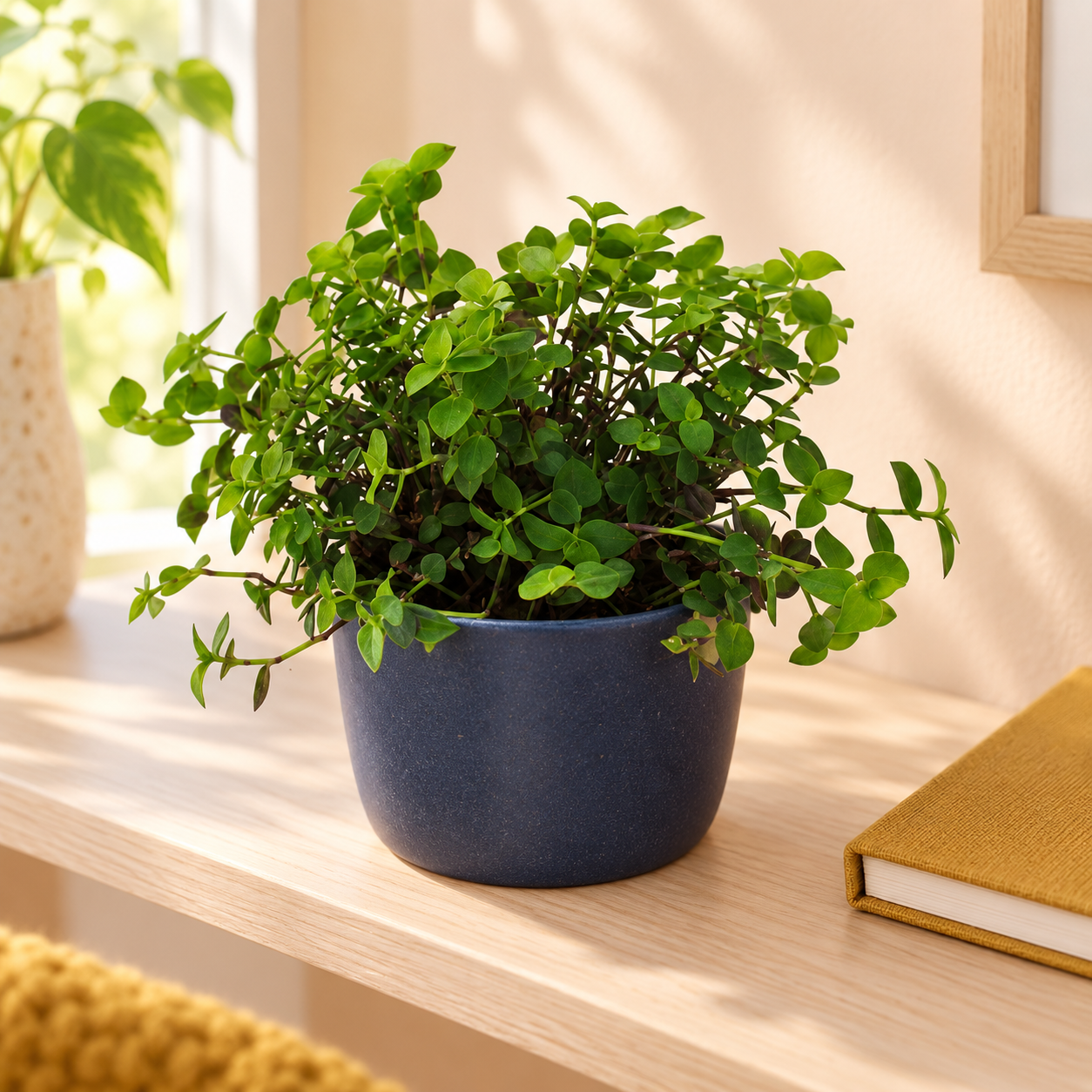
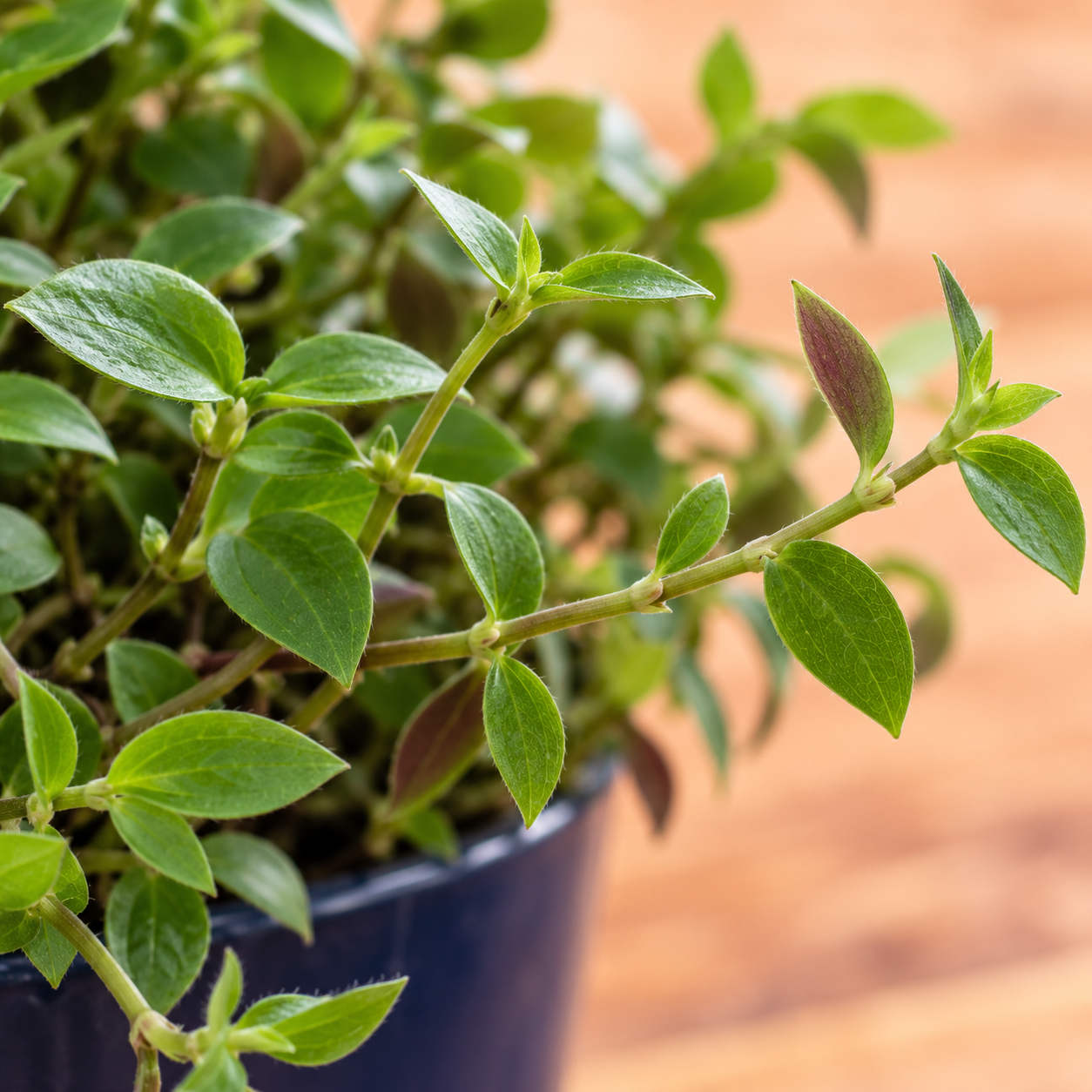
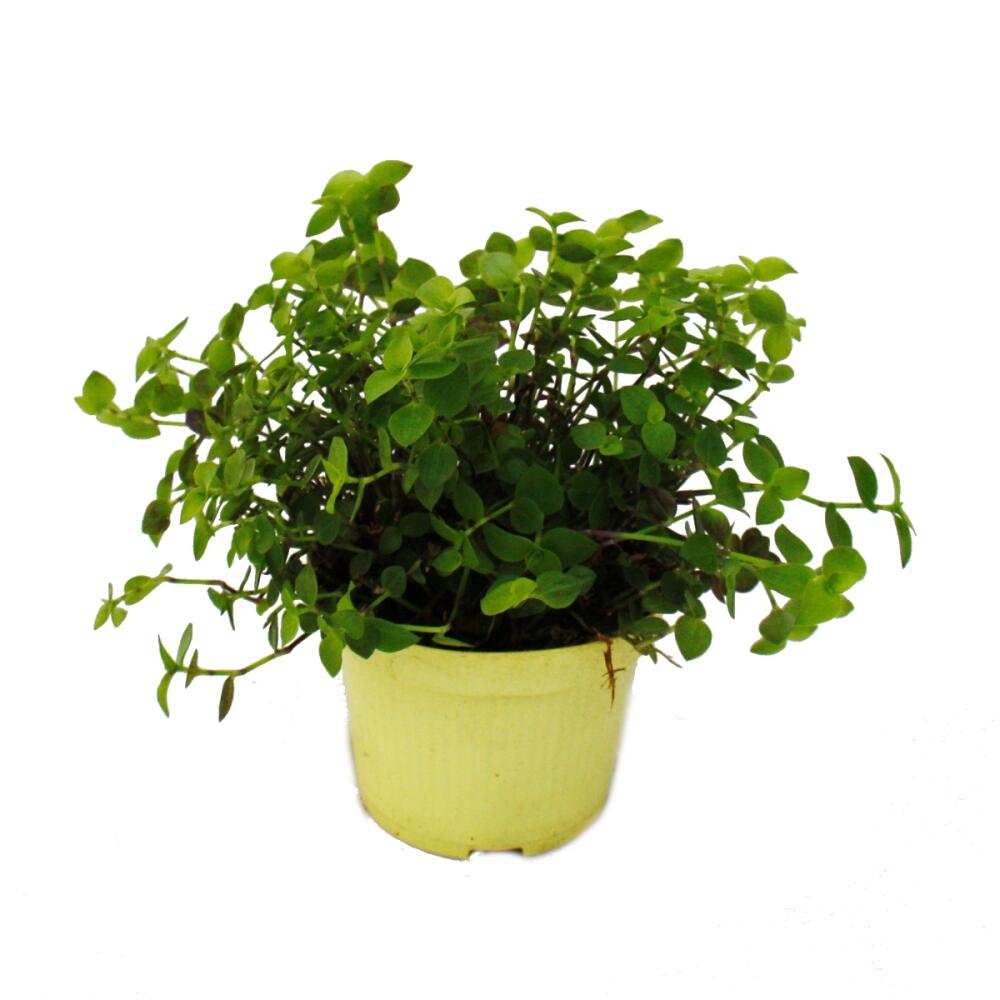
Callisia repens is best discovered up close. Small pointed-oval leaves sit on fine branching stems threading through the foliage. In the original they form a loose green dome, with some tips extending sideways over the pot edge. Leaves are slightly fleshy but do not form a rigid rosette. Fresh pale growth and older darker areas keep the cushion lively. A bright shelf reveals this fine structure beautifully. Leave room for the short side stems so they are neither caught between books nor touched whenever someone passes.
Creeping growth from tropical America
Callisia repens belongs to the spiderwort family. The species comes from south-eastern Texas and tropical America; in suitable surroundings its creeping stems spread and can root at nodes. The offer shows green leaves whose undersides may look darker to purple. The particular delivery plant is in a 12 cm pot and described as approximately 15 cm tall overall, including the pot. The same size is offered in the six-plant set, per plant. Later stems may become considerably longer and hang over the rim. Small white flowers in leaf axils are possible with suitable development, but indoors are not a promised feature of the supplied item.
Light reaches the centre too
Support the pot from below when unpacking and gently release packaging from the fine stems. Bright indirect daylight is a good start. A shelf may be homely but must bring enough light to the top of the cushion. If Callisia sits directly under a deep dark shelf, brightness elsewhere in the room helps little. Long gaps between new leaves can indicate insufficient light. Choose a more suitable spot without abruptly moving the plant into hot direct sun. Stable room warmth around 20 °C matches the shop recommendation; cold draughts and frost do not suit this potted plant.
Look beneath the dense foliage
The cushion conceals soil, making moisture hard to judge by sight alone. Gently check an open spot beneath the foliage and lift the pot. A still heavy moist rootball needs no extra water initially. As moisture decreases, supply the soil evenly, then let surplus water drain. Keep the rootball slightly moist without making it constantly wet or leaving it completely dry for long. A narrow opening at the rim helps targeted watering. In winter lower light often reduces consumption. In warm dry heated air, a small pot can nevertheless lose water quickly.
Combine air and moisture around roots
Loose houseplant soil with well-drained components and a pot with drainage holes make cultivation easier. Perlite or a suitable mineral addition can open the structure; a completely dry gravel bed does not suit ongoing moisture provision. When roots use the available space well, repot slightly larger. Retain the previous planting depth and press soil down gently. During visible growth, feed moderately with liquid houseplant fertiliser following its label. New pre-fertilised substrate already counts. Extra feeding alone cannot fill a sparse centre caused by poor light.
Renew with healthy stem nodes
Trimming a few overly long tips can guide the shape without cutting the entire cushion at once. Use clean tools and start with a few healthy stems. Removed sections with leaf nodes make suitable cuttings: remove lower leaves, set suitable nodes in loose slightly moist substrate and place brightly protected from intense sun. Several cuttings can later form a dense pot centre together. Keep propagation moist and airy rather than hiding it in a wet sealed container. The ability to form roots at nodes explains both easy renewal and the spread of older plants.
Distinguish changes early
Limp dry stems call for a rootball check; soft dark bases in wet soil can instead indicate root damage. Check pale dry patches after a sunny move for sun stress. Inspect leaf undersides and stem forks for fine webbing, aphids or cottony deposits before damage spreads. Clear cuttings and clean tools. Place outside the reach of small children and nibbling cats or dogs: swallowing can cause discomfort, sap can irritate skin. Gloves help sensitive skin. Good light and an accessible pot make these small everyday checks easier.
One plant, several views
Good to know
How large is the current offer?
The plant is in a 12 cm pot and described as approx. 15 cm total height including the pot. In the six-plant set those dimensions apply to each plant.
Will the stems stay this short?
No. Creeping growth can develop beyond the pot edge. Delivery height is not a fixed mature size.
Should soil under the cushion look dry?
Foliage hides the rootball. Check an open spot and pot weight; soil stays slightly moist without being constantly wet.
Can it stand on a high shelf?
If the top also receives ample indirect daylight. A dark spot directly beneath a shelf is unsuitable.
How do I renew an older sparse centre?
First check light and rootball moisture. Healthy cuttings with suitable leaf nodes can be rooted and later potted together.
What do I do with soft dark stem bases?
Check moisture and drainage rather than adding water. Damaged roots or constant wetness may play a role.
Sources and editorial note
- Exotenherz: directly checked offer and delivery dimensions (03.10.2026)
- RHS: complete species profile and cultivation (03.10.2026)
- NParks: confirmed species, leaf shape and creeping growth (03.10.2026)
- Kew POWO: accepted species name and origin (03.10.2026)
- NC State Extension: cultivation, problems and specific household guidance (03.10.2026)
Product identity, our offer descriptions and directly read specialist sources compared on 03.10.2026. Total dimensions include the pot of the particular delivery plant. This portrait describes green Callisia cultivation without nutritional or health promises.