
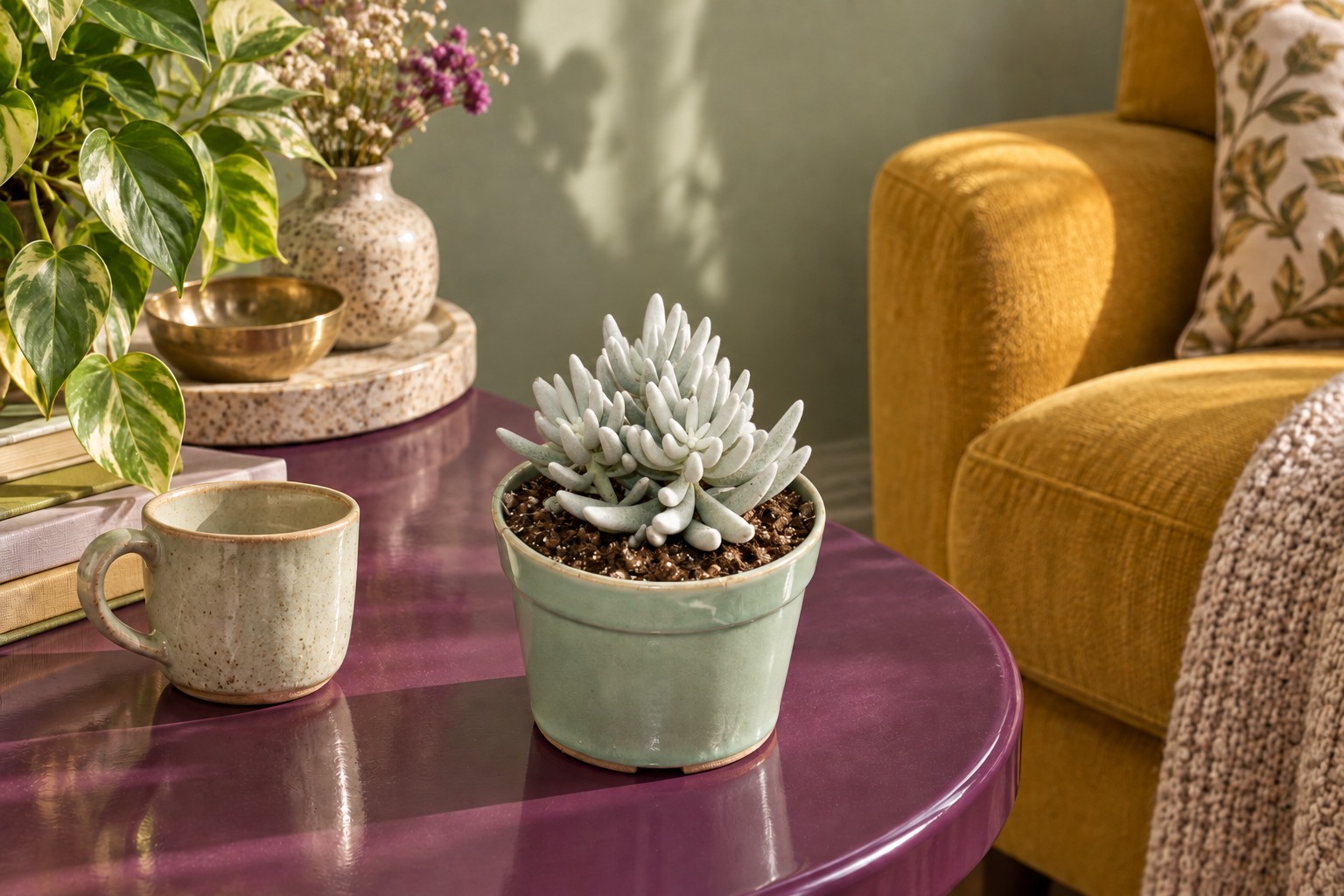
This plant at Exotenherz
Check the shop offer for current availability, price and what is included.
Product details, availability and delivery information in the shop.
Your care table
| Topic | What to do | Why it helps |
|---|---|---|
| Light | Very bright to sunny after acclimatisation. | Dark cultivation loosens the structure. |
| Water | Let the root ball dry, then water selectively. | Water-storing leaves allow intervals. |
| Surface | Protect the felt and do not mist daily. | Persistently wet leaves are unsuitable. |
| Drainage | Remove residual water. | Roots need air. |
| Compost | Mineral, free-draining succulent mix. | Compaction delays drying. |
| Fertiliser | Sparingly during growth, following the label. | High doses are unnecessary. |
| Pruning | Shorten individual long healthy shoots. | This allows gentle renewal of the structure. |
| Winter | Bright and frost-free; water less when cool. | Frost values at the natural habitat do not apply generally to pots. |
Check the compost and pot weight. The care table explains how far the compost may dry.
Water only when needed. The water should reach the root ball without spilling over the rim.
Remove surplus water from the saucer or cachepot. Then return the plant to a suitable position.
A small pale shrub with firm leaf structure
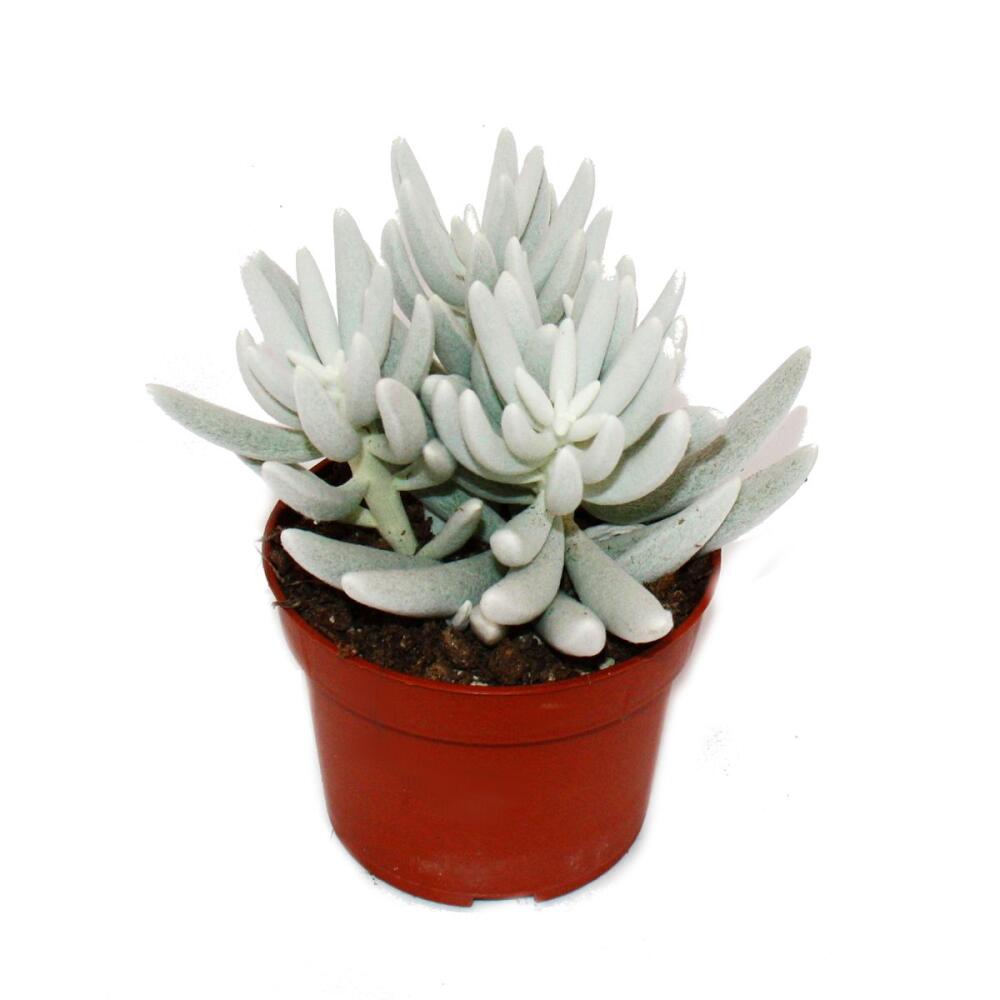
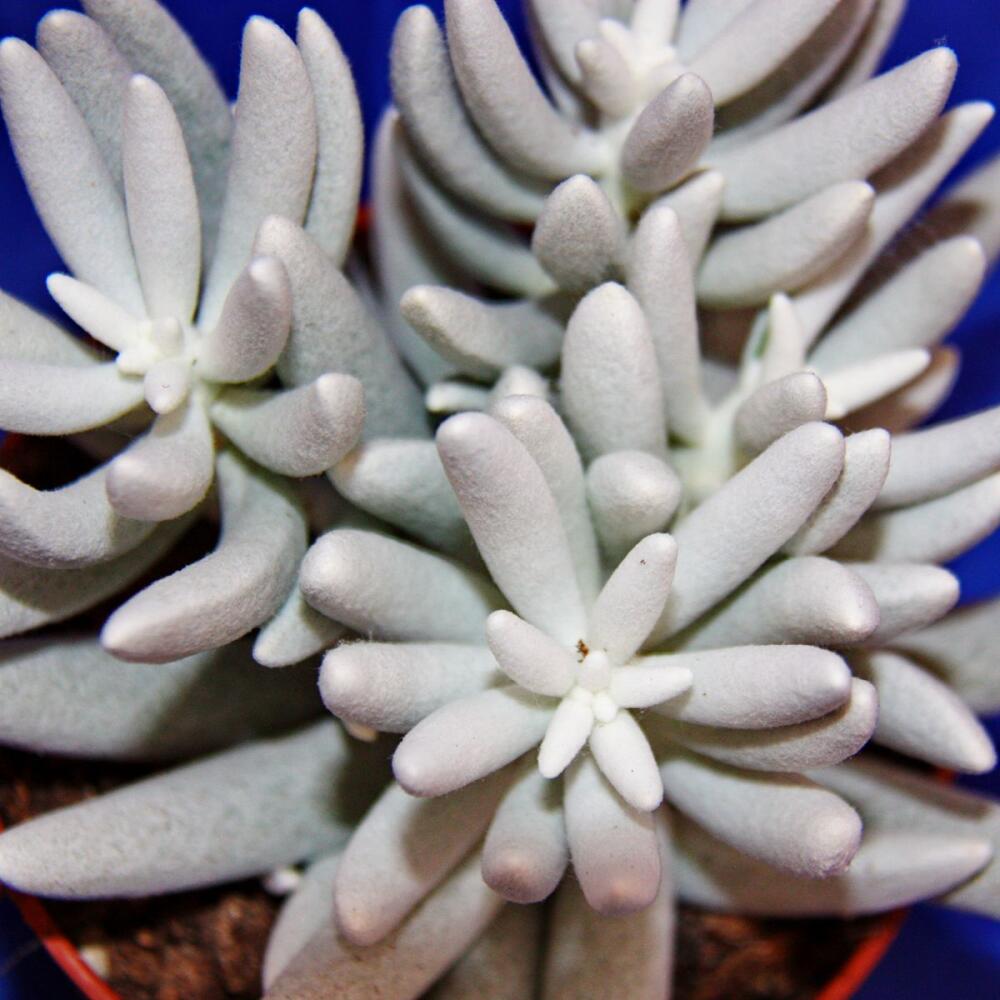
The elongated fleshy leaves stand densely on short branching shoots. Their fine pale hairs make the plant appear almost white. The offer lists a 10.5 cm pot and approximately 15 cm total height. Young growth initially remains low and compact. Depending on age and structure, later shoots may stay upright or lie down slightly. The felt belongs to the plant and is not applied decoration.
Recognise the older name
The shop title names Senecio haworthii. The name used today is Caputia tomentosa; both terms remain findable through search. The differing spelling haworthioides in the description is not adopted unchecked as another synonym. The species belongs to the Asteraceae family and comes from dry areas of South Africa. Its water-storing leaves and pale hairs suit sunny positions. This does not, however, make it independent of a good supply to its roots.
Position in sunshine and moving air
A very bright to sunny position is the foundation for compact growth. Increase sunlight slowly after shipping or darker winter conditions. The pale felt is no guarantee against every burn. Shoots become longer and the structure looser on a dark shelf. A warm summer position outdoors sheltered from rain may suit it well. Good air movement prevents leaf surfaces remaining wet for long after accidental wetting. Place it under protection in good time before cold, wet weather.
Water sparingly but sensibly
Let the root ball dry between waterings. Then direct water onto the compost and remove excess. Constantly slightly wet succulent compost is not a good foundation. The plant stores water but still needs supply during active growth. Calendar dates and cupfuls are less informative than root-ball moisture and pot weight. Do not mist the felted leaves daily. If they become wet, they should be able to dry well in an airy environment.
A suitable pot and gentle pruning
Use a loose, mineral, free-draining succulent mix and a container with a drainage hole. A small terracotta pot may help drying but is not obligatory. Repot when the root ball is rooted through or exhausted without unnecessary large new volumes of compost. Healthy overlong shoots can be selectively shortened. Shoot tips suit careful rooting after the cut dries. Handle the sensitive felted leaves as little as possible. Feed sparingly according to the label during active growth.
Distinguish winter care and warning signs
Overwinter in bright, frost-free conditions, watering particularly sparingly when cool. Statements about brief cold tolerance in the natural habitat are not a reliable frost guarantee for a small wet nursery pot. Soft, dark shoot bases require inspection for rot. Even white felt is normal; inspect individual sticky or cotton-like nests more closely for pests. Yellow flower heads are possible on developed plants but cannot be reliably expected in cultivation. The silver leaf appearance is the real reason to grow this species.
One plant, several views
Good to know
Is the white layer mould?
The even fine leaf felt belongs to the species. Nevertheless, check irregular sticky or cotton-like patches.
Why do the shop and portrait use different names?
Senecio haworthii is the older name; Caputia tomentosa is the current classification.
Should I brush the felt clean?
No. Do not scrub, pull it off or use leaf shine.
Is it winter-hardy?
Bright, frost-free overwintering is recommended for this small potted offer.
Sources and editorial note
- Product and delivery contents: Exotenherz
- SANBI PlantZAfrica: plant profile and cultivation
- Royal Botanic Gardens, Kew: botanical classification
Sources checked: 16 September 2026. Product information and the contents of delivery follow the linked shop offer. Care advice was checked against the cited specialist sources and should still be adapted to the plant’s condition, position and season.