

This plant at Exotenherz
Check the shop offer for current availability, price and what is included.
Check the selected shop offer for price, availability and delivery contents.
Your care table
| Topic | What to do | Why it helps |
|---|---|---|
| Position | Choose bright partial shade with accessible soil moisture. | The white leaf arches stay fresh more easily there than against a hot wall. |
| Soil | Prepare loose, humus-rich soil; avoid standing water. | Sedge roots need both moisture and air. |
| Planting | Plant in frost-free soil during mild weather and water thoroughly. | This connects the small 9 cm rootball with the surrounding garden soil. |
| Spacing | Allow approximately 30–50 cm between plant centres. | The slowly widening foliage cushions need room to the sides. |
| Water | Check the original rootball separately while it establishes; later water according to dryness. | Dark soil beside the rootball does not prove that the rootball itself has enough water. |
| Feeding | Be restrained in good border soil; supplement only if needed in spring. | Extra nutrients do not cure dry leaf tips. |
| Foliage care | Remove dead leaves and old spikes selectively; retain living foliage. | A low shearing removes the white-edged display of this wintergreen variety. |
| Division | Divide older cushions that have become too wide in spring and replant vigorous pieces. | The new divisions then need water again to establish. |
| Winter | Protect container roots and check for dryness on frost-free days. | Even retained winter foliage stands above a limited water reservoir. |
For young plants, feel the soil directly at the root ball. The surface and deeper soil may have different moisture levels.
Water thoroughly after planting; later, water according to the soil, weather and establishment rather than a fixed calendar.
Avoid standing water. For plants in containers, also check that water runs out of the drainage hole.
Pale edges rather than large flowers
With Ice Dance, the effect is in each leaf: a pale, whitish edge runs along both sides of the green blade. Many such lines make even a low clump easy to recognise from a distance. The variety is a sedge, belonging to the sedge family rather than the true grasses. Its small brown spikes in late spring can remain in the background. Repeated groups in front of dark shrub foliage or beside larger fern fronds make the leaf pattern particularly clear, without the border needing to be in constant flower.
A small pot gradually becomes a cushion
The shop plants begin in a 9 cm pot at approximately 10–25 cm total height including the pot. These are individual young plants; the desired quantity comes from the selected set. For border planning, the shop gives around 20–30 cm garden height. Position and age affect the actual size. Approximately 30–50 cm between plant centres is a useful starting point. Closer planting produces a continuous edging sooner; wider spacing leaves each leaf shape individually visible for longer. The slowly widening cushions will also need lateral space later, particularly alongside a narrow path.
A cool garden spot with accessible water
Bright partial shade makes it easier to keep the foliage fresh. Shade is also possible; a dry spot immediately beside large tree roots still needs attention. Sunnier positions are possible with dependable moisture, but water consumption increases substantially against a hot wall. Check not only the light conditions but also the soil a few centimetres deep. Humus and a loose structure help retain moisture. Compacted hollows that stay wet for longer are less suitable: the rootball needs air as well as water.
Let it settle and check the small rootball
After unpacking, water the sedge if its rootball has dried out. Place it in a sheltered spot outside initially, then plant it reasonably soon in the prepared border. Keep the top of the rootball level with the surrounding soil. After watering in, explicitly check the original small rootball during dry spells. Briefly wetting the border surface does not necessarily reach it. Established plants are watered according to the weather and actual soil moisture. In a pot, checks remain more frequent because the limited root space dries out faster.
Keep the white arches when tidying
Wintergreen does not mean that every leaf survives the cold season unchanged. Some outer leaves may turn brown or dry at the tips. Gently pull out loose dead leaves; cut attached dead foliage individually. Retain healthy green, white-edged leaves. A low overall cut would unnecessarily remove the foliage display. If an older cushion becomes too wide or weak in the centre, divide it in spring. Replant vigorous pieces and support them as you would a fresh planting.
Brown tips are a reason to observe
When edges dry out, check root moisture, sun and drying wind first. Extra fertiliser does not correct a dry rootball. Well-prepared garden soil often provides enough nutrients; supplement moderately in spring only if growth is weak. In a container, drainage and substrate structure must work. For winter, the pot stays sheltered outside and receives root protection during hard frost. Check for dryness on frost-free days. Choosing the position, managing water and careful tidying remain the three most important tasks for this foliage plant.
One plant, several views
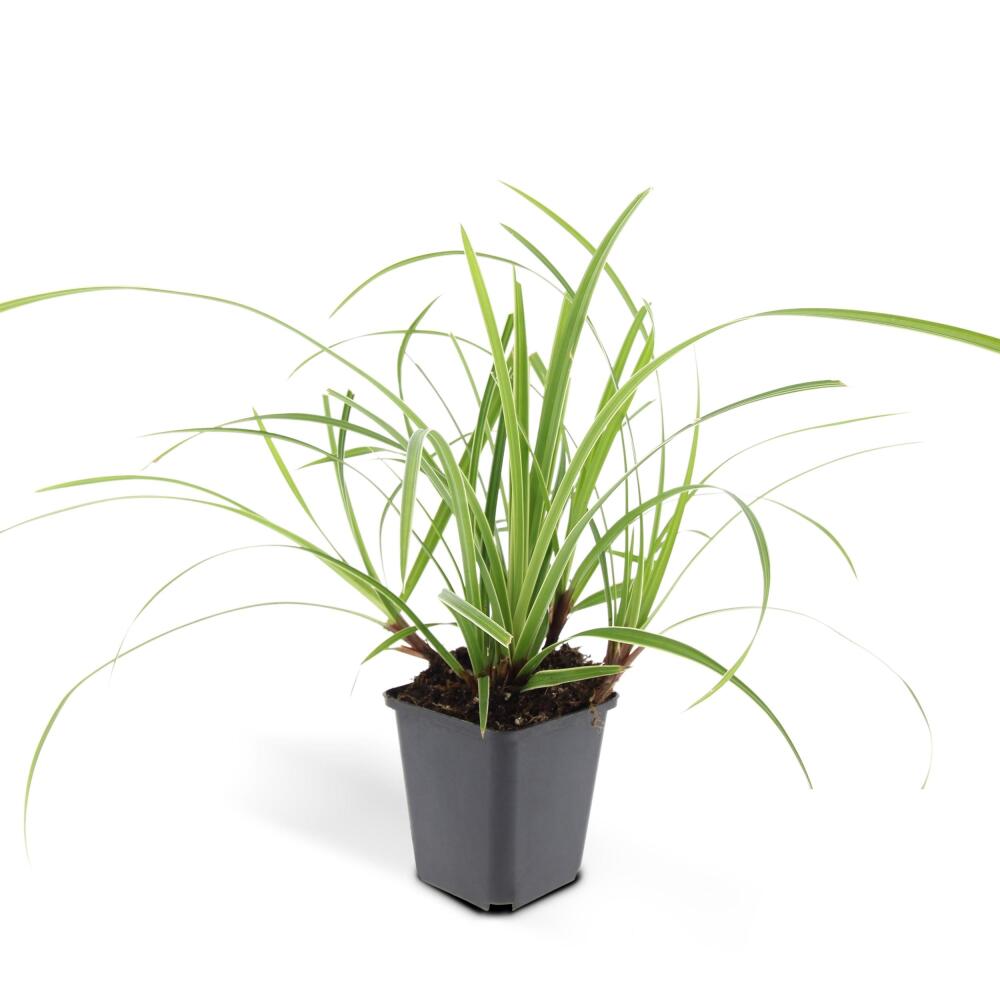
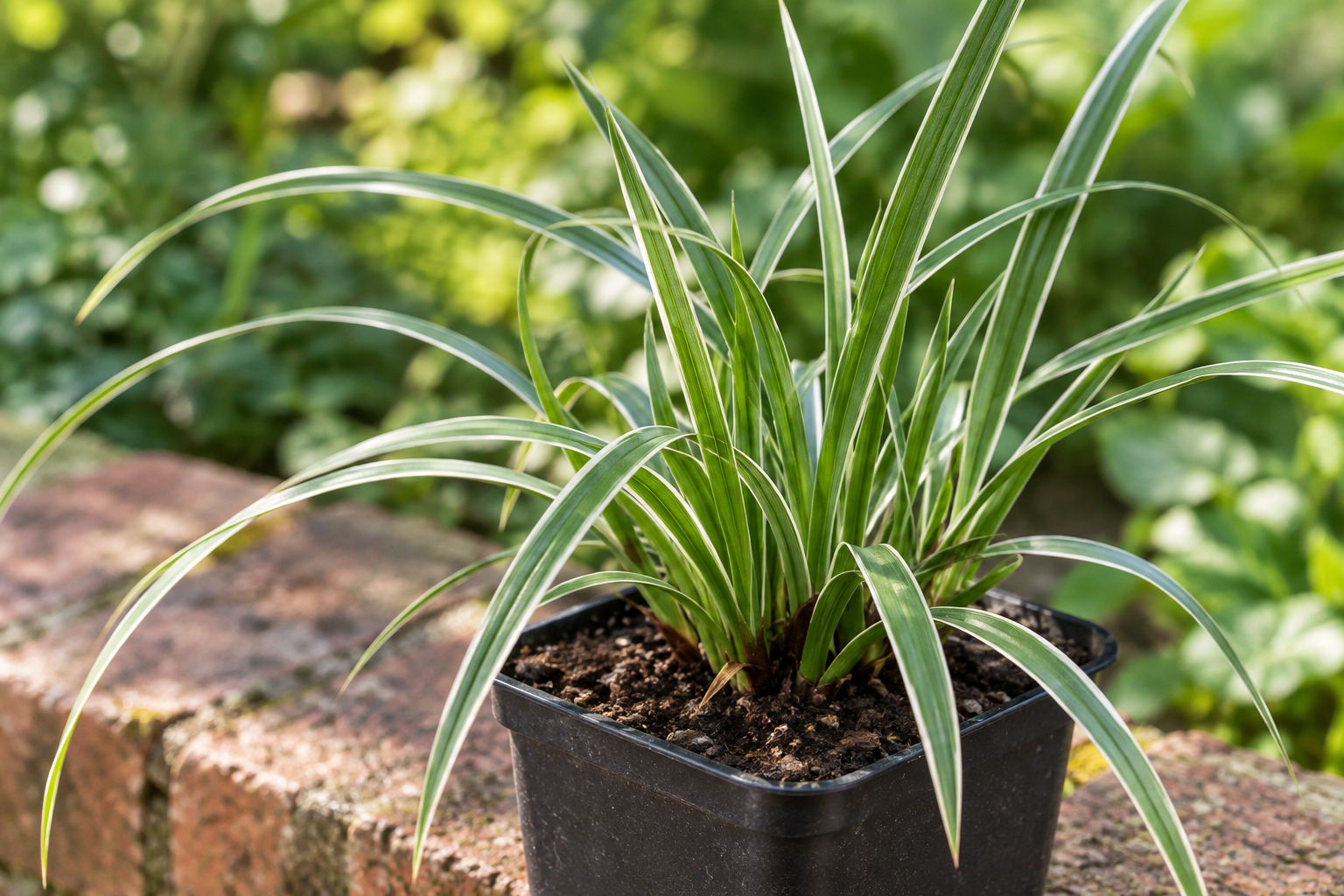
Good to know
How do I recognise Ice Dance?
By its narrow green leaves with whitish edges. A yellow centre is not part of this leaf pattern.
Is the delivery height its final height?
No. The 10–25 cm is the total height of the young potted plant. For older border plants, the offer gives about 20–30 cm; position and age influence development.
Can it grow under trees?
Yes, if the root space retains enough moisture. Shade alone does not prevent dryness caused by competing woody roots.
Must I cut off all the foliage?
No. Dead foliage is removed selectively from this wintergreen sedge; healthy edged leaves stay in place.
When should I divide a cushion that is too wide?
In spring. Replant vigorous divisions at the previous rootball level and water well.
Sources and editorial note
- Exotenherz: parent offer, measurements and original photographs (accessed 03.10.2026)
- Specialist reference: ice-dance-rhs (read directly 03.10.2026)
- Specialist reference: carex-nc (read directly 03.10.2026)
- Specialist reference: grasses-cutting (read directly 03.10.2026)
- Specialist reference: grasses-growing (read directly 03.10.2026)
- Exotenherz: verified 6-plant child offer (accessed 03.10.2026)
- Exotenherz: verified 6-plant child offer (accessed 03.10.2026)
- Exotenherz: verified 12-plant child offer (accessed 03.10.2026)
- Exotenherz: verified 20-plant child offer (accessed 03.10.2026)
- Exotenherz: verified 40-plant child offer (accessed 03.10.2026)
- Exotenherz: verified 60-plant child offer (accessed 03.10.2026)
Parent offer and all associated child offers read directly on 03.10.2026; article numbers, GTIN where present in the child offer, availability and files documented separately. Total delivery height of 10–25 cm including the 9 cm pot is explicitly distinguished from later garden height. Quantity variants do not count as new plant identities. Specialist sources read directly; full reference portraits fargesia-rufa-guide and heidelbeere-jersey-guide compared. Clean original view 2 retained unchanged; stamped montages excluded. The scene shows one young reference plant regardless of set quantity. Draft; joint page and browser acceptance still pending.