
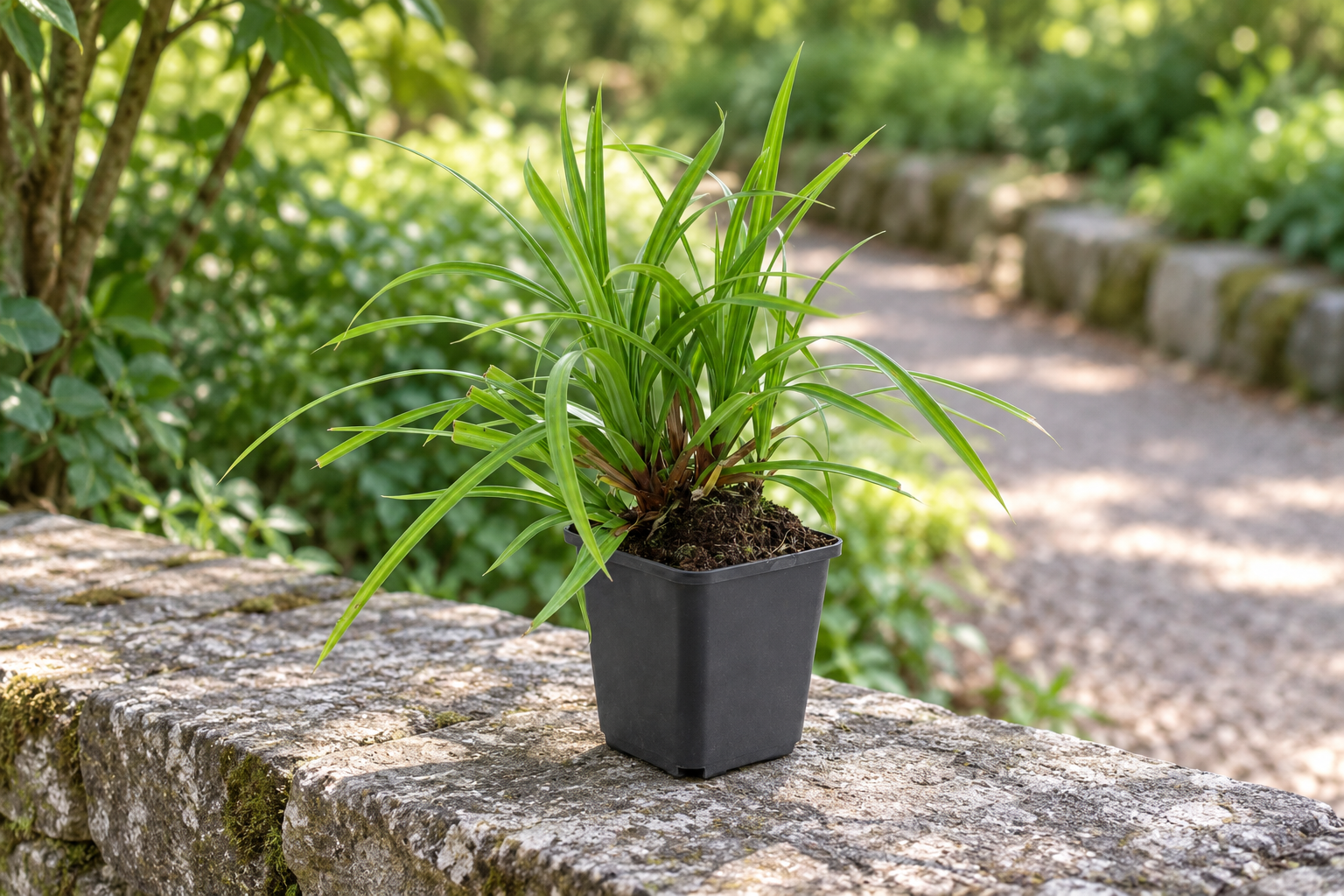
This plant at Exotenherz
Check the shop offer for current availability, price and what is included.
Check the selected shop offer for price, availability and delivery contents.
Your care table
| Topic | What to do | Why it helps |
|---|---|---|
| Light | Plant in sun to partial shade; use sunny positions only with dependable moisture. | The variety profile allows sun, but warmth increases water consumption. |
| Soil | Use moist, loose and sufficiently nutritious soil. | A wet, airless rootball hinders the formation of a dense clump. |
| Planting time | Prefer mild weeks in spring or early autumn. | Frozen soil, waterlogging and heat make it harder for a small delivery plant to establish. |
| Spacing | Allow around 30–50 cm between plant centres. | The leaf spread of older clumps 30–45 cm high needs room at the border edge. |
| Watering | Check the original rootball and water thoroughly when needed. | Woody roots can dry out even a cool garden position substantially. |
| Tidying | Remove loose dead leaves; cut attached dead foliage individually. | The healthy rich green arches remain as garden decoration. |
| Propagation | Divide larger clumps from spring to early summer. | Vigorous divisions preserve the green form of the offered variety. |
| Containers | Allow enough soil volume, clear drainage holes and moderate feeding. | A container has fewer water and nutrient reserves than garden soil. |
| Winter care | Keep sheltered outside and insulate roots in hard frost. | The wintergreen foliage and limited pot rootball still need observation. |
For young plants, feel the soil directly at the root ball. The surface and deeper soil may have different moisture levels.
Water thoroughly after planting; later, water according to the soil, weather and establishment rather than a fixed calendar.
Avoid standing water. For plants in containers, also check that water runs out of the drainage hole.
Green foliage carries the planting
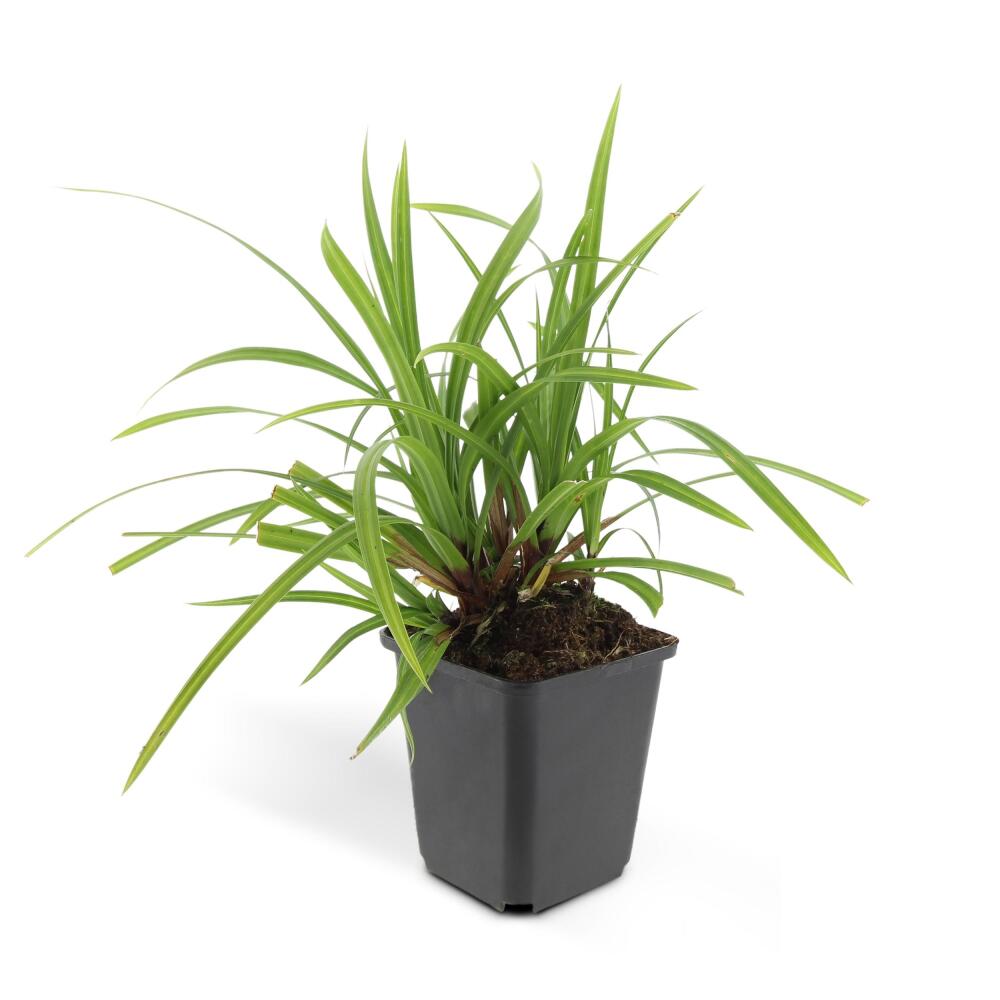
Sometimes a border is missing not another flower colour, but a calm line. Irish Green creates it with narrow, glossy leaves arching outwards from a dense centre. The variety remains unstriped. This distinguishes it from pale-edged Japanese sedges, although they can grow in the same garden area. Among large perennial leaves, the fine green foliage acts as a connecting layer. In summer, small pale greenish-brown spikes appear within the foliage; they do not turn the sedge into a showy flowering perennial.
The delivery size leaves room for development
A 9 cm pot at approximately 10–25 cm total height including the pot does not yet fill an entire border edge. Such young plants are offered in different quantities according to selection. Older Irish Green clumps reach about 30–45 cm tall; the lower shop figure of 20–30 cm is therefore not a fixed final size. Plan for the eventual leaf spread. Approximately 30–50 cm between plant centres is a useful guide. Where the leaves may overhang a path, allow extra distance from the edge so that the planting does not need constant trimming.
Consider light and moisture together
A sunny to partially shaded position is documented for Irish Green. In a garden, the light edge of shrubs is often easier to water than a hot open area. What matters is moist, loose and sufficiently nutritious soil that carries excess water away. Under shrubs, tree roots can quickly remove moisture from the small rootball. A spot that feels cool is therefore not yet a watering plan. Before planting, check whether the soil is loose deeper down and whether rainfall actually reaches it; roof overhangs and dense canopies keep out a great deal of rain.
Build a border edge without rushing
First place the young pots on the area to try the arrangement. This shows whether a regular edging or a looser group better suits the existing plants. Plant at the previous rootball level and water so that soil and rootball make good contact. Spring and early autumn usually offer favourable conditions as long as the soil is frost-free and not waterlogged. During warm, dry weather, the water supply must be particularly dependable. Initially weed by hand between the young clumps; the later denser growth develops only as they establish.
Care for green leaves without constant shearing
This wintergreen sedge should retain its arches. To tidy it, gently pull loose dead leaves and old spikes from the clump. Cut out attached foliage that is entirely brown individually. Cutting every leaf low does not replace this care. An older, unevenly growing clump can be divided from spring to early summer. The vigorous pieces then need water and space again. If aphids appear on fresh growth, start with a careful inspection; leaf loss or wilting alone does not establish the cause.
Containers and winter need a different approach
Irish Green can fill an outdoor container with a fine green structure. Choose a container with clear drainage holes and enough soil rather than leaving the plant permanently in its small delivery pot. Check moisture by weight and rootball condition. Moderate feeding during active growth is more likely to be needed in a container than in a well-supplied border. In winter, a sheltered position protects the root space against strong changes; still check for dryness on frost-free days. The plant belongs to the garden’s seasonal cycle and is not overwintered in a heated living room.
One plant, several views

Good to know
Does Irish Green have white stripes?
No. Its documented varietal characteristic is rich, uniformly green foliage.
How big does it become later?
About 30–45 cm is a guide for older plants. The shop delivery height of 10–25 cm including the pot describes the young plant.
Is it strictly a shade plant?
Sun and partial shade are documented for the variety. In sunny positions, soil moisture must be particularly dependable.
How closely should I plant it?
Around 30–50 cm between plant centres is a horticultural guide. Closer spacing closes the edging sooner; wider spacing leaves individual clumps visible.
Why do leaves turn brown?
Possible causes include dryness, winter stress or individual old leaves. Check the rootball, weather and new growth before cutting the whole plant.
Sources and editorial note
- Exotenherz: parent offer, measurements and original photographs (accessed 03.10.2026)
- Specialist reference: irish-green-rhs (read directly 03.10.2026)
- Specialist reference: carex-nc (read directly 03.10.2026)
- Specialist reference: grasses-cutting (read directly 03.10.2026)
- Specialist reference: grasses-growing (read directly 03.10.2026)
- Exotenherz: verified 6-plant child offer (accessed 03.10.2026)
- Exotenherz: verified 6-plant child offer (accessed 03.10.2026)
- Exotenherz: verified 12-plant child offer (accessed 03.10.2026)
- Exotenherz: verified 20-plant child offer (accessed 03.10.2026)
- Exotenherz: verified 40-plant child offer (accessed 03.10.2026)
- Exotenherz: verified 60-plant child offer (accessed 03.10.2026)
Parent offer and all associated child offers read directly on 03.10.2026; article numbers, GTIN where present in the child offer, availability and files documented separately. Total delivery height of 10–25 cm including the 9 cm pot is explicitly distinguished from later garden height. Quantity variants do not count as new plant identities. Specialist sources read directly; full reference portraits fargesia-rufa-guide and heidelbeere-jersey-guide compared. Clean original view 2 retained unchanged; stamped montages excluded. The scene shows one young reference plant regardless of set quantity. Draft; joint page and browser acceptance still pending. Garden height deliberately based on the RHS variety data of 30–45 cm; the shop gives a lower 20–30 cm. No unsupported promise of an area without runners.