
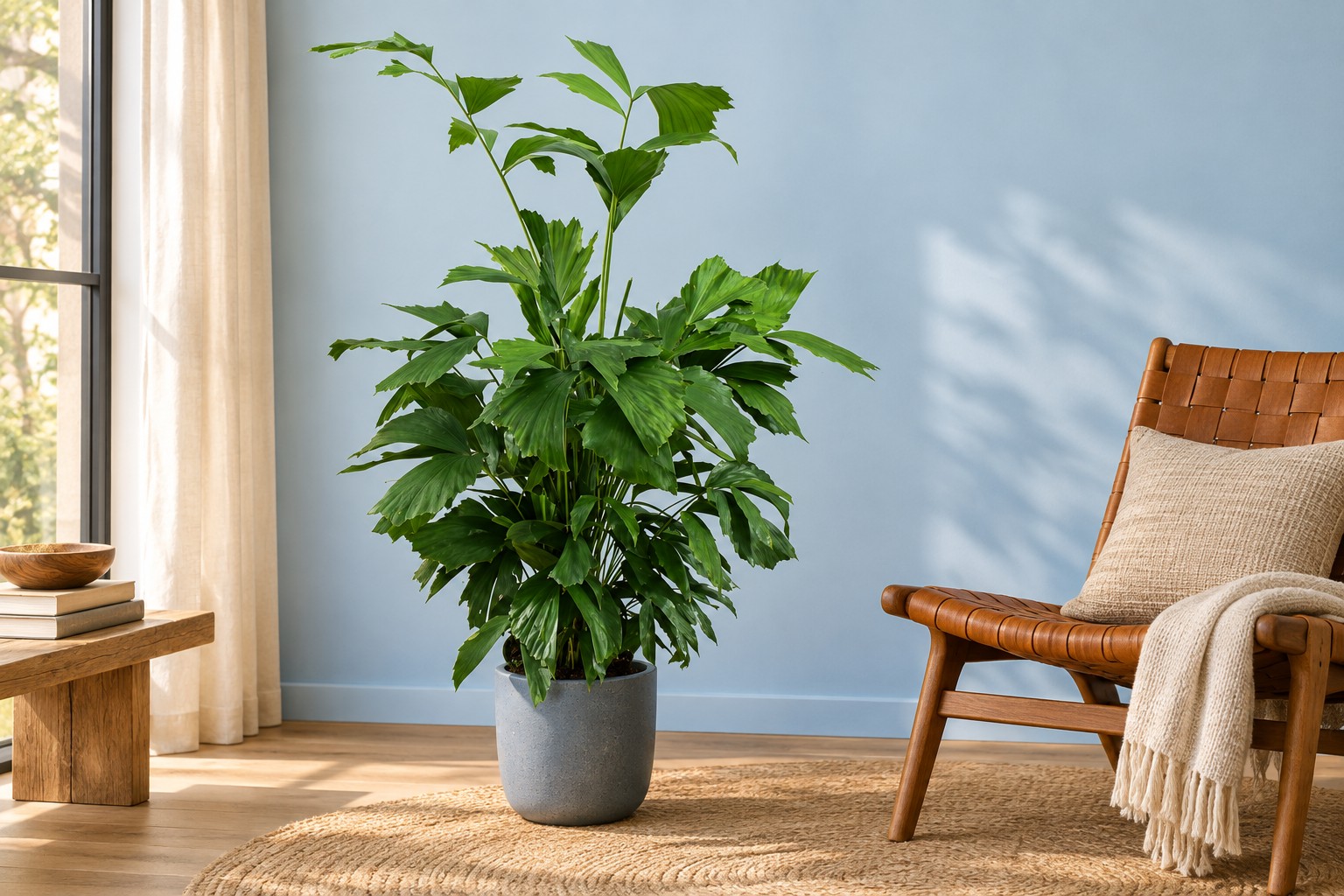
This plant at Exotenherz
Check the shop offer for current availability, price and what is included.
Link to the offer in German. Check the shop for the current price, availability and delivery contents.
Your care table
| Topic | What to do | Why it helps |
|---|---|---|
| Position | Bright, warm and without suddenly strong midday sun. | Broad leaflets need space and gentle acclimatisation. |
| Water | Let the surface dry slightly and keep the root ball lightly moist inside. | Do not allow complete drying; remove remaining water. |
| Compost | Loose humus-rich mix with stable structure and drainage. | Good drainage prevents a persistently wet centre. |
| Nutrients | Feed weakly during growth according to product instructions. | Reduce accordingly when winter activity is low. |
| Summer position | Possible warm and wind-sheltered outdoors after acclimatisation. | Bring it indoors before cold nights. |
| Leaf care | Remove only entirely dead fronds at their base. | Preserve green fans and young growth. |
| Repotting | Provide a little more room gently when well rooted. | Protect the root ball and choose a stable pot. |
| Checking | Inspect undersides for webbing and scale insects. | Also compare brown tips with water balance and position. |
Check the compost and pot weight. The care table explains how far the compost may dry.
Water only when needed. The water should reach the root ball without spilling over the rim.
Remove surplus water from the saucer or cachepot. Then return the plant to a suitable position.
A truly recognisable leaf shape
Fishtail palm is not easily confused with an ordinary feather palm. Its twice-pinnate leaves carry broadly flaring, irregularly toothed leaflets. They resemble cut-off fish fins and give Caryota mitis its common name. The species comes from Southeast Asia and belongs to the palm family. It grows with several stems and can form new shoots at its base. Over time this creates a denser clump rather than a single unbranched indoor trunk.
A young palm that needs room
The offer describes a 21 cm pot and about 110–120 cm overall height. In this size class the palm stands well on the floor, for example beside a bright seating area. Leave enough space at the sides for spreading leaves. The scene does not show a ten-metre tropical palm but follows the offered form. Later the plant can become considerably wider. Measure free crown space too, not just the pot’s footprint.
A bright position with protected leaves
Indoors, choose a bright position without suddenly strong midday sun. The shop description allows a summer stay outside after gradual acclimatisation; also consider wind protection and warm nights. A palm leaf constantly rubbing against a wall or door edge may be damaged. Choose a calm position with gentle airflow. Before bringing it in during autumn, inspect undersides and leaf bases closely so possible pests do not come indoors unnoticed.
Even supply without a pool of standing water
The offer emphasises that the root ball should not dry out during growth. At the same time the palm needs a well-drained root space. In practice, let the surface dry slightly while the centre remains slightly moist. Then water slowly across the compost and remove remaining water from the decorative pot. This avoids both drought stress and persistent wetness. Account for lower winter consumption: an unchanged summer watering schedule can now leave the root ball wet for a long time.
Preserve roots and do not trim fronds
Use a loose, humus-rich potting mix with a stable structure. When well rooted, gently move it into a slightly larger stable container without unnecessarily tearing apart the existing root ball. Feed weakly during visible growth according to product instructions. Cutting a palm leaf’s tip does not make it smaller and more attractive. Remove only entirely dead leaves carefully at their base, protecting young growth in the middle of each stem.
Undersides often reveal more
Spider mites and scale insects can become a problem indoors. Regularly look beneath leaflets and into leaf bases, particularly with dry heating air. Brown tips alone do not prove infestation; water balance, salt build-up and position are also part of checking. Flowers and fruits are possible on older plants but are not a guaranteed delivery feature. Fruits may be strongly irritating. They must neither be eaten nor crushed without protection and belong out of reach of children or pets.
One plant, several views
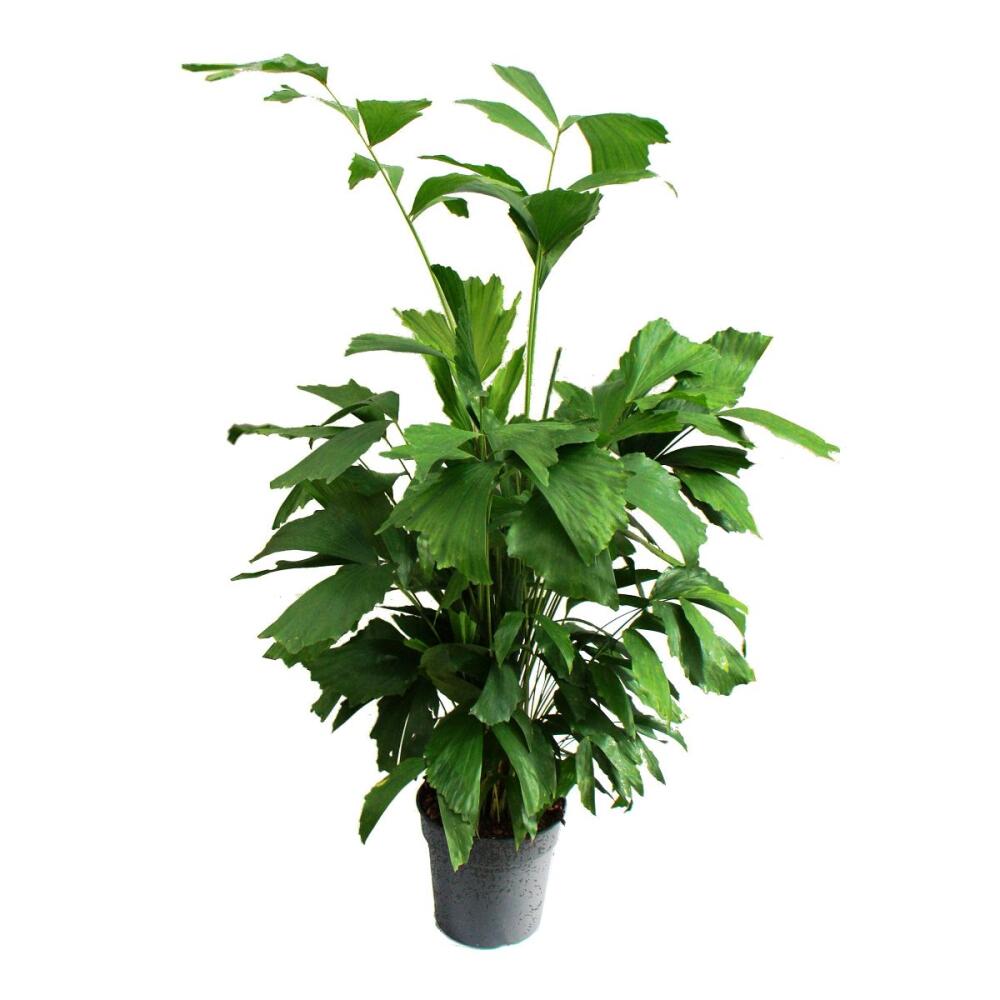
Good to know
Why do leaf edges look frayed?
The irregular fishtail shape is part of the natural leaflet structure and not automatically damage.
Can I simply shorten fronds that are too broad?
Green fronds should not be trimmed to correct their shape. It is better to plan enough lateral space from the start.
How large is the offered palm?
About 110–120 cm overall in a 21 cm pot. This is a young plant that will continue growing.
Are any fruits edible?
No. They can be strongly irritating and must not be eaten or crushed without protection.
Sources and editorial note
Sources checked: 15 September 2026. Product information and delivery contents follow the linked shop offer. Care has been checked against the stated specialist sources and remains subject to plant condition, position and season.