

This plant at Exotenherz
Check the shop offer for current availability, price and what is included.
The linked shop is in German. Product details, availability and delivery information are provided in that shop.
Your care table
| Topic | What to do | Why it helps |
|---|---|---|
| Light | Bright and filtered; test new sunny positions gradually. | Sufficient light supports the development of larger leaves. |
| Water | Water thoroughly after the surface compost dries. | The root ball needs moisture followed by aeration. |
| Drainage | Use only pots with clear drainage; remove leftover water. | Waterlogging can damage roots. |
| Climate | Keep warm without cold draughts. | The tropical climber is sensitive to cold. |
| Compost | Choose loose compost with structurally stable components. | Large air spaces support a healthy root zone. |
| Nutrients | Feed during growth according to the label; reassess winter needs. | Light and growth determine appropriate feeding. |
| Climbing shoots | If climbing growth is wanted, guide loosely on a stable support. | The juvenile form may change over time. |
| Safety | Do not eat; keep away from nibbling pets. | Plant parts may irritate mucous membranes. |
Check the compost and pot weight. The care table explains how far the compost may dry.
Water only when needed. The water should reach the root ball without spilling over the rim.
Remove surplus water from the saucer or cachepot. Then return the plant to a suitable position.
Blue-green is not a colour promise
Epipremnum pinnatum Cebu Blue bears elongated, undivided leaves when young. Colour varies with lighting, leaf age and surface. The young foliage in the original shop photograph looks predominantly green. The indoor scene follows this appearance without turning it into an artificially bright blue plant. The variety belongs to the aroid family. Its climbing way of life distinguishes it from a plant that remains a rigid rosette permanently.
Small shoots and a later climbing story
The listing has a 12 cm pot and shoots about 10 to 15 cm long. A low shelf or bright surface shows this small starting size well. Shoots can later become considerably longer. With a support and sufficient light, larger, increasingly split leaves are possible. This is a developmental possibility, not a promise for a particular date. A young specimen without splits is therefore neither incorrectly supplied nor automatically poorly cared for.
Consider light throughout the day
Choose a bright position with predominantly indirect daylight. Initially screen hot summer sun directly behind glass. Turn the plant slightly now and then if growth is one-sided, without continually moving it between very different positions. A protected place with steady warmth is preferable to cold draughts. If stems hang from a shelf, check light at the lower leaves too. A bright pot position is of little help if the whole new shoot disappears into a dark gap.
The surface compost may dry
Check moisture before each watering. When the upper compost layer has dried but the root ball is not yet completely parched, water evenly. Water must be able to emerge below. Empty the cachepot afterwards. With yellow leaves, assess moisture, roots and light together; more water is not automatically the right response. Small pots often dry quickly in summer, while the same pot may stay damp for many days in winter. A calendar does not replace this check.
Plan compost, support and feeding together
A loose houseplant mix with stable, coarse components gives roots air. Fit a climbing support during the next necessary repotting so you disturb the root ball less later. Attach the main shoot loosely and check ties as it thickens. Feed moderately according to the label during noticeable growth. Fresh, pre-fertilised compost counts towards the supply. With limited winter light, intervals usually increase; additional feeding is not used to force a weakened plant into faster growth.
A node makes the difference
Propagation requires a healthy stem section with a node. Cut cleanly and keep the rooting environment bright and moderately moist. Existing aerial roots can help, but should not be forcibly pressed into compost. Observe young leaves for unusual distortions and undersides for pests. If suspicious insects are found, initially separate the plant. Like other Epipremnum species, Cebu Blue belongs out of reach of children and pets; plant parts are not suitable for eating.
One plant, several views
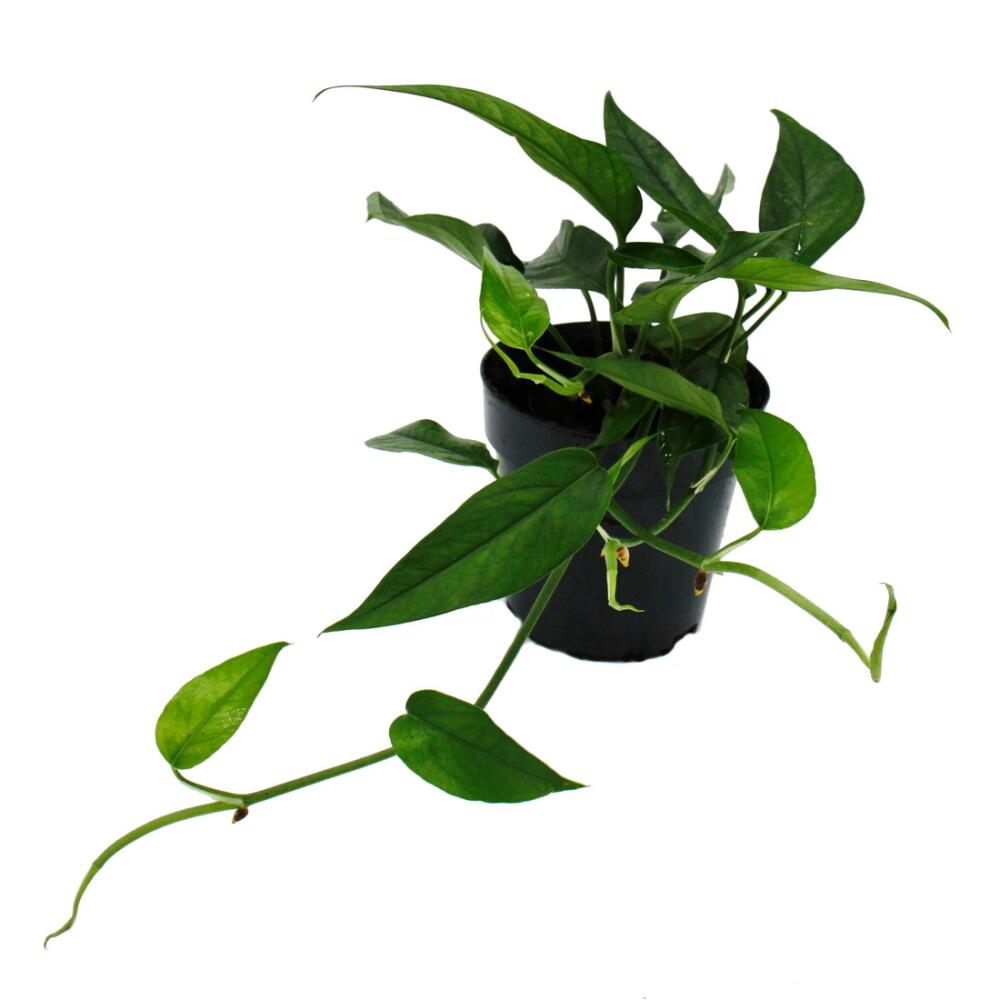
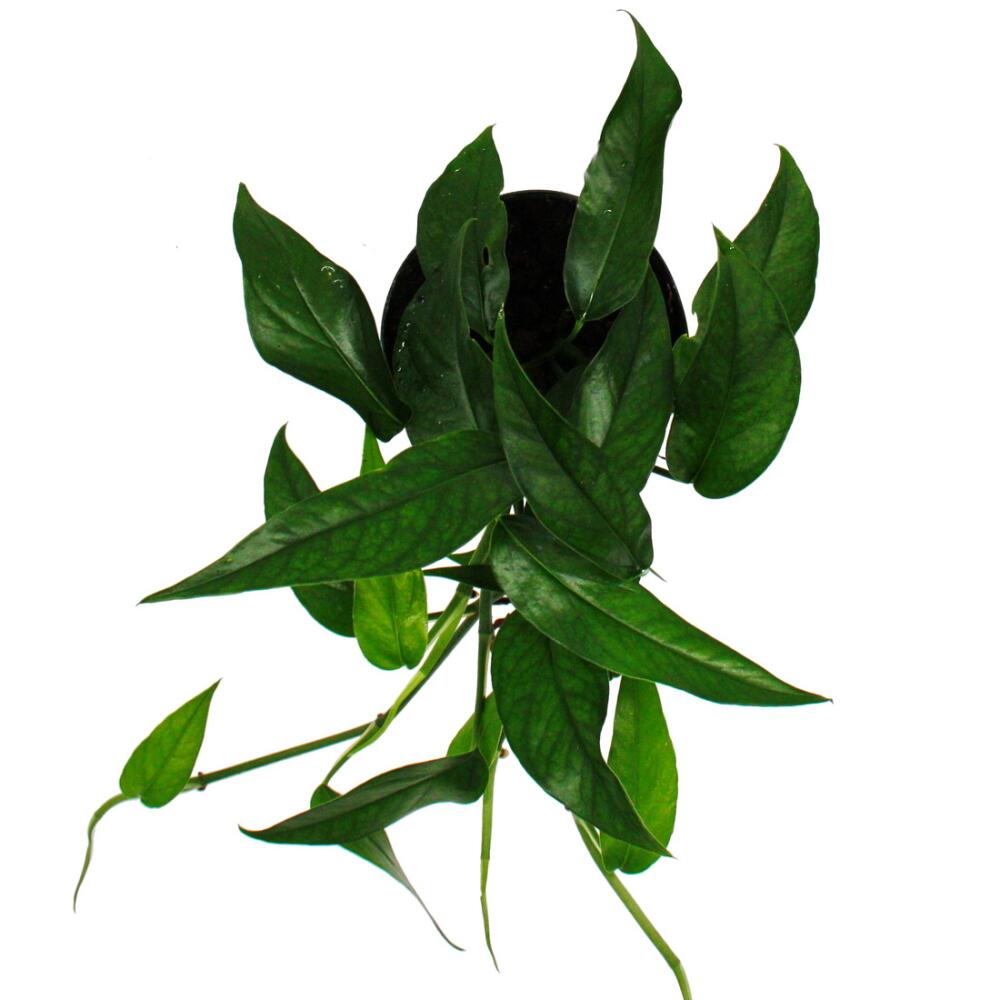
Good to know
Why are the leaves not truly blue?
Green to blue-green is normal depending on the specimen and light. The young shop plant shows predominantly green leaves.
When does Cebu Blue develop split leaves?
This depends on maturity, light and climbing opportunities. A fixed time cannot be promised.
Can it grow from a single leaf?
A suitable stem node is needed for a complete new plant. Take a healthy shoot section.
May it grow as a hanging plant?
Yes. A support is a styling and developmental option, not essential for basic care.
Sources and editorial note
Sources checked: 15 September 2026. Product details and delivery contents follow the linked shop listing. Care has been checked against the specialist sources cited and must be adapted to the plant’s condition, position and season.